
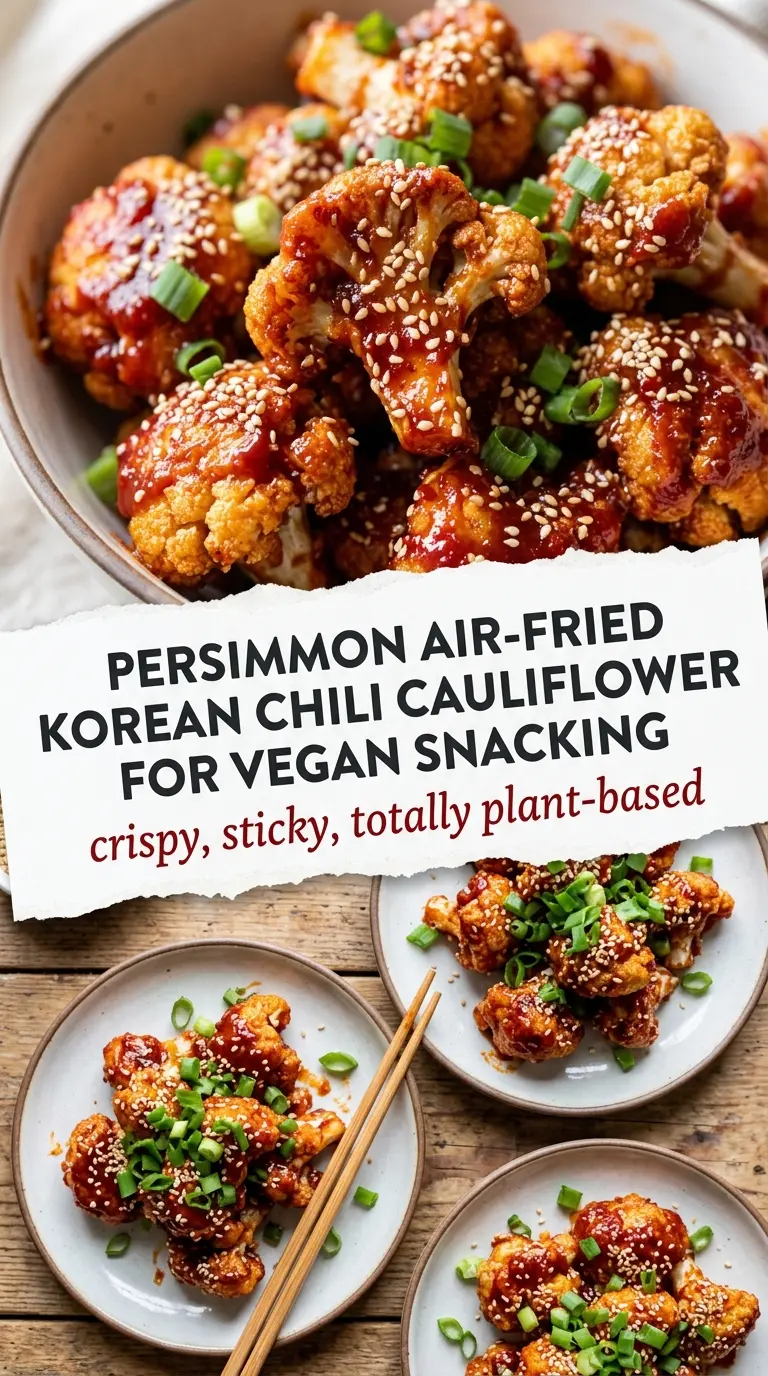
Crispy cauliflower with a sticky Korean chili glaze has a way of disappearing fast, and this version earns that kind of attention. The florets come out with a light, craggy coating that stays crunchy long enough for the sauce to cling instead of slide off, and the glaze lands in that sweet spot between spicy, savory, and a little tangy. It tastes like something you’d order as a snack and keep picking at until the bowl is empty.
The trick is keeping the batter thin enough to coat without turning gummy, then air-frying the cauliflower in a single layer so the edges dry and brown instead of steaming. Gochujang brings depth, not just heat, and maple syrup smooths out the chile paste without making the sauce taste sugary. A short second trip through the air fryer helps the glaze set into a glossy finish that hugs the cauliflower instead of pooling underneath it.
Below, I’ve included the one step that matters most for crunch, plus a few swaps that keep the same bold bite if you need a different flour or want to adjust the heat. If you’ve ever had sauced cauliflower turn soft too fast, this method fixes that.
The batter stayed light and the cauliflower still had crunch after the sauce went on. I loved that the gochujang glaze got sticky without making everything soggy, and the sesame seed finish pulled it together.
Save this crispy Korean chili cauliflower for the nights when you want a sticky vegan snack with real crunch and a bold gochujang glaze.
The Reason the Coating Stays Crisp Instead of Turning Soggy
The difference here is timing and surface texture. Cauliflower already holds a lot of moisture, so if the batter gets too thick or the basket gets crowded, you end up with soft patches instead of crisp edges. A thin batter that clings in a light layer gives the hot air something to dry out quickly, which is what creates that craggy bite.
The second air-fryer pass matters too. Once the sauce goes on, the goal is not to cook the cauliflower longer than necessary. It’s to give the glaze a brief blast of heat so it tightens up and turns glossy. Skip that step and the sauce stays looser, which is fine for flavor but not for texture.
- Single layer: Crowding traps steam, and steam is the enemy of browning.
- Thin batter: You want a coating, not a shell. A heavy batter softens before it crisps.
- Short finish after saucing: Just enough heat to set the glaze, not enough to burn the sugars in the maple syrup.
What Each Ingredient Is Doing in This Dish
- Cauliflower: Use a large head and cut the florets into similar sizes so they finish at the same rate. Smaller pieces crisp faster, but tiny bits can overcook before the glaze goes on.
- All-purpose flour: This gives the batter enough structure to cling to the cauliflower and dry into a light shell. A 1:1 gluten-free flour blend works here if you need it, though the coating may be a little less delicate.
- Gochujang: This is the backbone of the sauce. It brings fermented chile heat, sweetness, and depth all at once, and there isn’t a substitute that matches it exactly. If you need less heat, use a little less and balance with extra maple syrup.
- Maple syrup: It softens the sharp edges of the chile paste and helps the glaze go glossy. Honey works for non-vegan cooks, but it tastes a little heavier and less clean.
- Sesame oil: A small amount goes a long way. It gives the sauce that toasted finish that makes the whole dish taste complete.
Building the Crunch, Then Setting the Glaze
Mixing the Batter
Whisk the flour, water, garlic powder, and salt until the batter looks smooth and pourable, like thin pancake batter. If it’s too thick, it coats in clumps and bakes up heavy; if it’s too loose, it slides off before the cauliflower hits the basket. Dip each floret and let the excess drip away so you end up with an even film, not a paste.
Air-Frying the Cauliflower
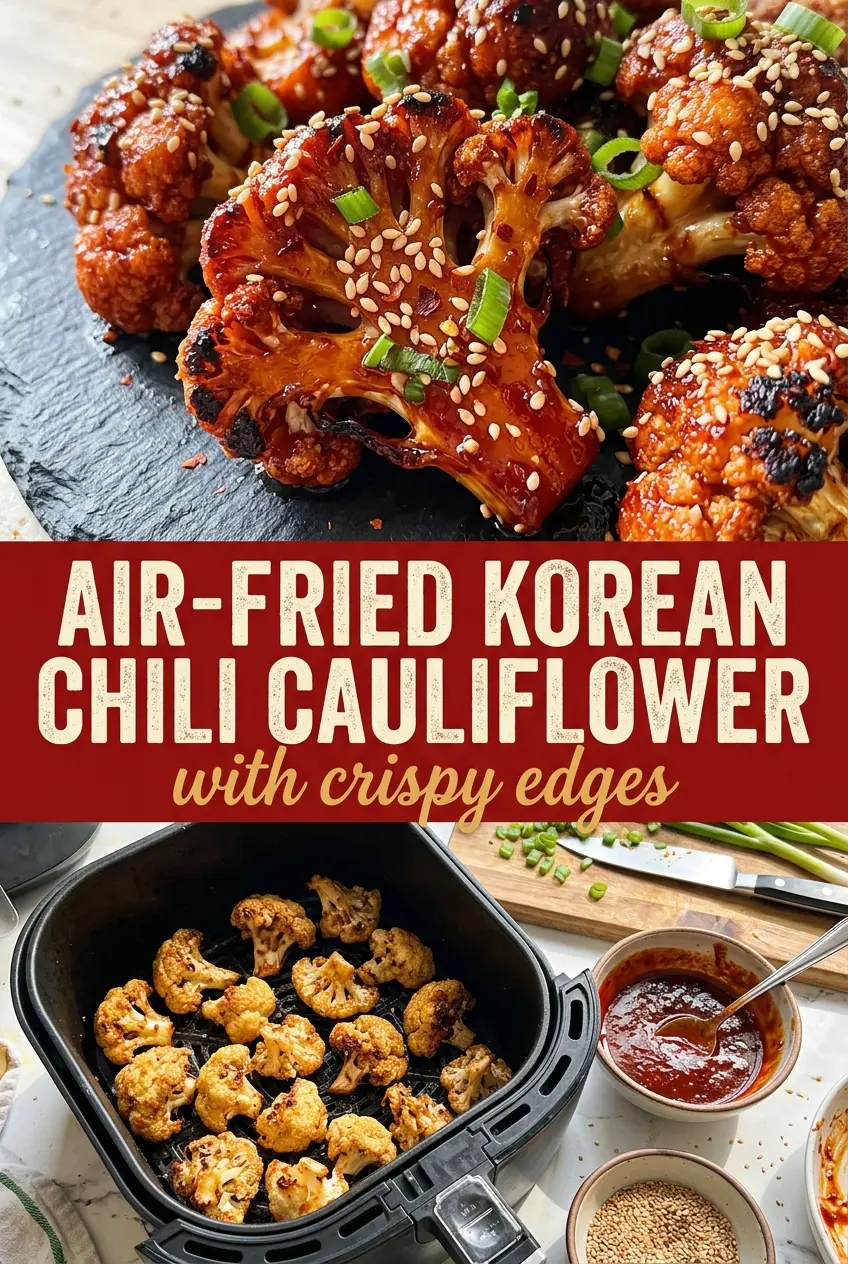
Arrange the florets in a single layer with space between them. They need direct hot air on all sides to dry and crisp, and if they’re piled up, the undersides stay soft. Shake the basket halfway through so the edges that touch the tray get a chance to brown. You’re looking for a dry, lightly blistered coating with golden spots at the corners.
Making the Gochujang Glaze
Whisk the gochujang, soy sauce, maple syrup, rice vinegar, and sesame oil until smooth. The sauce should be thick enough to coat a spoon but loose enough to toss easily. If it tastes flat, it usually needs a touch more vinegar rather than more sweetness; acidity keeps the glaze bright and keeps the maple from taking over.
Coating and Finishing
Toss the hot cauliflower with the glaze until every piece looks lacquered. Then return it to the air fryer for a short finish, just long enough for the sauce to tighten. Don’t leave it in too long or the sugars can darken too fast and the coating turns sticky instead of crisp-glossy. Finish with sesame seeds and sliced green onions while the glaze is still tacky so they stick well.
Three Useful Ways to Adjust the Heat, Texture, or Diet
Make it gluten-free without losing the crunch
Swap the all-purpose flour for a 1:1 gluten-free blend. The coating will still crisp, though it may brown a little faster and the texture will be slightly more fragile, so keep an eye on the basket during the last few minutes.
Dial the heat down without flattening the sauce
Use 2 tablespoons of gochujang instead of 3 and add an extra teaspoon of maple syrup. You’ll get a gentler burn, but the sauce still keeps its savory depth and sticky finish.
Make it gluten-free and soy-free
Use a gluten-free flour blend and swap the soy sauce for coconut aminos. Coconut aminos are sweeter and less salty, so the glaze will taste softer and you may want a pinch more salt in the sauce.
Turn it into a fuller meal
Serve the cauliflower over steamed rice or tucked into lettuce cups with extra green onions. The glaze acts like a sauce, so you don’t need much else, but a plain grain underneath helps catch every bit of it.
Storage and Reheating
- Refrigerator: Store leftovers in an airtight container for up to 3 days. The coating softens as it sits, but the flavor stays strong.
- Freezer: It freezes poorly once sauced. The cauliflower turns watery after thawing, so this dish is best made fresh.
- Reheating: Reheat in the air fryer at 375°F for a few minutes until the edges perk back up. The common mistake is microwaving it, which makes the coating collapse and the glaze go loose.
Answers to the Questions Worth Asking
Air-Fried Korean Chili Cauliflower (Vegan)
Ingredients
Equipment
Method
- Whisk together the flour, water, garlic powder, and salt to make a smooth batter.
- Dip the cauliflower florets in the batter, letting excess drip off so the coating crisps instead of pooling.
- Air fry at 375°F for 15-18 minutes, shaking the basket halfway, until the cauliflower is crisp and lightly golden at the edges.
- Whisk together the gochujang, soy sauce, maple syrup, rice vinegar, and sesame oil until glossy and pourable.
- Toss the crispy cauliflower in the sauce until every floret is well coated, with a visible sheen.
- Return to the air fryer and air fry at 375°F for 2-3 minutes to set the glaze so it looks caramelized instead of wet.
- Garnish with sesame seeds and green onions before serving for fresh color and crunch.