
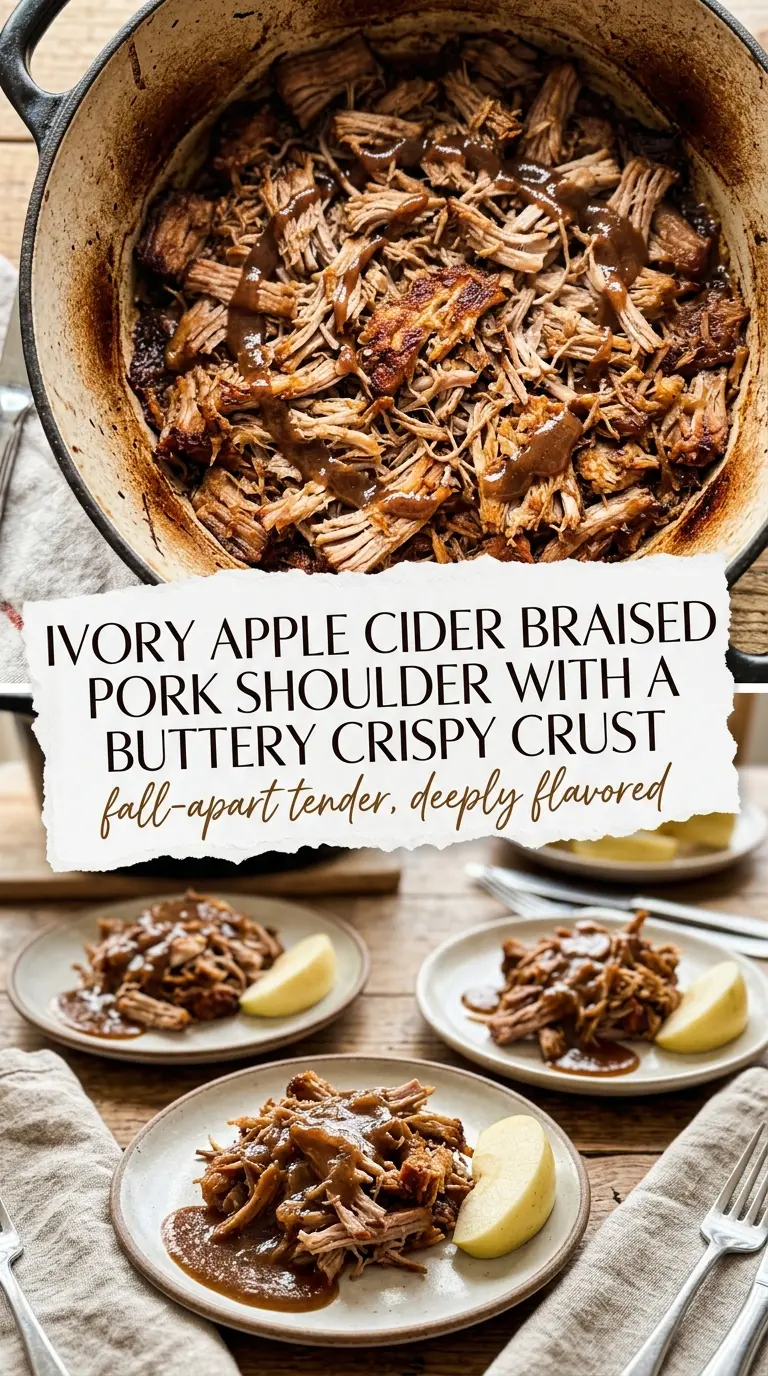
Apple cider braised pork shoulder comes out with the kind of deep, savory-sweet richness that makes people pause after the first bite. The pork turns fork-tender without drying out, and the cider reduces into a glossy sauce that tastes like roasted apples, onions, and browned meat all working together in the same pot. It’s one of those dinners that feels calm and deliberate, even though the oven does almost all the work.
The real difference here is the way the pork gets handled before the braise starts. A good sear builds the base flavor, and the onions and garlic pick up every browned bit left behind in the pot. Apple cider gives you a rounder, fresher sweetness than juice would, while the apples break down just enough to soften the sauce without turning it mushy. Low heat keeps the shoulder tender instead of stringy, which is what happens when people try to rush a cut like this.
Below, you’ll find the exact point where the pork should stop resisting the fork, the ingredient choices that matter most, and a few smart swaps if you need to work around what’s in your pantry.
The pork came out meltingly tender and the cider sauce reduced beautifully without getting too sweet. I served it over mashed potatoes and my husband went back for seconds before I even sat down.
Apple Cider Braised Pork Shoulder with that glossy, apple-onion sauce is the kind of dinner worth keeping close for low-effort comfort.
The Sear Is What Keeps the Braise from Tasting Flat
People often think the cider is what carries this dish, but the sear is what gives it backbone. Pork shoulder has enough fat and connective tissue to take on aggressive browning, and that browned crust becomes the starting point for the sauce. If you skip it or crowd the pan until the meat steams, the whole dish lands softer and less defined.
That same idea applies to the onions. They don’t just soften; they dissolve some of the browned bits from the pot and turn them into flavor. The cider then picks up all of that and reduces into something that tastes layered instead of one-note. A braise like this should smell savory first and sweet second.
What Each Ingredient Is Actually Doing in This Dish
- Pork shoulder — This cut is built for long cooking because the collagen melts slowly and keeps the meat moist. Pork loin won’t give you the same result; it’s too lean and can dry out before it turns tender.
- Apple cider — Use real cider, not apple juice, if you can. Cider tastes fuller and less candy-sweet, which matters once it reduces in the oven. If you only have juice, cut the sweetness with a splash of vinegar or a little extra onion.
- Apples — Firm apples hold their shape better. Softer varieties can work, but they’ll collapse into the sauce faster and make it sweeter and thicker.
- Smoked paprika and thyme — These keep the dish from reading as dessert-adjacent. The paprika adds quiet warmth, and thyme gives the braise a savory edge that stays in the background but makes a big difference.
The Low Oven Temperature That Turns This Pork Shoulder Tender
Seasoning and Searing First
Rub the pork generously with smoked paprika, thyme, salt, and pepper before it hits the pan. Heat the oil until it shimmers, then sear the meat on all sides until you get a deep brown crust, not pale tan patches. If the pot is crowded, the pork will steam and the fond won’t develop, which means the sauce loses a lot of flavor before it even starts.
Building the Braising Base
Take the pork out and cook the onion in the same pot until it turns soft and starts to pick up color at the edges. Add the garlic for only a minute so it smells fragrant but doesn’t burn; burned garlic makes the whole pot bitter. Pour in the cider and scrape the bottom well, because those browned bits dissolve into the braising liquid and carry the flavor of the sear into the sauce.
Slow Braising Until the Fork Slides In
Return the pork to the pot, tuck the apples around it, cover tightly, and move it to the oven at 300°F. After a couple of hours, check for tenderness with a fork; it should slide in with almost no resistance, and the meat should start to pull apart at the edges. If it still feels tight, keep going. Pork shoulder is done by texture, not by the clock.
Finishing the Sauce
When the pork is tender, lift it out and give the sauce a taste before serving. If it’s thin, let it simmer uncovered on the stove for a few minutes until it lightly coats a spoon. If your sauce tastes a little sweet, a pinch of salt or a small splash of vinegar pulls it back into balance without flattening the apple flavor.
How to Adapt This for Different Tables and Leftovers
Make It Dairy-Free Without Changing the Texture
This recipe is naturally dairy-free as written, which is part of why it works so well for a crowd. If you serve it with mashed potatoes or polenta, use olive oil or a dairy-free butter substitute there, but the braise itself doesn’t need any changes.
For a Sweeter Finish, Use Half Apples and Half Pears
Pear adds a softer sweetness and breaks down faster than apple, so the sauce turns silkier and a little more perfumed. Keep one apple in the pot for structure if you want the fruit to stay visible at the end.
If You Need It Gluten-Free, Change the Sides, Not the Braise
The pork, cider, and aromatics are already gluten-free. Serve it over mashed potatoes, rice, or roasted vegetables instead of bread or egg noodles, and you won’t lose anything in the actual dish.
Storage and Reheating
- Refrigerator: Store for up to 4 days. The flavor deepens overnight, and the sauce usually thickens as it chills.
- Freezer: It freezes well for up to 3 months. Cool it completely first, then portion the pork with sauce so it doesn’t dry out when thawed.
- Reheating: Warm it covered in a low oven or gently on the stovetop with a splash of cider or stock. High heat can tighten the meat and make the sauce separate, especially if you’ve already reduced it down.
The Things That Trip People Up With This Dish

Apple Cider Braised Pork Shoulder
Ingredients
Equipment
Method
- Pat the pork shoulder dry and season generously with smoked paprika, dried thyme, salt, and pepper for even flavor all over.
- Let the seasoned pork sit while you prepare the pot so the surface seasoning adheres.
- Heat olive oil in a Dutch oven over medium-high heat until shimmering, then sear the pork shoulder until browned on all sides, about 8-12 minutes total.
- Remove the pork from the pot and keep any browned bits in the Dutch oven.
- Add sliced onion and sauté until softened, about 5-7 minutes.
- Stir in minced garlic and cook until fragrant, about 30-60 seconds.
- Return the pork shoulder to the pot, then add apple cider and add quartered apples around the roast.
- Cover and braise at 300°F for 3-3.5 hours, until fork-tender.
- Remove the pork, shred or slice it, then spoon the apple cider sauce over the top before serving.