
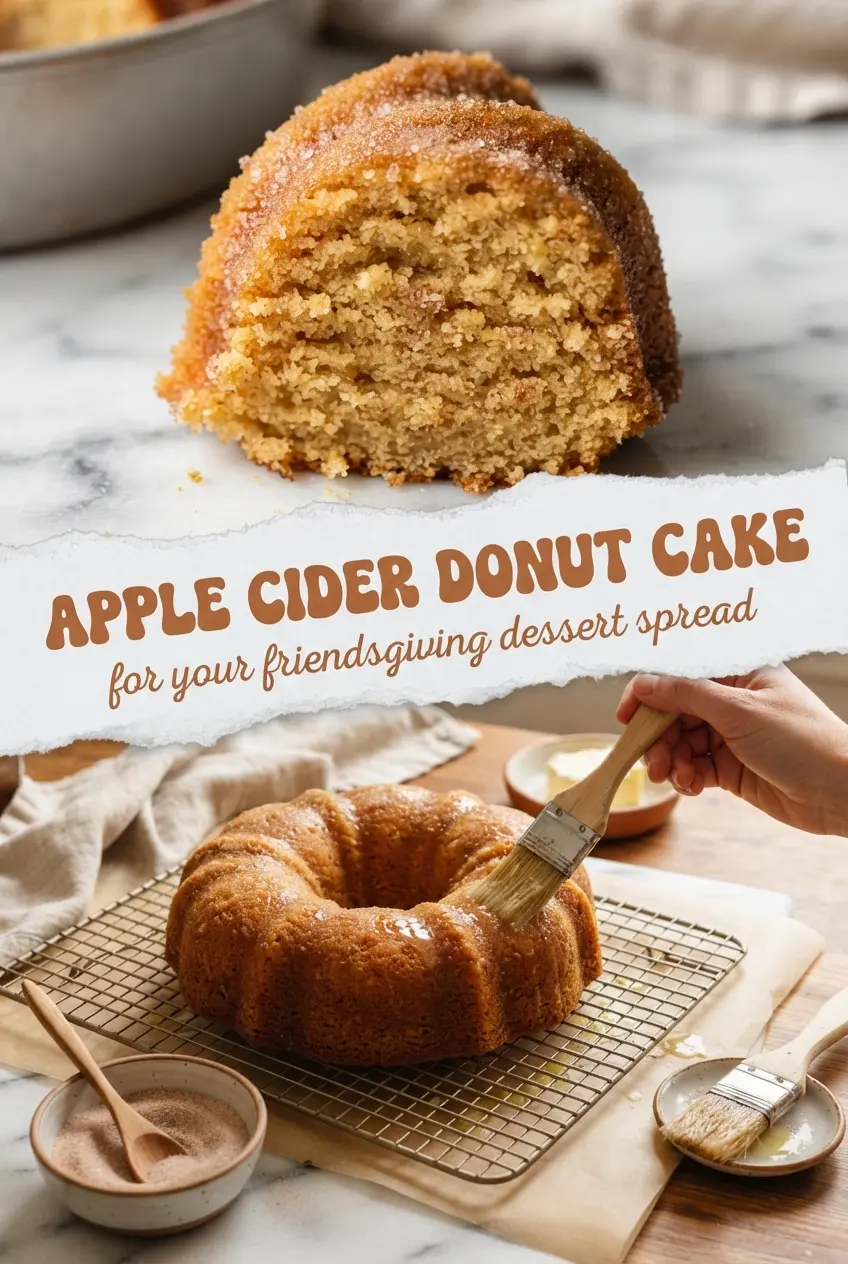
Apple cider donut cake lands with the same cozy pull as a fresh cake donut, but without standing over hot oil or worrying about batches. The crumb stays soft and tender, the edges bake up golden, and the cinnamon-sugar coating gives every slice that unmistakable crackly finish. It’s the kind of cake that disappears fast because it tastes familiar in the best way: warm spice, browned butter notes from the coating, and a real apple-cider flavor instead of just a hint of autumn perfume.
The part that makes this version worth keeping is the reduced cider. Simmering it down concentrates the apple flavor so it doesn’t get lost under the flour and sugar, and cooling it completely keeps the batter from turning greasy or uneven. Brown sugar brings depth, while buttermilk keeps the crumb soft and gives the cake enough tang to taste balanced after it’s coated in all that cinnamon sugar.
Below, you’ll find the exact cue for when to stop reducing the cider, how to keep the coating from slipping off, and a couple of ways to adapt the cake if you want a different pan or need a dairy-free swap.
The reduced cider made the cake taste like actual apples instead of just spice, and the cinnamon sugar stuck beautifully when I brushed it on while the cake was still warm.
Save this apple cider donut cake for when you want that bakery-style cinnamon sugar finish without frying a single donut.
The Cider Reduction Is What Gives This Cake Its Real Apple Flavor
If you skip the reduction, the cake still bakes up fine, but it won’t taste like much beyond cinnamon and sugar. Apple cider is mostly water, and water dilutes flavor. Simmering it down to a concentrated 3/4 cup gives the batter enough apple intensity to stand up to the butter, eggs, and spices without making the crumb heavy.
The other thing that matters is temperature. The reduced cider has to cool completely before it goes into the batter. Warm cider melts the butter too soon, and that changes the texture from fluffy and tender to dense and slightly greasy. The batter should look thick and smooth when it comes together, not loose or glossy.
- Apple cider — Use real cider, not apple juice. Cider has a deeper, more tart apple flavor, and it reduces into something much more concentrated. Simmer it gently until it measures 3/4 cup; don’t boil it hard or you can push it too far and end up with a syrup that throws off the batter.
- Brown sugar — This gives the cake its molasses depth and keeps the crumb soft. Light or dark brown sugar both work, but dark brown sugar makes the cake taste a little more caramelized.
- Buttermilk — This is doing two jobs: tenderness and balance. If you don’t have it, whole milk plus 1 1/2 teaspoons of lemon juice or vinegar works in a pinch, but the cake will be a touch less rich and tangy.
- Butter — Softened butter helps build the cake’s structure when it’s beaten with the sugar. Use unsalted butter here so you can control the salt in the batter and the coating separately.
Building the Batter Without Overworking It
Reducing the Cider First
Start this before anything else so it has time to cool. Pour the cider into a small saucepan and simmer until it reaches 3/4 cup, not less. You’re looking for a slightly thicker liquid with a stronger smell of apples, not a sticky glaze. If you reduce it too far, the flavor gets sharper and the batter can become too wet-dry imbalanced once everything else goes in.
Beating the Butter and Sugar Properly
Beat the softened butter and brown sugar until the mixture looks lighter in color and a little fluffy around the edges of the bowl. That air you whip in matters because it helps the cake rise and keeps the crumb from packing down. If the butter is too cold, you’ll just get paste; if it’s melted, the cake will bake up dense.
Stopping the Batter at the Right Moment
Add the dry ingredients, buttermilk, and cooled cider in alternating additions, mixing only until the last streaks disappear. The batter should look thick and scoopable, not whipped. Overmixing develops too much gluten in the flour, which is how you end up with a cake that tastes bready instead of tender. A few tiny flour streaks are better than a tough crumb.
Baking Until the Center Springs Back
Use a 9-inch round or bundt pan that’s well greased so the coating later can cling to the surface instead of catching on torn edges. Bake until the top is set and the center springs back lightly when touched. If you wait for the cake to look dark all over, you’ll overshoot it and dry out the edges before the middle is done.
How to Adapt This Cake for the Pan You Have
Bundt pan for a more bakery-style look
A bundt pan gives you more surface area for the cinnamon sugar to cling to, so every slice tastes a little more like the donut version. Grease every ridge well, because this cake has a tender crumb and can stick in the detailed parts of the pan if you rush the prep.
Gluten-free version
A 1:1 gluten-free baking flour works here, but the crumb will be a little more delicate and the cake may need a few extra minutes in the oven. Let it cool in the pan for the full 10 minutes before turning it out so it has time to set up.
Dairy-free swap
Use a plant-based butter and replace the buttermilk with unsweetened non-dairy milk plus 1 1/2 teaspoons lemon juice. The cake will still be soft and spiced, though the coating will taste a little cleaner and less rich than the original.
Storage and Reheating
- Refrigerator: Store covered for up to 4 days. The sugar coating softens a bit after day one, but the cake stays moist.
- Freezer: Freeze slices tightly wrapped without the coating if you want the best texture, then add fresh cinnamon sugar after thawing. Fully coated cake can freeze, but the finish won’t stay crisp.
- Reheating: Warm slices in a 300°F oven for 8 to 10 minutes or microwave briefly until just heated through. Overheating melts the coating and makes the crumb feel heavy.
Answers to the Questions Worth Asking
Apple Cider Donut Cake
Ingredients
Equipment
Method
- Simmer the apple cider until reduced to 3/4 cup, then cool completely. The reduction should look syrupy and slightly thick before cooling.
- Preheat the oven to 350°F and grease a 9-inch round or bundt pan. Lightly coat all ridges so the cake releases cleanly.
- Beat the softened unsalted butter and brown sugar until fluffy. The mixture should lighten in color and look airy.
- Beat in the eggs one at a time. Make sure each egg is fully incorporated before adding the next.
- Alternate adding the dry ingredients, buttermilk, and reduced apple cider until just combined. Stop mixing as soon as no dry flour remains to keep the crumb tender.
- Bake for 35 to 40 minutes, until a toothpick comes out with a few moist crumbs. The top should look set and lightly golden.
- Cool the cake for 10 minutes. It should be warm but not scorching when you coat it.
- Brush the cake with melted unsalted butter, then coat in cinnamon sugar. For the thickest coating, apply while the cake is still warm.