
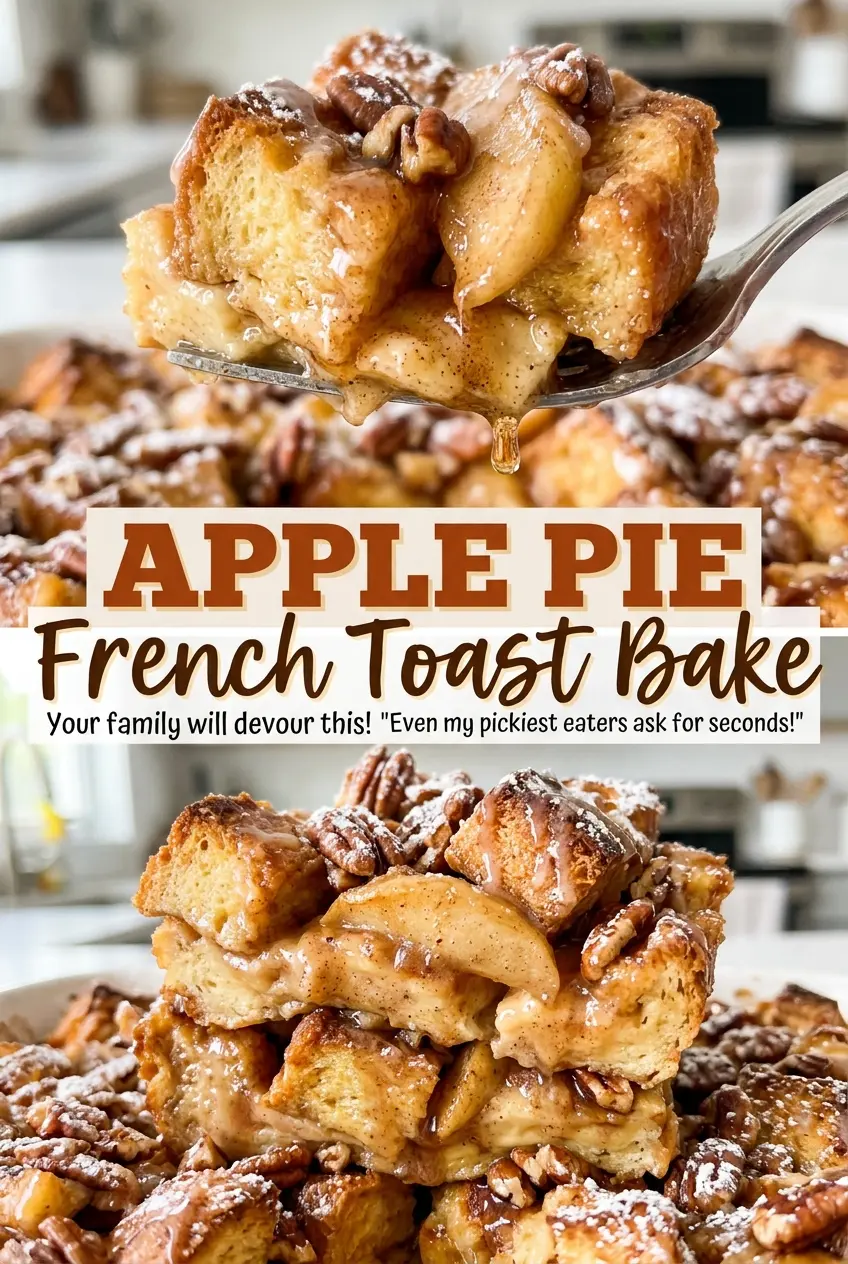
The apples turn glossy in the skillet before they go anywhere near the bread. That short cook gives them a head start, so they’re tender rather than crunchy when the center of the casserole is done. In this Apple Pie French Toast Bake, cinnamon-sweet apples sit between cubes of challah, and the whole dish soaks up an egg custard overnight.
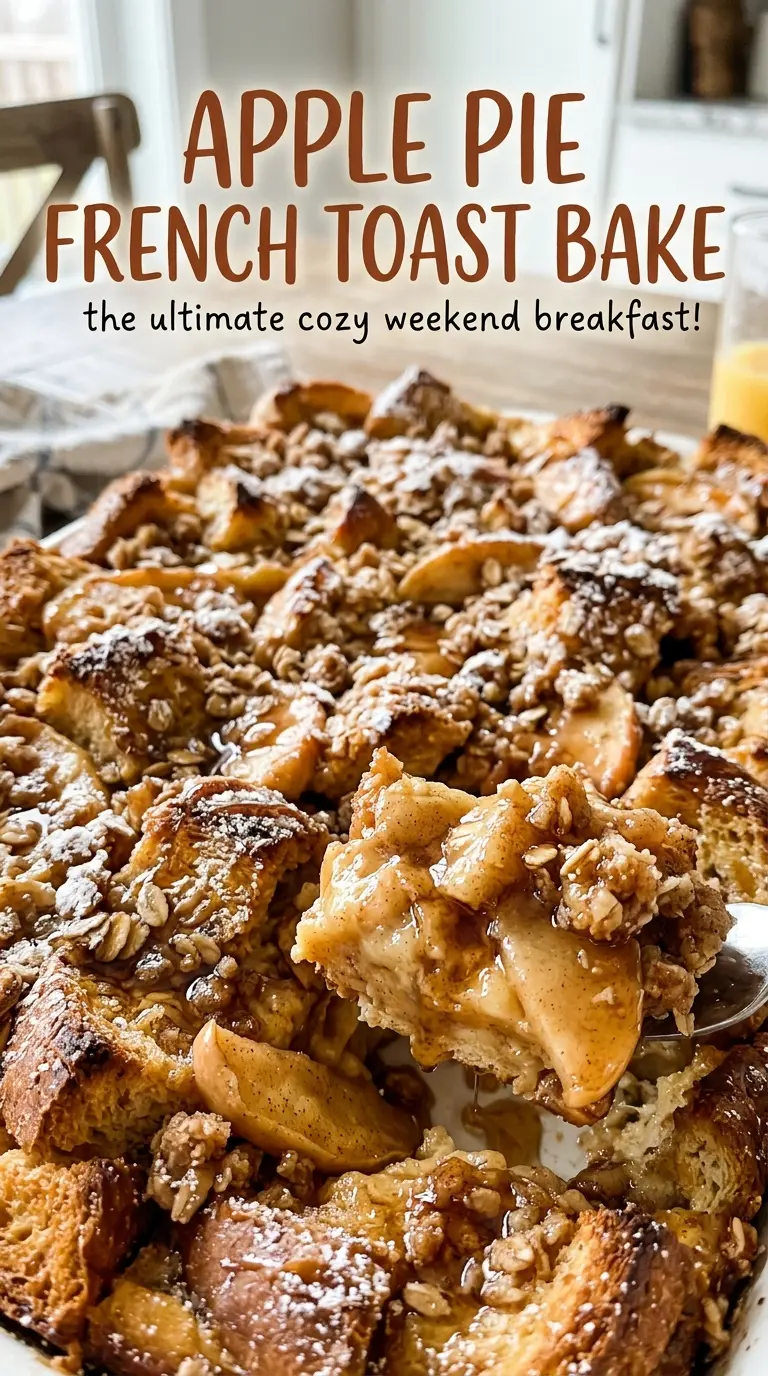
I like this bake because the morning work is already done: after the chill, it goes into the oven while I get the rest of breakfast together. Challah makes a soft, rich center, while the exposed bread on top turns golden after the foil comes off. The apple filling brings the familiar warmth of pie without making the casserole heavy or wet. Give it a 10-minute rest after baking, then scoop into the custardy middle and the tender apple layers.
Kitchen Note
Let the apple filling cool for the full 15 minutes before you layer it with the challah. Hot filling softens the bread before the custard has a chance to soak in, and the cooled filling is easier to spread evenly.
Save this Apple Pie French Toast Bake for a make-ahead breakfast with tender cinnamon apples and a golden challah top.
Why the Apple Filling Belongs Between the Bread, Not Just on Top
Putting apple filling in the middle of the casserole does more than make the layers look pretty when you serve it. The fruit is spread through the bread, so you get apples in the custardy center instead of a thick layer of fruit sitting on the surface. That also keeps the top cubes of challah exposed to the oven after the foil comes off, where they can turn golden rather than being buried under filling.
The order matters when you assemble it: half the bread goes into the dish first, followed by half the cooled apples, then the remaining bread and apples. Pour the custard over the whole arrangement so it can run between the cubes. You don’t need to stir or press the layers together; keeping them in place gives the finished bake distinct pockets of tender apple and soft bread. It’s a simple way to make a casserole that feels like French toast with apple pie tucked through it, rather than bread pudding with fruit only on top.
The Challah, Apples, and Custard Choices That Shape Every Bite
- Challah — Its rich, tender crumb absorbs the custard while still giving the casserole enough structure to hold its shape. Choose a plain 16-ounce loaf and cut it into even 1-inch cubes; a very soft sandwich loaf tends to lose its definition. Brioche is the closest swap, though it makes the bake softer and a little richer.
- Apples — Firm apples keep some shape during the skillet cook and the oven bake. A crisp, tart-sweet variety is a good choice; bruised or mealy fruit breaks down more quickly. Peel and cut the pieces evenly so they soften at the same rate.
- Eggs, whole milk, and heavy cream — The eggs set the custard, while the milk and cream give it a tender, rich texture. Fresh eggs and ordinary whole milk work well; the cream is what makes the custard fuller than a milk-only soak. For a dairy-free version, see the variation below.
- Cornstarch — Whisking it with water before it goes into the skillet prevents dry lumps and thickens the apple juices into a coating rather than a puddle. Keep the slurry smooth, then stir it into the hot apples so it can cook through.
- Cinnamon, brown sugar, and lemon juice — Brown sugar sweetens the filling, cinnamon gives it its pie-like warmth, and lemon juice keeps that sweetness from tasting flat. Ground cinnamon from the pantry is fine; use fresh-smelling cinnamon if yours has been sitting around for years.
From Thickened Apples to a Set, Golden Center
Soften and thicken the apples
Combine the peeled, cored, 1/2-inch apple pieces with the brown sugar, cinnamon, and lemon juice in a large skillet over medium heat. Cook for 5 to 7 minutes, stirring occasionally, until the apples are just beginning to soften; they should still hold their shape. Whisk the cornstarch and water in a small bowl, stir that mixture into the skillet, and cook for 1 to 2 minutes as the juices thicken. Transfer the filling to a bowl and let it cool for 15 minutes.
Layer the challah and pour the custard
Coat a 9×13-inch baking dish with cooking spray. Arrange half of the 1-inch challah cubes in the dish, spread half of the cooled apple filling over them, then add the remaining bread and apple filling. In a large bowl, whisk the eggs, whole milk, heavy cream, granulated sugar, vanilla, and kosher salt until the eggs are fully blended. Pour the custard evenly over the bread instead of aiming it all at one spot.
Give the casserole its overnight soak
Cover the baking dish and refrigerate it for at least 8 hours or up to 12 hours. This is the part to plan ahead for: the challah needs time to take in the egg mixture throughout the dish. Keep the casserole covered while it chills, then take it out as you heat the oven. The wait happens before baking, not after.
Bake until the center is set
Heat the oven to 350°F while the covered casserole stands at room temperature for 15 minutes. Bake it covered with foil for 30 minutes, then uncover and bake for another 20 to 30 minutes, until the top is puffed and golden and the center reaches 160°F. A browned surface alone doesn’t tell you whether the center is ready, so check the middle with an instant-read thermometer. Rest the casserole for 10 minutes before serving so the custard can settle.
Three Swaps That Change the Bake Without Losing Its Custardy Center
Use pears in place of the apples
Replace the apples with an equal amount of peeled, cored, firm pears cut into the same 1/2-inch pieces. Pears make the filling milder and more delicate, and softer varieties may break down more in the skillet, so choose fruit that still feels firm.
Swap challah for brioche
Use a 16-ounce loaf of brioche cut into 1-inch cubes in place of the challah. Brioche brings a buttery, slightly sweeter taste and a softer texture, so the baked center will be more delicate. Keep the same layering, chilling, and baking method.
Make the custard dairy-free
Replace the whole milk with unsweetened oat milk and the heavy cream with full-fat canned coconut milk, using the same amounts. The casserole will still contain eggs, and the coconut milk adds a faint coconut note while making the custard a little less buttery in taste.
Storage and Reheating
- Refrigerator: Store covered leftovers for 3 to 4 days. The bread softens as it sits, but the custardy center stays pleasant.
- Freezer: Freeze fully cooled portions in airtight containers for up to 2 months. Thaw overnight in the refrigerator; the bread may be softer after thawing.
- Reheating: Warm portions covered in a 325°F oven until heated through, or use the microwave for a quick single serving. Reheat leftovers to 165°F, and don’t leave them uncovered in the oven long enough for the edges to dry out.
Questions That Come Up Before You Put This Bake in the Oven
Apple Pie French Toast Bake
Ingredients
Equipment
Method
- Combine the apples, light brown sugar, ground cinnamon, and lemon juice in a large skillet over medium heat; cook for 5 to 7 minutes, stirring occasionally, until the apples are just beginning to soften.
- Whisk the cornstarch and water in a small bowl.
- Stir the cornstarch mixture into the apples and cook for 1 to 2 minutes until the juices thicken.
- Transfer the filling to a bowl and cool for 15 minutes.
- Coat a 9x13-inch baking dish with cooking spray.
- Arrange half of the challah cubes in the dish.
- Spread half of the cooled apple filling over the bread.
- Top with the remaining bread cubes and apple filling.
- Whisk the eggs, whole milk, heavy cream, granulated sugar, vanilla extract, and kosher salt in a large bowl.
- Pour the egg mixture evenly over the bread.
- Cover the dish and refrigerate for at least 8 hours or up to 12 hours.
- Let the covered casserole stand at room temperature for 15 minutes while the oven heats to 350°F.
- Bake covered with foil for 30 minutes.
- Uncover and bake for 20 to 30 minutes, until puffed and golden and the center reaches 160°F.
- Rest the casserole for 10 minutes before serving.