
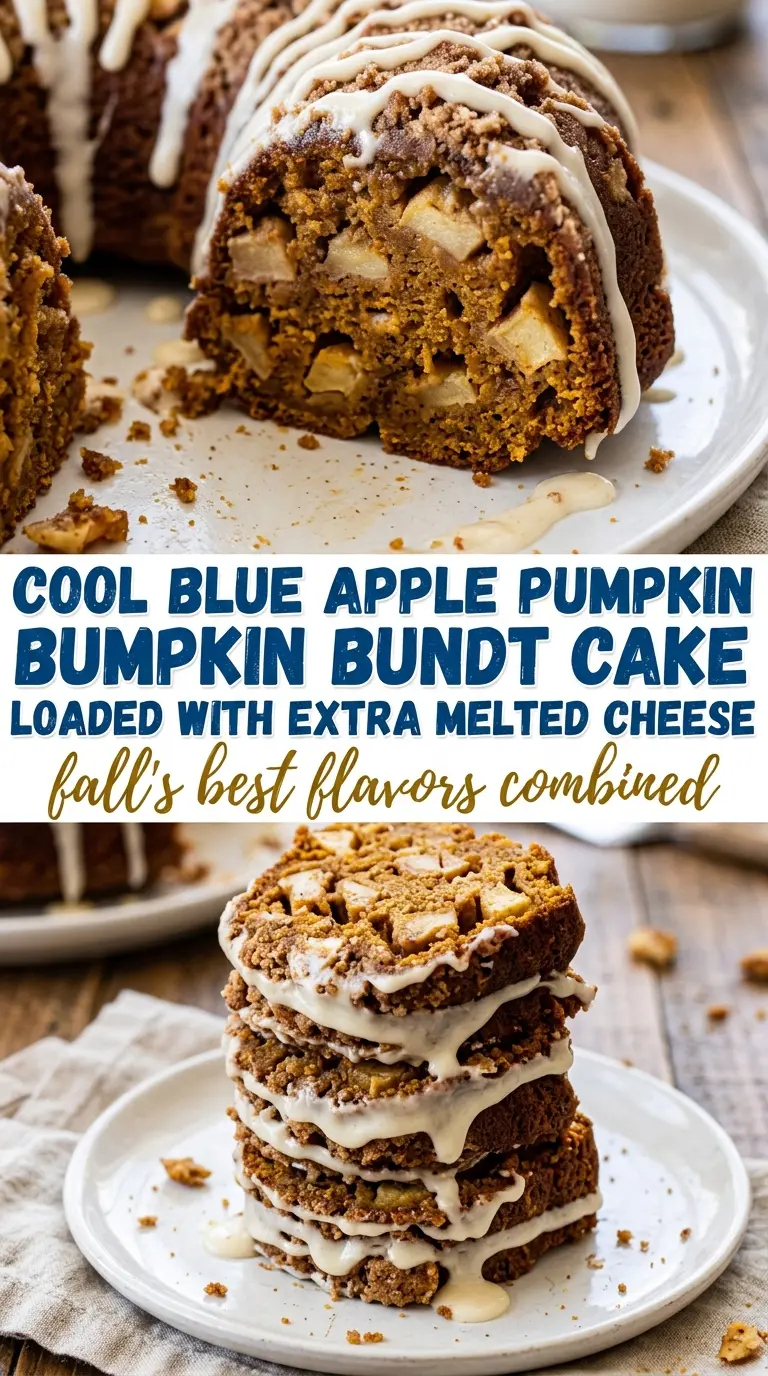
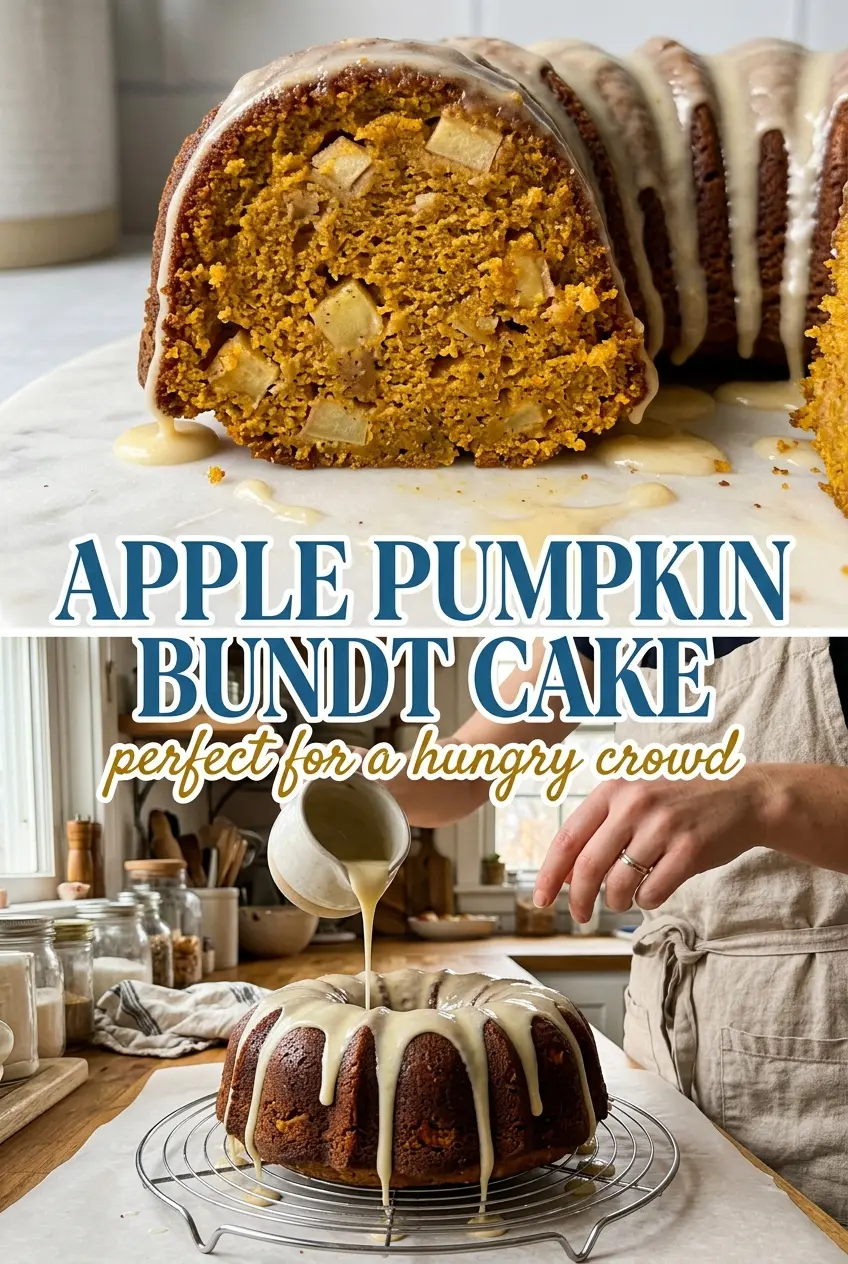
Apple pumpkin bundt cake lands with the kind of soft, dense crumb that slices cleanly but still feels tender on the fork. The pumpkin keeps the cake moist for days, the diced apples add little pockets of brightness, and the cream cheese glaze drips down the ridges in the best possible way. It tastes like a cake that was built for sharing, but it disappears fast enough that leftovers are never guaranteed.
What makes this version work is the balance. Pumpkin puree brings body and moisture, while the apples keep the cake from eating like a solid loaf of spice cake. The batter stays simple, but the order matters: whisk the dry ingredients first so the baking soda is evenly distributed, then mix the wet ingredients until smooth before folding them together. That keeps the crumb even instead of streaky or heavy.
Below, I’ve included the trick that keeps the apples from sinking, the one bundt-pan move that saves the cake from sticking, and a few swaps that still give you a bakery-style finish.
The cake turned out incredibly moist, and tossing the apples in flour kept them from sinking to the bottom. The cream cheese glaze set up beautifully and tasted like the best part of a cinnamon roll.
Love the moist crumb and cream cheese glaze on this apple pumpkin bundt cake? Save it to Pinterest for the next time you need an easy cake that looks special on the table.
The Reason the Apples Stay in the Cake Instead of Sinking
The biggest problem with a fruit-studded bundt cake is a sad ring of apple pieces at the bottom. That happens when the batter is too loose or the fruit goes in uncoated. A light toss in flour gives the apple pieces just enough grip to stay suspended while the cake bakes and sets around them.
The other part of the equation is texture. This batter is thick enough to hold the fruit but still soft enough to rise evenly in the pan. If the batter looks too thin, the apples will drift; if it’s overmixed, the cake gets tight and heavy. Stop stirring as soon as the flour disappears and fold the apples in gently at the end.
What Each Ingredient Is Actually Doing in This Cake
- Pumpkin puree — This gives the cake its moisture and that deep orange color, but it also adds body. Use plain pumpkin puree, not pumpkin pie filling, or the spice level and sweetness will be off before you start.
- Brown sugar — Brown sugar brings moisture and a mellow caramel note that white sugar can’t match here. It helps the crumb stay soft even after the cake cools.
- Vegetable oil — Oil keeps the cake tender in a way butter doesn’t quite replicate. If you swap in melted butter, the cake will taste richer but it won’t stay quite as moist on day two.
- Apples — Choose a firm apple that holds its shape in the oven, like Honeycrisp, Granny Smith, or Fuji. Softer apples can turn mushy and disappear into the crumb.
- Cream cheese — Full-fat cream cheese gives the glaze its tang and thickness. Light cream cheese usually makes the glaze looser and less glossy.
Building the Batter and Baking the Bundt
Dry Ingredients First
Whisk the flour, pumpkin pie spice, and baking soda together before anything else touches the bowl. That keeps the leavener evenly distributed, which matters more in a bundt cake than in a sheet cake because you want the crumb uniform all the way around. If you see streaks of spice or pockets of baking soda, keep whisking.
Mix the Wet Base Until Smooth
Beat the pumpkin puree, oil, eggs, and brown sugar until the mixture looks glossy and thick. You’re not trying to whip in a lot of air here; you’re looking for a smooth base with no visible egg streaks. If the mixture looks curdled, the eggs were probably too cold, but it will still come together once the dry ingredients go in.
Fold Without Beating the Batter
Add the dry ingredients to the wet mixture and stir just until the flour disappears. Overmixing here is what turns a tender cake into something rubbery and tough. Fold in the diced apples at the very end so they stay intact and don’t break up the batter.
Know When the Bundt Is Done
Pour the batter into a well-greased bundt pan and bake until a toothpick comes out clean, usually 55 to 60 minutes. The top should spring back when lightly pressed, and the edges will pull slightly from the pan. If the top is browning too fast before the center is set, tent it loosely with foil for the last 10 to 15 minutes.
Cool Before You Turn It Out
Let the cake rest in the pan for 15 minutes before inverting. That short wait helps the structure set, but leaving it too long can trap steam and make the cake stick. If your bundt pan has a lot of detail, run a thin offset spatula around the edges before flipping it onto a plate.
How to Adapt This Cake for Different Pans and Diets
Make it gluten-free
Swap the all-purpose flour for a 1:1 gluten-free baking blend that includes xanthan gum. The cake will still be moist and sliceable, though the crumb may be a little more delicate when warm.
Use pears instead of apples
Firm pears can stand in for the apples if that’s what you have on hand. Choose pears that are still slightly firm so they keep some shape after baking; very ripe pears can collapse into the batter.
Turn it into cupcakes
This batter works in muffin tins too. Fill each cup about two-thirds full and start checking for doneness around 20 to 24 minutes; you’ll get a lighter, faster-baking version with more glaze per bite.
Storage and Reheating
- Refrigerator: Store covered for up to 4 days. The crumb stays moist, but the glaze will firm up in the fridge.
- Freezer: Freeze slices tightly wrapped for up to 2 months. Freeze without the glaze for the best texture, then glaze after thawing.
- Reheating: Warm individual slices in the microwave for 10 to 15 seconds or let them come to room temperature. If you heat it too long, the cake dries out and the glaze turns greasy.
The Questions People Usually Ask Before They Bake It
Apple Pumpkin Bundt Cake
Ingredients
Equipment
Method
- Preheat the oven to 350°F and grease a bundt pan well so the cake releases cleanly.
- Whisk the all-purpose flour, pumpkin pie spice, and baking soda together in one bowl.
- Beat the pumpkin puree, vegetable oil, eggs, and brown sugar until smooth.
- Fold the wet mixture into the dry ingredients until just combined.
- Fold in the diced apples so the batter stays thick and the apples are evenly distributed.
- Pour the batter into the greased bundt pan and bake for 55-60 minutes, until a toothpick comes out clean.
- Cool the cake for 15 minutes, then invert onto a plate.
- Beat the cream cheese with the powdered sugar and milk until smooth, then drizzle the glaze over the cake.