
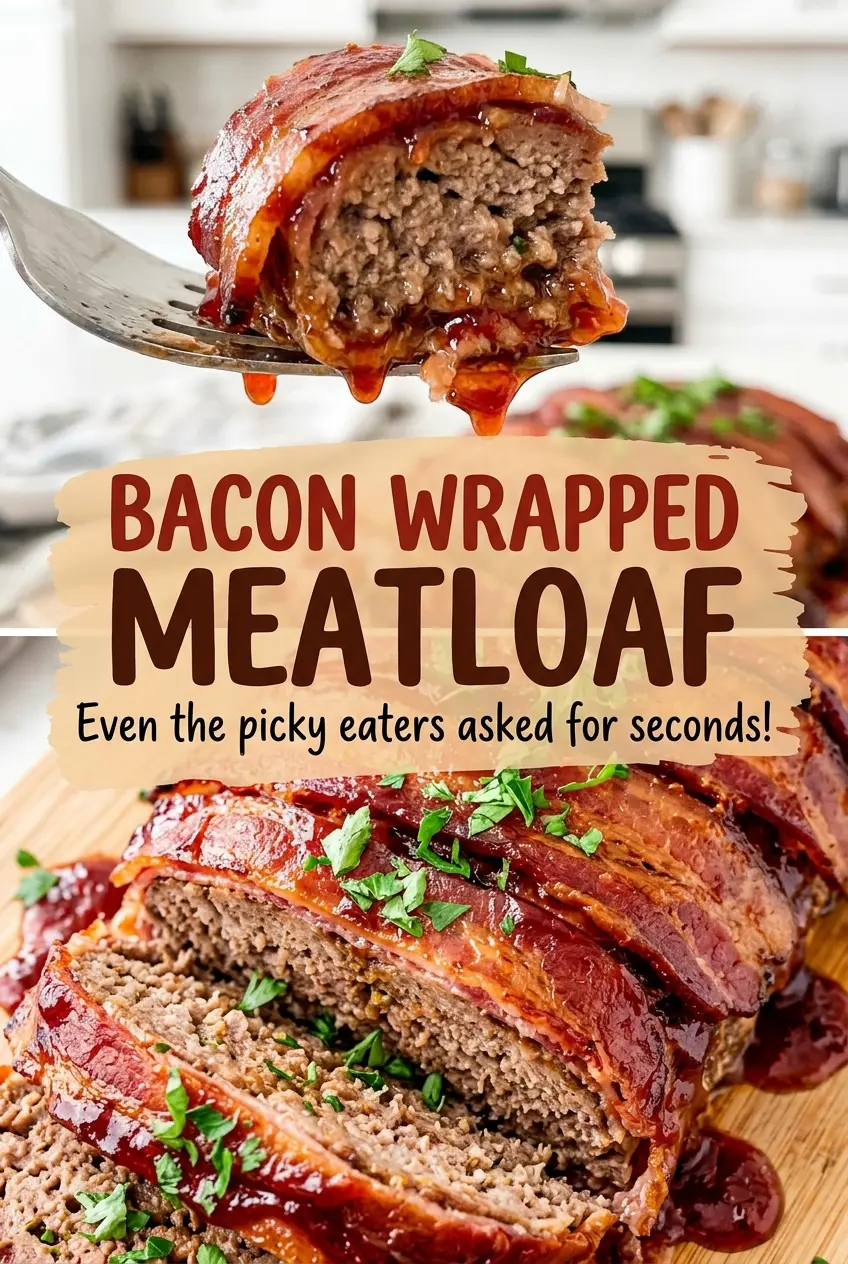
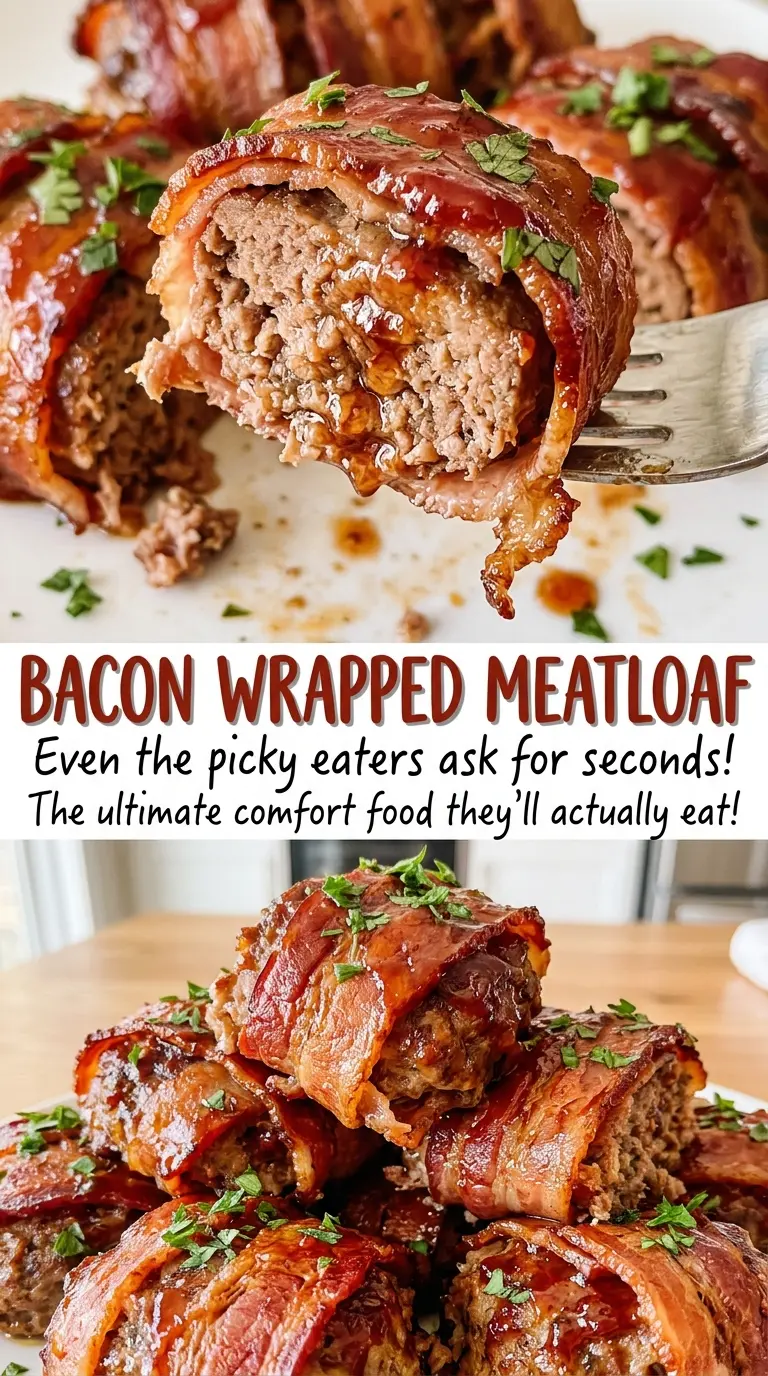
The bacon starts to glisten before the meatloaf is done, and that’s when the glaze goes on—not at the beginning, when it would spend the whole bake sliding off the meat. With this bacon wrapped meatloaf, the bacon gets time to render first, then two layers of a tangy-sweet glaze turn glossy in the oven. The loaf bakes on a rimmed sheet pan, so the bacon sits around the sides instead of steaming in a pan full of drippings.
I like this method because it keeps the steps straightforward without asking you to guess when the center is ready. The loaf is shaped by hand, the glaze is stirred together in a small bowl, and an instant-read thermometer gives you a clear finish line. Keep the mixing gentle and the loaf an even 9×5 inches, and you’ll have slices that hold together under browned bacon and a sticky ketchup glaze.
Kitchen Note
Lay the bacon across the width of the loaf and let the slices overlap just enough to cover the sides. Tuck the ends underneath so they stay in place as the bacon renders.
Save this bacon wrapped meatloaf for a dinner that earns its browned bacon and glossy, tangy-sweet glaze.
Why the Breadcrumbs Need Five Minutes Before the Beef Goes In
Dry breadcrumbs need a little time to absorb the milk before they’re mixed with the beef. Stirring the two together first gives the crumbs a chance to soften evenly, so they help bind the loaf instead of drawing moisture out of the meat as it bakes. That short rest also makes it easier to mix the rest of the ingredients through without working the beef more than necessary.
Once the beef goes into the bowl, stop mixing as soon as everything looks evenly combined. A compact, heavily mixed mixture bakes up firm and tight, while a gentle hand keeps the slices tender. The egg helps hold the loaf together, and the softened breadcrumb mixture supports the beef without making the finished texture bready. Five minutes may not look like much on the clock, but it’s the small pause that sets up the texture of every slice.
What the Breadcrumbs, Milk, and 85% Beef Each Contribute
- Plain breadcrumbs and whole milk — Together, these make the soft binder that helps the beef stay moist and sliceable. Plain, unseasoned breadcrumbs are the dependable choice; seasoned crumbs bring extra herbs and salt that change the balance. The milk only needs to be stirred into the crumbs and left to stand before the other ingredients go in.
- Ground beef — The 85% lean blend has enough fat to keep the loaf from baking up dry, especially with the beef exposed around the sides. I wouldn’t switch to extra-lean beef for this method; it can make a firmer, drier loaf. Keep the beef cold until you’re ready to mix, and fold it in gently.
- Egg, onion, and Worcestershire sauce — The egg helps bind the mixture, finely chopped onion distributes its flavor without leaving large pieces in a slice, and Worcestershire adds a savory, slightly tangy note. Chop the onion small rather than leaving chunky pieces, which can make the loaf less even.
- Regular-cut bacon — Regular slices fit the bake time and drape over the loaf without the extra thickness of a thick-cut slice. Use slices that are flexible enough to lay across the top and sides. Thick-cut bacon takes longer to brown, so it isn’t a one-for-one swap here.
- Ketchup, brown sugar, and Dijon mustard — Ketchup gives the glaze its familiar tomato tang, brown sugar rounds it out, and Dijon adds a little sharpness. Standard ketchup and Dijon work well; there’s no need for specialty versions. Stir until the brown sugar is dispersed so the glaze brushes on evenly.
Building the Loaf So the Bacon Browns Before the Center Is Done
Soften the Breadcrumbs Before Mixing
Heat the oven to 375°F and line a rimmed baking sheet with foil. Stir the breadcrumbs and milk together in a large bowl, then leave them alone for 5 minutes; the mixture should look damp rather than dusty. Stir in the egg, finely chopped onion, Worcestershire sauce, kosher salt, black pepper, and garlic powder. Add the beef last and mix gently until no large streaks of seasoning remain, stopping before the mixture turns dense.
Shape an Even Loaf and Cover It
Shape the mixture into a 9×5-inch loaf on the prepared baking sheet. Keeping the loaf even in thickness helps the center cook at the same pace from end to end. Lay the bacon across the width to cover the top and sides, then tuck its ends underneath. If the bacon is pulled tight enough to leave bare patches, loosen and reposition it before baking.
Mix the Glaze and Give the Bacon a Head Start
Stir the ketchup, packed light brown sugar, and Dijon mustard together in a small bowl while the loaf is ready to bake. Bake the loaf for 45 minutes before adding any glaze. This gives the bacon time in the oven before the sweet glaze goes on, so it isn’t coated for the entire bake. After those first 45 minutes, brush half the glaze over the bacon in a thin, even layer.
Glaze in Two Coats and Check the Center
Bake for 15 minutes after the first glaze coat, then brush the remaining glaze over the loaf. Continue baking for 10 to 20 minutes, until the center reaches 160°F on an instant-read thermometer and the bacon is browned. Check the temperature in the center of the loaf, not against the baking sheet. Let the meatloaf rest on the baking sheet for 10 minutes before slicing so it has time to settle.
Easy Changes for Different Pantries and Preferences
Use gluten-free breadcrumbs
Replace the plain breadcrumbs with the same amount of plain gluten-free breadcrumbs. Let them stand with the milk for the same 5 minutes before mixing. The loaf will still have a tender, cohesive texture; choose unseasoned crumbs so you keep control of the salt and seasoning.
Make the glaze less sweet
Leave the brown sugar out of the ketchup and Dijon mixture for a sharper, less-sweet topping. It won’t have quite the same rounded sweetness, but the ketchup and mustard still make a brushable glaze. Keep the two-coat timing so the topping goes on during the same stages of baking.
Make it dairy-free
Use an equal amount of unsweetened, plain oat milk in place of the whole milk, then let it stand with the breadcrumbs as usual. Avoid vanilla or sweetened varieties; they bring flavors that don’t belong in a savory meatloaf. The crumb mixture may look a little different, but it still softens the breadcrumbs for mixing.
Storage and Reheating
- Refrigerator: Store leftovers covered or in an airtight container for 3 to 4 days. The bacon softens in the refrigerator, but the slices stay flavorful.
- Freezer: Freeze cooled slices in an airtight freezer container or wrap them well for up to 2 to 3 months. Thaw overnight in the refrigerator for more even reheating.
- Reheating: Reheat slices covered in a 325°F oven until the center reaches 165°F, or microwave individual slices in short bursts. Leaving slices uncovered in the oven can dry the beef before the middle warms through.
Questions That Come Up When Making Bacon Wrapped Meatloaf
Bacon Wrapped Meatloaf
Ingredients
Equipment
Method
- Heat the oven to 375°F and line a rimmed baking sheet with foil.
- In a large bowl, stir together the breadcrumbs and milk; let stand for 5 minutes.
- Stir in the egg, onion, Worcestershire sauce, salt, pepper, and garlic powder.
- Add the beef and mix gently until just combined.
- Shape the mixture into a 9x5-inch loaf on the baking sheet.
- Lay the bacon slices across the width of the loaf, overlapping slightly to cover the top and sides, and tuck the ends underneath.
- In a small bowl, stir together the ketchup, brown sugar, and Dijon mustard.
- Bake the loaf for 45 minutes.
- Brush half of the glaze over the bacon and bake for 15 minutes.
- Brush the remaining glaze over the loaf and bake for 10 to 20 minutes, until the center reaches 160°F on an instant-read thermometer and the bacon is browned.
- Let the meatloaf rest on the baking sheet for 10 minutes before slicing and serving.