
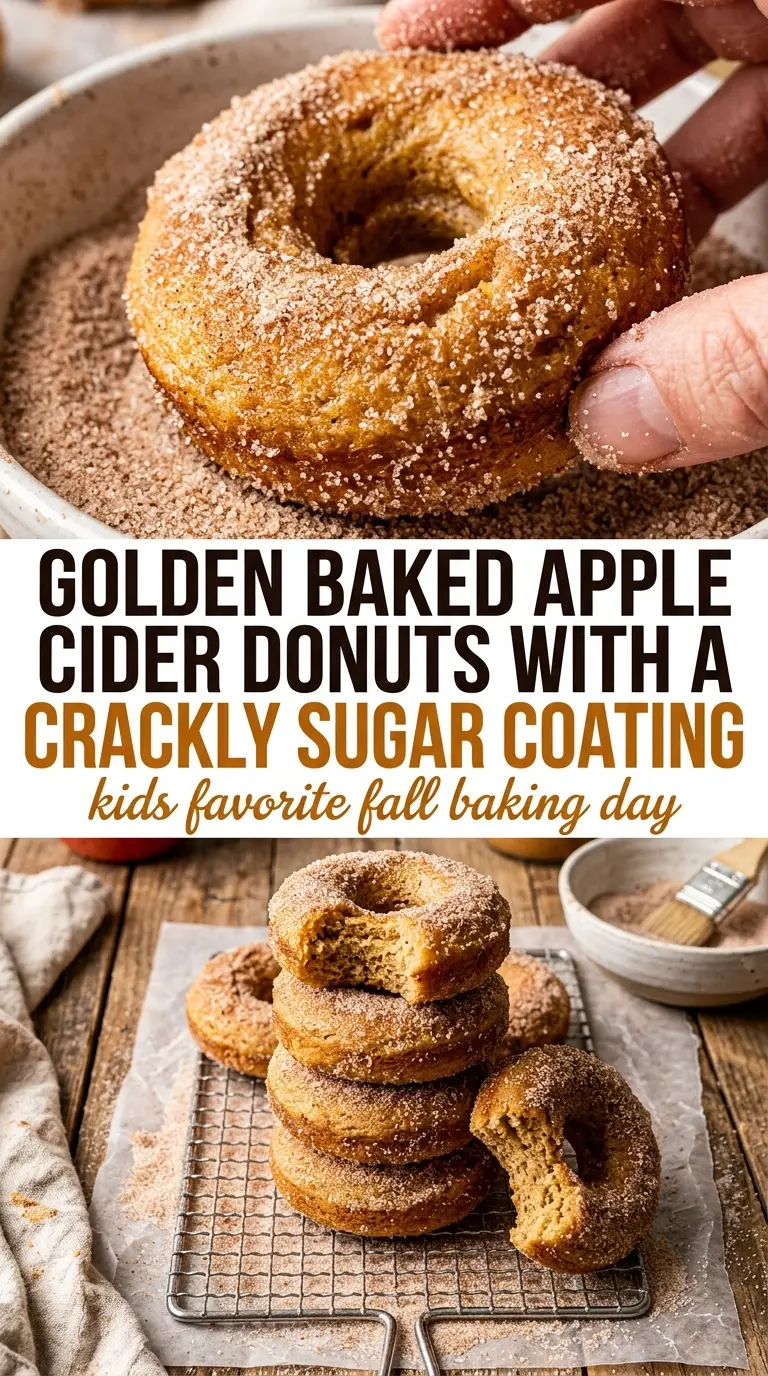
Golden baked apple cider donuts come out soft in the center with just enough structure to hold that cinnamon sugar coating without feeling heavy. Reducing the cider first is what gives them their apple flavor a little more depth, so they taste like actual cider donuts instead of plain spice cake baked in a ring.
The batter stays tender because the wet ingredients are mixed separately and folded in just until the flour disappears. That keeps the crumb light and avoids the dense, bready texture that shows up when donut batter gets overworked. A quick brush of melted butter after baking gives the cinnamon sugar something to cling to, which is what makes the outside crackly instead of dusty.
Below you’ll find the part that matters most: how to keep the donut holes open, how to judge the bake without drying them out, and why these are best rolled while they’re still warm.
The cider flavor came through beautifully, and the cinnamon sugar stuck to every side because I rolled them while they were still warm. Mine baked in 10 minutes flat and stayed soft all afternoon.
Love these baked apple cider donuts? Save them to Pinterest for the days when you want a soft, spiced treat with that crackly cinnamon sugar finish and no frying mess.
The Trick to Keeping Baked Donuts Light Instead of Muffin-Dense
The biggest mistake with baked donut batter is treating it like cake batter and beating it until smooth. That extra mixing builds gluten fast, and gluten is what gives you a tighter, chewier crumb instead of a tender donut. Stop as soon as the flour disappears and the batter still looks a little rough.
Reducing the cider matters more than people think. A full cup of cider sounds promising, but most of that is water; cooking it down concentrates the apple flavor so the donut tastes like cider from the first bite instead of just cinnamon and sugar. Let it cool before whisking it into the wet ingredients, or it can scramble the egg and thin the batter.
What Each Ingredient Is Actually Doing in This Dish
- Apple cider — Reducing it is what gives the donuts their real apple flavor. If you skip that step, the spice takes over and the donuts taste flatter. There isn’t a true substitute here, but unsweetened apple juice can work in a pinch if you reduce it the same way.
- All-purpose flour — This gives the donut its structure without making it tough. Cake flour would soften the crumb even more, but these donuts need enough body to lift cleanly out of the pan.
- Brown sugar — It adds moisture and a deeper caramel note that works with the cider. White sugar will bake up a little drier and less rounded in flavor.
- Buttermilk — The acidity helps the baking soda do its job and keeps the crumb tender. If you don’t have it, mix 1/2 cup milk with 1/2 tablespoon lemon juice or vinegar and let it sit for 5 minutes.
- Melted butter — Butter brings richness and helps the donuts taste more like the bakery version people expect. Use real butter here; oil makes them softer but less flavorful.
- Cinnamon and nutmeg — These don’t replace the cider, but they support it. Nutmeg should stay in the background, not take over, so keep the measure light.
The 10-Minute Bake That Makes or Breaks the Texture
Reducing the Cider
Pour the cider into a small saucepan and simmer it until it drops to about half a cup. You’ll see the bubbles get a little tighter and the liquid look darker and more syrupy. If you rush this and use it too soon, the batter ends up too wet and the donuts bake up pale and bland.
Mixing the Batter
Whisk the dry ingredients in one bowl and the wet ingredients in another, then fold them together just until no dry flour remains. A few streaks are fine; they disappear in the oven. Overmixing here is the fastest way to get tough donuts with peaked tops instead of a tender crumb.
Filling the Donut Pan
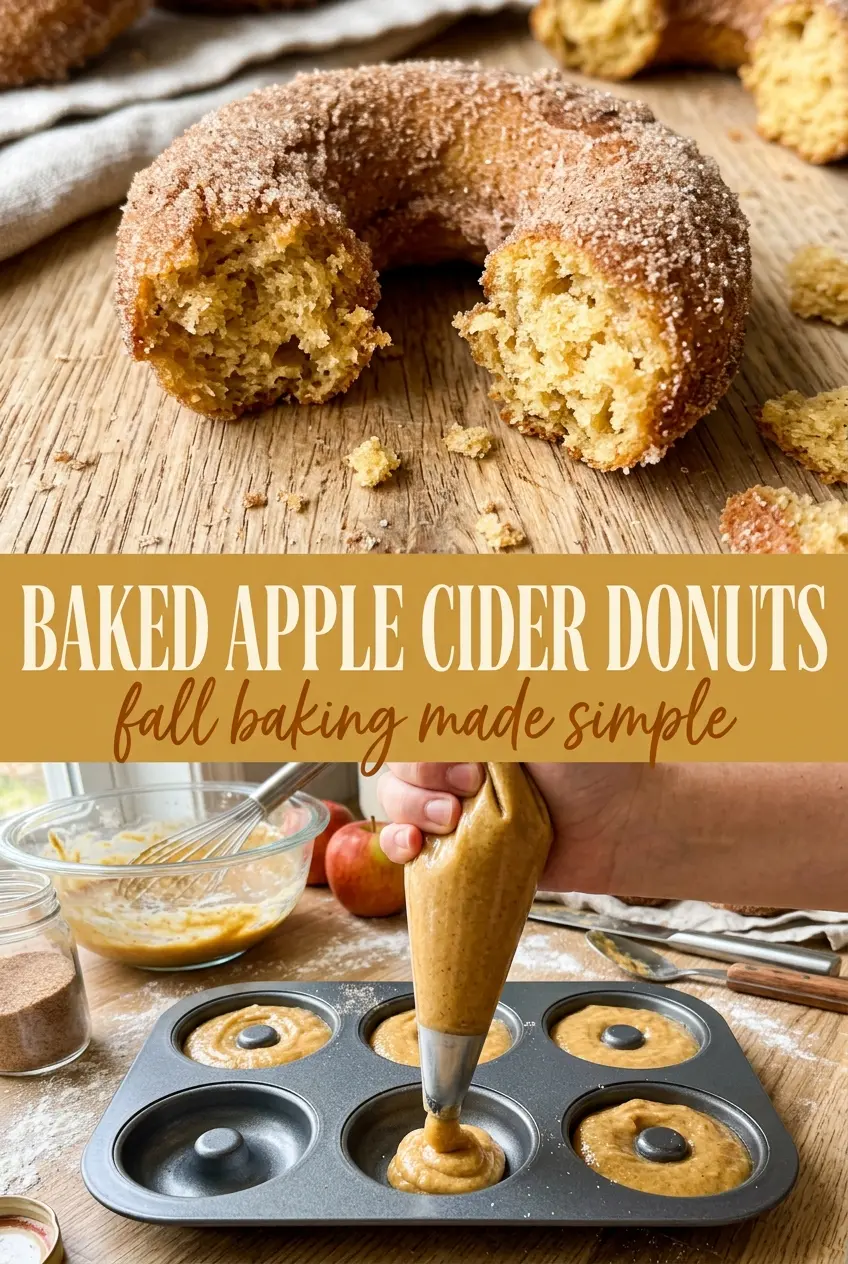
Spoon or pipe the batter into a greased donut pan, filling each cavity about three-quarters full. If you overfill, the center hole can bake shut and the edges will spread into a muffin shape. A piping bag gives the cleanest result, but a zip-top bag with the corner snipped works just as well.
Bringing on the Cinnamon Sugar
Bake until the donuts spring back when touched and the tops look set, then cool them just enough to handle. Brush each one with melted butter and roll it in the cinnamon sugar while still warm. If they cool completely first, the coating slides off instead of setting into that crackly shell.
Three Ways to Make These Work in Your Kitchen
Dairy-Free Version
Swap the buttermilk for a dairy-free milk mixed with 1/2 tablespoon lemon juice, and use melted dairy-free butter for the coating. The donuts stay soft, but the flavor becomes a little cleaner and less rich than the original.
Gluten-Free Option
Use a 1:1 gluten-free baking blend that includes xanthan gum. The texture will be a touch more delicate, so let the donuts cool in the pan for a few extra minutes before lifting them out.
Extra-Spiced Orchard Flavor
Add a pinch of cloves or cardamom to the dry ingredients if you want a deeper spice note. Keep it subtle; too much will bury the cider and turn the donuts into something that tastes more like spice cake.
Storage and Reheating
- Refrigerator: Store in an airtight container for up to 3 days. The sugar coating softens a bit, but the crumb stays tender.
- Freezer: Freeze the uncoated donuts for up to 2 months, then thaw and coat after warming. Fully coated donuts can be frozen, but the sugar shell won’t stay as crisp.
- Reheating: Warm in a 300°F oven for 5 to 8 minutes. The microwave makes them rubbery fast, so use it only if you don’t care about texture.
Questions I Get Asked About This Recipe
Baked Apple Cider Donuts
Ingredients
Equipment
Method
- Simmer the apple cider until reduced by half, then cool.
- Preheat oven to 350°F and grease a donut pan.
- Whisk the flour, baking powder, baking soda, cinnamon, nutmeg, and salt until evenly combined.
- Whisk the brown sugar, melted butter, egg, buttermilk, and reduced cider until smooth.
- Fold the wet ingredients into the dry until just combined, leaving a thick batter.
- Pipe or spoon the batter into the donut pan, filling each cavity about 3/4 full.
- Bake for 9-11 minutes, until springy to the touch.
- Cool slightly, then brush with melted butter.
- Roll the warm donuts in cinnamon sugar so the coating clings evenly.