
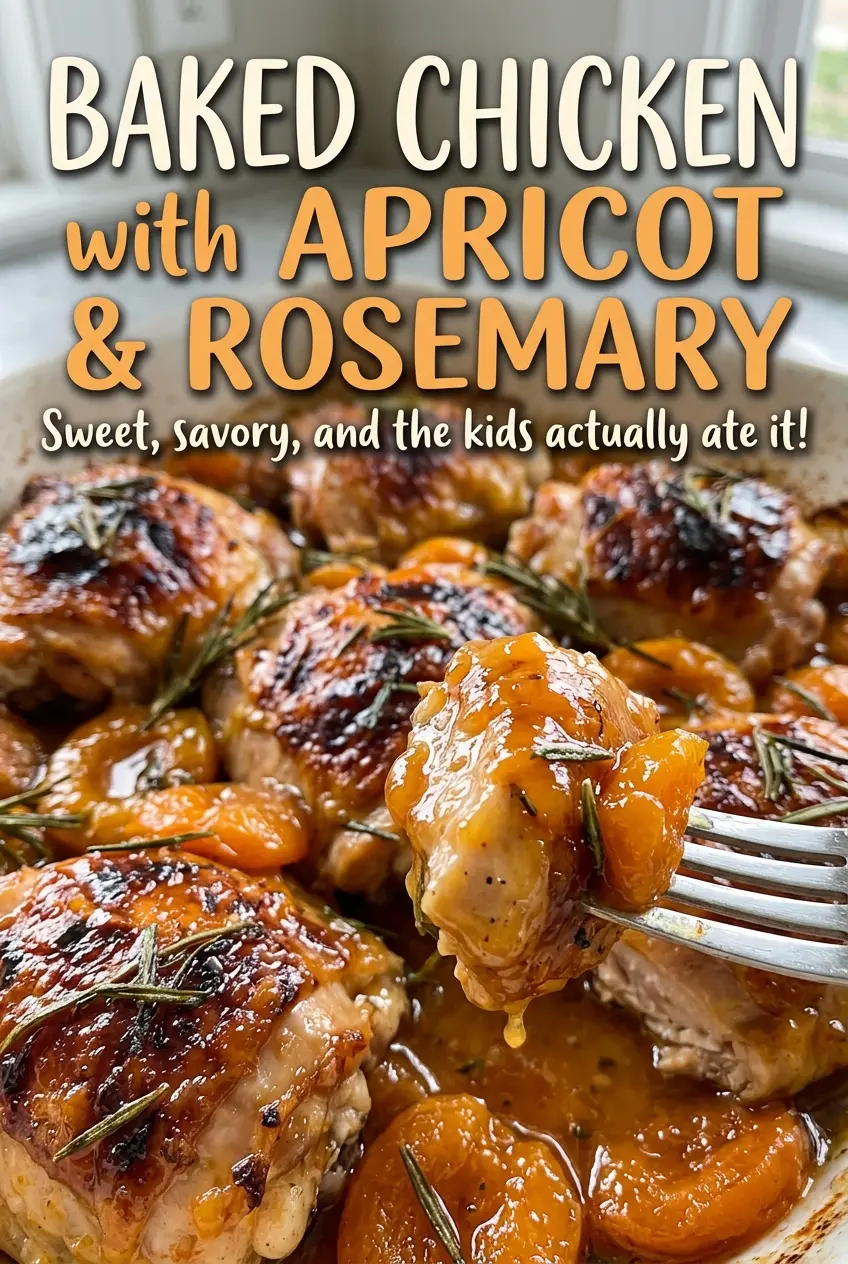
The rosemary starts to smell piney and warm while the chicken begins to brown in the oven. I like having the apricot glaze ready in a bowl beside the stove, so it’s easy to brush on when the thighs have had their first stretch of baking. That timing gives this Baked Chicken with Apricot and Rosemary a glossy, tangy-sweet finish without turning the whole dish into a sugary sauce.
Bone-in, skin-on thighs bring plenty of savory flavor to the pan, while Dijon and lemon keep the fruit preserves from tasting one-note. The method is straightforward, but each piece gets its own coat of glaze and a little time to finish cooking through. The finished chicken is tender beneath its shiny apricot top, with rosemary and garlic tucked into every bite.
Kitchen Note
Chop the fresh rosemary finely before stirring it into the glaze. Large pieces can cling to the brush instead of spreading evenly across the chicken.
Save this Baked Chicken with Apricot and Rosemary for a weeknight dinner with tender thighs and a glossy, herb-scented glaze.
Why the Apricot Glaze Goes on After the First Bake
Apricot preserves bring concentrated fruit and sugar, which is what makes the finished coating glossy and sticky. That same sweetness needs a little care in the oven: if it sits on the chicken for the entire bake, it has much longer to darken before the thighs are cooked through. Giving the chicken its first bake without the glaze lets it start cooking on its own, then the preserves go on for the shorter finishing stretch.
The glaze also works better as a coating than as a pool of sauce. Brushing it over the tops keeps the apricot, Dijon, lemon, rosemary, and garlic where their flavors can meet, while the chicken continues to cook underneath. It’s a useful distinction if you’re used to adding a sweet sauce at the start. Here, the timing protects the bright fruit flavor and leaves the surface shiny rather than scorched.
What the Apricot Glaze Ingredients Each Bring to the Chicken
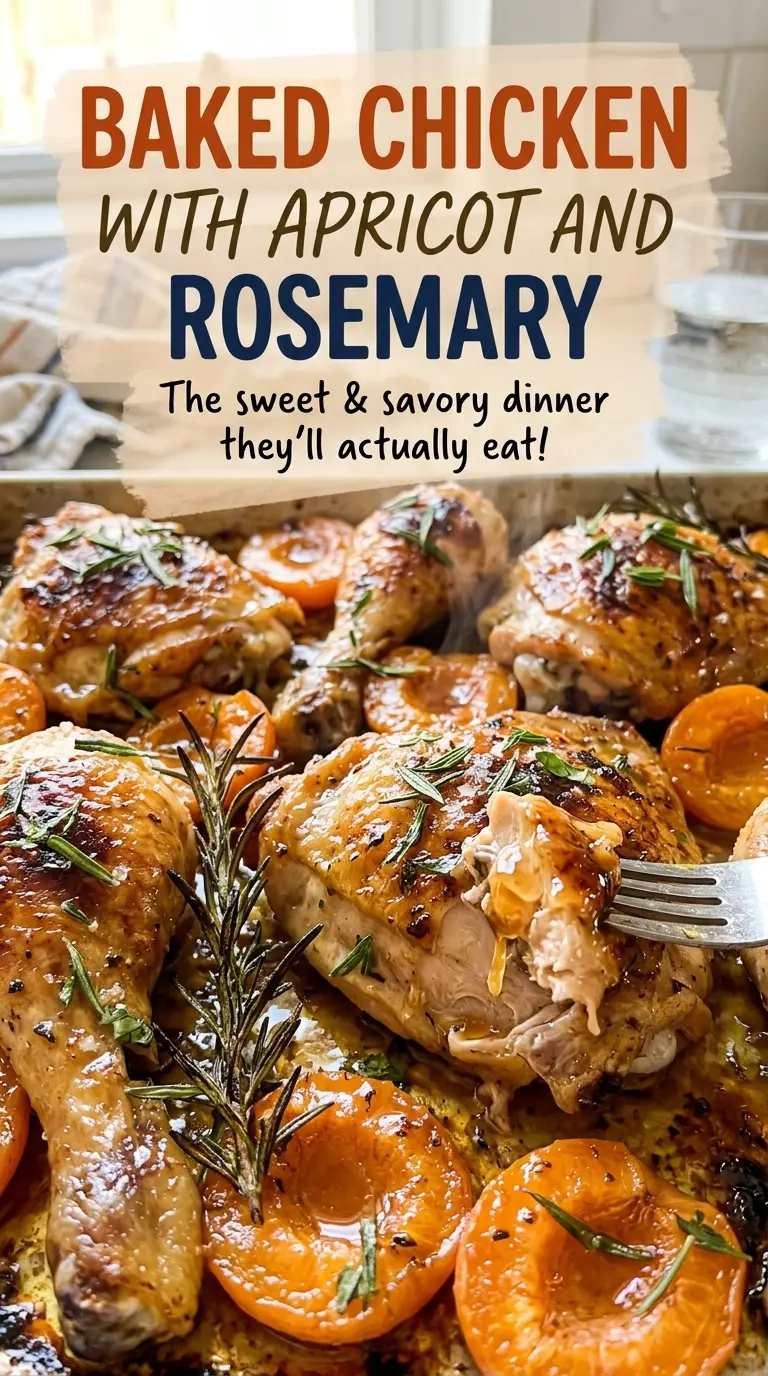
- Bone-in, skin-on chicken thighs — The bone and dark meat make a forgiving roast, and the skin contributes savory richness beneath the glaze. Similar-sized thighs cook more evenly; a budget pack is fine as long as the pieces are close in size.
- Apricot preserves — Preserves provide both fruit flavor and enough body to cling to the chicken. A smooth jar gives an even coat, while a chunky one leaves little pieces of fruit; either works. Orange marmalade can stand in at the same measure for a more bittersweet finish.
- Dijon mustard — Dijon brings a sharp, savory counterpoint to the sweet preserves. Whole-grain mustard works in the same measure, though its seeds make the glaze more textured. A basic grocery-store Dijon is fine here.
- Lemon juice — The tartness cuts through the sweetness and keeps the glaze from tasting heavy. Fresh juice has a brighter aroma, but bottled lemon juice works as a practical one-for-one substitute.
- Fresh rosemary — Rosemary gives the fruit glaze its woodsy, aromatic note. If fresh isn’t available, use dried rosemary in a smaller amount; crush it between your fingers so the pieces aren’t too coarse.
- Garlic and olive oil — Minced garlic adds savory depth, and olive oil helps coat the chicken before seasoning. If needed, garlic powder can replace the minced cloves in a smaller quantity; another neutral cooking oil can replace olive oil measure for measure.
Getting the Chicken Baked Before the Glaze Goes On
Season the thighs in the baking dish
Heat the oven to 400°F. Pat the chicken thighs dry, then arrange them skin side up in a 9×13-inch baking dish with a little space around each piece. Rub the olive oil over the thighs and season them with kosher salt and black pepper. Dry surfaces take the oil and seasoning more evenly than damp ones.
Stir together the apricot glaze
In a small bowl, stir the apricot preserves, Dijon mustard, lemon juice, chopped fresh rosemary, and minced garlic until combined. Scrape the bottom and sides of the bowl so there aren’t pockets of mustard or garlic left behind. The mixture will be thick, but it should still be easy to spread with a pastry brush or spoon.
Give the thighs their first bake
Bake the chicken uncovered for 25 minutes before adding any glaze. The thighs will have started cooking, and their surfaces will be hot when it’s time to brush them. Keep the dish uncovered so the tops are exposed to the oven rather than trapped under a lid.
Brush, finish, and rest
Brush the apricot mixture over the thighs, coating the tops. Return the uncovered dish to the oven for 15 to 20 minutes, until the glaze looks glossy and the thickest part of each thigh reaches at least 165°F; place the thermometer without touching the bone. If one thigh is larger than the others, check that piece carefully rather than assuming every piece is done at the same moment. Let the chicken rest for 5 minutes before serving.
Two Simple Swaps for a Different Apricot-Rosemary Chicken
Use orange marmalade for a bittersweet glaze
Replace the apricot preserves measure for measure with orange marmalade. The citrus peel makes the glaze less softly fruity and adds a slight bitter edge that pairs well with the rosemary; keep the rest of the glaze ingredients the same.
Trade rosemary for fresh thyme
Use chopped fresh thyme instead of the rosemary in the glaze. Thyme gives the chicken a softer, earthier herbal note and lets the apricot come through more clearly. Keep the amount the same and stir it in with the other glaze ingredients.
Storage and Reheating
- Refrigerator: Cool promptly and refrigerate in a covered container within 2 hours. The chicken keeps for 3 to 4 days; expect the skin to soften as it sits.
- Freezer: Freeze cooled thighs in an airtight container for up to 3 months for best quality. Thaw them in the refrigerator before reheating.
- Reheating: Reheat covered in a 325°F oven until hot throughout, checking that the thickest part reaches 165°F. Leaving the dish uncovered can dry the meat and make the glaze darken before the center warms.
Questions That Come Up When Baking These Chicken Thighs
Baked Chicken with Apricot and Rosemary
Ingredients
Equipment
Method
- Heat the oven to 400°F.
- Pat the chicken thighs dry.
- Arrange the chicken thighs skin side up in a 9x13-inch baking dish.
- Rub the chicken thighs with the olive oil and season with the salt and pepper.
- Stir the apricot preserves, Dijon mustard, lemon juice, rosemary, and garlic together in a small bowl.
- Bake the chicken uncovered for 25 minutes.
- Brush the apricot glaze over the thighs.
- Bake for 15 to 20 minutes more, until the glaze is glossy and the thickest part of each thigh reaches at least 165°F without touching the bone.
- Rest the chicken for 5 minutes before serving.