
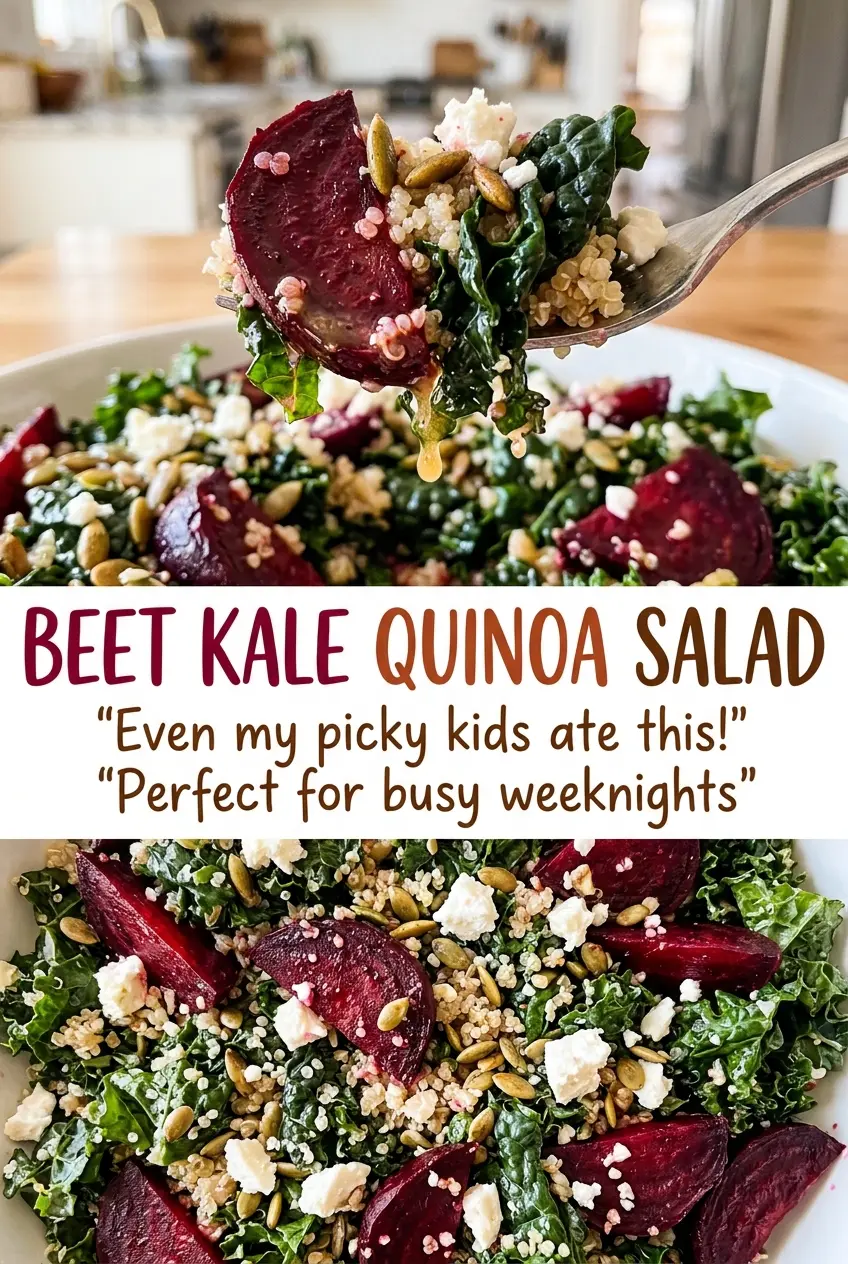
When the saucepan lid lifts, the quinoa should be fluffy, not sitting in a puddle of water. That’s the moment I start thinking about how it will meet the kale: warm grains can soften the leaves before they’re dressed, while cooled quinoa keeps the salad fresh and sturdy. Beet Kale Quinoa Salad brings earthy beets and chewy cranberries into that mix, with toasted walnuts for crunch and goat cheese for a creamy, tangy finish.
I like this combination because each bite has a different texture, but nothing takes much effort. The beets are already cooked, the dressing comes together in a bowl, and the kale gets a quick massage before everything is tossed together. Once the quinoa has cooled and the walnuts smell lightly toasted, the bowl turns into a colorful, filling salad that holds its own at lunch or on the dinner table.
Kitchen Note
Give the fluffed quinoa about 10 minutes to cool before it goes into the salad. If it’s still steaming, it can wilt the kale and soften the cheese sooner than you want.
Save this Beet Kale Quinoa Salad for a colorful lunch with tender kale, earthy beets, and a bright lemon-Dijon dressing.
Why the Kale Gets Dressed Before Anything Else Goes in the Bowl
Raw kale can stay tough and dry even when a salad has plenty of dressing. In this bowl, the dressing goes onto the chopped leaves first, then you massage it in for a minute or two. That hands-on step helps the leaves soften slightly and gives the lemon, mustard, and oil a chance to coat the pieces instead of pooling underneath the quinoa.
It also gives you a useful texture check before the other ingredients go in. The leaves should look a little glossier and feel less rigid, not limp or crushed. If you add the quinoa and beets first, they can get in the way of working the dressing through the kale, and the delicate goat cheese can break apart when you toss everything repeatedly. Dressing the greens on their own keeps the later toss gentle, so the finished salad still has distinct grains, beet pieces, and creamy cheese on top.
What Each Ingredient Brings to This Beet-and-Kale Bowl
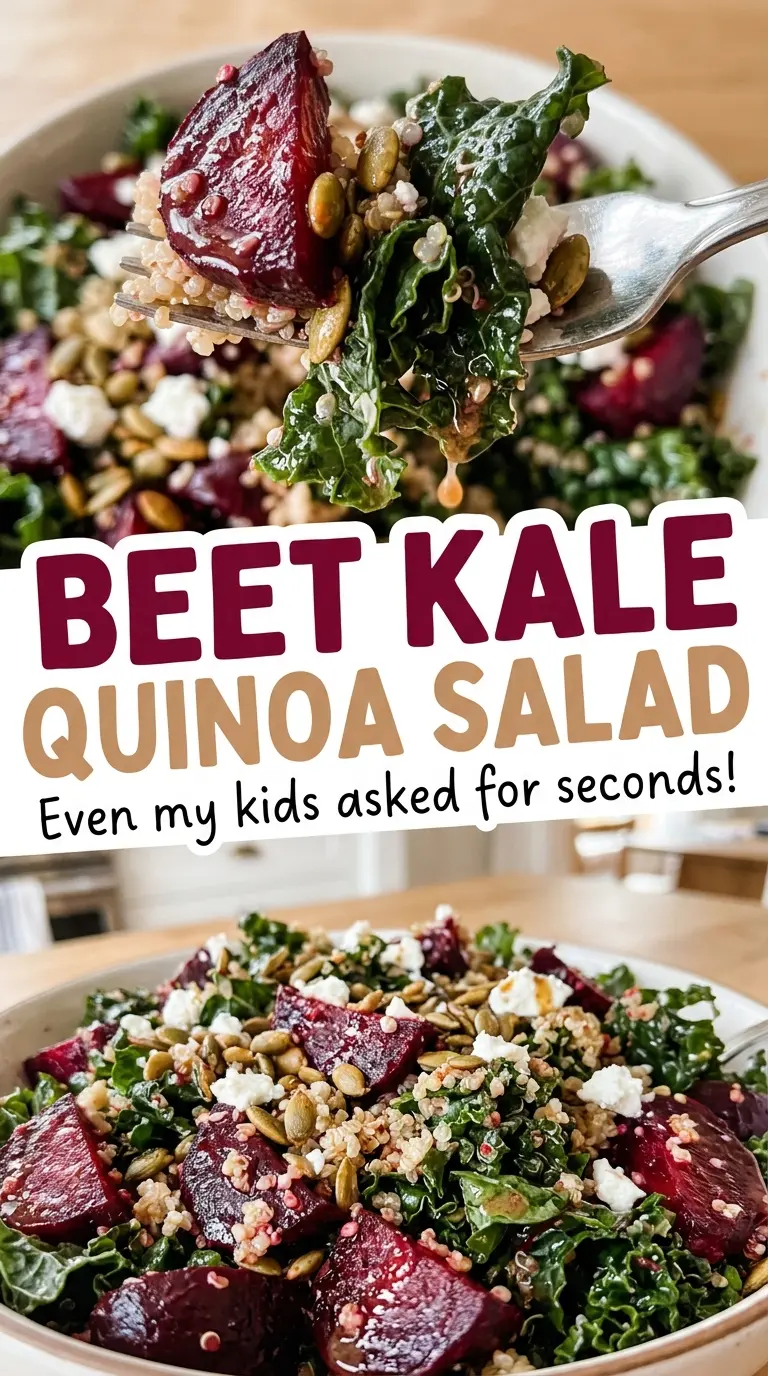
- Quinoa — It gives the salad a light, fluffy base and makes it more substantial than greens alone. Rinsing it in a fine-mesh strainer before cooking clears away its dusty coating. For a chewier grain, use cooked, cooled farro in place of the finished quinoa; cook the farro separately according to its package directions and use a similar volume.
- Kale — Its sturdy leaves hold up under dressing better than delicate salad greens. Remove the stems and chop the leaves so the pieces are easy to coat and eat. Baby kale works in the same role if you prefer a more tender green; use it in place of the chopped kale and stop massaging as soon as it softens.
- Cooked beets — Packaged cooked beets save the extra cooking and cooling time, and their earthy sweetness balances the lemony dressing. Golden beets are a useful swap if you want less color to transfer through the salad; use cooked, diced beets in the same way. Fresh beets need to be cooked and cooled before they go into this bowl.
- Walnuts and dried cranberries — Walnuts bring a buttery crunch, while the cranberries add concentrated tart sweetness. Everyday walnuts are fine here; freshness matters more than a premium label because toasting brings out their aroma. Chopped dried apricots can stand in for the cranberries for a sweeter, softer bite, and pecans can replace the walnuts for a milder crunch.
- Goat cheese and the dressing ingredients — Goat cheese adds a creamy tang that cuts through the sweet beets and fruit. A creamy, fresh-tasting cheese works best; feta is a firmer, saltier alternative. Good everyday olive oil is plenty for the dressing, while fresh lemon juice gives it a clean brightness. Dijon helps the oil and lemon blend into a cohesive dressing, and honey rounds off the sharper notes.
Cook the Quinoa, Toast the Walnuts, Then Dress the Greens
Simmer the quinoa until the water disappears
Rinse the quinoa in a fine-mesh strainer, then combine it in a medium saucepan with the water and salt. Bring it to a boil over medium-high heat, cover the pan, and reduce the heat to low for a 15-minute simmer. The grains are ready when the water has been absorbed; if you still see liquid, keep the lid on and let the low simmer finish the job rather than stirring repeatedly. Take the pan off the heat, leave it covered for 5 minutes, then fluff with a fork.
Let the grains cool while you toast the walnuts
Set the quinoa aside to cool while you work on the rest of the salad. Add the walnuts to a dry skillet over medium heat and stir often for 3 to 5 minutes. They’re ready when they smell fragrant and look lightly browned, not dark at the edges. Transfer them to a plate to cool so they don’t keep browning in the hot skillet.
Whisk a dressing that coats instead of puddles
In a small bowl, whisk together the olive oil, lemon juice, Dijon mustard, honey, salt, and black pepper until combined. The mustard helps the oil and lemon come together, so whisk until the dressing looks evenly blended rather than streaky. If the dressing has been sitting while you finish the quinoa, give it another quick whisk before it goes over the kale.
Massage the kale, then fold in the salad ingredients
Put the chopped kale in a large serving bowl and pour the dressing over it. Massage the leaves for 1 to 2 minutes, until they soften slightly and look lightly coated. Add the cooled quinoa, diced beets, toasted walnuts, and cranberries, then toss to combine without crushing the greens. Scatter the crumbled goat cheese over the top at the end.
Three Ways to Change the Salad Without Losing Its Balance
Make it vegan with a creamy finish
Replace the honey with the same amount of maple syrup and leave out the goat cheese. Fold diced avocado into the salad just before serving for richness; it’s softer and less tangy than the cheese, but it makes a satisfying plant-based version.
Use pepitas for a seed-based crunch
Swap the walnuts for an equal volume of pepitas and toast them in a dry skillet, stirring often, until fragrant. They keep the salad’s crunch while making the nut flavor less prominent; watch closely, since smaller seeds can brown quickly.
Add a little garlic to the dressing
Whisk one small grated garlic clove into the dressing for a sharper, more savory finish. The garlic stands out against the sweet beets, so start with a small clove rather than adding several.
Make-Ahead and Storage
- Refrigerator: Keep leftovers covered for up to 3 days. The kale softens over time, and the walnuts lose some of their crunch.
- Freezer: This salad doesn’t freeze well; the kale turns limp when thawed, and the cheese changes texture.
- Make-ahead: Cook and cool the quinoa, toast the walnuts, and whisk the dressing ahead, storing each separately in the refrigerator. Massage and toss the salad close to serving so the greens stay fresher and the walnuts stay crisp.
Questions That Come Up While Making Beet Kale Quinoa Salad
Beet Kale Quinoa Salad
Ingredients
Equipment
Method
- Rinse the quinoa in a fine-mesh strainer, then combine it with the water and 1/4 teaspoon salt in a medium saucepan.
- Bring the quinoa mixture to a boil over medium-high heat, cover, and simmer over low heat for 15 minutes, until the water is absorbed.
- Remove the saucepan from the heat and let the quinoa stand, covered, for 5 minutes.
- Fluff the quinoa with a fork and cool for about 10 minutes.
- Toast the walnuts in a dry skillet over medium heat for 3 to 5 minutes, stirring often, until fragrant and lightly browned.
- Transfer the walnuts to a plate to cool.
- Place the chopped kale in a large serving bowl.
- Whisk the olive oil, lemon juice, Dijon mustard, honey, 1/4 teaspoon salt, and black pepper in a small bowl until combined.
- Pour the dressing over the kale and massage it into the leaves for 1 to 2 minutes, until they soften slightly.
- Add the cooled quinoa, beets, toasted walnuts, and cranberries, then toss to combine.
- Scatter the goat cheese over the top.