
Blueberry crumble cheesecake lands in that rare dessert sweet spot where every layer earns its place. The crust gives you a buttery, sturdy base, the filling bakes up dense and silky, and the blueberry swirl cuts through all that richness with a bright, jammy bite. The crumb topping finishes it with a soft crunch that keeps each slice from feeling flat or one-note.
The part that makes this version work is balance. The blueberries get cooked with a little sugar and cornstarch first, so they swirl through the batter as a thick ribbon instead of bleeding into it. The cheesecake itself stays smooth because the cream cheese is beaten until fully lump-free before the eggs go in. That sounds minor, but it’s the difference between a clean, velvety slice and a filling that bakes up with tiny bumps all through it.
Below, you’ll find the little details that matter most: how to keep the top from cracking, why the crumb topping should stay cold, and the easiest way to get neat slices after chilling.
The blueberry layer stayed in perfect swirls instead of sinking, and the crumb topping baked up crisp even after chilling overnight. I used the water bath and had zero cracks, which never happens for me with cheesecake.
This blueberry crumble cheesecake keeps the filling silky, the swirl jammy, and the topping buttery, so every slice looks bakery-worthy.
The Secret to Cheesecake That Slices Cleanly Instead of Cracking
Cheesecake cracks most often because it bakes too hot, cools too fast, or gets overmixed once the eggs go in. This recipe avoids all three traps by keeping the oven at a moderate 325°F, using softened cream cheese that blends without extra beating, and baking until the center still has a slight wobble. That wobble matters. If the middle looks fully firm in the oven, it’s already overdone.
The blueberry swirl and crumb topping both help protect the surface a little, but they can’t rescue an overbaked cheesecake. The real win comes from gentle heat and a patient cool-down. If you’ve ever cut into a cheesecake that looked perfect on the outside and then turned grainy or dry in the middle, this method fixes that problem from the start.
A water bath is worth using here if you want the smoothest top possible. It keeps the edges from racing ahead of the center and gives you that even, custardy set that makes each slice hold its shape.
What Each Layer Is Doing in This Blueberry Crumble Cheesecake
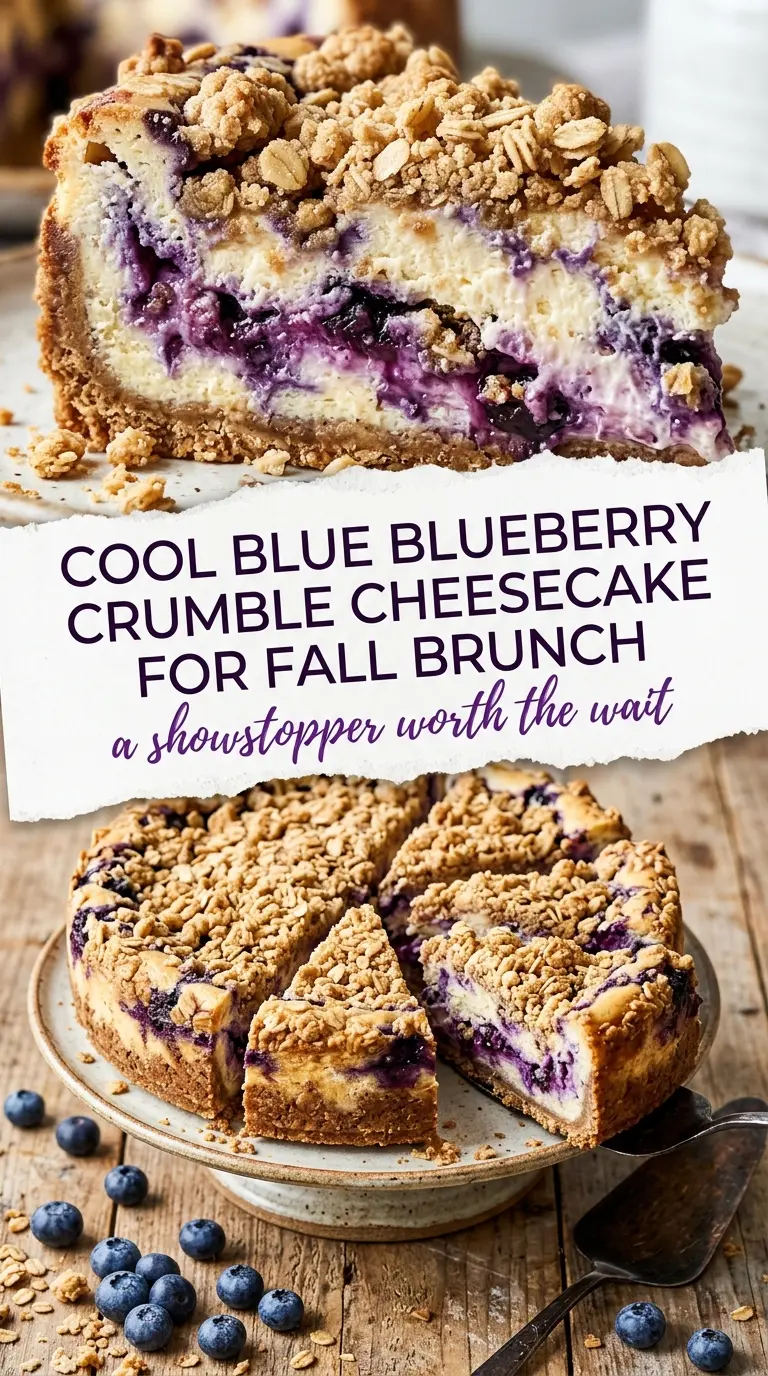
Cream cheese is the backbone here, and the quality matters. Use full-fat blocks, not tub-style spreadable cream cheese, because the looser version can make the filling bake up soft and uneven. Let it soften at room temperature so it beats smooth without extra air.
Blueberries do more than add color. Cooking them briefly with sugar and cornstarch turns them into a thick filling that swirls beautifully instead of disappearing into the batter. Fresh berries give the cleanest texture, but frozen berries work too if you cook off the extra moisture first.
Graham cracker crumbs need enough butter to press into a crust that holds together when sliced, but not so much that it turns greasy. If you only have whole crackers, crush them finely so the crust bakes compact instead of sandy.
Cold butter in the crumble topping matters more than most people think. Warm butter melts into a paste and gives you a cookie layer instead of crumbs. Cold cubes rubbed in by hand leave uneven bits that bake into a crisp, buttery topping.
Building the Layers Without Losing the Texture
Pressing the Crust
Mix the graham cracker crumbs with melted butter until every crumb looks damp, then press the mixture firmly into the bottom of the springform pan. A flat-bottomed measuring cup helps pack it evenly, which keeps the crust from crumbling when you cut the cheesecake. If the layer feels loose in the pan, it needs more compression, not more butter.
Whipping the Filling Smooth
Beat the cream cheese and sugar until the mixture looks glossy and completely smooth before adding the eggs. Scrape the bowl well so no dense pockets hide along the bottom. Once the eggs go in, mix only until combined. Overbeating at this stage pulls in air, and that extra air is one of the main reasons cheesecake rises, falls, and cracks.
Cooking the Blueberry Swirl
Cook the blueberries, sugar, and cornstarch until the mixture thickens and the berries start to burst. You’re looking for a spoonable texture, not a loose sauce. If the swirl is too thin, it will sink straight through the batter instead of staying suspended in ribboned pockets.
Finishing with the Crumb Topping
Use your fingertips to work the cold butter into the flour and brown sugar until the mixture forms uneven crumbs. Sprinkle it across the top in a loose, even layer. If you press it down, the topping bakes into a hard sheet instead of that delicate crumbly finish that gives this dessert its name.
How to Adapt This Cheesecake for Different Kitchens and Different Cravings
Gluten-Free Crust and Crumble
Swap in certified gluten-free graham-style crumbs for the crust and use a gluten-free 1:1 flour blend in the topping. The texture stays close to the original, though the crumble can be a touch more delicate, so chill the cheesecake fully before slicing.
Frozen Blueberries When Fresh Aren’t Available
Frozen blueberries work well, but cook them a little longer so the extra liquid evaporates before you swirl them in. If you skip that step, the filling can water down the batter and leave a streaky, soft center.
Lower-Sugar Version
Reduce the sugar in the blueberry filling first, not the cheesecake base. The filling brings most of the fruit brightness, and trimming that sugar has less effect on the structure than cutting into the main batter, which relies on sugar for smoothness and balance.
Storage and Reheating
- Refrigerator: Store covered for up to 5 days. The crumble softens a little after the first day, but the flavor stays excellent.
- Freezer: Cheesecake freezes well. Wrap individual slices tightly and freeze for up to 2 months, then thaw in the refrigerator overnight.
- Reheating: Serve this dessert chilled or just slightly cool. Don’t microwave it, or the filling will turn greasy and the topping will lose its texture.
Answers to the Questions Worth Asking
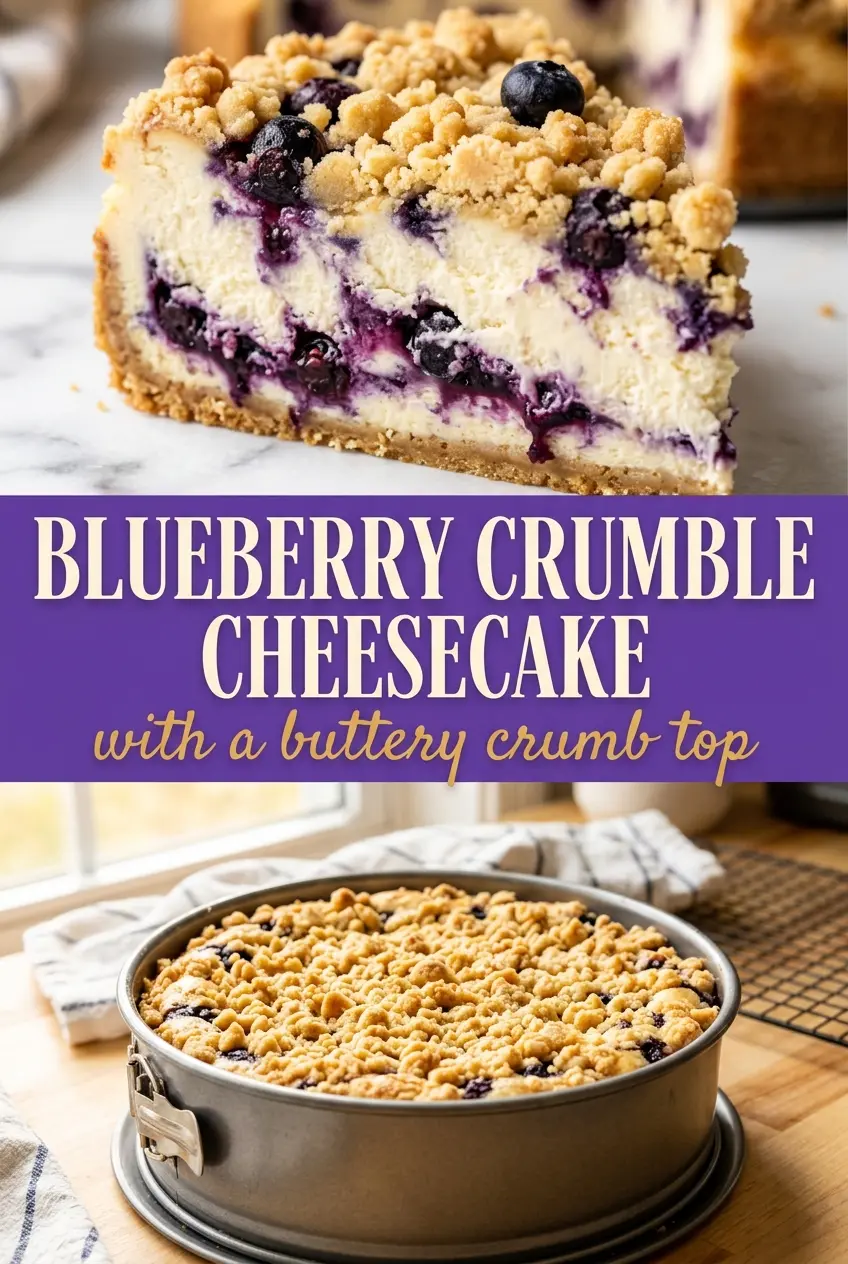
Blueberry Crumble Cheesecake
Ingredients
Equipment
Method
- Preheat the oven to 325°F, then mix graham cracker crumbs with melted butter until evenly combined and press into a springform pan to form a tight crust.
- Place the crust in the oven and bake at 325°F for 10 minutes, then remove and keep the crust warm while you prepare the filling.
- Beat the cream cheese and granulated sugar until smooth, then add eggs one at a time and mix just until incorporated, followed by the vanilla extract.
- Pour the cheesecake batter over the baked crust in the springform pan.
- In a saucepan, cook fresh blueberries, sugar, and cornstarch over medium heat until thickened, glossy, and jammy.
- Let the blueberry mixture cool for 5 minutes, then swirl spoonfuls into the cheesecake batter.
- Mix flour, brown sugar, and cold butter with your fingers until the mixture looks crumbly and sandy.
- Sprinkle the crumble topping evenly over the cheesecake surface.
- Bake at 325°F for 50-55 minutes, until the center is just set with a slight wobble.
- Cool to room temperature completely, then chill for at least 4 hours before slicing to set the texture.