
The braid takes shape quickly, but the dough needs time to puff before it looks like the festive loaf you had in mind. I watch for the ropes to become pillowy rather than rushing them into the oven; that extra rise gives Braided Christmas Bread its soft, pull-apart crumb instead of a tight, heavy one.
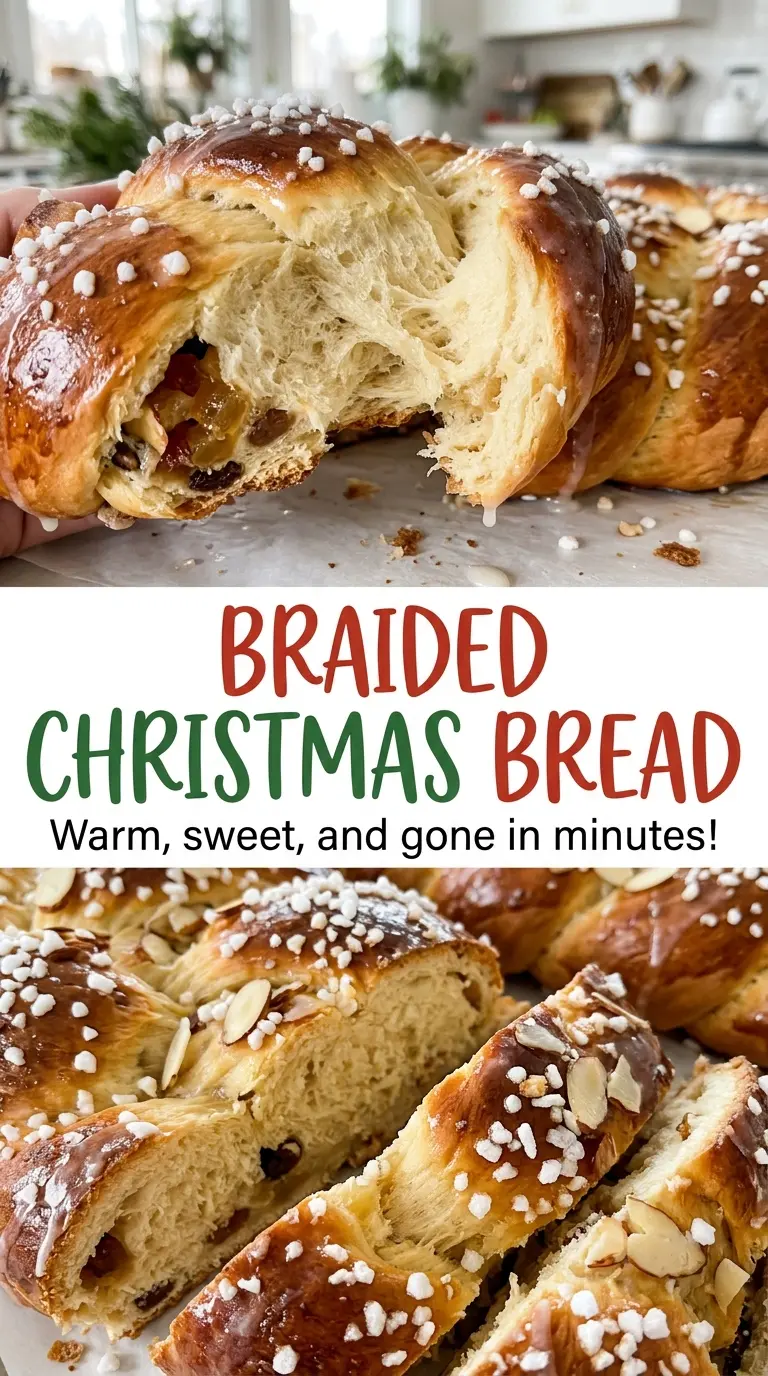
Orange zest and cardamom bring a gentle fragrance to the buttery dough, while sliced almonds add a crisp finish. I like how the loaf looks straight from the oven, deeply golden with the braid still defined. It’s a lovely centerpiece, but it’s just as welcome sliced for breakfast the next morning.

Kitchen Note
After braiding, tuck the loose ends underneath instead of leaving the cut tips exposed. They stay neat as the loaf puffs, and the finished braid looks tidy from end to end.
Save this Braided Christmas Bread for a soft, fragrant loaf with a glossy golden top and crisp sliced almonds.
Why This Enriched Dough Needs Both Rises to Stay Light
This isn’t a lean bread dough made from flour, water, yeast, and salt. Milk, butter, eggs, and sugar make it richer and more tender, but that richness also means the dough needs time to build volume. Trying to hurry it along can leave you with a compact loaf that looks braided on the outside but feels dense when you slice it.
The first rise gives the whole batch room to expand before shaping. The second lets the braid relax and puff after the ropes have been formed, so the finished loaf isn’t tight or bready in the middle. Look for the dough to double on the first rise and the shaped loaf to look noticeably puffy on the baking sheet. Those visual changes matter more than watching the clock alone, since a cool kitchen can slow yeast and a warm one can speed it up.
That balance is what makes this loaf pleasant to pull apart: a tender center, a golden crust, and enough structure to hold its shape. The braid doesn’t need complicated shaping; it needs dough that has had enough time to rise at each stage.
Orange and Cardamom Give This Braided Loaf Its Fragrant Finish
- Whole milk — It gives the dough a richer, softer crumb than water would. A store-brand carton is fine; 2% milk works in the same amount, though the loaf will be a little less rich.
- Butter and eggs — These enrich the dough and help create its tender texture. Use large eggs, since the dough’s proportions depend on them; the remaining egg is also what gives the braid its glossy finish. There isn’t a simple egg replacement that preserves both the dough and the wash.
- Orange zest — Finely grated zest distributes the citrus aroma without adding extra liquid. Fresh oranges are worth using here; bottled orange juice won’t give the same fragrant oils.
- Ground cardamom — Cardamom adds a warm, floral note that sets this bread apart from a plain sweet loaf. If you don’t have it, use ground cinnamon in its place; the result will taste warmer and more familiar, with less of cardamom’s delicate aroma.
- All-purpose flour — It makes a soft, sliceable loaf, and an ordinary store-brand bag is perfectly suitable. Bread flour can be used in the same amount for a chewier, firmer crumb.
- Sliced almonds — Thin slices toast on top and add a light crunch. Fresh almonds matter more than a premium brand; if you’d rather use another nut, chopped walnuts give a chunkier, more pronounced topping.
From Foamy Yeast to a Deep-Gold Braid
Wake Up the Yeast and Mix the Dough
Warm the milk in a small saucepan or microwave until it reaches 105–110°F. Stir in the sugar and active dry yeast, then leave the mixture for 5–10 minutes, until a foamy layer appears on top. Stir in the melted butter, cooled until just warm, two eggs, orange zest, and cardamom. Add the salt and flour and stir until you have a shaggy dough with no dry pockets of flour.
Knead Until Smooth, Then Let the Dough Double
Turn the shaggy dough onto a clean work surface and knead for 8–10 minutes. It will change from rough and uneven to smooth and elastic; don’t stop while it still tears easily when stretched. Grease a large bowl with the neutral oil, add the dough, and turn it to coat. Cover and leave it in a warm place for 1–1½ hours, until it has doubled in size.
Form the Braid and Give It a Second Rise
Line a large baking sheet with parchment paper and preheat the oven to 350°F. Divide the risen dough into three equal pieces, then roll each into a 16-inch rope. Braid the ropes and place the loaf on the prepared sheet. Cover loosely and let it rise for 30–45 minutes, until the braid looks puffy rather than compact.
Brush, Top, and Bake Until the Center Is Set
Beat the remaining egg and brush it over the braid, then sprinkle the sliced almonds across the top. Bake for 28–35 minutes, until the loaf is deeply golden and the center registers about 190°F. If the outside looks golden before the center reaches that temperature, keep baking until the center is there rather than pulling it early. Let the bread cool on the baking sheet for at least 15 minutes before serving, so the crumb has time to settle.
Ways to Change the Citrus, Topping, or Dairy
Make It Dairy-Free
Replace the whole milk with an unsweetened oat or soy milk and use dairy-free butter in the same amounts. The dough will still be enriched and braidable, though the loaf may taste a little less buttery than the original.
Bake a Nut-Free Braid
Leave off the sliced almonds for a nut-free topping. The egg wash will still give the loaf a glossy, golden surface; you’ll simply miss the crisp contrast from the nuts.
Trade Orange for Lemon
Use finely grated lemon zest in place of the orange zest for a sharper, brighter citrus note alongside the cardamom. Keep the zest finely grated so it blends evenly through the dough.
Storage and Reheating
- Room temperature: Keep the cooled loaf in an airtight container or bag for 2–3 days. The crust softens as it sits, but the crumb stays pleasant when sealed.
- Refrigerator: Refrigeration isn’t the best choice for bread you’ll eat within a few days because it makes the crumb firm and stale faster. If you do refrigerate it, wrap it airtight and use it within 5 days.
- Freezer: This bread freezes well for up to 2 months. Freeze it whole or in slices, wrapped tightly; thaw at room temperature before serving.
- Reheating: Warm a larger piece loosely wrapped in foil in a 300°F oven until heated through, or toast individual slices. Avoid microwaving for too long, which can make the bread tough.
Questions That Come Up While Making Braided Christmas Bread
Braided Christmas Bread
Ingredients
Equipment
Method
- Warm the whole milk in a small saucepan or microwave until it reaches 105–110°F.
- Stir the granulated sugar and active dry yeast into the warm milk and let stand for 5–10 minutes, until foamy.
- Stir in the melted butter, 2 eggs, orange zest, and ground cardamom.
- Add the kosher salt and all-purpose flour, then stir until a shaggy dough forms.
- Knead the dough on a clean work surface for 8–10 minutes, until smooth and elastic.
- Grease a large bowl with the neutral oil, add the dough, and turn it to coat.
- Cover the dough and let rise in a warm place for 1–1 1/2 hours, until doubled in size.
- Line a large baking sheet with parchment paper and preheat the oven to 350°F.
- Divide the dough into 3 equal pieces and roll each into a 16-inch rope.
- Braid the ropes and tuck the ends under.
- Place the braid on the prepared baking sheet, cover loosely, and let rise for 30–45 minutes, until puffy.
- Beat the remaining egg and brush it over the braid, then sprinkle with the sliced almonds.
- Bake for 28–35 minutes, until deeply golden and the center registers about 190°F.
- Cool on the baking sheet for at least 15 minutes before serving.