
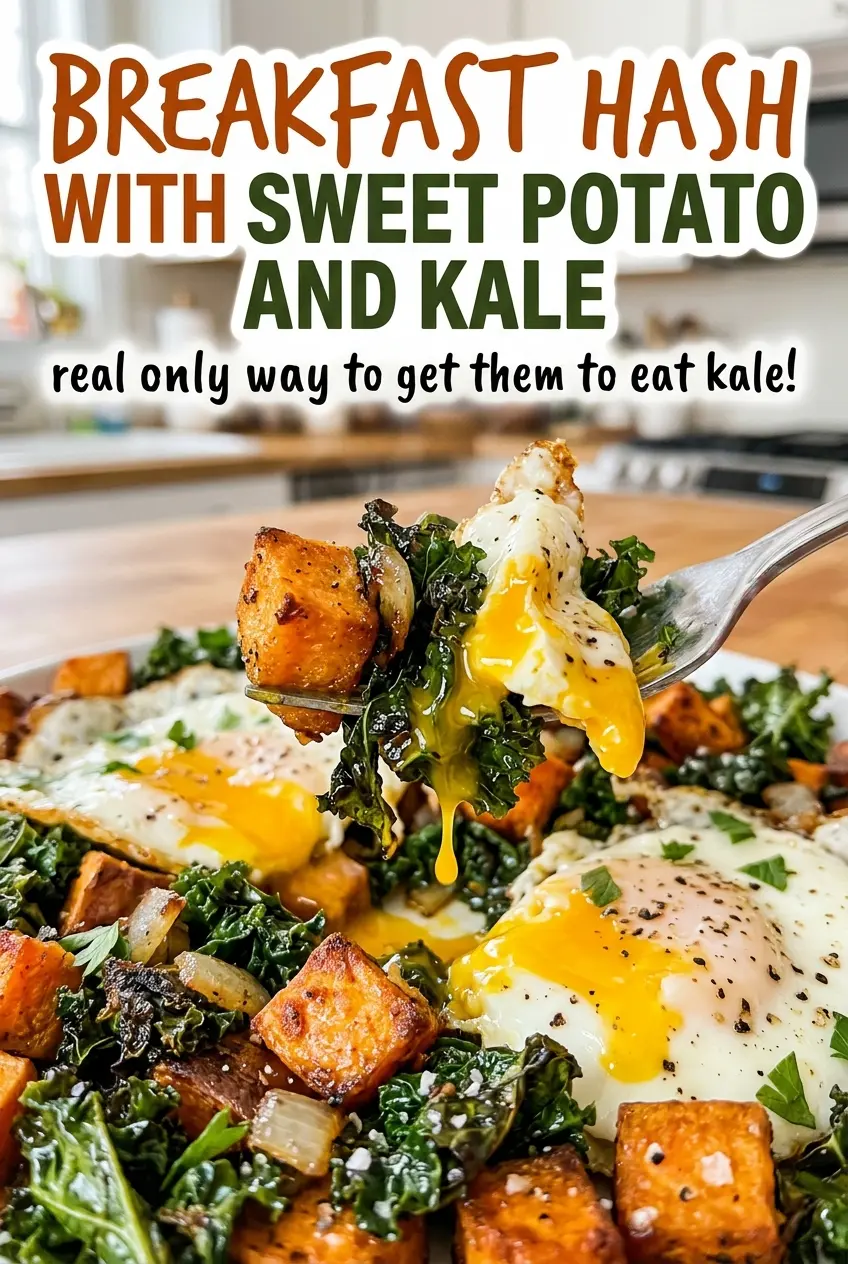
The onion softens in the skillet while the sweet potatoes wait their turn, and the whole pan starts to smell smoky once the paprika hits the oil. I like this breakfast hash because the potatoes cook right in the skillet, then kale and eggs turn it into a complete meal without a pile of dishes.
The order matters here: the sweet potatoes steam under a lid first, then cook uncovered until the water is gone and browned spots appear. That gives you tender centers without leaving the whole hash wet. I cut the potatoes into even cubes so they cook at the same pace, and the eggs finish gently on top. You get sweet, smoky potatoes with wilted kale and firm eggs in every serving.
Kitchen Note
Keep the sweet potato cubes close to the same size. When some pieces are much larger than others, the small ones soften before the big ones are ready.
Save this sweet potato and kale breakfast hash for a savory skillet meal with smoky potatoes and eggs cooked right on top.
Why the Potatoes Need a Covered Cook, Then an Uncovered One
Sweet potatoes can be tender on the outside while still hard in the middle, especially when they’re cooked over direct heat the whole time. Covering the skillet with a little water creates steam, which softens the cubes without asking the oil to do all the work. Stir once halfway through so the pieces cook evenly, then check that they’re nearly tender with a fork.
Leaving the lid off for the next stretch solves the other common hash problem: a damp, pale pile of vegetables. As the water evaporates, the potatoes meet the hot skillet directly and develop browned spots. Wait until the liquid is gone before you stir in the kale; adding greens while water is still pooling makes it harder for the potatoes to brown. The two stages do different jobs, and the switch between them is what gives this hash its tender-and-toasty texture.
What Smoked Paprika, Kale, and Eggs Bring to the Skillet

- Sweet potatoes — Their natural sweetness balances the savory onion and smoky seasoning. Choose firm potatoes without soft spots; peeling them gives the finished hash a tender, consistent bite.
- Smoked paprika — This brings the distinctive smoky note without needing a long cooking time. Check the label for smoked paprika rather than regular paprika, which won’t give the same flavor.
- Kale — The leaves add a sturdy, earthy contrast to the soft potatoes. Remove the tough stems before chopping; they stay chewy even after the leaves wilt.
- Large eggs — Large eggs sit neatly in the wells and provide a generous portion on each serving. Fresh eggs hold their shape well when cracked into the hash.
- Yellow onion and olive oil — The onion builds a mellow savory base, while olive oil coats the vegetables and helps them cook in the skillet. A fresh, mild olive oil is all you need here; there’s no reason to reach for a specialty bottle.
Build the Hash in Stages So the Potatoes Brown Before the Eggs Go In
Soften the Onion First
Heat the olive oil in a 12-inch lidded skillet over medium heat. Add the diced onion and cook for 3 minutes, stirring occasionally. It should begin to soften before the sweet potatoes go in. Keep the heat at medium so the onion doesn’t brown deeply while the rest of the hash still needs cooking.
Steam the Sweet Potatoes Until Nearly Tender
Add the sweet potatoes, kosher salt, smoked paprika, and black pepper, then stir to coat the cubes. Pour in the water and cover the skillet. Cook over medium heat for 8 to 10 minutes, stirring once halfway through. When you pierce a cube, the fork should meet only a little resistance; the potatoes will finish softening uncovered.
Let the Water Cook Off and Catch Some Color
Remove the lid and continue cooking for 5 to 8 minutes, stirring occasionally. The water needs to evaporate, and the sweet potatoes should be tender with browned spots. If you still see liquid in the bottom of the skillet, give it more time before adding the kale. This uncovered stage is where the hash turns from steamed vegetables into a skillet hash.
Wilt the Kale and Set the Eggs
Stir in the kale and cook for 2 to 3 minutes, until the leaves have wilted, then spread the hash evenly in the skillet. Make four wells and crack an egg into each one. Cover the skillet and cook over medium-low heat for 5 to 8 minutes, until both the egg whites and yolks are firm. Keep the heat gentle; a hard boil can overcook the bottoms before the tops set.
Two Ways to Adapt This Sweet Potato and Kale Hash
Make a Two-Serving Skillet
Halve every ingredient, including the eggs, for two servings. Keep the same order of cooking, but use the visual cues rather than assuming the smaller batch will take the full time at every stage. A 12-inch skillet still gives the potatoes plenty of room to cook without crowding.
Make It a Vegan Sweet Potato-Kale Hash
Leave out the eggs and cook the hash through the kale stage. The result is a vegetable-forward skillet that keeps the sweet potatoes, smoky paprika, and greens at the center of the plate, without the richness or protein from the eggs.
Storage and Reheating
- Refrigerator: Refrigerate leftovers within 2 hours and use them within 3 to 4 days. The eggs will be firmer after chilling.
- Freezer: Freezing isn’t my pick for this hash; the potatoes can turn mealy and the eggs can become rubbery after thawing.
- Reheating: Warm a portion in the microwave in short bursts until it reaches 165°F. Long, high-heat reheating can make the eggs tough.
Questions That Come Up When Cooking This Skillet Hash
Breakfast Hash with Sweet Potato and Kale
Ingredients
Equipment
Method
- Heat the olive oil in a 12-inch lidded skillet over medium heat, then add the onion and cook for 3 minutes, stirring occasionally.
- Add the sweet potatoes, salt, smoked paprika, and black pepper, and stir to coat.
- Pour in the water and cover the skillet.
- Cook over medium heat for 8 to 10 minutes, stirring once halfway through, until the sweet potatoes are almost tender when pierced with a fork.
- Uncover and cook for 5 to 8 minutes, stirring occasionally, until the water has evaporated and the sweet potatoes are tender and browned in spots.
- Stir in the kale and cook for 2 to 3 minutes, until wilted, then spread the hash evenly in the skillet.
- Make 4 wells in the hash and crack an egg into each one.
- Cover the skillet and cook over medium-low heat for 5 to 8 minutes, until the egg whites and yolks are firm.