
Brown butter apple cider cake bakes up with a crisp, sugary edge and a tender crumb that stays soft in the middle. The cider gets reduced first, which concentrates the apple flavor instead of watering down the batter, and the butter is browned until it smells nutty and toasted. Those two small steps do most of the heavy lifting here.
The result tastes deeper and more layered than a standard spice cake. Brown sugar keeps the crumb moist, cinnamon and nutmeg bring warmth without taking over, and a little turbinado sugar on top gives the top crust a crackly finish. It all comes together by hand, so there’s no mixer to drag out for a simple cake that still feels special.
Below, I’ve included the one detail that keeps the crumb from turning dense, plus a few smart swaps if you need them. If you’ve ever had apple cake taste flat, this version fixes that by putting the flavor where it matters: in the butter, the cider, and the pan.
The brown butter gave the cake this toasted, caramel-like flavor, and the reduced cider kept it from tasting bland. My edge pieces were crisp and the center stayed soft for days.
Save this brown butter apple cider cake for the days when you want a spiced cake with a crisp top and deep caramel notes.
The Reason This Cake Stays Tender Instead of Heavy
The biggest mistake with cakes like this is overmixing after the flour goes in. Once the batter turns smooth, stop. Stirring too long builds structure in the wrong way and turns a soft snacking cake into something tight and bready.
Reduced cider matters here too. If you skip that step, the apple flavor fades behind the spices and the batter can lean thin. Reducing the cider concentrates the fruit and gives you a stronger payoff without adding extra sweetness.
Brown butter is the other part people rush. It needs to move from foamy to golden with little brown flecks at the bottom, and you need to pull it off the heat before it goes from nutty to burnt. Those browned solids are the flavor.
What Each Ingredient Is Actually Doing in This Cake
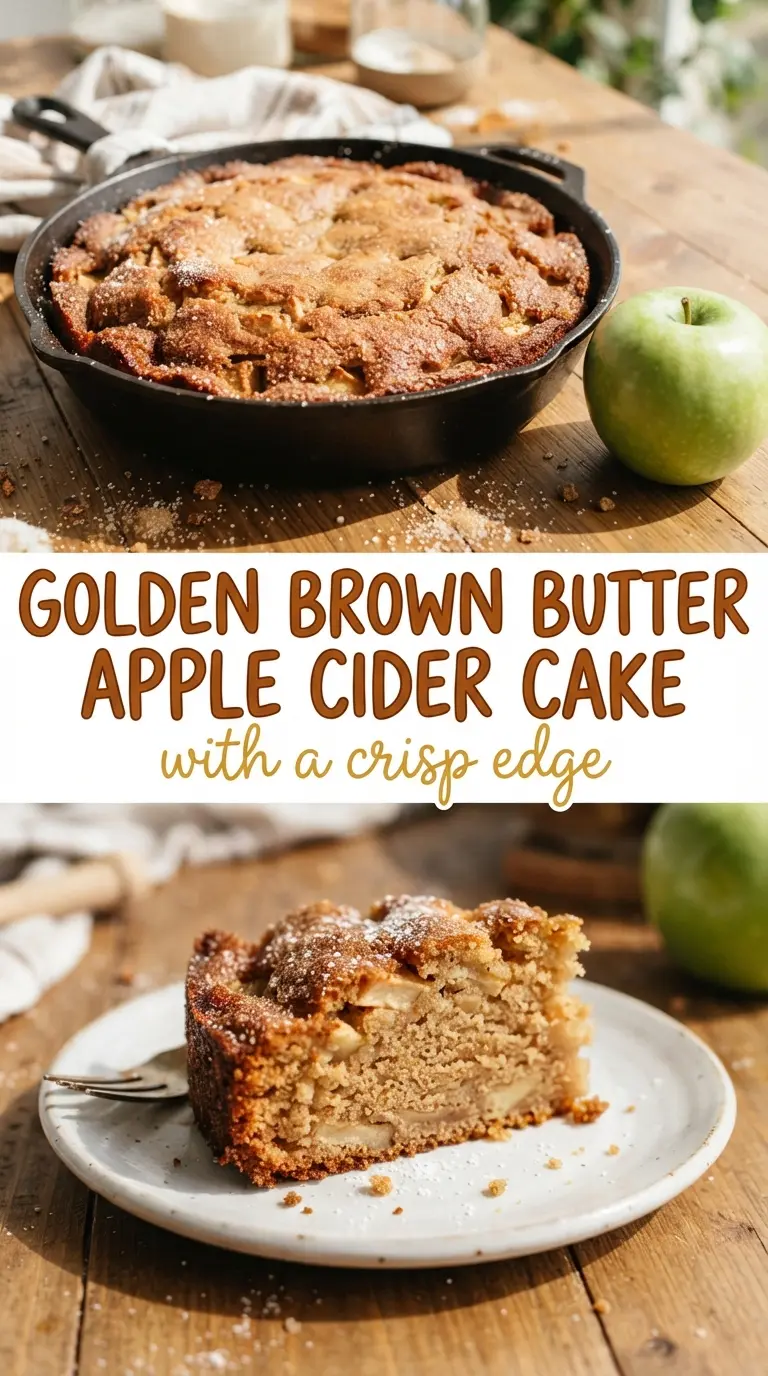
- Apple cider — Reducing it concentrates the apple flavor and keeps the cake from tasting flat. Use the real cider, not apple cider vinegar and not juice drink.
- Unsalted butter — Browning the butter gives the cake its toasted, caramel note. If you only have salted butter, use it and reduce the added salt slightly.
- Brown sugar — This brings moisture and a deep molasses sweetness that fits the browned butter. Light or dark brown sugar both work, though dark brown sugar gives a stronger caramel edge.
- All-purpose flour — This keeps the crumb soft without turning it fragile. Don’t swap in cake flour here unless you want a finer, more delicate texture that loses some of the rustic bite.
- Milk — It loosens the batter just enough to keep the cake tender. Whole milk is best, but 2% works without changing much.
- Turbinado sugar — This gives the top its crackly finish. If you skip it, the cake will still bake fine, but you’ll lose that crisp, sparkling crust.
Building the Batter Without Losing the Brown Butter
Reduce the cider first
Start with the cider and cook it until it drops to about half a cup. You want a stronger aroma and a slightly syrupy look, not a hard boil that turns it sticky. If you reduce it too far, the batter can get too thick and the apple flavor starts tasting cooked instead of bright.
Brown the butter and let it cool
Cook the butter until the foam subsides and brown specks collect at the bottom of the pan. It should smell nutty, almost like toasted hazelnuts. Let it cool for about 10 minutes before mixing, because hot butter can scramble the eggs and flatten the batter.
Mix the batter by hand
Whisk the cooled brown butter, brown sugar, eggs, and vanilla until the mixture looks glossy and a little thickened. Stir in the dry ingredients, milk, and reduced cider until the last streaks of flour disappear. If you keep mixing after that point, the cake gets tough instead of tender.
Bake for a crisp edge and soft center
Spread the batter into a greased 9-inch round pan and top it with turbinado sugar. Bake at 350°F until the edges are crisp and the center springs back when touched lightly. A toothpick should come out with a few moist crumbs, not wet batter.
What to Change When You Need a Different Version
Dairy-Free Swap
Use a plant-based butter that browns well and swap the milk for unsweetened oat milk. The flavor won’t be quite as rich as real butter, but you’ll still get a good toasted note if you watch the pan closely and don’t rush the browning.
Gluten-Free Version
A 1:1 gluten-free baking blend works here, especially one that includes xanthan gum. The cake will be a little more delicate, so let it cool before slicing or it can crumble at the center.
Extra-Spiced Version
Add another 1/4 teaspoon cinnamon and a small pinch of cloves if you want a sharper spice note. That pushes the cake toward a more classic apple spice flavor, but too much clove will cover up the brown butter.
Storage and Reheating
- Refrigerator: Store covered for up to 4 days. The crust softens a little, but the crumb stays moist.
- Freezer: Freeze slices tightly wrapped for up to 2 months. Thaw at room temperature so the texture doesn’t turn gummy.
- Reheating: Warm individual slices in a 300°F oven for 8 to 10 minutes. Microwave only if you don’t mind losing the crisp top, because it softens fast.
Answers to the Questions Worth Asking
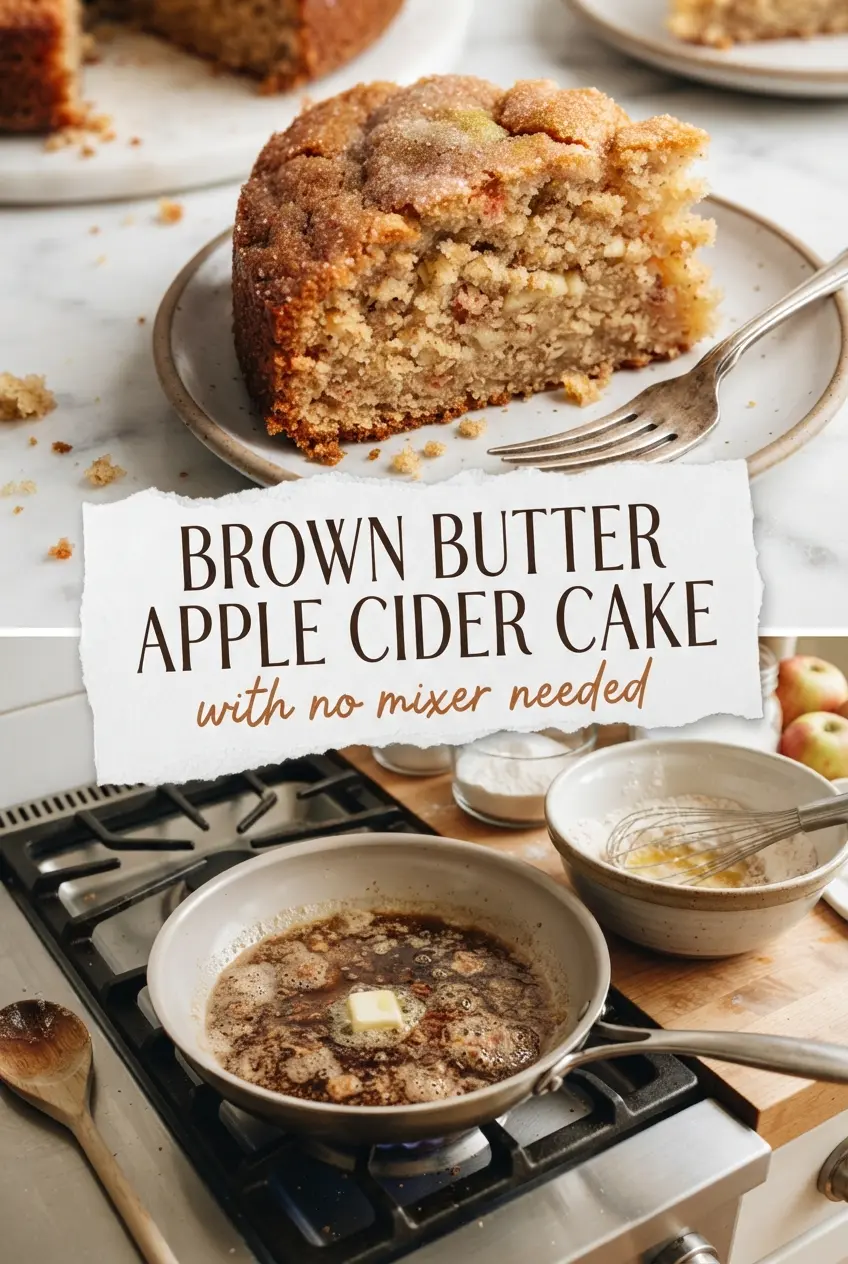
Brown Butter Apple Cider Cake
Ingredients
Equipment
Method
- Simmer apple cider in a pan until reduced to 1/2 cup, watching for a thicker syrupy consistency.
- Melt the unsalted butter in a pan over medium heat until golden and nutty, then cool for 10 minutes.
- Preheat the oven to 350°F and grease a 9-inch round pan.
- Whisk the brown butter, brown sugar, eggs, and vanilla extract until smooth.
- Stir in the all-purpose flour, baking powder, salt, ground cinnamon, and ground nutmeg until the batter looks evenly mixed.
- Add the milk and reduced apple cider and stir until just combined.
- Pour the batter into the pan and sprinkle turbinado sugar evenly over the top.
- Bake at 350°F for 35 minutes until the edges are crisp and the center looks set.