
Brown butter banana bread bakes up with a deeper, toastier flavor than the usual loaf, and that one change makes the whole kitchen smell like caramel and warm nuts. The crumb stays tender, the top turns deeply golden, and every slice tastes like the banana bread you already know, just with more character and a little more edge.
The reason it works is simple: browning the butter cooks off some water and pulls out those nutty milk solids, so the loaf starts with flavor before the bananas even go in. Using very ripe bananas keeps the bread moist and naturally sweet, while brown sugar adds a little molasses note that matches the butter instead of fighting it. The batter comes together fast, but the order matters — the browned butter needs a few minutes to cool before it hits the egg.
Below, I’ve broken down the butter step, the ingredient choices, and the exact cues that tell you the loaf is baked through without drying out. If you’ve ever had banana bread that tasted flat, this version fixes that with one small but important move.
The browned butter made such a difference — the loaf came out moist with a nutty, almost caramel flavor, and it sliced cleanly after cooling. My husband kept sneaking pieces off the counter.
Pin this brown butter banana bread for the day you want a loaf that tastes richer, toastier, and more caramelized than the classic version.
The butter turns from plain fat into the flavor base
Most banana bread is built on melted butter, which works fine, but it leaves a lot of flavor on the table. Browning the butter changes that. You’re not just melting it; you’re cooking the milk solids until they turn amber and smell nutty, and that’s what gives this loaf its deeper taste.
The failure point is heat. If you walk away for a minute, browned butter becomes burnt butter fast, and burnt butter tastes bitter instead of warm and toasty. Pull the pan the moment you see golden specks at the bottom and smell that nutty aroma. It will keep darkening from residual heat, so stopping a shade early is the right move.
Banana bread also gets muddy when the butter is too hot and cooks the egg on contact. Let it cool until it’s warm, not piping hot. It should still be liquid, just not aggressive enough to scramble anything.
What each ingredient is doing in this loaf
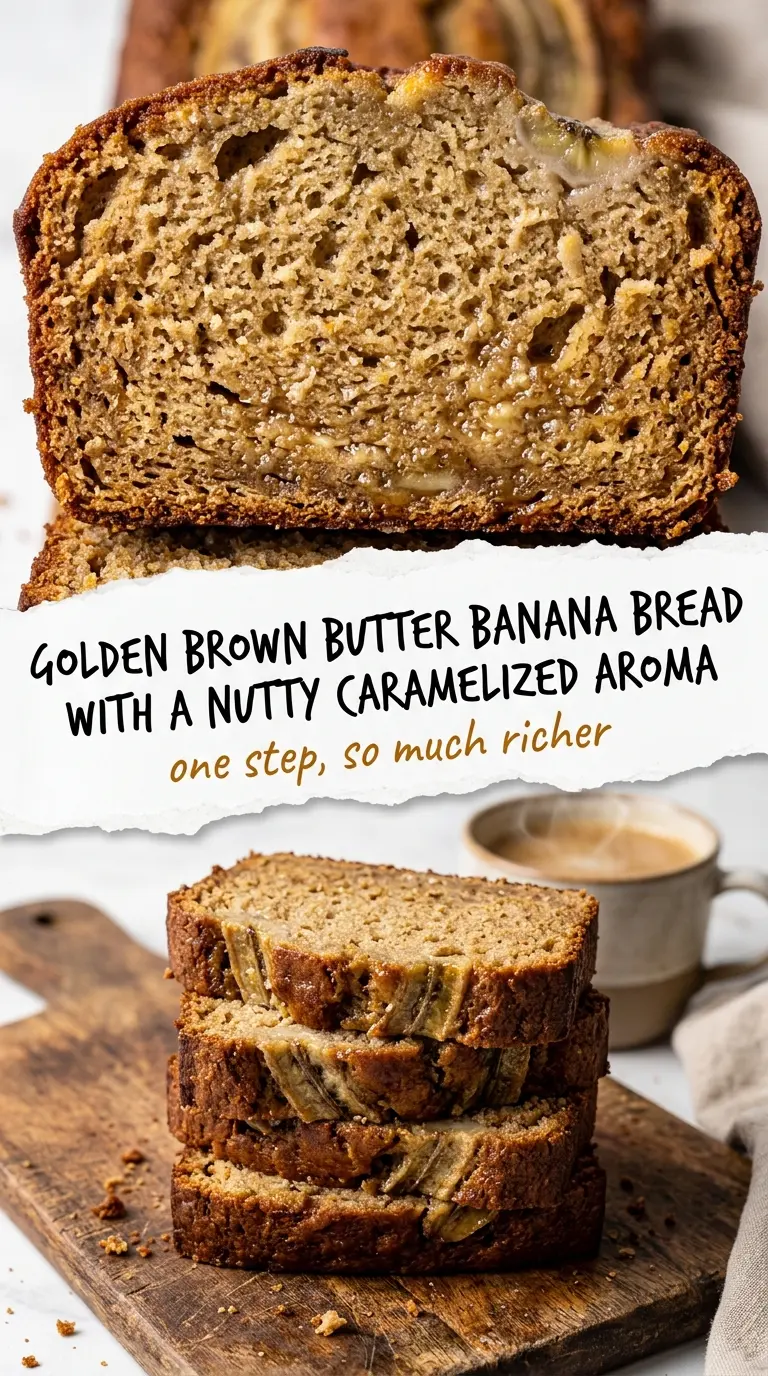
- Butter — This is the whole trick. Browned butter adds a toasted, almost caramel note that plain melted butter can’t give you. Use real butter here; the flavor depends on the milk solids, not just the fat.
- Bananas — The riper the better. You want bananas with lots of brown spotting or even fully black skins, because they mash smoothly and bring the sweetness and moisture this loaf needs. If yours are only yellow, the bread will still work, but it won’t taste as deep.
- Brown sugar — Brown sugar supports the browned butter with a molasses note that makes the loaf taste richer. White sugar will sweeten it, but you’ll lose some of the warm, almost caramel flavor that makes this version stand out.
- Egg — The egg gives the loaf structure so it slices cleanly. Add it after the butter has cooled a bit, or the heat from the pan can start cooking it before it’s mixed in.
- Baking soda — This reacts with the natural acidity in the bananas and helps the bread rise. If it’s old and weak, the loaf will bake up dense instead of light and tender.
- Flour — All-purpose flour gives the right balance of structure and softness. Spoon it into the measuring cup and level it off; packing in too much flour is the quickest way to get a dry loaf.
Building the loaf without overmixing it
Brown the butter first
Melt the butter over medium heat in a light-colored saucepan so you can see the color changing. Swirl it often, and watch for the foam to subside and small brown bits to collect at the bottom. Once it smells nutty and the solids are a deep golden brown, take it off the heat right away and let it cool slightly.
Bring the bananas and sugar together
Mash the bananas in a large bowl until mostly smooth, then stir in the browned butter. The mixture may look loose and a little speckled from the browned bits, and that’s exactly what you want. Add the brown sugar, egg, and vanilla, then stir until everything looks evenly combined. Don’t beat it hard; banana bread batter gets tough when it’s overworked.
Finish with the dry ingredients
Sprinkle the baking soda and salt over the wet mixture so they distribute evenly, then fold in the flour just until no dry streaks remain. A few small lumps are fine. If you keep stirring until the batter looks perfectly smooth, the loaf will bake up tighter and less tender. Scrape the batter into the prepared pan and bake until a toothpick comes out clean or with just a few moist crumbs.
How to adjust this loaf without losing what makes it good
Make it dairy-free
Use a plant-based butter that browns well, but check the label first because some spreads are mostly oil and won’t give you those toasted milk solids. The loaf will still be good, but it loses a little of the deep nutty edge that makes brown butter banana bread special.
Add chocolate or nuts
Fold in up to 3/4 cup chopped walnuts, pecans, or chocolate chips at the very end. Walnuts echo the nutty butter flavor, while chocolate makes the loaf feel more dessert-like. Keep the add-ins modest or the crumb gets crowded and the loaf won’t slice as neatly.
Swap in whole wheat flour
Replace up to half of the all-purpose flour with whole wheat flour for a slightly heartier loaf. Anything more starts to make the bread heavier and drier, which works against the soft banana crumb. If you go this route, don’t overbake it.
Storage and Reheating
- Refrigerator: Store tightly wrapped for up to 4 days. The crumb firms up a little in the fridge, so let slices sit at room temperature before eating.
- Freezer: This loaf freezes well. Wrap the whole cooled loaf or individual slices tightly in plastic, then foil, and freeze for up to 3 months.
- Reheating: Warm slices in a toaster oven or microwave just until heated through. Too much heat dries out the banana bread fast, so short bursts are better than trying to revive it all at once.
Answers to the questions worth asking
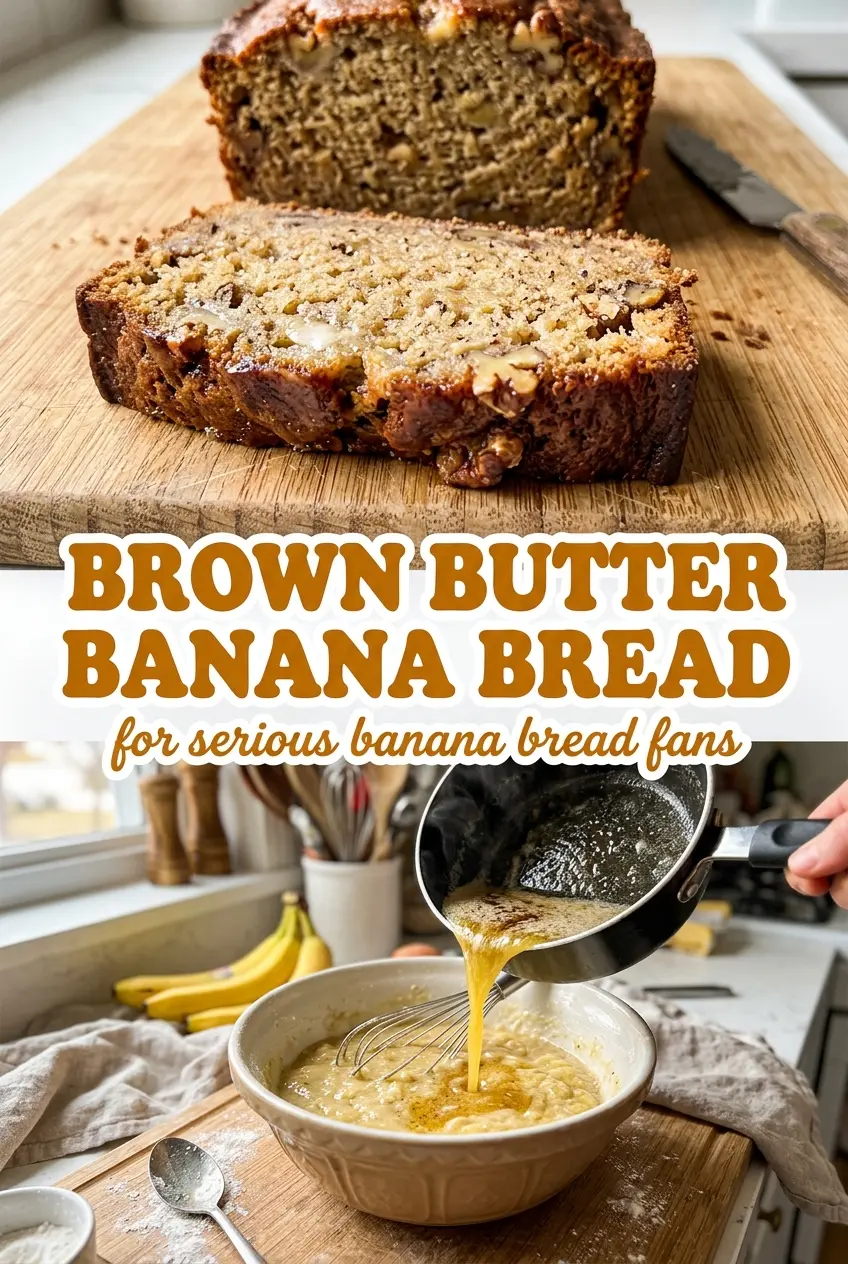
Brown Butter Banana Bread
Ingredients
Equipment
Method
- Melt the butter in a saucepan over medium heat, swirling until it turns golden brown with a nutty aroma. Watch closely, as it can go from browned to burnt quickly.
- Cool the browned butter slightly so it’s no longer scorching before mixing. This helps prevent cooking the egg.
- Preheat the oven to 350°F and grease a loaf pan. Set the pan on a sheet pan for easier handling.
- Mash the ripe bananas and stir them into the bowl, then add the browned butter and mix until combined.
- Mix in the brown sugar, egg, and vanilla extract until the batter looks smooth and glossy.
- Sprinkle the baking soda and salt over the batter and stir until evenly distributed.
- Fold in the all-purpose flour until just combined, stopping as soon as no dry streaks remain.
- Pour the batter into the greased loaf pan and bake at 350°F for 55-60 minutes, until a toothpick comes out clean.