
Brown butter pumpkin bread bakes up tender, deeply aromatic, and just a little more interesting than the usual loaf. The pumpkin keeps the crumb soft and plush, while the browned butter brings in a toasty, nutty edge that makes each slice taste warmer and fuller. It’s the kind of bread that disappears one slice at a time, usually while it’s still barely cool enough to cut cleanly.
The extra step here is worth it because browned butter changes the whole direction of the loaf. Instead of tasting flat or one-note, the batter picks up caramel-like depth before it even hits the oven. Letting the butter cool slightly matters too; if it’s too hot, it can throw off the texture of the eggs and make the batter harder to mix evenly.
Below you’ll find the point where the butter is truly browned, not just melted, plus the small cues that tell you when the loaf is done without drying it out. That’s the difference between a pumpkin bread that tastes fine and one people ask for again.
The browned butter gave the loaf this deep, nutty smell while it baked, and the crumb stayed moist for days. I sliced it warm with a little salted butter and my kids kept coming back for more.
Save this brown butter pumpkin bread for the day you want a loaf with a nutty crust, soft crumb, and real depth of flavor.
The Butter Has to Turn Brown, Not Just Warm Up
A lot of pumpkin breads miss their chance at real flavor because the butter never gets past the melted stage. Warm butter adds richness, but browned butter adds toasted milk solids, and that’s where the depth comes from. You’re looking for a golden amber color with tiny brown flecks at the bottom and a nutty smell that fills the kitchen fast.
The other place people go wrong is mixing the butter in while it’s still piping hot. That can make the eggs thicken in spots and give you a batter that looks slightly broken before it even goes into the pan. Let the browned butter sit long enough to lose its sizzle, then whisk it in until the batter looks smooth and glossy.
What Each Ingredient Is Actually Doing in This Dish
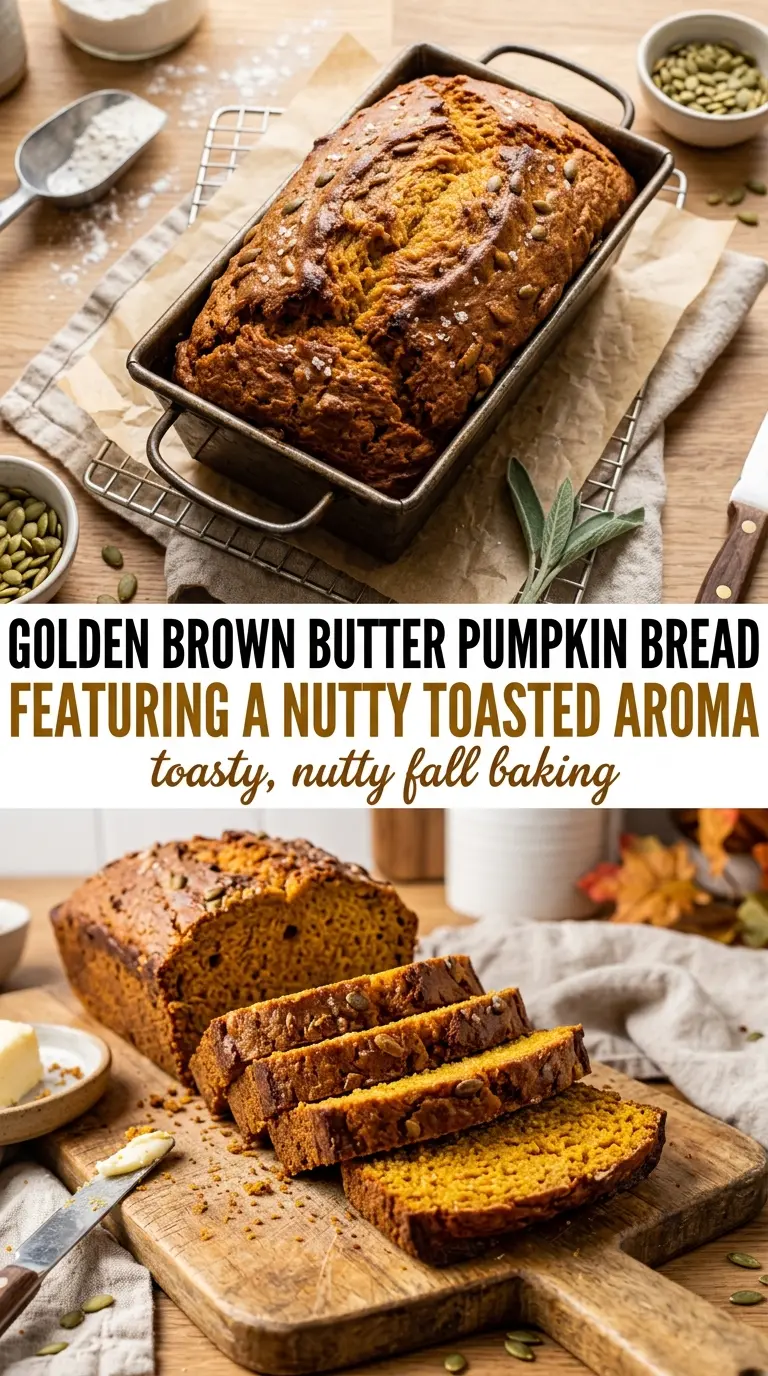
- Pumpkin puree — Use plain pumpkin puree, not pumpkin pie filling. Pie filling is already sweetened and spiced, which throws off the balance and can make the loaf taste too sugary.
- Butter — This is the ingredient that changes the whole loaf. Unsalted butter gives you control, but salted butter works if that’s what you have; just keep the added salt in the batter modest if you’re using it.
- Eggs — They give the loaf structure and help hold onto the moisture from the pumpkin. Room-temperature eggs blend more evenly, but cold eggs will work if the browned butter has cooled properly first.
- Pumpkin pie spice — This gives the bread its familiar warmth without needing a long spice list. If yours tastes flat, it’s usually old spice; spices lose punch quietly, and pumpkin bread shows that fast.
- All-purpose flour — This keeps the crumb soft instead of heavy. Spoon it into the measuring cup and level it off so you don’t pack in too much flour, which is the fastest route to a dry loaf.
The Quiet Minutes That Decide the Crumb
Browning the Butter
Set the butter in a light-colored skillet if you have one, because you can track the color changes more easily. It will foam first, then the foam will thin and you’ll start seeing little brown specks at the bottom. The smell shifts from dairy-rich to toasted and nutty right before it’s ready. Pull it off the heat as soon as it reaches a deep golden color; once it crosses into dark brown, the bitterness shows up fast.
Building the Batter
Whisk the pumpkin puree, sugar, eggs, and spice until the mixture looks smooth and a little thick. Add the cooled browned butter and stir again until it’s fully blended. Fold in the flour just until the streaks disappear. If you keep going after that, the loaf gets tight instead of tender, and pumpkin bread loses its best texture when it’s overmixed.
Baking to the Center
Scrape the batter into a greased loaf pan and smooth the top so it bakes evenly. The oven should be at 350°F before the pan goes in, because a cool oven makes the loaf rise unevenly and can give you a dense center. Bake until the top is set and a toothpick comes out clean from the middle. If the top is browning before the center is done, lay a loose piece of foil over it for the last stretch.
Make It Dairy-Free Without Losing the Toasty Note
Use a plant-based butter that browns well, not a soft tub spread. Some dairy-free butters don’t develop the same nutty solids, so the flavor will be a little less deep, but you’ll still get a rich loaf if you brown it carefully.
How to Make It a Little Less Sweet
Cut the sugar back by a few tablespoons if you prefer a more bread-like slice. The loaf will still bake up moist because the pumpkin is doing a lot of that work, but the crust will brown a touch less and the flavor will lean more earthy than dessert-like.
Turning It Into Muffins
Divide the batter into a muffin tin and shorten the bake time significantly. Muffins give you more browned edges and a faster bake, but they dry out sooner if you leave them in too long, so start checking early.
Storage and Reheating
- Refrigerator: Store tightly wrapped for up to 4 days. The crumb stays moist, though the flavor deepens a little by the second day.
- Freezer: Freeze slices or the whole loaf wrapped well for up to 2 months. Thaw at room temperature so condensation doesn’t make the crust soggy.
- Reheating: Warm slices in a low oven or toaster oven for a few minutes. The common mistake is microwaving too long, which makes the loaf rubbery instead of soft.
Answers to the Questions Worth Asking
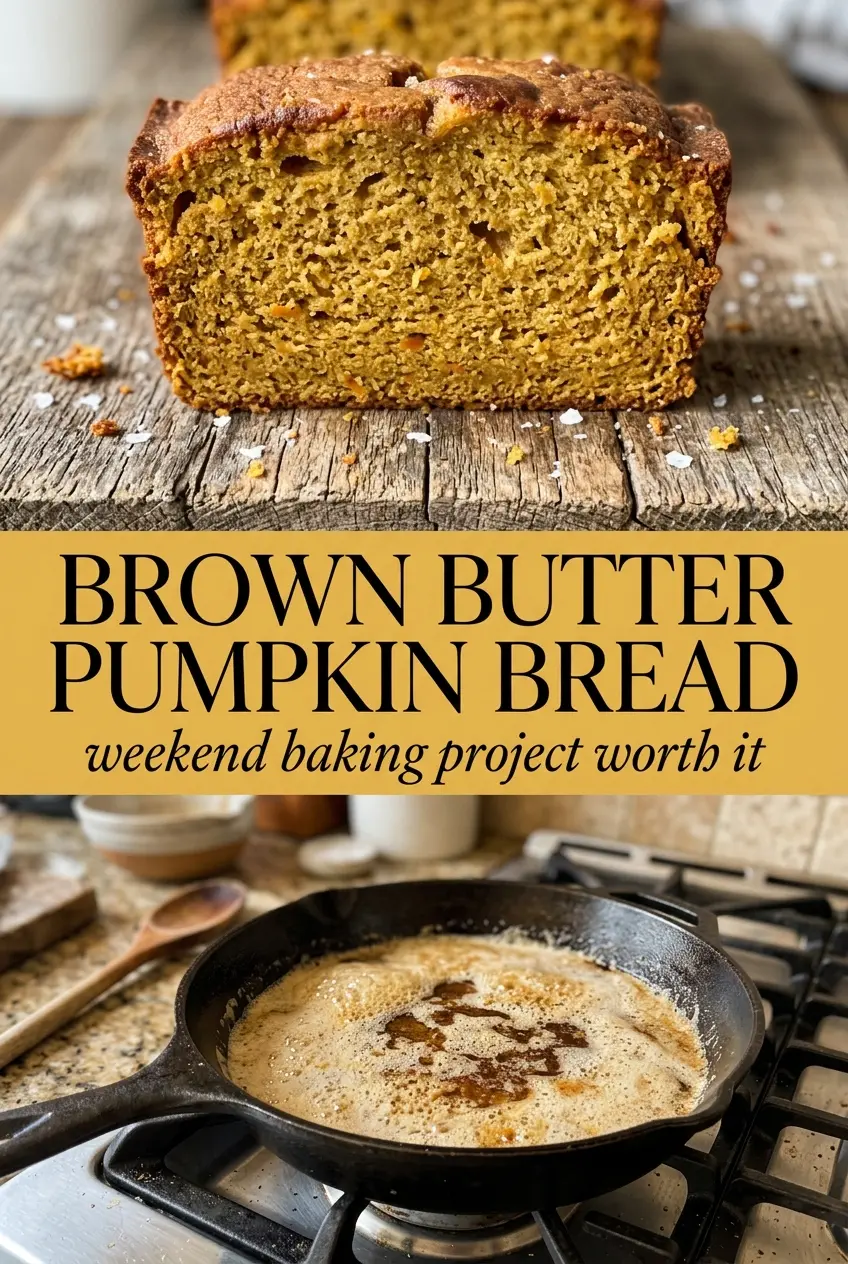
Brown Butter Pumpkin Bread
Ingredients
Equipment
Method
- Melt the butter in a cast iron skillet over medium heat, swirling until golden brown and fragrant. Let it cool slightly to avoid scrambling.
- Preheat the oven to 350°F and grease a loaf pan. Keep it ready while you mix the batter.
- Whisk together the pumpkin puree, granulated sugar, eggs, pumpkin pie spice, and cooled brown butter until smooth. Stop when the mixture looks fully combined and glossy.
- Fold in the all-purpose flour until just combined. Mix gently so the batter stays thick and doesn’t overdevelop gluten.
- Pour the batter into the loaf pan and bake for 55-65 minutes at 350°F, until a toothpick inserted in the center comes out clean. Cool before slicing for clean edges and a set crumb.