
Bursts of sweet tomato, toasty bread, and a garlicky olive oil spooned over the top make this bruschetta the kind of appetizer that disappears before you even set the platter down. The tomatoes cook just long enough to collapse into a jammy pile with a little body, so they stay bright instead of turning watery and sad. Piled onto charred baguette slices, it gives you crunch, juice, and a little heat in one bite.
What makes this version work is the way the tomatoes are handled. Covering the skillet traps steam at first, which helps the skins split and the juices release. Then the lid comes off and the mixture thickens fast, so you end up with something scoopable instead of a loose topping that slides off the bread. A little parsley adds freshness, and the basil goes on at the end so it stays fragrant.
Below, I’ve laid out the small details that matter most: how to get the baguette properly crisp without drying it out, what to do if your tomatoes are taking their time to burst, and a few smart swaps if you need to adjust for what’s in your kitchen.
The tomatoes turned into the perfect jammy topping and didn’t make the bread soggy at all. I kept the lid on until they started popping, then uncovered them like you said, and it thickened up fast. My husband stood at the counter eating the last two pieces.
Save this burst cherry tomato bruschetta for the kind of appetizer that turns ripe tomatoes into a jammy, garlicky topping in 15 minutes.
The Reason the Tomatoes Burst Instead of Steaming
Bruschetta goes wrong when the tomato mixture turns thin and soupy, and that usually starts with too much heat or too much uncovered time at the wrong moment. Here, the covered skillet does the first job: it traps enough steam to split the skins and soften the tomatoes without scorching the garlic. Then the lid comes off so the liquid can cook down and cling to the fruit instead of pooling underneath it.
The other detail that matters is the pan itself. Use a skillet wide enough for the tomatoes to sit in a fairly even layer. If they’re stacked too deep, they stew from the bottom and the top barely cooks. You want the tomatoes to collapse, not surrender all at once.
- Covered cooking first — This gives the tomatoes a head start on bursting without reducing the liquid too soon.
- Uncovered finish — That last minute after you remove the lid is where the topping tightens up and becomes spoonable.
- Garlic early, not late — Garlic needs a little time in the oil to soften and perfume the pan, but too much heat will make it bitter fast.
What the Bread, Oil, and Basil Are Actually Doing
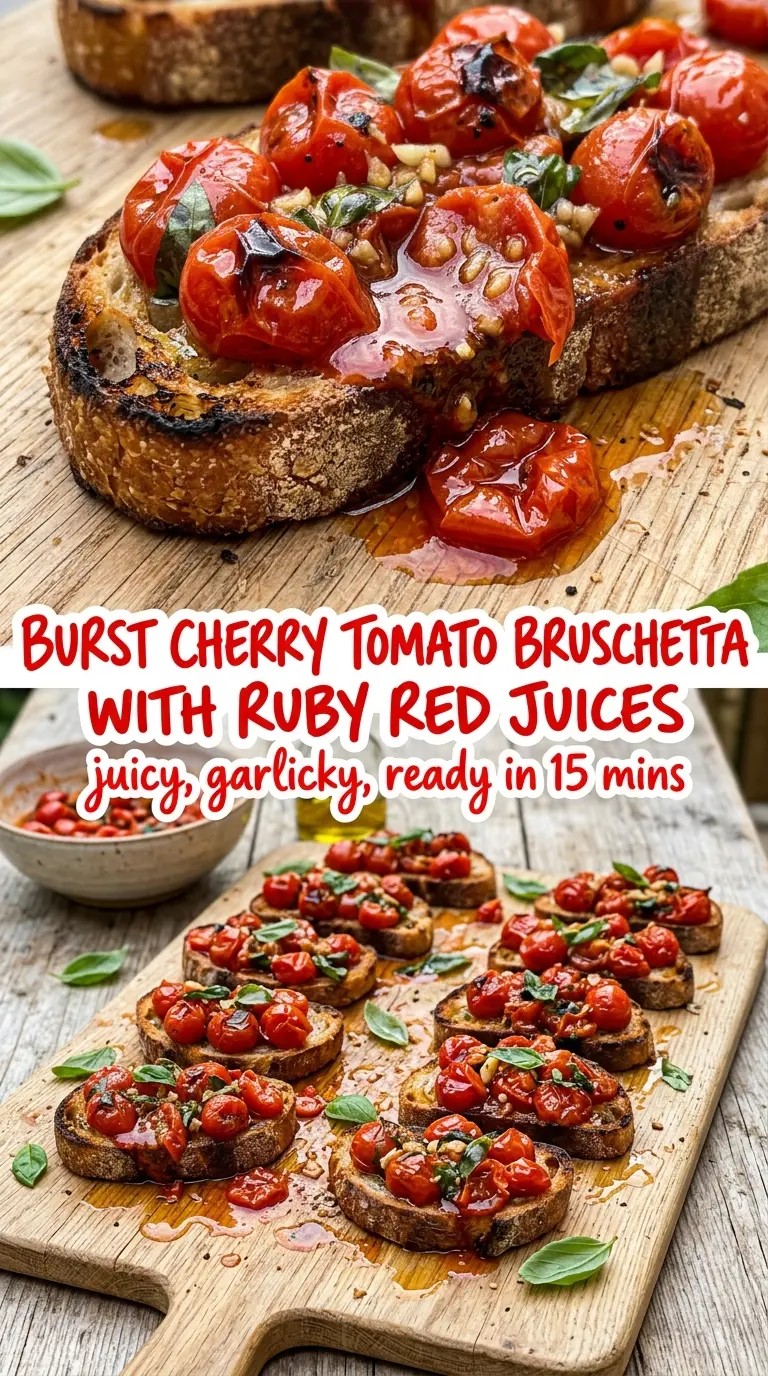
- Baguette — A sturdy baguette holds up to the juicy topping better than soft sandwich bread. Slice it on a diagonal for more surface area, and broil it until the edges are deeply toasted so it stays crisp under the tomatoes.
- Olive oil — This isn’t just for flavor; it helps the bread brown and keeps the garlic and tomatoes from catching in the pan. Use a decent extra-virgin oil if you can taste it on the finished toast, but it doesn’t need to be expensive.
- Cherry tomatoes — Smaller tomatoes burst more evenly and give you that jammy texture faster than larger tomatoes cut up by hand. If yours are on the larger side, halve them first so the cooking time stays close.
- Balsamic glaze — The glaze adds a sweet-tart finish that lifts the tomatoes without making the topping runnier. If you only have balsamic vinegar, simmer it until it lightly coats a spoon before drizzling.
- Basil — Add it at the very end. Heat dulls basil fast, and this dish depends on that fresh, peppery smell right before serving.
Building the Topping and Toast So They Land Together
Softening the Garlic Without Burning It
Warm the olive oil over medium heat and let the garlic move around in it for about 2 minutes, just until it smells sweet and looks pale gold at the edges. If the garlic browns hard at this stage, the whole topping picks up a bitter note that won’t cook out later. Keep the heat moderate and listen for a gentle sizzle, not an aggressive fry.
Cooking the Tomatoes to Jammy, Not Watery
Add the tomatoes, red pepper flakes, and salt, then cover the skillet and let the heat work. You’ll hear them start to pop and collapse under the lid. When most of them have split, uncover the pan and press the stubborn ones with a wooden spoon. That final minute without the lid is what thickens the juices into a glossy, spoonable mixture.
Toasting the Baguette for a Clean Crunch
Brush the slices with the remaining olive oil and broil them until the tops are charred in spots and the edges feel crisp, then flip and toast the other side. The bread should be crunchy but not dry all the way through; that little bit of tenderness inside keeps it from shattering when you bite into it. If you skip the second side, the bottom can turn limp under the tomatoes.
Finishing the Platter
Spoon the tomatoes onto the hot toast while they’re still glossy and steamy, then scatter basil over the top and drizzle with balsamic glaze. Add the basil after the tomatoes come off the heat so it stays bright. Serve it right away, while the bread still has its crunch and the topping is warm.
Three Smart Ways to Adjust This Bruschetta
Make It Dairy-Free and Naturally Vegetarian
It already lands in that lane as written, which is part of why it works so well for a crowd. The texture and richness come from the olive oil and the reduced tomato juices, so you don’t need cheese to make the topping feel complete. If you want more heft, add a thin swipe of hummus or white bean spread to the toast before piling on the tomatoes.
Make It Gluten-Free
Swap the baguette for a sturdy gluten-free loaf that can handle broiling without drying out into a crumbly mess. Slice it a little thicker than you would a baguette and toast it well on both sides, since gluten-free bread tends to soften faster once topped. The tomato mixture stays the same.
Add Cheese Without Overloading the Toast
A little whipped ricotta or torn fresh mozzarella works if you want a richer appetizer, but keep it light. Too much cheese buries the tomato brightness and makes the toast soft faster. Spread a thin layer on the bread before adding the tomatoes, or tuck a few small pieces on top after the basil goes on.
Storage and Reheating
- Refrigerator: The tomato topping keeps for 3 days in a sealed container, though it softens as it sits. Store the bread separately or it will lose all its crunch.
- Freezer: The tomato mixture can be frozen, but the texture turns softer after thawing. Freeze it flat in a small container, then thaw in the fridge and drain off any excess liquid before reheating.
- Reheating: Warm the tomatoes in a skillet over low heat until just hot. Re-toast the bread separately under the broiler. Don’t microwave the assembled bruschetta or the bread will go limp in seconds.
Answers to the Questions Worth Asking
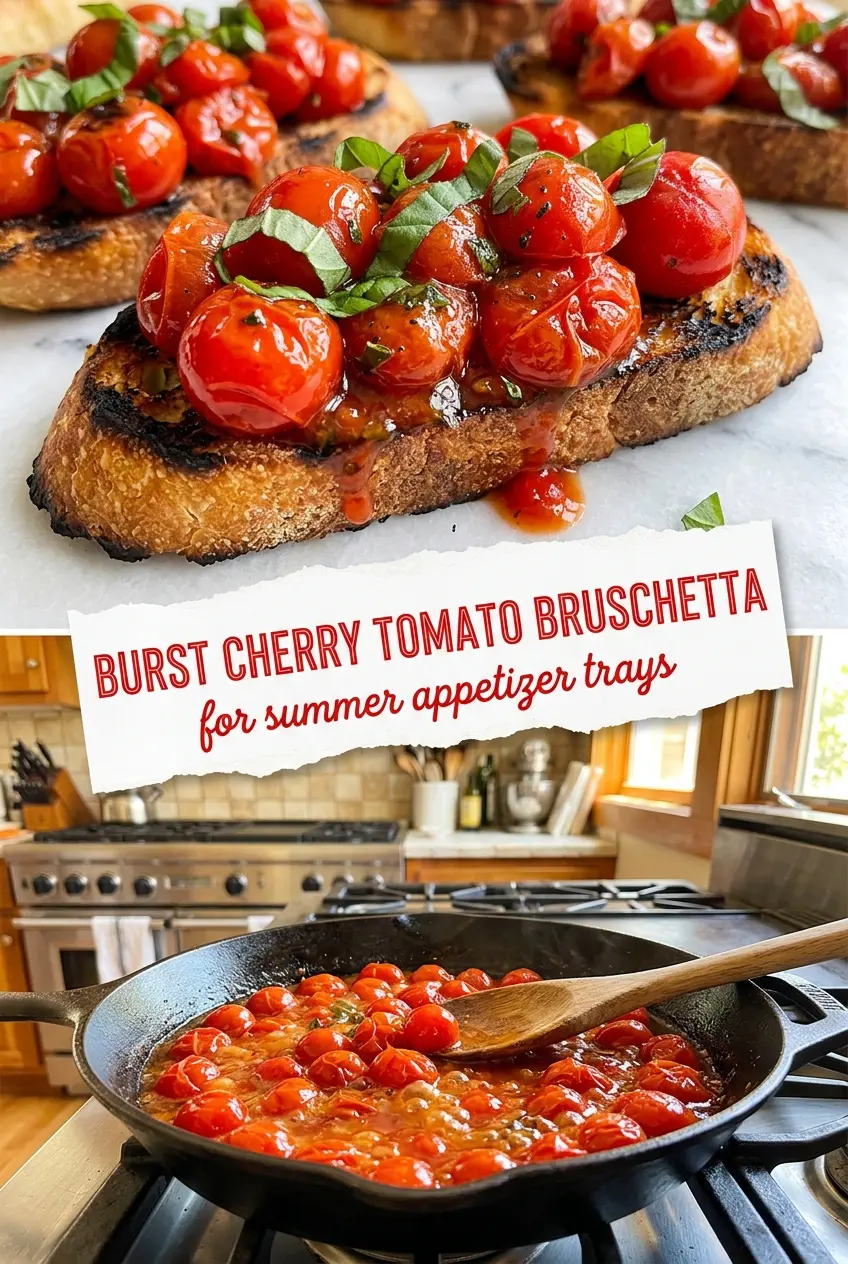
Burst Cherry Tomato Bruschetta
Ingredients
Equipment
Method
- Heat 2 tablespoons olive oil in a medium cast iron skillet over medium heat, then sauté the garlic for 2 minutes until fragrant.
- Add the cherry tomatoes and red pepper flakes, season with salt, and toss to coat so the tomatoes begin releasing juices.
- Cover the pan and cook until the tomatoes burst, about 10 to 12 minutes.
- Uncover and squish any whole tomatoes with a wooden spoon, then let the mixture thicken for 1 minute.
- Stir in the parsley and adjust seasoning to taste.
- Brush the baguette slices with the remaining olive oil.
- Broil on a sheet pan until charred on both sides.
- Top the broiled baguette with the burst tomatoes, fresh basil, and a drizzle of balsamic glaze.