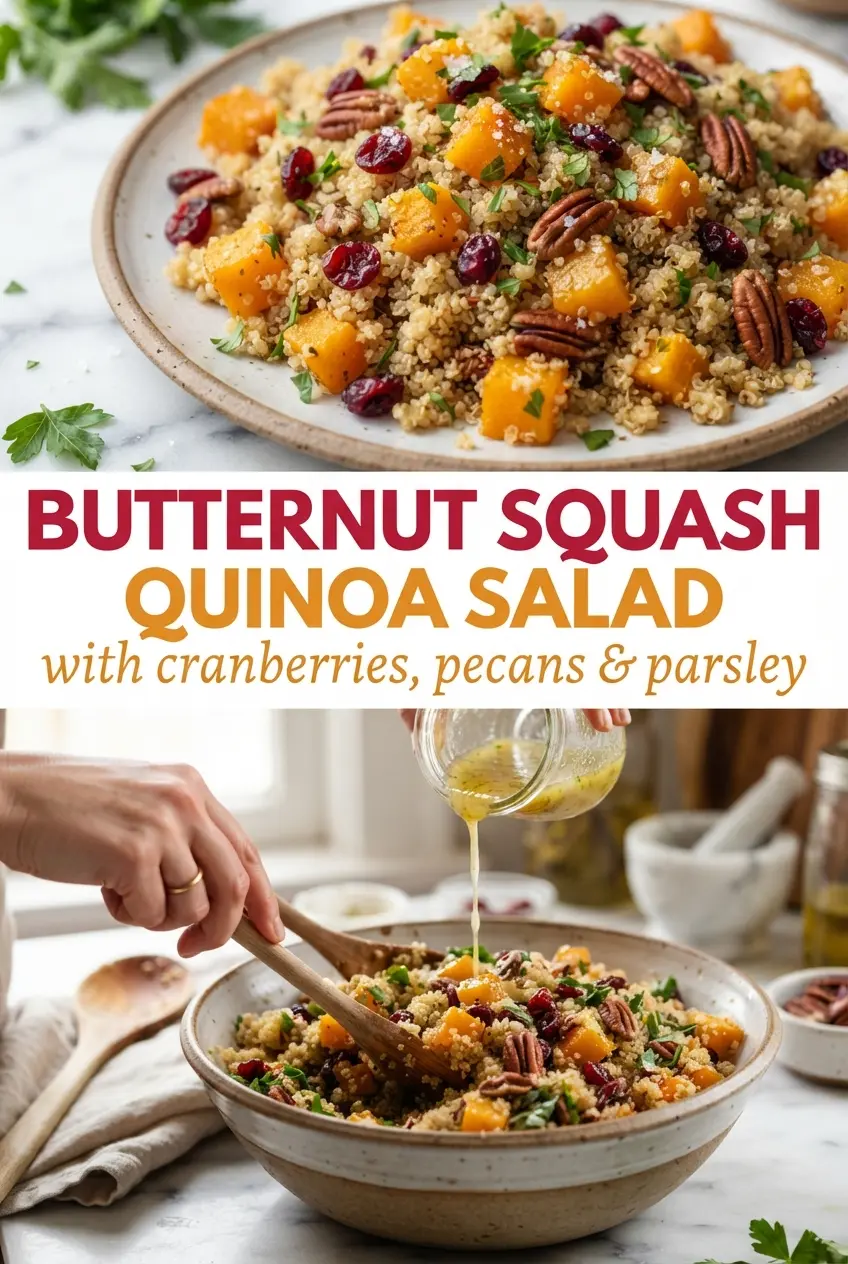
Fluffy quinoa, roasted butternut squash, tart cranberries, and toasted pecans make this salad feel hearty without turning heavy. The squash brings soft caramelized edges, the quinoa stays light and nutty, and the lemon dressing keeps every bite bright instead of sweet. It works as a side dish, but it’s substantial enough to stand on its own when lunch needs to be filling and still taste fresh.
What makes this version worth keeping is the balance. Vegetable broth seasons the quinoa from the inside out, so it doesn’t taste flat once the dressing goes on. Roasting the squash until the edges brown adds depth, and the parsley goes in at the end so it stays lively against the warm grains. The result is a salad that holds its shape, tastes good at room temperature, and never turns soggy after a few hours in the fridge.
If you’ve ever made grain salad that ate like dry cereal or mushy leftovers, the details below will help. The timing on the quinoa, the best way to cool it, and a few simple swaps make this one dependable enough to repeat.
The quinoa stayed fluffy, the squash held its shape, and the lemon dressing kept everything tasting bright even the next day. I packed the leftovers for lunch and the pecans still had a nice crunch.
Save this quinoa salad for a make-ahead lunch or easy side, with roasted squash, cranberries, and lemon dressing in every bite.
The Trick to Keeping Quinoa Fluffy Instead of Gummy
Quinoa turns heavy when it’s overcooked or left steaming in a closed pot. The grains keep absorbing moisture after the burner turns off, so the texture can go from tender to paste fast. For this salad, the goal is distinct grains that can catch the dressing without collapsing.
Rinsing matters here because it removes the bitter coating on the outside of the quinoa. Cooking it in vegetable broth instead of water gives the base enough seasoning to carry the squash and cranberries. Once it’s done, let it sit uncovered for a few minutes so the extra steam escapes instead of soaking back into the grains.
- Quinoa — White quinoa gives the lightest texture, but tri-color quinoa works too. Rinsing before cooking is worth the extra minute because unwashed quinoa can taste soapy or bitter.
- Vegetable broth — This seasons the grain itself, which matters because the dressing is light. Water works in a pinch, but the salad tastes flatter unless you add more salt and lemon.
- Butternut squash — Roast it until the edges brown and the centers are soft. Pre-cubed squash is fine if the pieces are similar in size; uneven chunks cook at different rates and some will turn mushy before others brown.
- Dried cranberries — They add tart sweetness and a little chew. If yours are especially dry, let them sit in the warm salad for a few minutes so they soften slightly.
- Pecans — Toasted pecans bring the crunch that keeps the salad from feeling soft all the way through. Walnuts can step in, but pecans stay sweeter and pair better with the squash.
- Lemon juice and olive oil — This dressing is intentionally simple. Good olive oil matters because it’s doing most of the flavor work, and fresh lemon juice keeps the whole dish bright instead of syrupy.
- Parsley — Add it at the end so it stays fresh and green. Dried parsley won’t give the same lift, so this is one place where fresh herbs matter.
Roast, Cool, and Toss in the Right Order
Cooking the Quinoa First
Start the quinoa in broth and cook it until the grains look open and the little spiral tails show. That’s the sign it’s done. If there’s still liquid at the bottom, let it sit off heat for a few minutes with the lid on, then fluff it with a fork. Spread it out briefly if you need it to cool faster; a hot, tightly packed mound traps steam and makes the texture dense.
Roasting the Squash Until It Browns
Roast the squash until the edges turn deep gold and a fork slides through without resistance. Pale squash tastes steamed, not roasted. If the pieces are crowded on the pan, they’ll soften before they color, so give them space and turn them once if one side is browning faster. A little cinnamon is welcome here if you want warmth, but keep it light so it doesn’t overpower the lemon.
Building the Salad Without Bruising It
Combine the quinoa, squash, cranberries, and pecans while the quinoa is still just slightly warm. Warm grains absorb the dressing better than cold ones, which helps the salad taste seasoned all the way through. Add the parsley after the dressing goes in so it stays perky and doesn’t disappear into the mix. Toss gently enough to keep the squash cubes intact.
The Final Dressing Toss
Whisk the oil, lemon juice, salt, and pepper until it looks emulsified and slightly cloudy. Then drizzle it over the bowl in a thin stream. If the salad tastes flat, it usually needs more salt, not more lemon. Let it sit for 10 minutes before serving so the quinoa can take in the dressing and the flavors settle together.
Three Ways to Adjust This Salad Without Losing the Point
Make It Dairy-Free and Naturally Gluten-Free
This salad already lands in both camps as written, which is part of why it works so well for mixed crowds. The key is keeping the quinoa fluffy and the dressing light so nothing needs cheese or bread to feel complete. If you’re serving someone who avoids nuts, swap the pecans for toasted pumpkin seeds and you’ll still get the crunch.
Turn It Into a Fuller Lunch
Add a can of drained chickpeas or some crumbled feta if you want more protein and salt. Chickpeas keep the salad plant-based and make it sturdier for meal prep, while feta gives it a sharper edge that plays well with the cranberry sweetness. Either way, add the extra ingredient after the dressing so it doesn’t get broken up by too much tossing.
Swap the Squash When You Need to
Roasted sweet potatoes or delicata squash work well if butternut isn’t handy. Sweet potatoes are softer and a little sweeter, while delicata gives you thinner, more caramelized pieces and less prep because you don’t need to peel it. Keep the roasting time tied to color and tenderness, not the clock, since cut size changes everything.
Storage and Reheating
- Refrigerator: Keeps for 4 days in a sealed container. The quinoa stays pleasant, though the pecans soften a little after the first day.
- Freezer: Freezing isn’t ideal because the squash and parsley lose their texture once thawed. The salad is better made fresh or kept in the fridge.
- Reheating: Warm it gently in a skillet over low heat or eat it cold. If you microwave it, use short bursts so the quinoa doesn’t dry out and the cranberries don’t harden.