
Juicy chicken breasts with a molten mozzarella center and sweet tomato slices earn a permanent spot on the dinner rotation fast. The outside sears into a golden crust while the basil stays bright and the balsamic glaze pulls everything together without turning the dish heavy. It feels like a special-occasion plate, but it lands on the table in the time it takes to get a salad together.
What makes this version work is the pocket cut and the way the filling is kept simple. Too much stuffing, or cheese sliced too thick, will leak before the chicken is done. Thin mozzarella, ripe but firm tomato, and a few basil leaves give you that Caprese flavor without flooding the pan.
Below, I’ll walk through the part that matters most: how to keep the chicken sealed long enough to cook through without losing the filling. I’ve also included a couple of smart swaps and the one reheating method that keeps the chicken from drying out.
The chicken stayed juicy and the mozzarella melted without escaping everywhere. I used a toothpick like you suggested, and the balsamic glaze at the end made it taste like something from a restaurant.
Save this Caprese Stuffed Chicken for a quick skillet dinner with juicy chicken, melted mozzarella, and balsamic finish.
The Trick to Keeping Caprese Stuffed Chicken Closed in the Pan
The pocket is where this recipe lives or dies. Cut it deep enough to hold the filling, but stop short of slicing all the way through the breast. If the opening is too wide, the mozzarella will melt out before the chicken sets around it.
Keep the filling modest. A few basil leaves, one or two tomato slices, and enough mozzarella to create a center are enough. Overstuffing adds pressure to the seam, and that pressure is what opens the chicken while it sears.
- Chicken breasts — Look for breasts that are close in size so they cook at the same pace. If one side is much thicker, pound the thick end lightly before cutting the pocket.
- Fresh mozzarella — Use sliced mozzarella, not shredded. Slices melt into a clean, creamy center; shredded cheese escapes faster and turns greasy in the pan.
- Tomato — A ripe but firm tomato is best. Too juicy and it floods the pocket, which keeps the chicken from browning properly.
- Fresh basil — Add it inside the chicken for the classic Caprese note, then use a little more at the end for color and freshness. Dried basil won’t give the same lift here.
- Balsamic glaze — This finishes the dish with sweetness and acid. Regular balsamic works in a pinch, but glaze clings better and doesn’t run all over the plate.
What Each Ingredient Is Actually Doing in This Dish
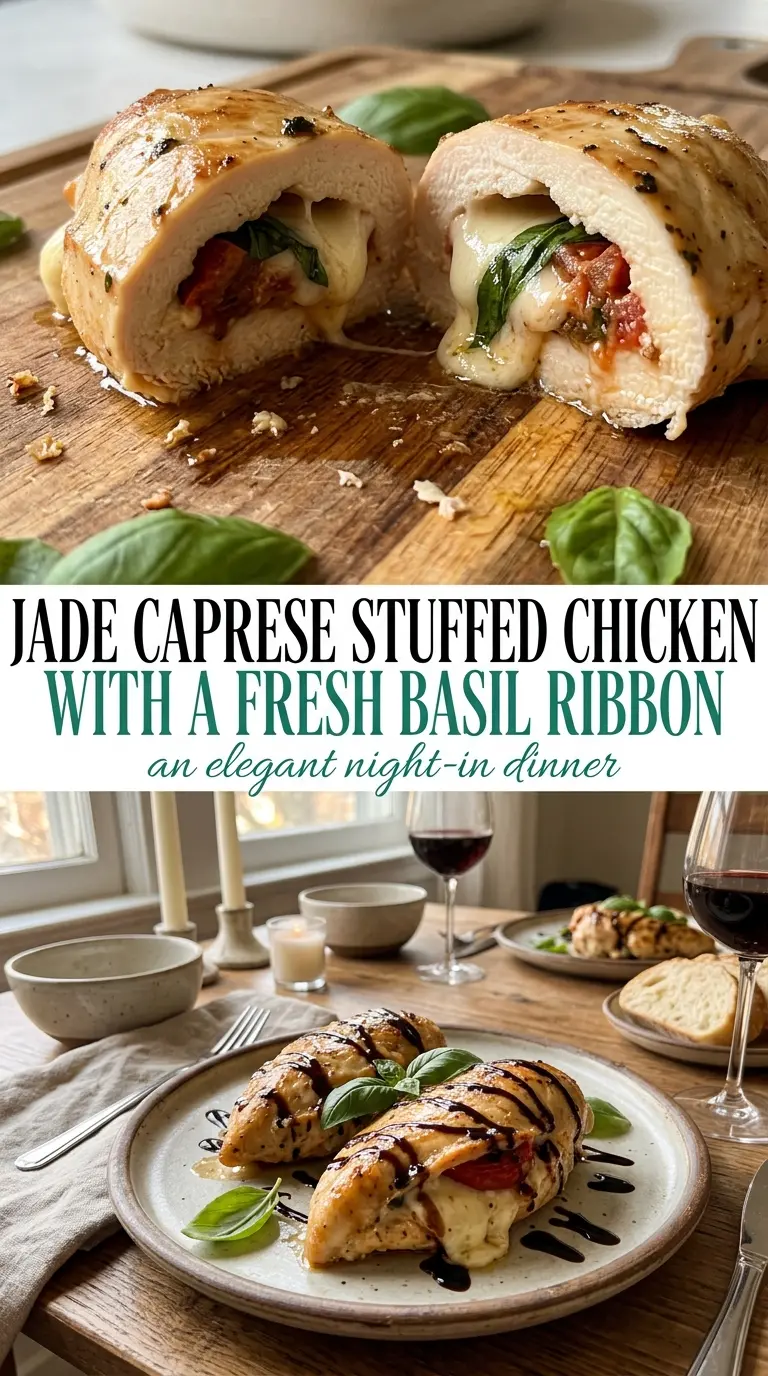
Chicken breasts are the structure here, so their size and thickness matter more than you might expect. If they’re very uneven, the thinner side will dry out before the center finishes cooking.
Olive oil helps the outside brown in the skillet. Use a decent one, since the flavor stays on the chicken, but you don’t need anything fancy.
Italian seasoning gives the surface a quick herb background so the chicken tastes seasoned all the way through. It’s a shortcut, but it works because the filling itself is fresh and simple.
Salt and pepper should go on the outside before the chicken hits the pan. That seasoned crust is part of what balances the creamy filling.
How to Sear the Chicken Without Losing the Filling
Cutting the Pocket
Lay the chicken breast flat and use a sharp knife to slice horizontally into the thickest side, stopping about half an inch before the opposite edge. The goal is a deep pocket, not a split breast. If you cut through the back or make the opening too narrow, stuffing becomes a fight and the chicken tears once it starts cooking.
Building the Center
Stuff each pocket with mozzarella, tomato slices, and basil, then close the opening as neatly as you can. A toothpick through the seam holds the filling in place and buys you time in the skillet. If the cheese is stacked too high, it will leak before the chicken is done, so keep the filling low and tidy.
Getting the Sear
Heat the olive oil over medium heat and lay the chicken in the pan once it shimmers. You want steady sizzle, not aggressive popping. Cook until the first side is deeply golden and releases from the pan without sticking, then turn and finish the second side until the chicken reaches 165°F in the thickest part. If the outside is browning too fast, lower the heat; if the pan is too cool, the chicken will steam instead of sear.
The Finish
Let the chicken rest for a couple of minutes before pulling the toothpicks. That pause keeps the juices inside instead of running onto the cutting board. Drizzle with balsamic glaze and add fresh basil just before serving so the topping stays bright and the chicken still looks clean on the plate.
Three Ways to Adapt Caprese Stuffed Chicken
Dairy-Free Version
Swap the mozzarella for a plant-based melting cheese that holds its shape in the pan. The flavor won’t be quite as milky and rich, but you’ll still get the tomato-basil balance and the same stuffed-chicken presentation.
Gluten-Free and Naturally Low-Carb
This dish already fits both without any changes as long as your balsamic glaze is gluten-free. Serve it with roasted vegetables or a simple salad and it stays light without feeling like a compromise.
Using Chicken Cutlets Instead
If your chicken breasts are huge, slice them horizontally into thinner cutlets and roll them around the filling instead of cutting a deep pocket. They cook faster and more evenly, though you’ll need extra toothpicks to keep the seam closed.
Storage and Reheating
- Refrigerator: Store leftovers in an airtight container for up to 3 days. The tomato will soften a bit, but the chicken stays juicy if it isn’t overcooked the first time.
- Freezer: Freezing is possible, but the tomato changes texture and gets watery when thawed. If you plan to freeze it, wrap each stuffed breast tightly and use within 1 month.
- Reheating: Warm in a covered skillet over low heat or in a 300°F oven until heated through. High heat dries the chicken and pushes the filling out, so go slow and add a small splash of water to the pan if needed.
Answers to the Questions Worth Asking
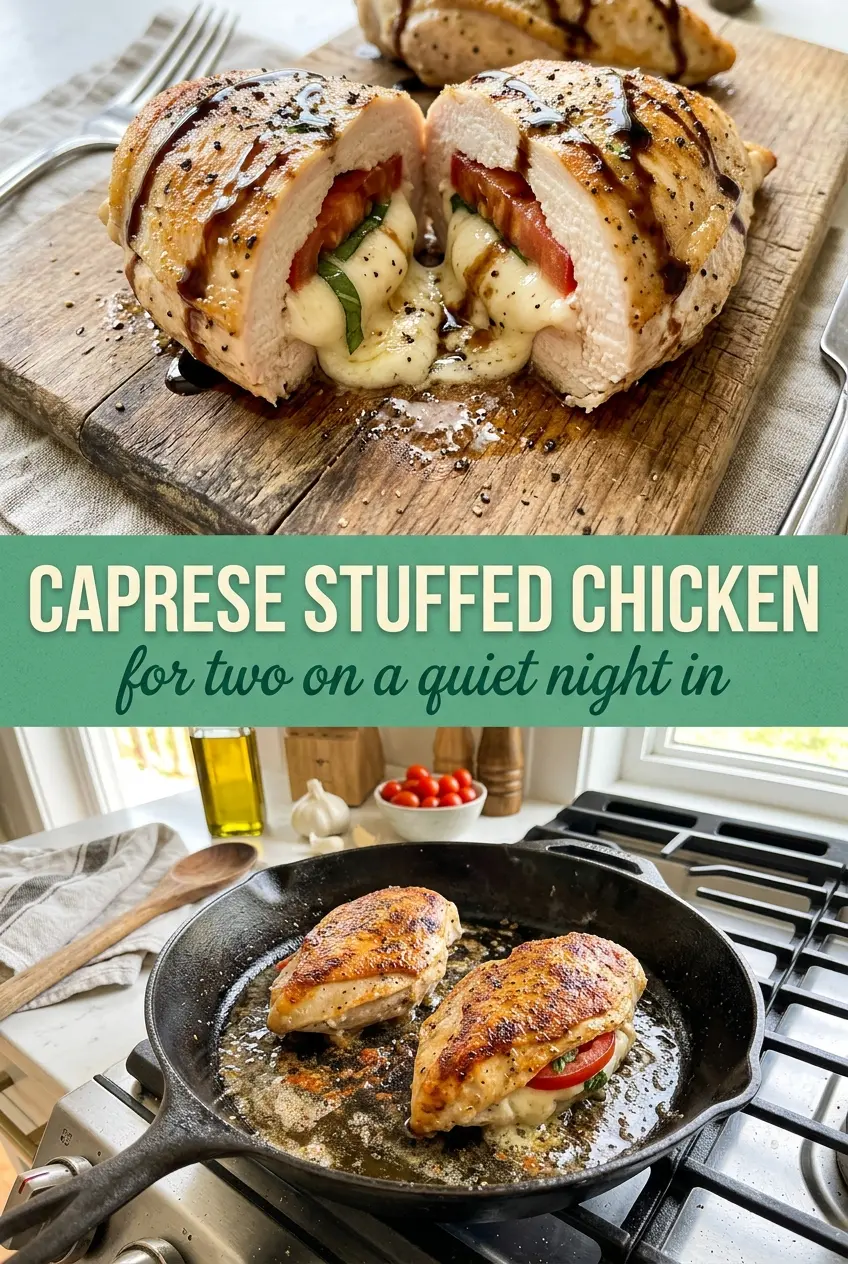
Caprese Stuffed Chicken
Ingredients
Equipment
Method
- Cut a pocket into the side of each chicken breast, being careful not to cut all the way through.
- Stuff each pocket with mozzarella, tomato slices, and a few basil leaves.
- Secure with toothpicks if needed, then season the outside with Italian seasoning, salt, and pepper.
- Heat the olive oil in a skillet over medium heat and sear the chicken for 5–6 minutes per side, until golden and cooked through.
- Drizzle with balsamic glaze and garnish with fresh basil before serving.