
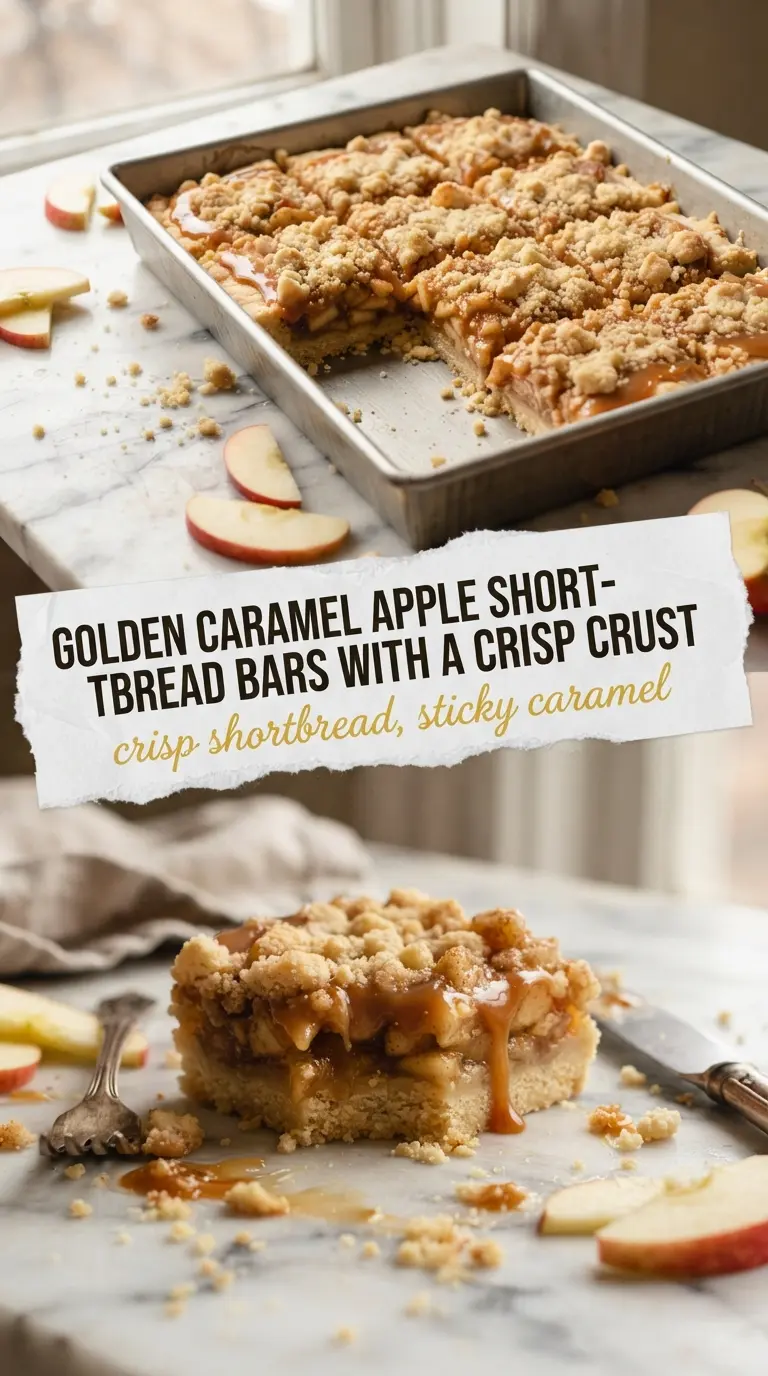
Buttery shortbread, tender baked apples, and a sticky caramel topping all land in one pan here, and the payoff is a bar that slices cleanly once it cools. The crust stays crisp around the edges, the middle softens just enough to hold the apples, and the caramel settles into the fruit instead of turning the whole thing soggy. That balance is what makes these bars worth baking again.
The trick is starting with a crust that gets a head start in the oven. If you layer raw apples over unbaked shortbread, the bottom turns pasty before the fruit is done. A short first bake sets the base so it can support the juices from the apples and the caramel without losing its structure. Tart apples matter here, too, because the caramel brings plenty of sweetness on its own.
Below you’ll find the one timing detail that keeps the bars neat, plus a few practical swaps if you only have a different apple on hand. Once you see how the layers bake together, this turns into the kind of dessert you can make without hovering over it.
The crust held together beautifully after the first bake, and the caramel soaked into the apples without making the bottom layer mushy. I waited the full cool time and the bars cut into clean squares like a bakery dessert.
Love the crisp shortbread and sticky caramel layers? Save these Caramel Apple Shortbread Bars for the next time you want an easy pan dessert that slices cleanly.
The Fix for a Soggy Bottom in Apple Bars
The bottom layer fails when the apples go straight onto raw dough. Apples release juice as they bake, and caramel loosens them even more. A quick first bake sets the shortbread so it can take that moisture without collapsing.
There’s another detail that matters more than most recipes admit: cooling. Warm bars may taste great, but they cut badly because the caramel and butter are still loose. Give them time, and the layers settle into neat squares instead of sliding apart.
What Each Ingredient Is Doing in These Bars
- All-purpose flour — This gives the shortbread its structure. You want enough to hold the crust in a firm layer, but not so much that it turns dry and bready.
- Butter — This is the flavor in the crust. Softened butter creams with the sugar and flour into that crumbly, press-in dough, and there isn’t a true substitute that gives the same shortbread texture.
- Sugar — It sweetens the crust and helps it bake up tender at the edges. Granulated sugar is fine here; there’s no need for anything fancy.
- Apples — Tart apples are the smartest choice because they keep the bars from leaning cloying. Slice them thin so they soften through in the oven instead of staying firm and watery.
- Caramel sauce — This ties everything together and adds the sticky finish people expect from a caramel apple dessert. A thick jarred sauce works well, but it should be pourable; if it’s too stiff, warm it gently so it drizzles instead of clumps.
Building the Layers So the Bars Bake Evenly
Mixing the shortbread base
Work the flour, butter, and sugar until the mixture looks sandy and clumps when pressed. That crumbly texture is what gives you a shortbread crust instead of a cookie dough layer. If the dough looks greasy, the butter was too warm; chill it for a few minutes before pressing it into the pan.
Giving the crust its first bake
Press two-thirds of the mixture firmly and evenly into the pan, getting into the corners so the bars slice cleanly later. Bake it until the top looks set and the edges are just starting to take on color. Pulling it early is better than overbaking here because the crust finishes after the apples go on.
Layering the apples and caramel
Spread the sliced apples over the hot crust in an even layer, then drizzle the caramel across the top. Don’t pile the apples too high in the center or the middle will stay wet longer than the edges. A thin, even layer bakes into tender fruit instead of a loose mound that slips when cut.
Finishing with the crumb topping
Scatter the remaining crumbs over the apples so some fruit peeks through. You’re looking for a loose topping, not a packed lid, because the open spaces let steam escape and keep the top from turning dense. Bake until the topping is golden and the apples are soft when pierced with a knife.
How to Change These Bars Without Losing the Balance
Use Granny Smith for the sharpest contrast
Granny Smith apples keep their shape and bring enough tartness to balance the caramel. If you use sweeter apples, the bars will still work, but the filling will taste softer and less bright.
Make them dairy-free with plant butter
A good plant-based butter substitute can stand in for the crust, as long as it’s the baking kind that behaves like real butter. The texture will be a touch less rich, but the bars still hold together and bake with a crisp edge.
Add cinnamon without overpowering the caramel
A small pinch of cinnamon tossed with the apples brings the flavor closer to a classic caramel apple. Keep it light, since too much spice can drown out the buttery shortbread and make the bars taste like pie filling.
Storage and Reheating
- Refrigerator: Store covered for up to 4 days. The crust softens a little as it sits, but the bars stay tidy and sliceable.
- Freezer: Freeze well once fully cooled and cut. Wrap individual bars and thaw them in the fridge so the caramel doesn’t get sticky and runny.
- Reheating: Eat them chilled or let them come to room temperature. If you want a warm bar, heat it for a few seconds only — longer heat will melt the caramel and make the crust greasy.
Answers to the Questions Worth Asking
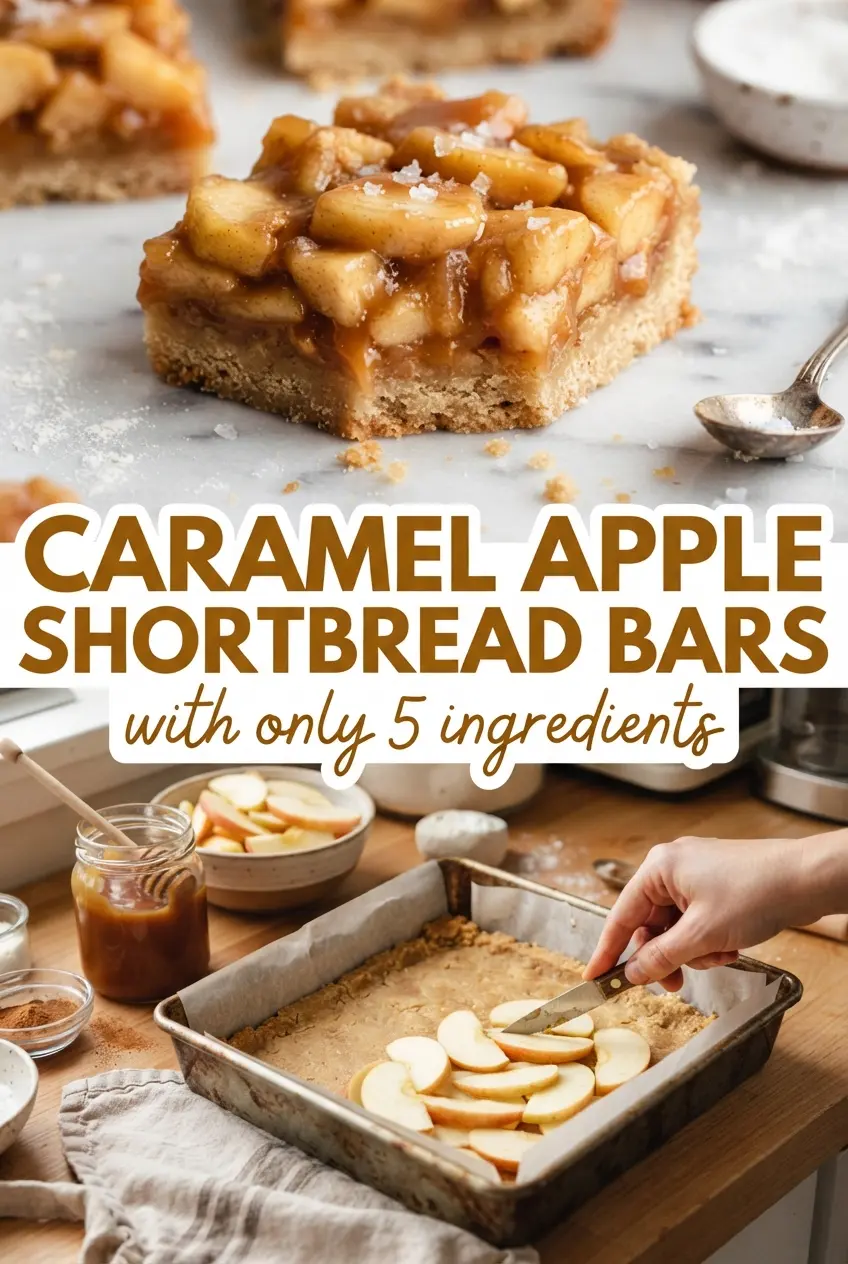
Caramel Apple Shortbread Bars
Ingredients
Equipment
Method
- Mix the all-purpose flour, butter, softened, and sugar until crumbly with an even, sandy texture.
- Heat the oven to 350°F so it’s ready for baking the crust.
- Press 2/3 of the crumb mixture into a 9x9-inch pan to form an even crust layer, then bake 15 minutes at 350°F until lightly set.
- Layer the apples, thinly sliced evenly over the baked crust.
- Drizzle 1 cup caramel sauce over the apples to coat, then sprinkle the remaining crumbs on top.
- Bake 30 minutes at 350°F until the top looks golden and the caramel is bubbling at the edges, then cool to firm up the bars.