
Roasted carrot ginger miso soup comes out silky, deep orange, and layered with the kind of savory sweetness that makes a plain bowl of soup feel like a complete meal. Roasting the carrots first changes everything. You get caramelized edges, a softer body for blending, and a richer flavor than boiling alone can ever give you. The miso brings a quiet, rounded umami that makes the soup taste like it simmered for hours even though most of the work happens in the oven.
The real trick is in the order. Carrots roast until their edges take on color, then they get simmered just long enough to soften fully before blending. The miso goes in at the end, off the direct heat, so it keeps its clean flavor instead of turning dull or grainy. Ginger and onion build the base without stealing the spotlight, which lets the carrots stay front and center.
Below, I’ve included the small details that matter here: how to keep the miso tasting bright, what to do if your soup feels too thick, and a few smart variations if you want to shift the flavor without losing that smooth, cozy finish.
The carrots got those caramelized edges like you said, and the miso stayed smooth when I whisked it in off the heat. My soup turned out velvety instead of thin, and even my picky kid ate a full bowl.
Save this carrot ginger miso soup for the nights when you want roasted flavor, a silky blend, and almost no cleanup.
The Reason Roasting the Carrots First Changes Everything
Boiled carrots can taste flat, even when they’re cooked perfectly. Roasting fixes that by driving off excess moisture and concentrating the natural sugars, which gives the soup a deeper color and a rounder sweetness before the broth ever hits the pot. That extra caramelization is what keeps this soup from tasting thin or one-note.
The other detail that matters is not rushing the simmer. Once the roasted carrots go into the pot, they only need enough time to finish softening and to help the onion and ginger settle into the broth. If you cook the soup hard and fast, the ginger can turn sharp and the miso can lose the gentle edge that makes it work so well here.
What Each Ingredient Is Actually Doing in This Dish

- Roasted carrots — These carry the soup. Smaller, younger carrots work fine, but whatever you use needs enough time in the oven to pick up color at the edges. Pale carrots will give you a pale, flatter soup.
- White miso paste — This adds salt, body, and umami. White miso is milder than red miso, which keeps the soup balanced instead of aggressively savory. If you only have red miso, use a little less and taste before adding more.
- Fresh ginger — Grated ginger perfumes the broth without becoming stringy. Ground ginger won’t give the same brightness here, so use fresh if you can. Peel it with a spoon, then grate it fine so it disappears into the soup.
- Vegetable broth — Use a broth you’d actually drink. Thin or overly salty broth makes the soup taste muddy or harsh once the miso goes in. If yours is weak, let the finished soup reduce a little before blending.
- Olive oil — Just enough to help the carrots brown instead of dry out. A neutral oil works too, but olive oil gives the roast a little more depth.
Building the Base Without Burning the Ginger
Roasting Until the Edges Color
Toss the chopped carrots with olive oil and spread them in a single layer so they actually roast instead of steam. You want browned spots on the corners and a fork-tender center. If the pan is crowded, the carrots will stay pale and the soup will taste sweeter than it should, but not nearly as complex.
Softening the Onion and Ginger
Cook the diced onion first until it turns translucent and starts to smell sweet, then add the ginger for just long enough to bloom it. Ginger burns quickly, and burnt ginger tastes sharp in a way that never blends out. Keep the heat moderate and stir often until the pan smells warm and fragrant, not toasted or bitter.
Simmering and Blending Smooth
Add the roasted carrots and broth, then simmer until the carrots practically collapse when pressed against the side of the pot. That short simmer ties everything together without washing out the roasted flavor. Blend until the soup is completely smooth and glossy. If it seems too thick, thin it with a splash of broth or hot water before you add the miso.
Whisking in the Miso at the End
Take the pot off the heat before you add the miso. Whisk it with a little hot soup in a bowl first if you want the cleanest, smoothest result, then stir it back in. High heat mutes miso fast, and that’s the easiest way to lose the savory finish that makes this soup taste complete.
How to Adapt This Carrot Ginger Miso Soup Without Losing the Silky Finish
Make It Dairy-Free and Naturally Vegan
This soup already lands in dairy-free, vegan territory as written, which is one reason it’s such a useful weeknight recipe. Keep the broth vegetable-based and skip any creamy add-ins unless they’re plant-based. If you want extra richness, blend in a small splash of unsweetened coconut milk at the end, but use it lightly so it doesn’t cover the ginger and miso.
If You Want It Thicker and More Filling
Blend in half a cooked potato or a small handful of cooked white beans with the carrots. That gives the soup more body without turning it heavy. The texture becomes creamier and a little more substantial, which works well if you’re serving it as a main course.
When You Need a Gluten-Free Version
Most miso paste is gluten-free, but not all of it is, so check the label before you buy. Use a certified gluten-free vegetable broth too, since broth is a sneaky place where gluten can show up. The soup itself doesn’t need any flour or starch, so once those two ingredients are sorted, you’re set.
Swap the Garnish for a Different Finish
Sesame seeds and scallions give the bowl a clean, savory finish, but toasted pumpkin seeds or a drizzle of chili oil work too. Seeds add crunch, while chili oil adds heat and a little richness. Skip both if you want the soup to stay especially smooth, but keep at least one finishing element so the bowl doesn’t feel one-dimensional.
Storage and Reheating
- Refrigerator: Store in an airtight container for up to 4 days. The flavor gets deeper by day two, and the soup may thicken as it sits.
- Freezer: It freezes well for up to 2 months. Cool it completely first, then freeze without the garnish. Leave a little room in the container because blended soups expand.
- Reheating: Warm it gently over low to medium-low heat and stir often. Don’t boil it after the miso goes in, or the flavor turns flat and the texture can get a little tired. Add a splash of broth or water if it has thickened in the fridge.
Questions I Get Asked About This Carrot Ginger Miso Soup
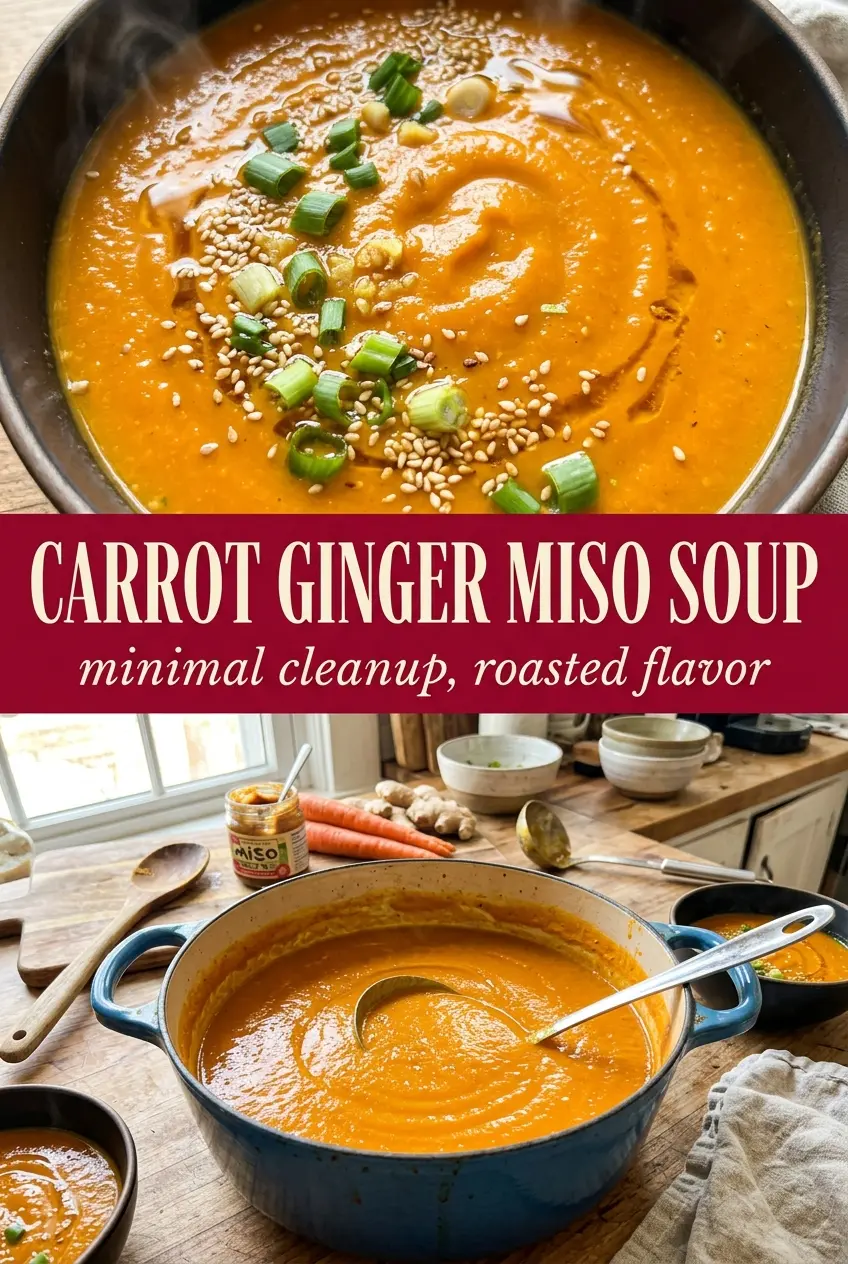
Carrot Ginger Miso Soup
Ingredients
Equipment
Method
- Preheat the oven to 425°F and line a sheet pan for easy cleanup (leave it ready for the carrots).
- Toss the chopped carrots with the olive oil on the sheet pan, then roast for 25 minutes until caramelized at the edges.
- In a Dutch oven, sauté the diced onion and grated ginger until fragrant, using medium heat to bring out aroma.
- Add the roasted carrots and vegetable broth to the pot, then simmer for 10 minutes to soften everything.
- Remove the pot from direct heat, then whisk in the white miso paste until fully dissolved.
- Blend until smooth, then garnish with sesame seeds and scallions.