
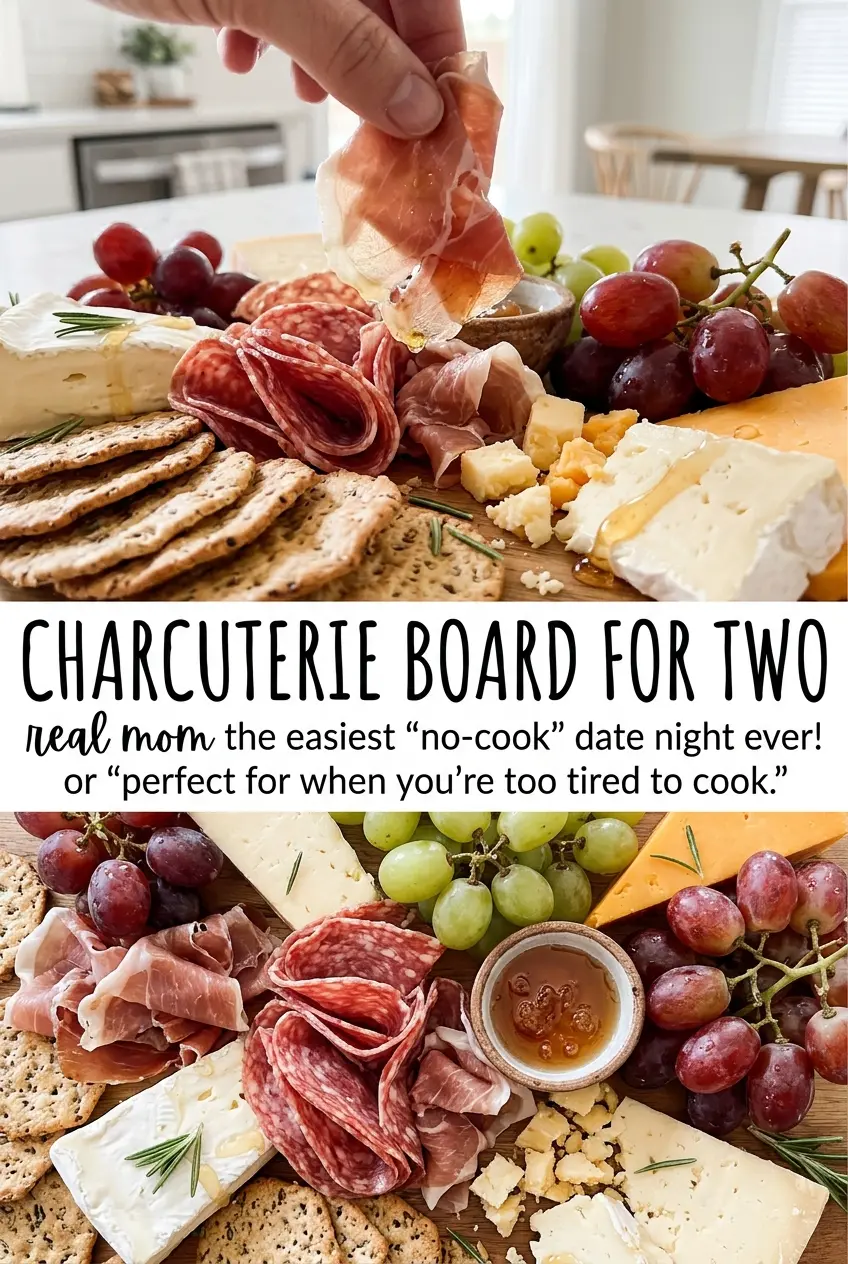
The grapes tend to roll toward the edge, and a pile of crackers can make a small board feel crowded before you’ve even added the meat. I build this charcuterie board for two in layers: cheeses first, then folded cured meats, with the fruit, olives, and almonds tucked into the open spaces. That order gives every bite a little room and keeps the board from looking like everything was tipped out at once.
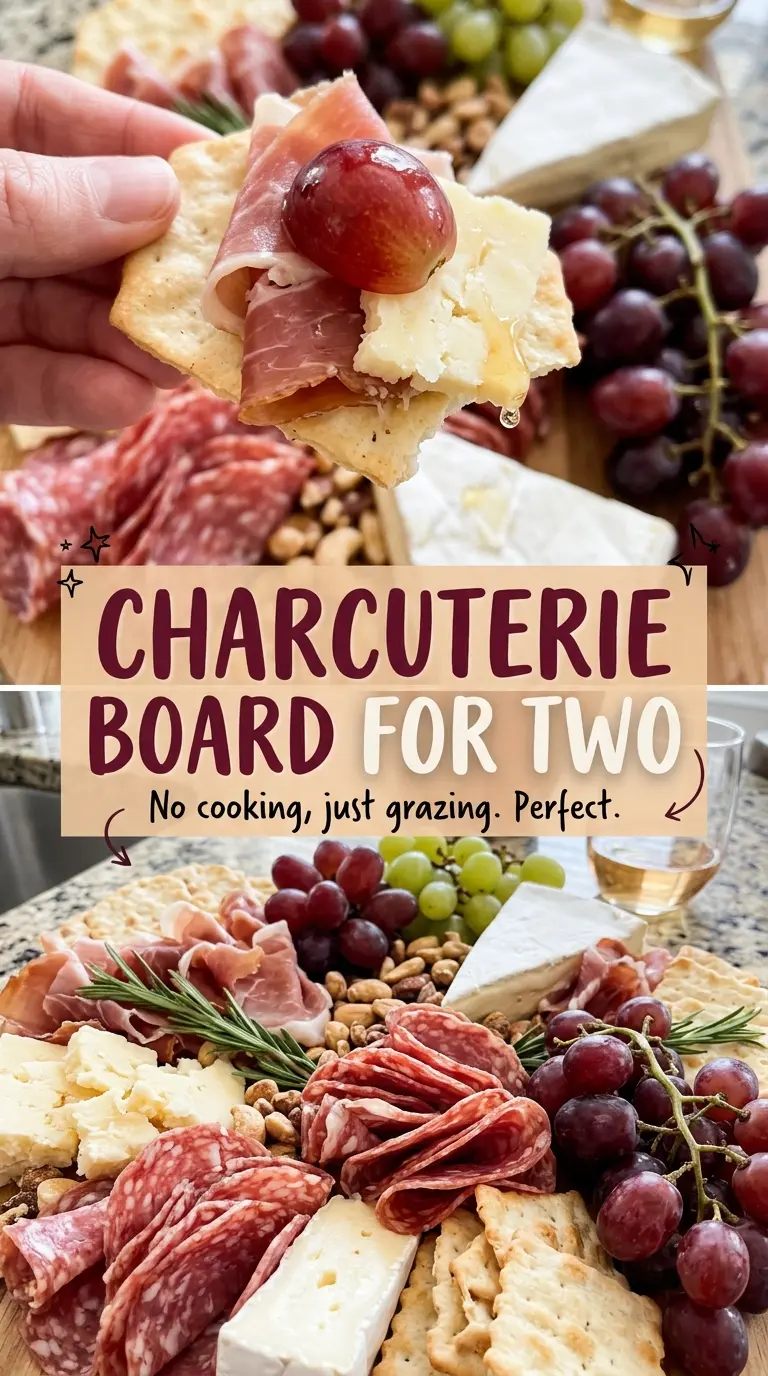
I like the contrast here: Brie is soft and mild next to aged cheddar, while soppressata and prosciutto bring savory, salty bites. Red grapes and dried apricots give you two kinds of sweetness, and the honey adds a little extra for dipping. You don’t need a large spread or special tools; a 10-inch serving board gives these portions a cozy, balanced home, with a small bowl of honey in the middle of the mix.
Kitchen Note
Set the honey bowl on the board after the other ingredients are in place. A flat, open spot keeps the bowl steady and makes it less likely to tip while you’re arranging everything around it.
Save this charcuterie board for two when you want a small spread with salty cured meats, sweet fruit, and honey for dipping.
A Small Board Needs Contrast More Than More Food
On a compact board, variety comes from texture and flavor rather than a long ingredient list. Here, the cheddar and Brie give you two distinct cheeses; the cured meats bring different shapes and saltiness; and the fruit, olives, and almonds fill out the bites without crowding the board. The honey adds a sweet finish, but it doesn’t need to cover every bite.
Think in little pockets instead of rows. Keep the cheeses visible as anchors, then place the folded meats beside them so the folds add height without hiding the cheese. Add crackers where they’re easy to reach, and use the remaining gaps for the smaller ingredients. Spreading the grapes and apricots apart also makes the board look more balanced and gives each person access to different pairings.
That balance matters because the ingredients are quite distinct on their own. A grape with Brie tastes different from an olive with cheddar, and a cracker gives you a crisp base for either. The board feels complete when those choices are easy to see and reach, not when every inch is covered.
What Each Ingredient Brings to This Two-Person Board
- Aged cheddar and Brie — The cheddar brings a firm, savory bite, while Brie gives the board a soft, creamy contrast. Buy cheddar you enjoy eating on its own; a basic Brie works well here because it’s paired with several other flavors. If Brie isn’t available, use Camembert cut into wedges for a similarly soft cheese with a more earthy taste. Slice the cheddar and cut the Brie into wedges before arranging them.
- Soppressata and prosciutto — Soppressata gives you a substantial, seasoned bite, while thinly sliced prosciutto is delicate and salty. Freshness matters more than a particular brand, so choose packages with slices that look moist rather than dried at the edges. For more heat, use spicy soppressata in place of the regular soppressata; keep the prosciutto for its softer texture. Fold both meats loosely so the slices stay easy to pick up.
- Crackers — They provide the crisp base for cheese and meat, and sturdy crackers hold toppings better than very thin ones. A familiar, inexpensive cracker is fine; choose gluten-free crackers instead if you need a gluten-free board, keeping the rest of the ingredients unchanged. Add them after the cheeses and meats so they don’t get buried.
- Red grapes and dried apricots — The grapes are juicy and fresh, while dried apricots are chewy and concentrated in sweetness. Choose firm grapes without split skins; the dried fruit doesn’t need to be fancy as long as it’s pleasantly soft, not hard and leathery. Dried figs can replace the apricots for a deeper, honeyed sweetness. Keep the grapes whole and use the dried fruit as it comes.
- Pitted olives and roasted almonds — Olives add a briny, savory note, and almonds bring a dry, crunchy contrast. Pitted olives are the practical choice for easy picking; everyday roasted almonds work well, salted or unsalted according to your preference. If olives aren’t your thing, replace them with more grapes for a sweeter, less briny board. Use pitted olives so there are no pits to manage while eating.
- Honey — Its floral sweetness pairs especially well with Brie and prosciutto. A good everyday honey is enough; a strongly flavored specialty honey will stand out more, but it isn’t necessary. Maple syrup can replace the honey in the small bowl for a different, more toasted sweetness. Pour it into the bowl just before setting the bowl on the board.
Building the Board Without Crowding the Good Parts
Give the cheeses their places first
Set the sliced aged cheddar and Brie wedges on the 10-inch serving board before adding anything else. Space them apart enough that each cheese stays easy to identify and reach. The firm cheddar and soft Brie already create a useful contrast in shape and texture. If the board feels crowded at this point, keep the rest in smaller clusters rather than stacking ingredients over the cheese.
Fold the meats and add the crackers
Fold the soppressata and prosciutto into loose folds, then arrange them beside the cheeses. Loose folds give the slices shape and make them easier to lift than a tightly packed pile. Add the crackers after the meats, leaving them visible and accessible. If the meat looks compressed, gently loosen the folds before moving on.
Fill the open spaces with contrast
Tuck the red grapes, dried apricots, pitted olives, and roasted almonds into the open spaces around the larger ingredients. The grapes and apricots add sweetness in different textures, while olives and almonds give the board savory and crunchy bites. Keep small ingredients in manageable pockets instead of scattering every piece across the board. That makes the choices clear and keeps the crackers from disappearing under loose items.
Set out the honey last
Pour the honey into a small bowl and set it on the board in an open, level spot. Leaving this until the other ingredients are arranged gives you room to place the bowl without nudging the cheese or folding the meats again. Keep the honey contained rather than drizzling it over the board; each person can add as much as they like to a bite. The finished board should feel full but still have enough space to pick up each item.
Easy Swaps That Keep the Board Balanced
Make the crackers gluten-free
Replace the crackers with gluten-free crackers, choosing a sturdy kind that can carry cheese and meat. The board keeps its crisp element, though some gluten-free crackers are more fragile, so arrange them in a small stack rather than pressing them into tight gaps.
Turn up the heat with spicy soppressata
Use spicy soppressata instead of regular soppressata, keeping the same amount. Its heat makes the mild Brie and sweet grapes especially useful contrasts, while the rest of the board stays familiar.
Trade apricots for dried figs
Use dried figs instead of dried apricots for a deeper, honeyed fruit note. Their chewy texture still fits the board, but their richer sweetness shifts the pairing slightly toward the Brie and honey.
Make-Ahead and Leftovers
- Refrigerator: Store leftover cheese, meats, fruit, olives, and almonds in separate airtight containers and use within 3 days for best quality. Keep crackers separate so they stay crisp.
- Freezer: Don’t freeze the assembled board. Grapes become soft, crackers lose their crunch, and Brie’s texture changes after freezing.
- Make ahead: Keep the components covered and chilled, then arrange the board shortly before serving. Perishable ingredients shouldn’t sit out for more than 2 hours, or 1 hour when the temperature is above 90°F.
Questions That Come Up When Making a Board for Two
Charcuterie Board for Two
Ingredients
Equipment
Method
- Arrange the cheddar and Brie on a 10-inch serving board.
- Fold the soppressata and prosciutto into loose folds and arrange them beside the cheeses.
- Add the crackers.
- Fill the open spaces with the grapes, dried apricots, olives, and almonds.
- Pour the honey into a small bowl and set it on the board.