
Cheesy hashbrown casserole lands on the table with a creamy center, crisp buttery topping, and those browned edges that disappear first. It’s the kind of side dish that works just as well beside eggs and bacon as it does next to roast chicken or ham, and the reason it gets requested again is simple: it holds together without turning gluey, and it still tastes rich after it cools a bit.
The trick is keeping the hash browns dry enough to bake instead of steam. Thawed potatoes that still carry a lot of ice crystals will water down the sauce, so I always let them finish thawing and then pat them down before mixing. The cornflake topping does more than add crunch; it gives the casserole a little structure on top, so every scoop has a soft middle and a crisp lid.
The hash browns baked up creamy without getting mushy, and the cornflake topping stayed crisp even after we went back for seconds. I followed the thaw-and-dry tip and it made a huge difference.
Cheesy hashbrown casserole with a crisp cornflake top is the kind of side dish people notice first and remember later.
The Reason This Casserole Stays Creamy Instead of Turning Heavy
A lot of hashbrown casseroles end up dense because the potatoes are wet and the sauce is overloaded before the dish ever reaches the oven. Here, the base is rich, but it’s not thickened with flour or built into a paste. The sour cream and soup coat the potatoes, and the cheese melts into the mix as it bakes, which keeps the texture soft and scoopable.
The other common problem is a casserole that bakes up fine in the center but soggy on top. That usually happens when the topping gets buried in moisture or the butter never coats it evenly. Tossing the cornflakes with melted butter before they go on top helps them toast instead of absorb steam.
What Each Ingredient Is Actually Doing in This Dish
- Frozen shredded hash browns — These are the backbone of the casserole. Thaw them fully and pat them dry, or the extra moisture will thin the sauce and keep the center from setting cleanly. Fresh shredded potatoes can work, but they need a quick rinse and a dry towel treatment to keep them from discoloring and releasing too much starch.
- Cream of chicken soup — This gives the casserole its built-in savory base and helps the filling cling together. You can use cream of mushroom if that’s what you have, but the flavor will shift a little earthier. If you want a homemade version, use a thick white sauce; just keep it thick enough that it won’t run when mixed with the potatoes.
- Sour cream — This is what gives the filling that tangy, creamy finish instead of a flat, heavy one. Full-fat sour cream gives the best texture, but a lower-fat version still works if that’s what’s in the fridge. Greek yogurt can step in, though it tastes a little sharper and bakes a touch less rich.
- Cheddar cheese — Sharp cheddar brings the most flavor because the casserole itself is mild. Pre-shredded cheese works in a pinch, but block cheese melts more smoothly and gives you a silkier filling. Mild cheddar will still work, but the casserole will taste less distinct.
- Cornflakes and butter — This topping is doing more than adding crunch; it gives you contrast against the creamy filling and prevents the top from feeling soft all the way through. Crush the cornflakes coarsely so you still get texture after baking. If you use very fine crumbs, the topping will bake into a thinner, less noticeable layer.
Getting the Texture Right From Mixing Bowl to Oven
Mix the Filling Without Smashing the Potatoes
Combine the thawed hash browns, soup, sour cream, melted butter, onion, and cheddar in a large bowl. Stir until everything is evenly coated, but don’t beat the mixture hard or the potatoes break down and turn the casserole pasty. The goal is a loose, creamy mixture with visible shreds of potato still intact. If the bowl looks watery at this point, the potatoes weren’t dry enough.
Spread It Into the Dish in an Even Layer
Scrape the mixture into a greased baking dish and press it down lightly so there aren’t air pockets under the surface. You want an even layer, not a packed one. If you compress it too much, the middle steams and the edges don’t get that nice baked texture. A spatula or the back of a spoon is enough here.
Toast the Topping Before It Goes In
Toss the crushed cornflakes with melted butter until every piece looks lightly coated. Scatter them over the casserole in a loose, even layer. Dry spots turn dusty and pale in the oven, while buttered flakes go deep golden and crisp. If you pile the topping too thickly in one area, that section will brown unevenly and the rest of the casserole will feel bare.
Bake Until the Center Moves Like Set Custard
Bake at 350°F until the casserole is hot through, bubbling at the edges, and the top is browned in spots. The center should look set but still soft underneath, not firm and dry. If the topping is getting dark before the middle is done, lay a loose piece of foil over the pan for the last stretch of baking. Let it rest for 5 minutes so the sauce settles before you scoop it.
How to Adapt This for Different Tables and Different Diets
Make It Vegetarian Without Losing the Savory Base
Swap the cream of chicken soup for cream of mushroom or cream of celery. Mushroom gives the deepest flavor and keeps the casserole cozy and savory, while celery stays milder. The rest of the recipe can stay exactly the same.
Go Gluten-Free Without Changing the Texture Too Much
Use a gluten-free cream soup and swap the cornflakes for a certified gluten-free crispy cereal or crushed gluten-free crackers. The casserole still bakes creamy, but the topping will toast a little differently depending on the swap. Check the casserole for salt after mixing, since gluten-free substitutes can vary a lot.
Make the Top Extra Crunchy for a Bigger Crowd
If you’re feeding a crowd and want the topping to stand out, add another small handful of crushed cornflakes and a tablespoon more butter. That gives you a thicker crust, but it also means you need to watch the edges so they don’t brown too quickly. The filling underneath stays the same.
Storage and Reheating
- Refrigerator: Store covered for up to 4 days. The topping softens a bit in the fridge, but the flavor holds up well.
- Freezer: It freezes well baked or unbaked. Wrap it tightly and freeze for up to 2 months; the topping will be less crisp after thawing, so expect a softer finish.
- Reheating: Reheat covered in a 325°F oven until hot, then uncover for the last few minutes to bring back some texture. The most common mistake is microwaving it straight from the fridge, which makes the potatoes turn gummy and the topping go limp.
Answers to the Questions Worth Asking
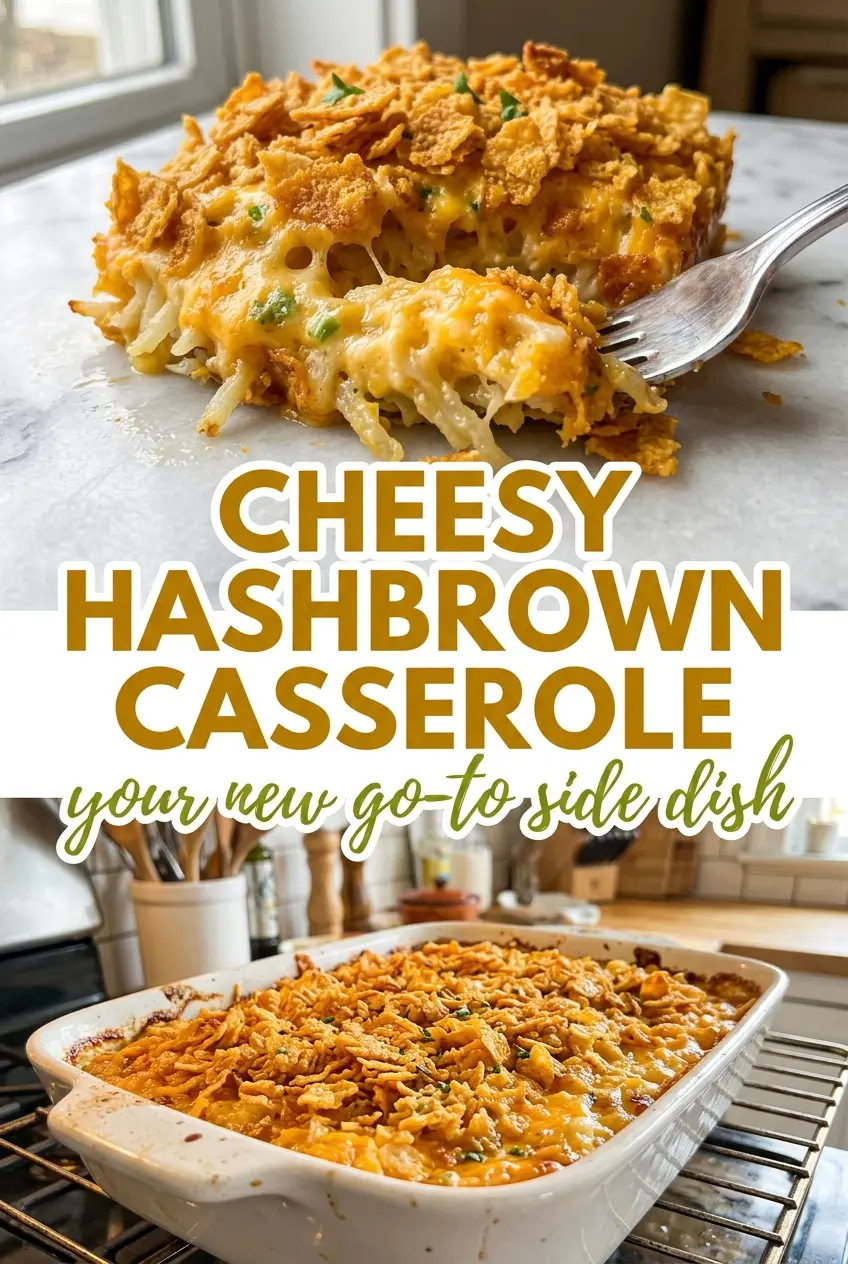
Cheesy Hashbrown Casserole
Ingredients
Equipment
Method
- Preheat the oven to 350°F and grease a baking dish.
- Thaw the hash browns fully and pat them dry so they bake up with better texture.
- In a large baking dish, mix the thawed hash browns, cream of chicken soup, sour cream, 1/2 cup melted butter, diced onion, and shredded cheddar cheese until evenly combined.
- Spread the mixture into the greased baking dish in an even layer.
- In a bowl, toss the crushed cornflakes with 3 tbsp melted butter until the crumbs are evenly coated.
- Sprinkle the buttered cornflake topping over the casserole so the top is fully covered.
- Bake at 350°F for 45-50 minutes until golden and bubbly with a crisp topping.
- Let the casserole rest for 5 minutes before serving to set the creamy center.