
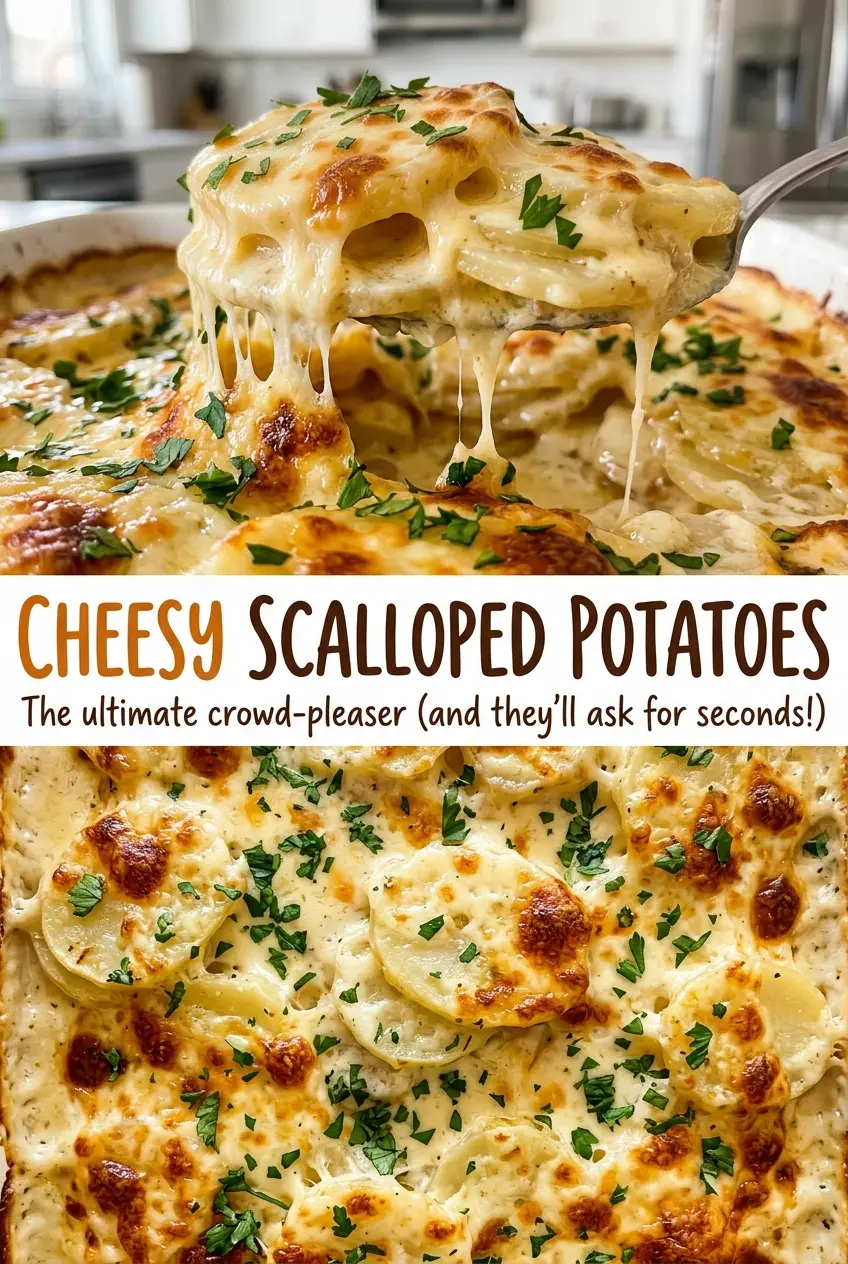
When the whisk leaves a trail across the saucepan, the cheese sauce is thick enough to cling to the potatoes instead of running straight to the bottom of the dish. That’s the texture I look for before I stir in the cheddar. It gives these cheesy scalloped potatoes a creamy layer between each stack of thin russet rounds, with a browned top after baking.
I use a simple flour-and-butter base, then whisk in whole milk until the sauce coats the back of a spoon. Taking the pan off the heat before adding the cheese helps it melt smoothly. The potatoes bake covered first, so they have time to soften, then uncovered until the top browns and a knife slides easily through the layers. After a short rest, they’re ready to serve warm and creamy.
Kitchen Note
Give the casserole its full 15-minute rest before serving. The bubbling sauce settles into the layers as it sits, so the first scoop holds together better.
Save these cheesy scalloped potatoes for a cozy dinner or a holiday table—the sharp cheddar sauce and browned top make this classic easy to come back to.
Why the Sauce Needs to Coat the Spoon Before It Meets the Potatoes
The sauce thickens on the stove, not in the baking dish. That matters because the potato slices are layered raw, and a thin sauce can slip down between them before it has a chance to cling. When it’s thick enough to coat the back of a spoon, it spreads across the layers and stays where you put it.
The flour and butter form the base that gives the milk body. Whisking the flour as it cooks helps it blend into the butter, while adding the milk gradually makes it easier to keep the sauce smooth. Once the cheddar goes in, the pan is off the heat; the residual warmth is enough to melt it without continuing to cook the cheese. This gives you a sauce that’s creamy before baking, rather than relying on the oven to fix a sauce that started out too loose.
Layering the sauce in two additions helps distribute it through the casserole. Put half over the first layer of potatoes, then repeat, so the top and the center both get some of that cheesy coating.
What the Russets, Whole Milk, and Cheddar Bring to the Dish

- Russet potatoes — Their starchy texture softens into tender layers as they bake and suits this creamy sauce. Peel them and slice them evenly; large differences in thickness mean the slices won’t soften at the same rate.
- Sharp cheddar — It brings a clear, tangy cheese flavor that stands up to the potatoes and milk. Freshly shredded cheddar melts smoothly; packaged shreds work in a pinch, though their coating can make the sauce a little less silky.
- Whole milk — The fat helps make the sauce rich and gives it more body than a low-fat milk would. I stick with whole milk here rather than thinning the sauce with a lower-fat swap.
- All-purpose flour — Flour thickens the milk into a sauce that clings to the slices. It’s the ingredient to change for a gluten-free adaptation; the variation below explains how to do that without making a flour roux.
- Unsalted butter — Butter greases the baking dish and forms the base of the cheese sauce. Unsalted butter also lets the measured kosher salt season the dish without guessing how salty the butter is.
Build the Sauce, Layer the Potatoes, Then Let the Oven Finish
Slice the Potatoes Evenly
Heat the oven to 350°F and grease a 9×13-inch baking dish with the softened butter. Peel the russets, then slice them into rounds 1/8 inch thick. Keeping the slices close in thickness helps them bake at the same pace. Set the baking dish nearby so you can layer the potatoes once the sauce is ready.
Cook the Flour Before Adding the Milk
Melt the butter in a 3-quart saucepan over medium heat. Whisk in the flour and keep whisking for 1 minute; the mixture should look smooth and lightly foamy rather than dry or lumpy. Gradually whisk in the milk, salt, and pepper, then cook for 5 to 7 minutes, whisking often. Stop when the sauce coats the back of a spoon.
Melt the Cheddar Off the Heat
Take the saucepan off the burner before stirring in the shredded cheddar. Stir until the cheese has melted into the sauce. If the cheese is still in distinct shreds, keep stirring gently in the warm sauce rather than returning the pan to the heat. The finished sauce should look smooth enough to spread over the potato layers.
Cover First, Then Brown the Top
Arrange half of the potato slices in the prepared dish and spread half of the cheese sauce over them. Add the remaining potatoes and sauce, then cover the dish tightly with foil. Bake for 45 minutes, remove the foil, and bake for another 25 to 35 minutes, until the top is browned and a knife slides easily into the potatoes. Let the casserole rest before serving.
Three Ways to Adjust the Cheddar or Make a Gluten-Free Sauce
Use Extra-Sharp Cheddar for a Bolder Finish
Swap extra-sharp cheddar for the sharp cheddar, keeping the same quantity. Its stronger, more assertive taste carries through the creamy sauce; if you prefer a gentler cheese flavor, stick with sharp cheddar.
Put Some of the Cheddar on Top
For a more pronounced browned-cheese finish, hold back some of the recipe’s cheddar and scatter it over the casserole when you remove the foil. The cheese on top browns as the uncovered potatoes finish baking, while the rest melts into the sauce.
Make the Sauce Gluten-Free with Cornstarch
Replace the flour with 2 tablespoons of certified gluten-free cornstarch. Whisk it into the cold milk until smooth, then add that mixture to the melted butter with the salt and pepper; cook, whisking often, until it thickens enough to coat a spoon. Take the pan off the heat and stir in the cheddar as usual. The sauce is still creamy, though it won’t have quite the same roux-based body.
Storage and Reheating
- Refrigerator: Store covered or in an airtight container for 3 to 4 days. The sauce will firm up as it chills, then soften again when reheated.
- Freezer: Freeze cooled portions in airtight, freezer-safe containers for up to 2 months. Thaw overnight in the refrigerator; the potatoes may be a little softer after freezing.
- Reheating: Warm covered portions in a 350°F oven until heated through to 165°F, or reheat individual servings in the microwave. Don’t reheat uncovered for the whole time, since the exposed potatoes can dry out before the center is hot.
Questions That Come Up While Making Cheesy Scalloped Potatoes
Cheesy Scalloped Potatoes
Ingredients
Equipment
Method
- Heat the oven to 350°F.
- Use the softened butter to grease a 9x13-inch baking dish.
- Slice the potatoes into 1/8-inch-thick rounds.
- Melt the butter in a 3-quart saucepan over medium heat.
- Whisk in the flour and cook for 1 minute, whisking constantly.
- Gradually whisk in the milk, salt, and pepper, then cook for 5 to 7 minutes, whisking often, until the sauce thickens enough to coat the back of a spoon.
- Remove the saucepan from the heat and stir in the cheddar until melted.
- Arrange half of the potatoes in the baking dish, spread half of the cheese sauce over them, then repeat with the remaining potatoes and sauce.
- Cover the dish tightly with foil and bake for 45 minutes.
- Remove the foil and bake for 25 to 35 minutes, until the top is browned and a knife slides easily into the potatoes.
- Let the potatoes rest for 15 minutes before serving.