
Blistered cherry tomatoes and a block of feta turn into a glossy, spoonable sauce in the oven, and that’s what makes this pasta worth repeating. The tomatoes collapse into something jammy, the feta softens into a creamy base, and the hot pasta pulls everything together without needing a separate sauce pan. It tastes like you worked harder than you did, which is exactly the kind of dinner I keep coming back to.
The trick is keeping the tomatoes crowded enough to burst and using block feta instead of crumbles. Block feta melts into a smoother, richer sauce; crumbled feta tends to dry out and stay grainy. A little reserved pasta water matters here too, because it loosens the mixture just enough to coat the noodles instead of turning the dish into a thick paste.
Below, I’ll walk through the part that matters most: how to get the tomatoes properly jammy, how to avoid a chalky feta sauce, and how to adjust the texture at the end so the pasta comes out creamy instead of heavy.
The tomatoes got jammy and the feta turned into the creamiest sauce right in the baking dish. I added a splash of pasta water at the end and it coated every noodle perfectly without being too heavy.
Cherry Tomato and Feta Baked Pasta is the kind of creamy, low-effort dinner worth keeping on repeat.
The Reason This Feta Pasta Stays Creamy Instead of Grainy
Most baked feta pastas fail for one simple reason: the cheese gets hot enough to dry out before the tomatoes have given up enough juice. Then you end up mashing a stubborn block into a sauce that tastes salty but not smooth. The fix is to bake until the tomatoes are fully collapsed and the feta is soft enough to smear with a spoon, not just warm on the outside.
The olive oil does more than keep things from sticking. It helps the tomatoes blister instead of scorch, and it gives the feta a little richness as it bakes. If your tomatoes are large enough to be watery inside, cut them in half so they burst faster. If they’re very small and tight-skinned, give them a few extra minutes in the oven before you add the pasta water.
What Each Ingredient Is Actually Doing in This Dish
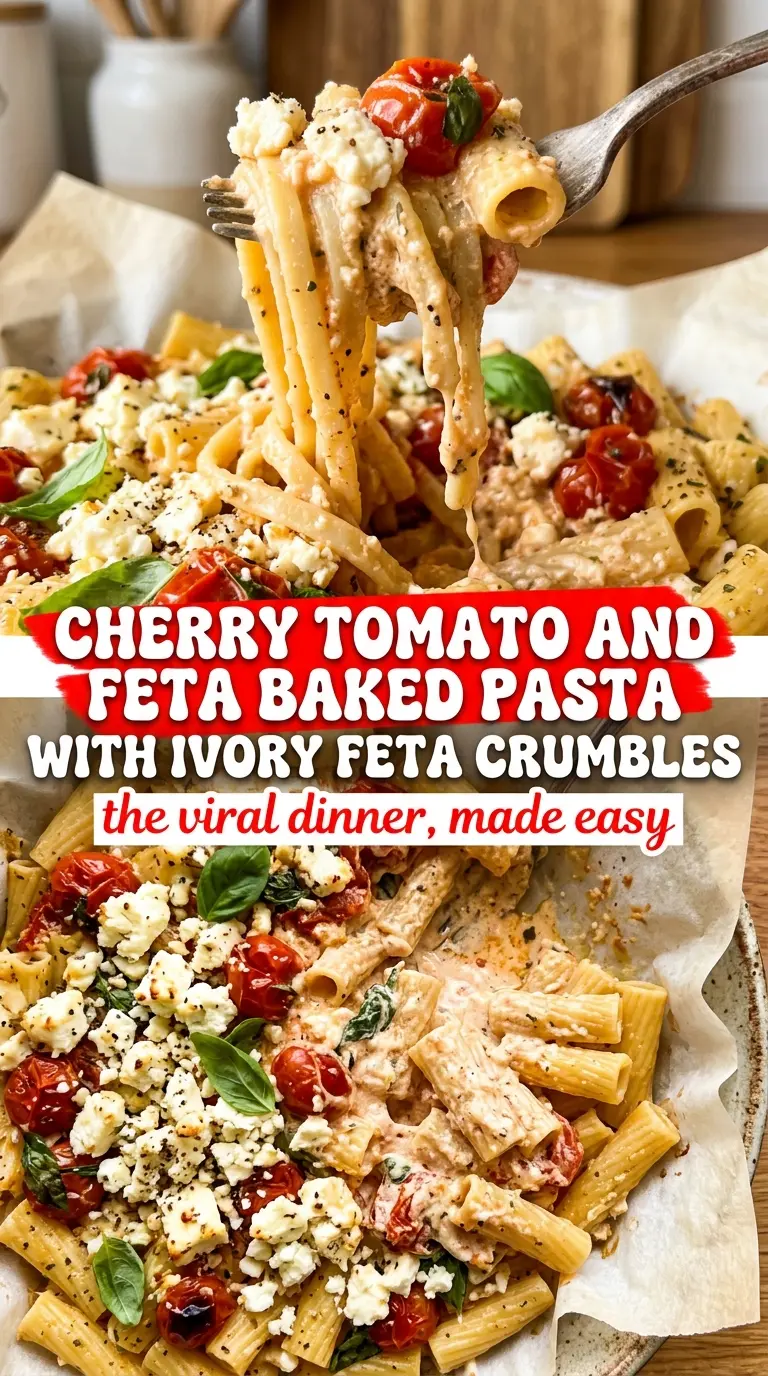
- Cherry tomatoes — Their natural juices become the sauce base. Grape tomatoes work too, but they’re a little firmer and may need a few extra minutes to burst.
- Block feta — This is the ingredient that turns silky when heated. Crumbled feta won’t melt the same way and can leave the sauce sandy.
- Olive oil — It carries the seasoning and helps the tomatoes roast properly. Use a decent one here because the sauce is simple and you’ll taste it.
- Garlic and basil — Add them after baking so they stay bright. Garlic added too early can turn harsh, and basil loses its fresh edge if it cooks too long.
- Pasta water — This is the bridge that turns roasted vegetables and cheese into a coating sauce. The starch helps the sauce cling to the pasta instead of slipping off.
How to Build the Sauce So It Doesn’t Split
Roast Until the Tomatoes Collapse
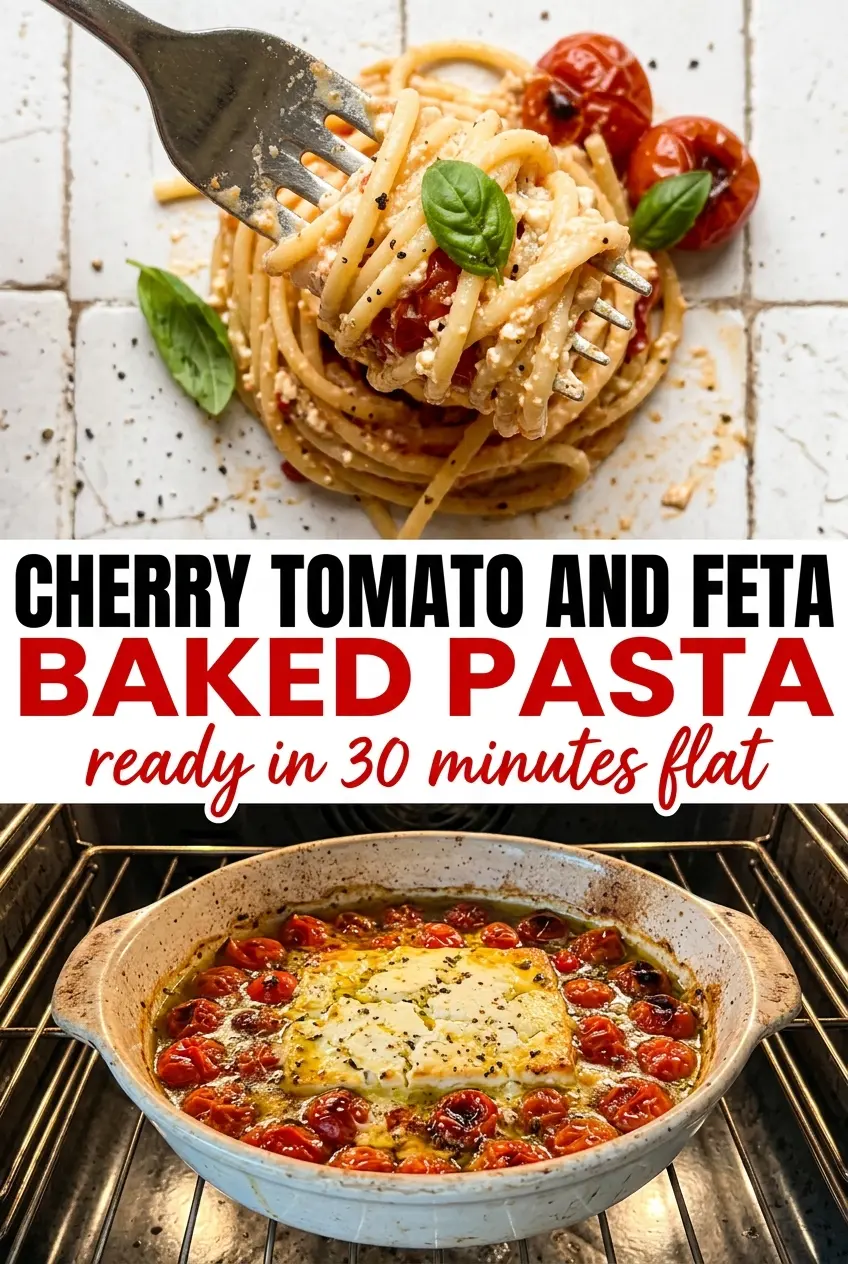
Start with a baking dish that holds the tomatoes snugly. Drizzle everything with olive oil and season it well, then nestle the feta in the center so it gets coated on all sides. When the tomatoes are ready, the skins will wrinkle, the juices will bubble around the edges, and the cheese will look softened all the way through. If the tomatoes are still mostly intact, the sauce won’t have enough body, so give them more time before moving on.
Mash, Then Loosen
Once the dish comes out of the oven, add the garlic and basil right away and mash the tomatoes and feta together. The heat from the pan takes the raw edge off the garlic without cooking away its bite, and the basil perfumes the sauce without turning dark. Add the pasta water gradually, a splash at a time, until the mixture looks creamy and glossy. Too much at once makes the sauce loose; too little leaves it clumpy and heavy.
Toss the Pasta While It’s Hot
Drain the pasta when it’s al dente and add it straight to the baking dish. Hot pasta grabs the sauce better than cooled pasta, and the starch on the surface helps everything cling. Toss until every piece is coated and the sauce looks unified instead of separated into tomatoes and cheese. If the pasta sits too long before mixing, it can tighten up and make the dish feel dry.
Make It Gluten-Free
Use your favorite gluten-free pasta and cook it just to al dente, because it softens a little more once it hits the hot sauce. A sturdy shape like penne or rotini holds up better than delicate noodles.
Make It Dairy-Free
Swap the feta for a dairy-free feta-style block that softens in heat, then finish with extra olive oil and a little reserved pasta water. The result won’t be identical, but you still get the same roasted tomato base and a creamy finish.
Add Protein Without Changing the Sauce
Stir in cooked chicken, sautéed shrimp, or white beans after the pasta is coated. Add them at the end so they warm through without overcooking or watering down the sauce.
Use It as a Baked Gnocchi Dish
Swap the pasta for shelf-stable gnocchi and boil it briefly first, or bake it separately if your brand cooks quickly. Gnocchi gives you a softer, more pillowy result and soaks up the tomato-feta sauce fast.
Storage and Reheating
- Refrigerator: Store in an airtight container for up to 4 days. The sauce thickens as it chills, so expect it to look a little tighter the next day.
- Freezer: It freezes, but the texture softens a bit after thawing because feta-based sauces can separate slightly. Freeze in portions for up to 2 months and reheat gently.
- Reheating: Warm it in a skillet over low heat with a splash of water until the sauce loosens again. High heat can make the cheese grainy and push the sauce into a broken, oily texture.
Answers to the Questions Worth Asking
Cherry Tomato and Feta Baked Pasta
Ingredients
Equipment
Method
- Preheat the oven to 400°F. Place the cherry tomatoes in a baking dish and pour the olive oil on top, seasoning with salt and pepper.
- Nestle the block of feta into the center of the dish, turning it to coat with the oil and seasoning.
- Bake for 35 minutes, until the tomatoes burst and the feta is melted and soft, with the surface visibly blistered and creamy.
- While baking, cook the pasta in salted water according to package directions until al dente, stirring occasionally so it cooks evenly.
- Reserve 1/2 cup of pasta water before draining the pasta, keeping it ready to loosen the sauce.
- Add the garlic and basil to the baked tomatoes and feta, then mash everything together until the mixture looks thick, creamy, and evenly combined.
- Toss the cooked pasta into the baking dish, adding reserved pasta water as needed until glossy, then garnish with more basil and Parmesan before serving.