
Chicken fajita foil packets come off the grill juicy, smoky, and packed with sweet peppers and softened onions that still keep a little bite. The sealed packet traps the seasoning and steam, so the chicken cooks fast without drying out and the vegetables pick up that charred fajita edge people usually chase in a skillet.
The trick is slicing the chicken and vegetables to a similar thickness so everything finishes at the same time. Heavy-duty foil matters here because the packets need to hold up over medium-high heat without tearing when you flip them or move them off the grill. A little olive oil helps the spices cling and keeps the chicken from sticking to the foil.
Below, I’ve included the one detail that keeps the chicken tender, plus a few smart swaps if you want to adjust the vegetables or serve these a different way.
The chicken stayed juicy and the peppers had just enough char without turning mushy. I loved that everything cooked in one packet and the cleanup took maybe a minute.
These chicken fajita foil packets make the juiciest no-mess grill dinner, and the peppers stay crisp-tender instead of soggy.
The Packet Trick That Keeps Chicken Juicy Instead of Overcooked
Foil packets are forgiving, but they’re not magic. If the chicken pieces are cut too small, they’ll dry out before the peppers finish softening. If the vegetables are cut too thick, the chicken ends up done before the onions lose their raw edge. The sweet spot is even strips, close in size, so the packet cooks like a balanced little steam-and-sear chamber.
Another thing that matters here is how tightly you seal the foil. Loose packets leak steam, which means less even cooking and fewer of those concentrated fajita juices at the bottom. Heavy-duty foil gives you a better seal and helps the packet hold its shape on the grill.
What Each Ingredient Is Actually Doing in This Dish
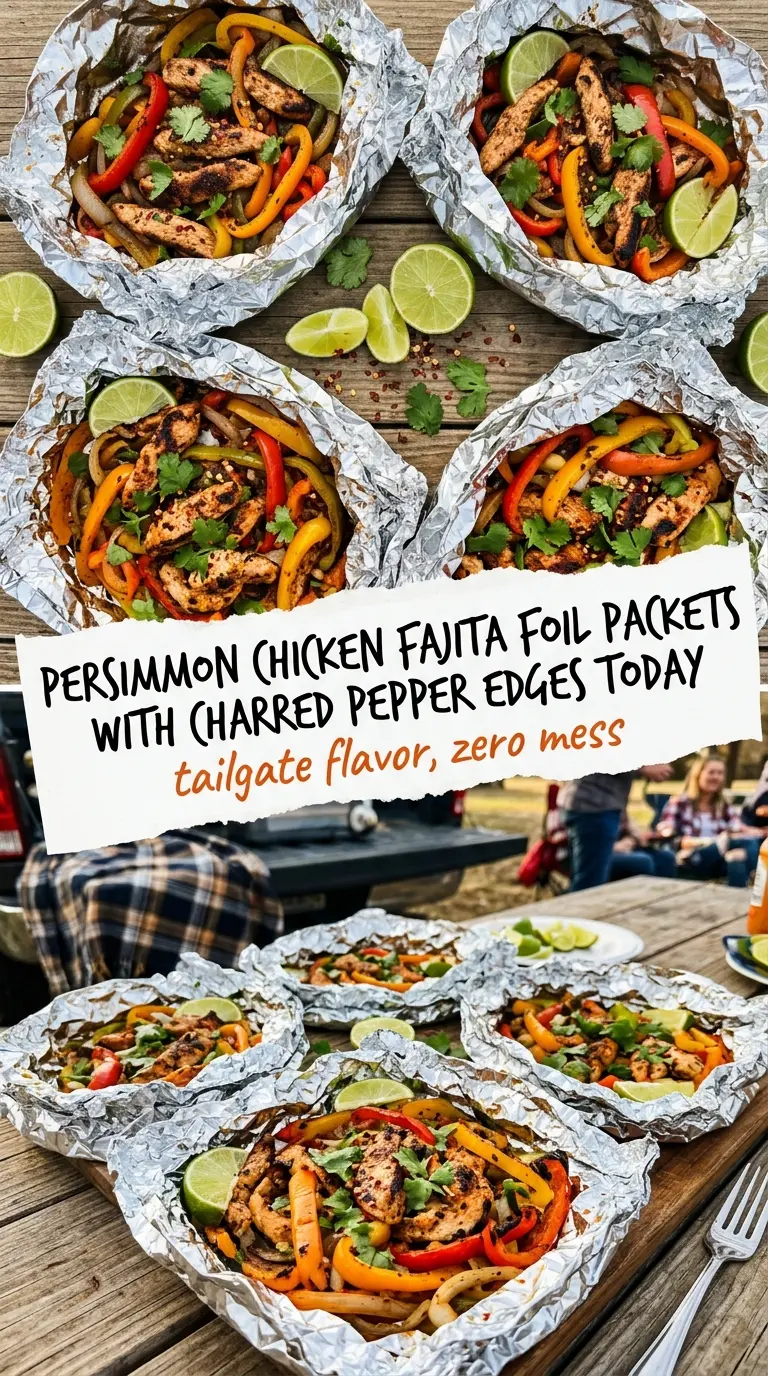
- Chicken breasts — Slice them into strips of similar width so they cook through in the same window as the peppers. Chicken thighs work too, and they stay a little more forgiving on the grill.
- Bell peppers — Use a mix of colors if you want a sweeter finish and a prettier packet. Thin slices cook fast and keep the packet from becoming watery.
- Onion — Yellow or red onions both work. Slice them thin so they soften enough to pick up the spice blend instead of staying crunchy and sharp.
- Olive oil — This helps the seasoning coat every piece and keeps the chicken from clinging to the foil. A neutral oil works in a pinch, but olive oil adds a little more body.
- Chili powder, cumin, and garlic powder — This is the backbone of the fajita flavor. If you only have a fajita seasoning blend, use it, but check the salt level before adding more.
Building the Packets So the Grill Does the Work
Layer the ingredients evenly
Lay out four large sheets of heavy-duty foil and divide the chicken, peppers, and onions evenly. Keep the pieces in a fairly flat mound in the center of each sheet so the heat can move through the packet evenly. If you pile everything high, the middle steams while the edges overcook.
Season before sealing
Drizzle the oil over each pile, then add the spices, salt, and pepper before tossing gently right inside the foil. That keeps every strip coated without dirtying an extra bowl. The oil and spices should cling to the chicken and vegetables, not pool at the bottom.
Seal tight and grill hot
Fold each packet closed with a tight seam and leave a little room inside for steam to circulate. Grill over medium-high heat for 15 to 20 minutes, depending on the size of the chicken strips. When you open one packet, the chicken should be opaque all the way through and the peppers should have charred edges but still some shape.
Make it with chicken thighs instead of breasts
Boneless chicken thighs give you a little more cushion if you’re worried about overcooking. They stay juicier and taste a bit richer, though they won’t slice as cleanly for tacos or bowls.
Dairy-free and naturally gluten-free serving ideas
The packets themselves are dairy-free and gluten-free as written. Serve them with corn tortillas, rice, or lettuce cups if you want to keep the meal completely in that lane without changing the cooking method.
Swap in different vegetables
Zucchini, mushrooms, or sliced poblano peppers work well here. Just keep the pieces similar in size to the chicken, since watery vegetables can soften fast and take over the packet if they’re cut too thick.
Storage and Reheating
- Refrigerator: Store leftovers in an airtight container for up to 3 days. The peppers soften a little more after chilling, but the flavor holds up well.
- Freezer: You can freeze the cooked chicken and vegetables for up to 2 months, though the peppers will lose some texture. Freeze in a flat container and thaw in the refrigerator before reheating.
- Reheating: Reheat in a skillet over medium-low heat with a splash of water or broth, or cover and warm in the oven. High heat dries the chicken out fast, especially once it’s already been cooked through.
Questions I Get Asked About This Recipe
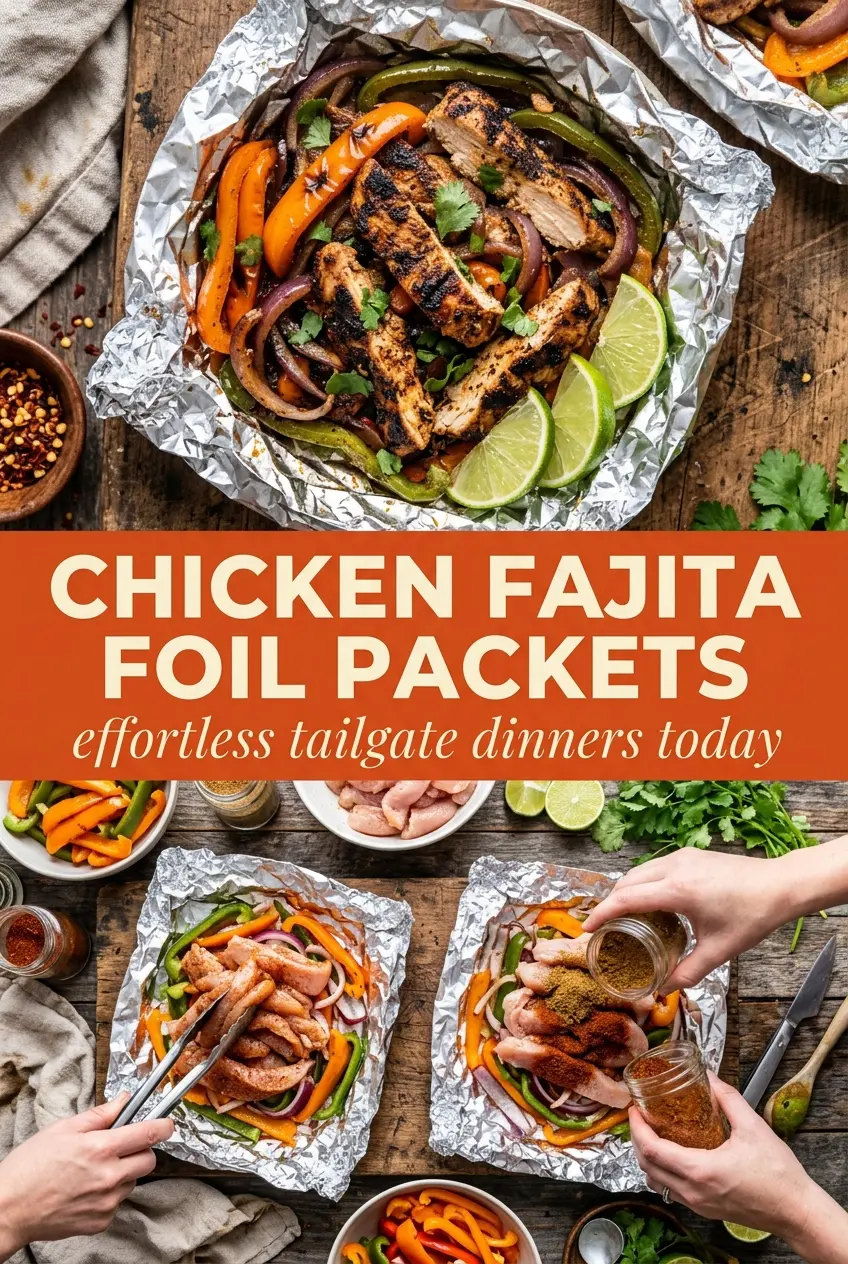
Chicken Fajita Foil Packets
Ingredients
Equipment
Method
- Lay out 4 large sheets of heavy-duty foil and set them on a sheet pan in a workable layout. Keep the foil roomy so you can fold and seal each packet tightly.
- Divide the chicken strips, bell peppers, and onion evenly among the foil sheets. Aim for similar thickness so everything finishes cooking at the same time.
- Drizzle olive oil over each pile, then sprinkle with chili powder, cumin, garlic powder, salt, and pepper. Season all the ingredients so the coating is visible on the chicken and vegetables.
- Toss gently within the foil to coat evenly, without tearing the foil. Stop when the strips and vegetables look evenly covered in spices.
- Fold and seal the foil packets tightly to trap steam. Leave minimal gaps so the packets stay sealed during grilling.
- Grill the packets over medium-high heat for 15-20 minutes. Open one carefully to check that the chicken is cooked through and the peppers are charred with browned spots.