
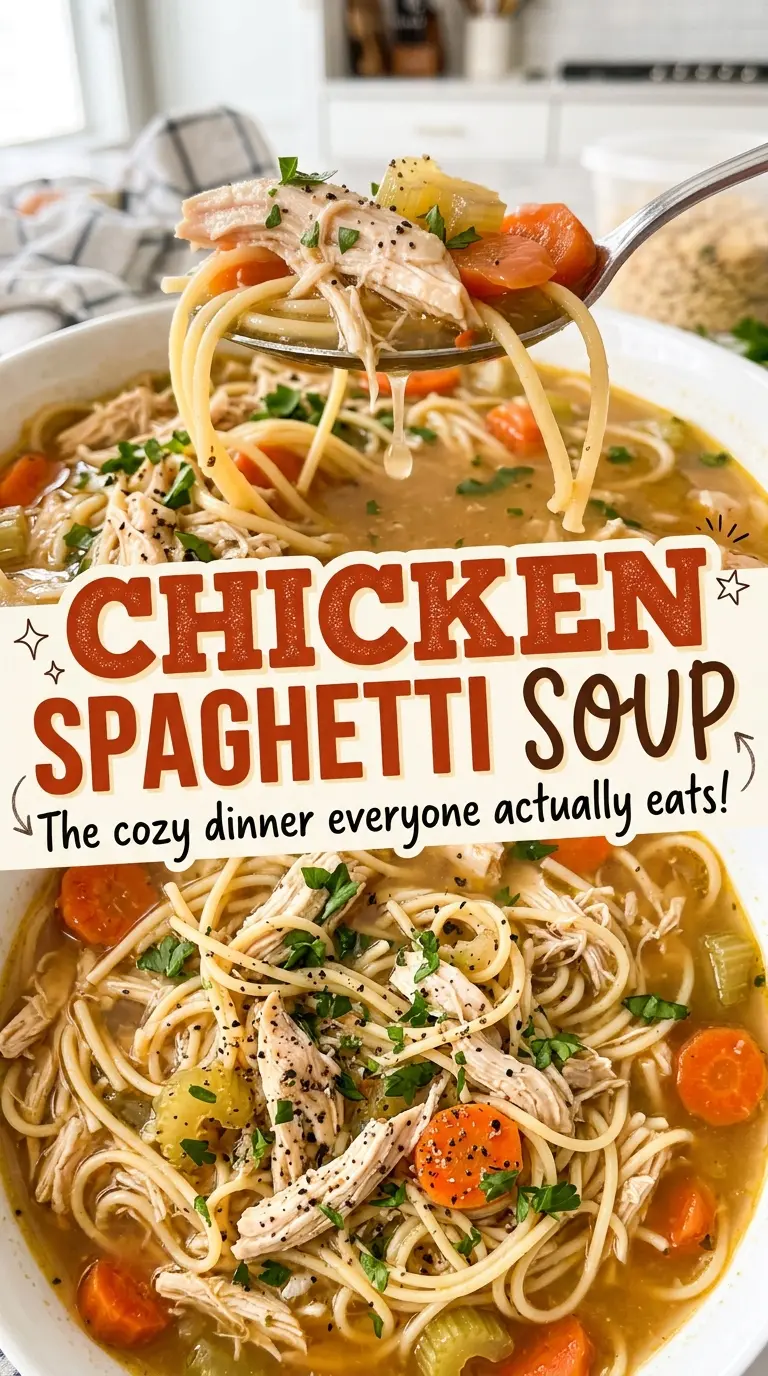
The broth starts clear and loose, then turns lightly cloudy once the spaghetti cooks right in the pot. That change is a good sign: the noodles give the liquid a little body instead of sitting on top as a separate layer. I make Chicken Spaghetti Soup when I want a full bowl from one pot, with tender chicken and vegetables in every spoonful, but don’t want a thick sauce to weigh it down.
The chicken simmers in the tomato broth first, then comes out to shred while the pasta cooks. That order keeps the chicken from spending extra time in the pot and gives the spaghetti room to turn tender in the flavorful broth. Carrots and celery bring a little sweetness and texture, while diced tomatoes brighten every spoonful. The result is a straightforward, hearty soup with noodles tucked into a savory broth.

Kitchen Note
I wait to add the garlic until the vegetables have started to soften. Minced garlic can scorch if it sits in hot oil through the longer vegetable-cooking stage, so adding it later keeps its flavor mellow.
Save Chicken Spaghetti Soup for a one-pot dinner with tender chicken, vegetables, and spaghetti simmered right in the tomato broth.
Why the Spaghetti Belongs in the Broth, Not a Separate Pot
Cooking the spaghetti directly in the soup does more than save you from washing another pot. As the noodles soften, a little starch moves into the broth and gives it a lightly rounded, less watery feel. The pasta also takes on the flavor of the chicken broth and tomatoes as it cooks, so each bite tastes connected to the soup around it.
There is a tradeoff: this isn’t a clear broth with plain noodles dropped in at the end. The liquid gets a touch cloudy, and the noodles keep absorbing broth as they sit. I like that just-cooked balance of tender spaghetti and a broth that still pours easily into a bowl. If you’re used to cooking pasta separately, that thicker, more integrated texture is the difference to expect.
Taking the chicken out before the spaghetti goes in makes the timing easier to manage. The chicken can be shredded while the noodles cook, and it only returns for a brief warm-through at the end. That keeps the pot moving without leaving the chicken to simmer through the pasta’s cooking time.
The Ingredients That Give Chicken Spaghetti Soup Its Savory Base
- Chicken breasts — Boneless, skinless breasts are lean and easy to shred once simmered. Pieces of similar thickness cook more evenly, so choose breasts that are close in size when you can.
- Low-sodium chicken broth — It supplies most of the soup’s savory flavor while leaving room for the kosher salt in the pot. A basic store-brand broth works well here; choosing low-sodium matters more than buying an expensive brand.
- Spaghetti — Dry spaghetti broken into short pieces is easy to catch on a spoon and releases starch into the broth as it cooks. Use regular spaghetti for the timing below; alternative pastas can soften at a different pace.
- Diced tomatoes — The tomatoes bring acidity and small, juicy pieces throughout the soup. Add the can with its liquid rather than draining it, so their tomato flavor joins the broth.
- Onion, carrots, and celery — Together they make the aromatic base and add sweetness and a little bite. Keep the carrot and celery slices reasonably even so they soften at a similar pace.
- Garlic and Italian seasoning — These give the broth its familiar savory-herb character. Dried Italian seasoning is convenient and works well; mince the garlic finely so it disperses rather than leaving a large raw-tasting piece in a spoonful.
- Olive oil, kosher salt, and black pepper — The oil starts the vegetables cooking, while salt and pepper season them before the broth goes in. Kosher salt’s larger crystals are easy to pinch and distribute as you stir.
Building the Soup Without Tough Chicken or Mushy Spaghetti
Soften the Vegetables Before Adding the Garlic
Warm the olive oil in a 6-quart pot over medium heat. Add the diced onion, sliced carrots and celery, kosher salt, and black pepper, then cook for 5 to 7 minutes, stirring occasionally. The vegetables should begin to soften, not brown deeply. If the onion edges are darkening before the carrots start to yield, lower the heat.
Give the Garlic and Herbs a Short Cook
Stir in the minced garlic and Italian seasoning once the vegetables have started softening. Cook for 30 seconds, stirring so the garlic doesn’t sit against the hot bottom of the pot. You’ll smell the garlic and herbs as they warm; don’t let the garlic turn brown, which can make the broth taste bitter.
Simmer the Chicken in the Tomato Broth
Add the chicken broth, diced tomatoes, and chicken breasts, then bring the pot to a boil. Reduce the heat and simmer uncovered for 15 to 22 minutes. Check the thickest part of each breast with a thermometer; the chicken is ready when it reaches 165°F. If one breast is thicker than the other, check each piece rather than relying only on the shorter cooking time.
Shred the Chicken and Finish the Noodles
Transfer the cooked chicken to a plate and shred it with two forks. Add the broken spaghetti to the soup and simmer for 8 to 10 minutes, stirring occasionally so the pieces don’t settle together. Look for tender noodles without a firm, chalky center. Return the shredded chicken to the pot and simmer for 1 to 2 minutes, just until heated through.
Simple Changes for a Different Bowl of Chicken Spaghetti Soup
Make It Gluten-Free with Gluten-Free Spaghetti
Swap in the same amount of gluten-free spaghetti, broken into short pieces. Gluten-free brands vary in how quickly they soften, so start checking before the usual pasta is expected to be tender and stop when the noodles have a pleasant bite. The broth may be a little less starchy, and the noodles can be more delicate.
Make a Milder, Tomato-Free Broth
Leave out the diced tomatoes for a more straightforward chicken-and-vegetable soup. The broth will taste less bright and won’t have the tomato pieces, but the chicken, vegetables, garlic, and Italian seasoning still make a savory base. Keep the rest of the method the same.
Break the Spaghetti into Shorter Pieces
For smaller, easier-to-spoon noodle bites, break the spaghetti into pieces shorter than the usual 2-inch lengths. Since the pieces may turn tender sooner, start checking the texture early while they simmer. The flavor stays the same; the bowl just eats more like a classic spoonable soup.
Storage and Reheating
- Refrigerator: Refrigerate leftovers within 2 hours and keep them for 3 to 4 days. The spaghetti will continue to absorb broth and soften, so the soup will be thicker the next day.
- Freezer: Freeze portions in airtight containers for up to 2 to 3 months. The soup freezes safely, though the spaghetti will be softer after thawing; freeze it only if that texture change won’t bother you.
- Reheating: Warm leftovers gently in a saucepan over low to medium heat, stirring now and then until hot throughout. Avoid a hard boil, which can make the chicken stringy and push the noodles toward mushy.
Questions That Come Up While Making This Soup
Chicken Spaghetti Soup
Ingredients
Method
- Heat the olive oil in a 6-quart pot over medium heat.
- Add the onion, carrots, celery, salt, and pepper; cook for 5 to 7 minutes, stirring occasionally, until the vegetables begin to soften.
- Stir in the garlic and Italian seasoning and cook for 30 seconds.
- Add the chicken broth, diced tomatoes, and chicken breasts and bring to a boil.
- Reduce the heat and simmer uncovered for 15 to 22 minutes, until the chicken reaches 165°F in the thickest part.
- Transfer the chicken to a plate.
- Shred the chicken with two forks.
- Add the spaghetti to the pot and simmer for 8 to 10 minutes, stirring occasionally, until tender.
- Return the shredded chicken to the pot and simmer for 1 to 2 minutes, until heated through.