
Chicken with Thai basil lands on the plate with the kind of heat, salt, and herbal perfume that makes plain rice disappear fast. The chicken gets browned hard enough to pick up those savory bits at the bottom of the pan, then the basil goes in at the end so it stays bright and peppery instead of fading into the sauce. That last-minute addition is what keeps this dish tasting sharp and fresh instead of flat.
The trick here is balance. Thai basil has a different edge than sweet basil — a little anise, a little pepper, and a lot more punch — so it can stand up to fish sauce, soy sauce, and chilies without getting buried. Ground chicken is perfect because it picks up flavor quickly and stays tender if you don’t overcook it into dry crumbs. Everything happens fast, which is exactly why the seasoning needs to be ready before the pan gets hot.
Below you’ll find the small timing details that keep the basil from turning bitter, plus a few smart swaps if you’re cooking around what’s already in the kitchen.
The basil stayed bright and fragrant when I added it off the heat, and the sauce clung to the chicken instead of pooling in the pan. My husband said it tasted like his favorite takeout stir-fry, only fresher.
Chicken with Thai basil brings fast browning, fresh basil, and bold savory heat together in one skillet.
The Reason the Basil Goes in Last
If Thai basil cooks too long, it loses the peppery lift that makes this dish taste alive. The leaves go from fragrant to dull fast, and once they’ve sat in direct heat for too long, they can turn dark and a little bitter. That’s why the chicken, garlic, and chilies do their work first, and the basil only joins the pan after the heat is off.
The other mistake is building the sauce before the chicken has a chance to brown. Ground chicken gives off moisture, and if you crowd the pan or stir constantly, it steams instead of searing. Let it sit in contact with the pan long enough to pick up color, then break it apart and keep cooking until the edges look caramelized, not pale.
What Each Ingredient Is Doing in This Dish

- Ground chicken — This is the base that carries the sauce and soaks up the garlic-chili mixture quickly. Thigh meat gives a little more richness, but lean ground chicken works fine if you don’t overcook it. If you swap in ground turkey, use the same method and expect a slightly milder result.
- Thai basil — This is the ingredient that makes the dish taste like itself. Regular sweet basil can work in a pinch, but it won’t give you the same spicy, clove-like edge. Add it only at the end so the leaves wilt without collapsing into the sauce.
- Fish sauce — It adds the deep savory saltiness that plain soy sauce can’t quite replace. If you need a substitute, use soy sauce plus a small splash of lime juice, but the flavor will be less rounded and less complex.
- Thai chilies and garlic — These bloom in the oil and season the whole pan from the start. If you want less heat, cut back on the chilies rather than skipping them entirely, because the dish needs that sharp bite to balance the sweetness.
- Brown sugar — Just enough sugar smooths the salt and heat without making the dish taste sweet. Don’t add more unless you’ve tasted the finished sauce and it feels harsh; a little sweetness goes a long way here.
Getting the Chicken Browned Before the Sauce Goes In
Start With Hot Oil and a Hot Pan
Heat the oil until it shimmers, then add the garlic and chilies and stir for about 30 seconds. You want the garlic fragrant, not browned to the point of bitterness. If the heat is too low, the aromatics will soften and turn greasy instead of blooming cleanly.
Let the Chicken Sit Long Enough to Color
Add the ground chicken and leave it alone for a moment before breaking it apart. That pause helps the meat pick up a little crust instead of turning into wet crumbles. Keep cooking until the liquid cooks off and the pan starts to look dry at the edges, which usually takes 6 to 8 minutes.
Season After the Meat Has Some Color
Stir in the soy sauce, fish sauce, and brown sugar once the chicken is cooked through and browned. If you add them too early, the liquid slows the browning and the chicken tastes more boiled than seared. The sauce should gloss the meat and cling lightly, not sit in a puddle at the bottom of the skillet.
Wilt the Basil Off the Heat
Pull the pan off the burner before adding the Thai basil. The residual heat is enough to soften the leaves in seconds, and that gentler finish keeps the basil bright. If you leave the pan over direct heat, the basil will darken and lose the fresh aroma that makes this dish stand out.
Three Practical Ways to Adjust This Dish
Make It Gluten-Free
Swap the soy sauce for a certified gluten-free tamari or coconut aminos. Tamari gives the closest savory depth, while coconut aminos tastes a little sweeter and lighter, so you may want a touch less brown sugar.
Make It Milder
Use one chili instead of two, or seed them before slicing. You’ll keep the fragrance and a little heat without the sharp burn, which works well if you’re serving this to kids or anyone who likes their food gentler.
Make It Dairy-Free and Low Effort
This dish already fits both of those needs without extra work. Keep the sauce simple, serve it over rice, and add a fried egg on top if you want more richness without changing the core flavor of the chicken and basil.
Stretch It Into a Bigger Meal
Toss in thin green beans, bell pepper strips, or snap peas during the last few minutes of cooking. They add crunch and help the dish feed more people without changing the sauce balance.
Storage and Reheating
- Refrigerator: Store in an airtight container for up to 4 days. The basil will darken a little, but the flavor stays good.
- Freezer: The chicken mixture freezes well for up to 2 months, but the basil is best added fresh after reheating if you want the brightest flavor.
- Reheating: Warm it in a skillet over medium-low heat with a splash of water if needed. Microwave reheating works, but it can dry out the chicken and mute the basil, so stop as soon as it’s hot through.
Questions I Get Asked About This Recipe
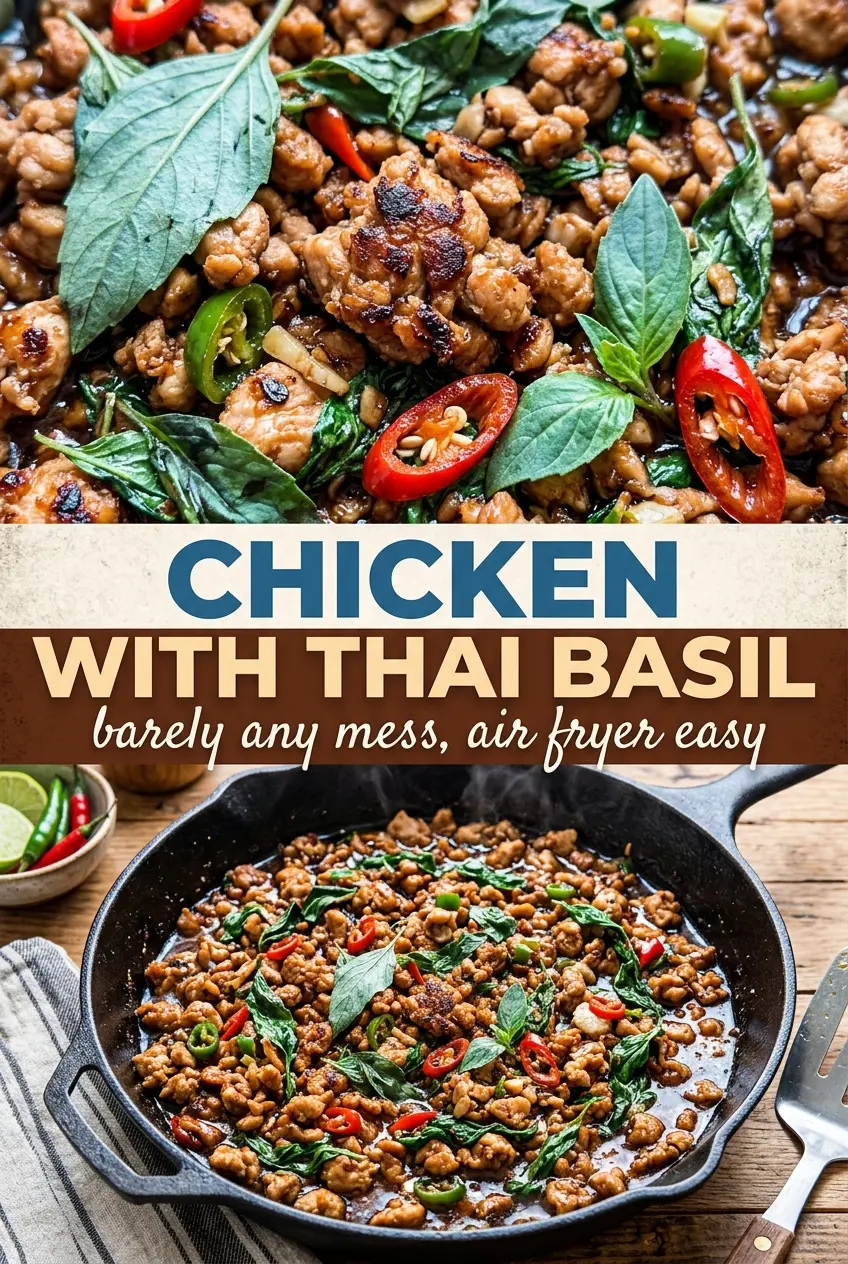
Chicken With Thai Basil
Ingredients
Equipment
Method
- Heat vegetable oil in a cast iron skillet over high heat until hot. You should see light shimmering in the pan within a few seconds.
- Add garlic and Thai chilies, cooking until fragrant for about 30 seconds. The garlic should smell aromatic without browning.
- Add ground chicken and cook until browned, breaking it apart, for about 6-8 minutes. The meat should lose its pink color and form small browned crumbles.
- Stir in soy sauce, fish sauce, and brown sugar. Simmer just enough to combine flavors for 1 minute, until glossy.
- Remove from heat and fold in fresh Thai basil until just wilted. The leaves should turn dark green but still hold their shape.
- Serve immediately over rice. The sauce should cling to the browned chicken and look lightly glossy.