
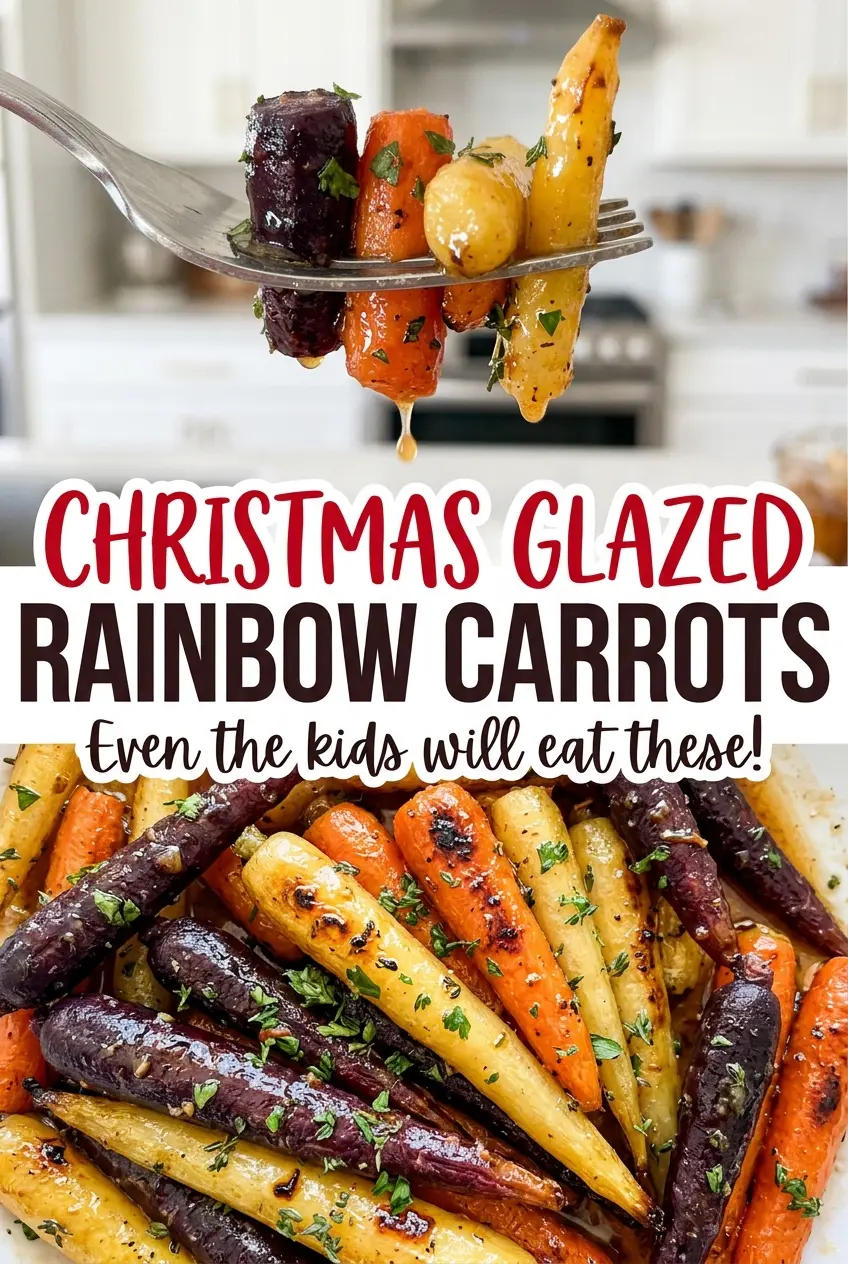
The carrots go into the skillet looking like a bright handful of color, then turn tender while their cooking water stays light and simple. I like this approach for Christmas Glazed Rainbow Carrots because the glaze gets its own time to reduce; the carrots don’t have to sit in bubbling sugar while it thickens. The finished carrots are fork-tender, shiny with orange-scented syrup, and ready for the table in one pan.
Cutting the thick pieces lengthwise helps the whole batch cook at a similar pace, especially when the carrots vary in size. I keep the pieces about the same length, then watch for that fork-tender stage before lifting them out. The glaze comes together quickly once the carrots are set aside, and a final toss coats each piece without letting it soften too far. The fresh parsley and black pepper give the sweet citrus glaze a clean, savory finish.
Kitchen Note
Halve the thick carrot pieces lengthwise before they go into the skillet. That small bit of prep keeps a chunky piece from lagging behind the thinner ones and turning the tender pieces soft while it catches up.
Save these Christmas Glazed Rainbow Carrots for a colorful holiday side with tender centers and a glossy orange-brown sugar glaze.
Why the carrots and the glaze need different cooking time
Carrots need steady, moist heat to turn tender all the way through. A glaze made with brown sugar, honey, butter, and orange juice needs a different treatment: it has to simmer down until it looks glossy and syrupy. Cooking both together from the start makes it harder to judge either one. The carrots can get soft before the liquid has reduced, or the glaze can become too concentrated while the centers are still firm.
Separating those jobs also gives you a clear visual cue at each stage. The carrots come out when a fork meets little resistance but the pieces still hold their shape. The glaze stays in the skillet to reduce on its own, then the carrots go back in just long enough to get hot and coated. That short final toss keeps the surface shiny instead of burying the carrots under a thick layer of syrup.
What the orange, honey, and brown sugar each bring
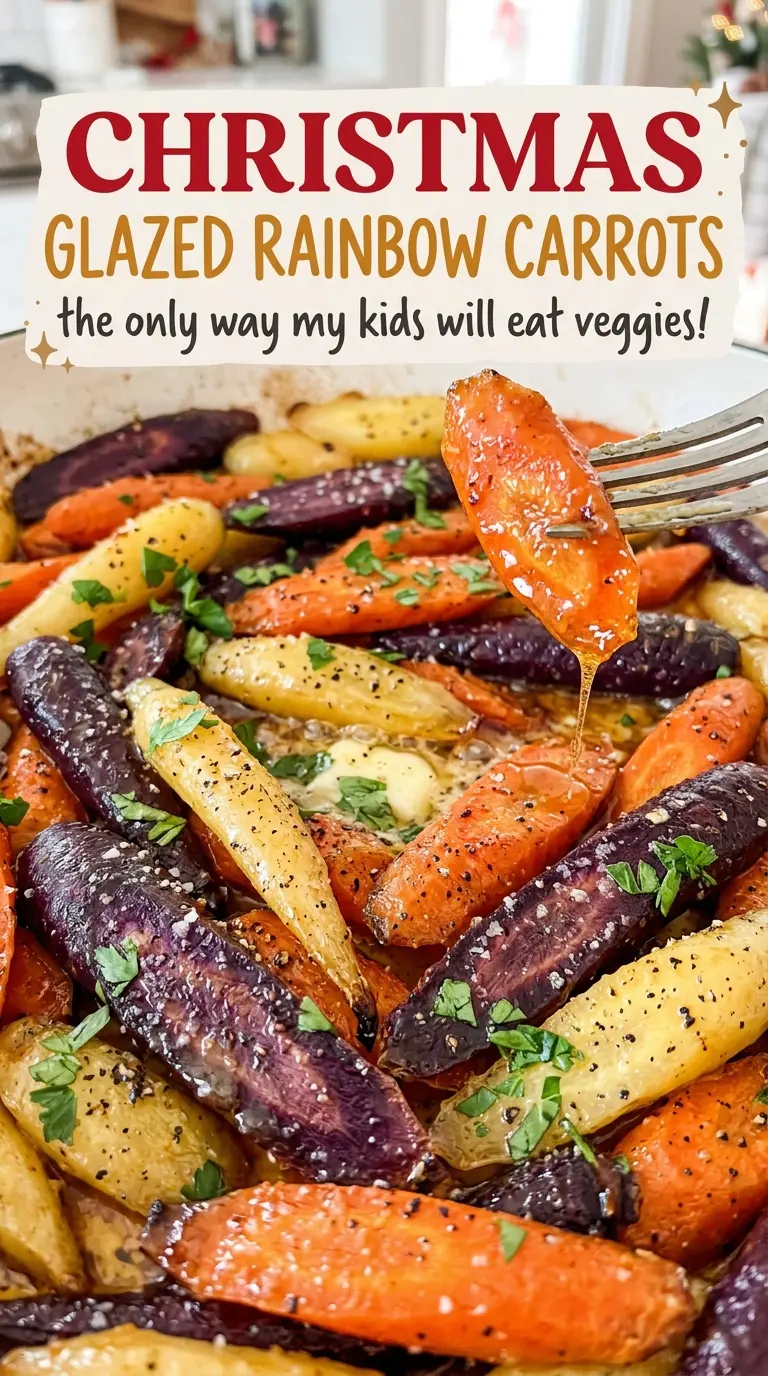
- Rainbow carrots — Choose firm carrots without limp tops or shriveled spots. Their different colors make the platter striking, while their main job here is to stay intact through the simmer and final toss. If you use regular orange carrots instead, cut them to the same length and halve thick pieces; the flavor stays familiar, but you lose the mix of colors.
- Orange zest and juice — The zest carries the orange’s fragrant oils, while the juice brings acidity and liquid to the glaze. Use a fresh orange so you can grate the zest finely before juicing it. Bottled juice won’t replace the zest’s aroma, so it changes the citrus character even if it provides juice.
- Light brown sugar and honey — Brown sugar gives the glaze a rounded, caramel-like sweetness, and honey adds its own floral note and helps the syrup cling. They don’t taste identical, so leaving one out changes the balance rather than making a like-for-like swap. Pack the brown sugar firmly when measuring.
- Unsalted butter — Butter rounds out the citrus and gives the reduced glaze a rich finish. Unsalted butter lets the kosher salt remain the seasoning control; salted butter can make the finished glaze taste more heavily seasoned.
- Parsley and black pepper — Fresh chopped parsley brings a green, clean finish, while black pepper keeps the glaze from tasting one-note sweet. Add both after taking the skillet off the heat so the parsley stays fresh and the pepper remains distinct.
Three skillet stages for tender carrots and a glossy finish
Simmer the carrots until a fork slips in easily
Put the carrots, water, and kosher salt in a 12-inch deep skillet with a lid, cover, and bring the liquid to a simmer over medium-high heat. Reduce the heat to medium-low and cook for 8–12 minutes. Check a few pieces with a fork, especially the thickest ones; they should be tender but not falling apart. Lift the carrots onto a plate with a slotted spoon so the liquid is no longer cooking them.
Reduce the orange mixture to a syrup
Add the butter, brown sugar, honey, orange zest, and orange juice to the skillet. Simmer over medium-high heat for 4–6 minutes, stirring often so the sugar dissolves and the mixture reduces evenly. Look for a glossy syrup that coats the spoon rather than a thin, watery liquid. Keep close to the pan during this stage; the glaze changes quickly as its liquid cooks away.
Toss briefly, then finish off the heat
Return the carrots to the skillet and toss over medium heat for 1–2 minutes, until they’re hot and coated. Use a gentle turn rather than vigorous stirring so the tender pieces keep their shape. Take the skillet off the heat before tossing in the black pepper and parsley. Serve while the glaze is still glossy and the carrots are warm.
Small changes that suit different tables
A dairy-free glaze
Replace the unsalted butter with 3 tablespoons of plant-based butter. The glaze will still turn glossy, though the exact richness and saltiness depend on the brand; an unsalted version keeps the seasoning closer to the original.
A softer orange finish
Leave out the orange zest and keep the orange juice. The glaze still gets citrus brightness, but its aroma is milder and less perfumed. This is useful when you want the brown sugar and honey to stand out more.
A classic orange-carrot version
Use regular orange carrots in place of rainbow carrots, keeping the same cut and cooking approach. The sweet citrus glaze works just as well, but the finished dish won’t have the contrasting colors that make the rainbow version pop.
Storage and Reheating
- Refrigerator: Refrigerate leftovers within 2 hours and use within 3–4 days. The glaze will thicken as it chills.
- Freezer: Freeze in an airtight container for up to 2–3 months. The carrots will be softer after thawing, so the texture won’t be quite as neat as freshly made.
- Reheating: Warm gently in a skillet over low heat, turning the carrots until heated through. Avoid high heat, which can make the sugary glaze catch before the carrots warm up.
Questions that come up while making these glazed carrots
Christmas Glazed Rainbow Carrots
Ingredients
Equipment
Method
- Put the carrots, water, and salt in a 12-inch deep skillet with a lid and cover.
- Bring to a simmer over medium-high heat.
- Reduce the heat to medium-low and cook for 8-12 minutes, until the carrots are fork-tender but not falling apart.
- Transfer the carrots to a plate with a slotted spoon.
- Add the butter, brown sugar, honey, orange zest, and orange juice to the skillet and simmer over medium-high heat for 4-6 minutes, stirring often, until reduced to a glossy syrup.
- Return the carrots to the skillet and toss over medium heat for 1-2 minutes, until coated and hot.
- Remove from the heat, toss with the pepper and parsley, and serve.