
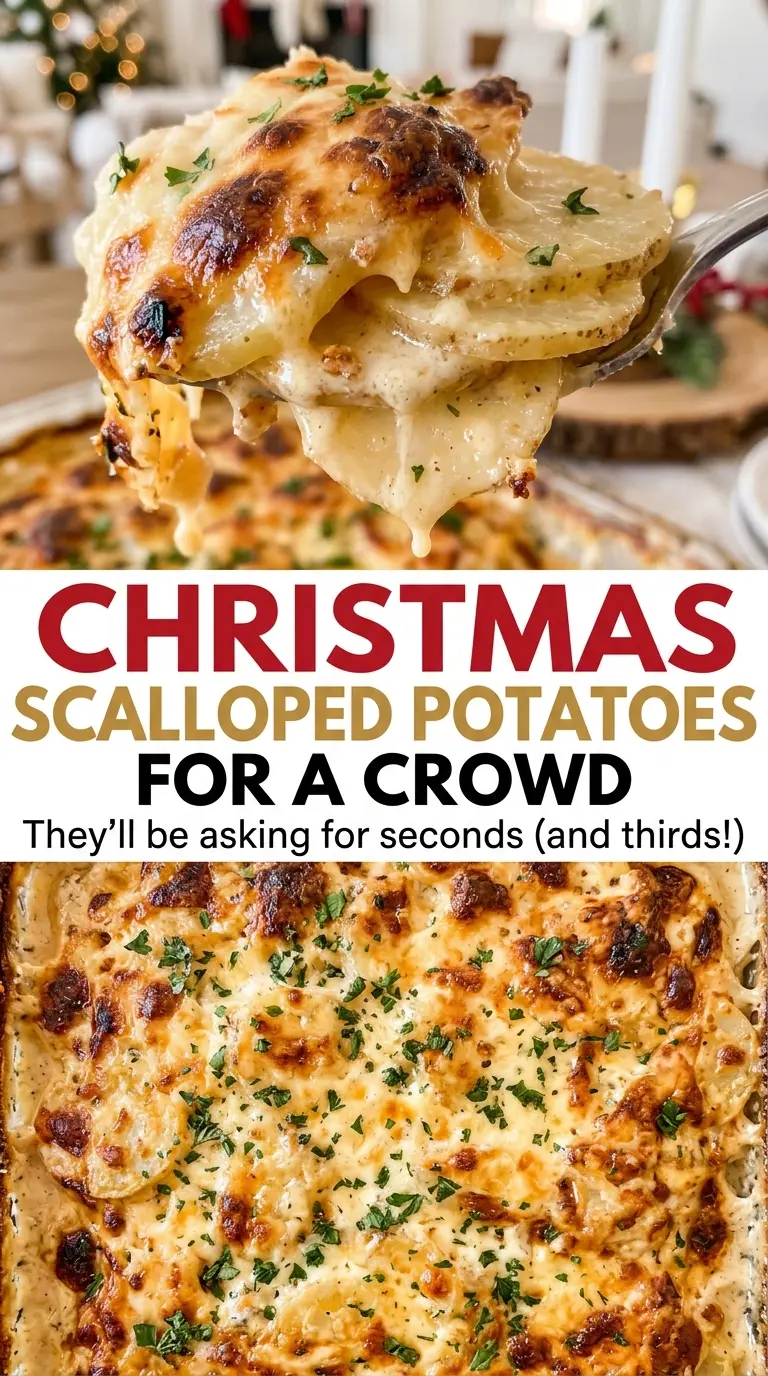
When the foil comes off, the edges of both pans should be bubbling while the centers are still finishing their slow bake. That’s the part I watch when I’m making Christmas Scalloped Potatoes for a Crowd: two full dishes need enough time for the potatoes in the middle to turn tender, not just the ones near the sides.
The sauce starts with onions softened in butter, then flour and milk turn it into a simple, savory coating. I layer it through the potatoes rather than pouring it all on top, so the sauce reaches the middle of each dish. Yukon Golds hold their shape while becoming tender, and the finished pans are rich without needing a separate topping.
This is a generous side for a table with plenty of people around it, and the two-dish setup makes the baking manageable. Give the potatoes their rest after they come out of the oven; the sauce settles into the layers, ready to spoon from the pan.

Kitchen Note
Take a moment to keep the potato slices close to the same thickness. Thin slices cook through together; a few thick ones in the center can stay firm while the edges are already tender.
Save these Christmas scalloped potatoes for a crowd: two bubbling pans of tender Yukon Golds in onion cream sauce.
Why Two Pans Bake More Evenly Than One Deep Dish
Five pounds of sliced potatoes make a tall stack, and piling all of it into one deep dish would change how heat reaches the center. Splitting the potatoes between two 9×13-inch baking dishes gives each pan a shallower, more even set of layers. The sauce can bubble around the edges while the potatoes in the middle soften, instead of leaving you with a browned perimeter and a firm center.
The two oven racks matter, too. The pans start on the upper and lower thirds, then switch places after the covered bake. That exchange evens out the heat each dish receives; it’s especially helpful when one rack runs a little hotter than the other. Keep the pans covered for the first stretch so the potatoes cook through in the sauce, then uncover them to finish. Don’t judge tenderness by the top layer alone: the center of each dish is the best place to check.
When both pans are out, let them stand before serving. The sauce is loose and hot straight from the oven, and the short rest gives it time to settle between the layers. You’ll get neater scoops and fewer potatoes sliding away from the sauce.
Why Yukon Golds and a Milk-Based Roux Matter Here
- Yukon Gold potatoes — Their creamy texture and ability to hold together suit overlapping layers. Choose firm potatoes without soft spots; peeling and slicing them just before assembly keeps the prep simple. Russets are starchier and tend to break down more, so they won’t give quite the same defined layers.
- Whole milk — It gives the sauce enough body to cling to the potatoes without turning heavy. Fresh milk from an inexpensive brand works well here; there’s no need for a specialty product. Lower-fat milk makes a thinner sauce, so whole milk is the dependable choice for this large panful.
- All-purpose flour and unsalted butter — Together, they make the roux that thickens the milk. Let the flour cook in the melted butter before adding liquid; that short cooking time takes away the raw-flour taste. Unsalted butter lets the measured kosher salt do the seasoning, and ordinary all-purpose flour is exactly right for the job.
- Yellow onions and dried thyme — The onions soften into the sauce and bring gentle sweetness; thin slices soften more evenly than thick wedges. Dried thyme adds an earthy note without needing fresh herbs. Use onions that feel firm, and keep the thyme dry and fragrant rather than using an old jar that has lost its aroma.
- Kosher salt and black pepper — They season the sauce itself, so each layer of potatoes gets some flavor as the sauce is spooned through. Grind or measure the pepper before you start whisking; once the sauce is simmering, it’s easier to season with everything at hand.
Building the Sauce and Baking Two Tender Pans
Set up the oven and baking dishes
Heat the oven to 375°F with racks in the upper and lower thirds. Grease two 9×13-inch baking dishes with softened butter, covering the bottoms and sides. Having the dishes ready before slicing keeps the potatoes moving straight into assembly. Set out foil for covering both pans tightly.
Soften the onions without browning them
Melt the butter in a 4-quart saucepan over medium heat, then add the thinly sliced onions. Cook for 8 to 10 minutes, stirring occasionally, until they’re softened. You’re looking for flexible, translucent pieces rather than dark, browned edges. If the onions start coloring quickly, lower the heat so they soften gently.
Whisk the milk sauce until it coats a spoon
Whisk the flour into the onions and butter, and cook for 1 minute. Gradually whisk in the milk, kosher salt, black pepper, and dried thyme; adding the milk gradually helps the flour blend in smoothly. Bring the sauce to a gentle simmer and cook for 3 to 5 minutes, whisking, until it lightly coats a spoon. Keep the simmer gentle and keep whisking so the sauce thickens evenly instead of catching on the bottom.
Layer the potatoes with sauce between them
Peel the Yukon Golds and slice them 1/8 inch thick. Divide the potatoes between the prepared dishes, arranging them in overlapping layers and spooning sauce over each layer. Divide the sauce evenly between the pans, then gently press the potatoes down so they’re submerged. If the top layer sits above the sauce, press it down carefully rather than pouring all the sauce in one spot.
Cover, uncover, and check the centers
Cover both dishes tightly with foil and bake at 375°F for 45 minutes. Uncover, switch the dishes between racks, and bake for 25 to 35 minutes more. Look for bubbling sauce around the edges, then slide a thin knife into the potatoes in the center of each dish; it should pass through easily. Rest the pans for 15 minutes before serving so the sauce settles into the layers.
Simple Ways to Adapt These Scalloped Potatoes
Make the sauce gluten-free
Replace the all-purpose flour with the same amount of a cup-for-cup gluten-free flour blend. Whisk it into the butter and onions as you would the flour, then add the milk gradually. The sauce may thicken a little differently depending on the blend, so use the spoon-coating texture as your cue before layering.
Leave out the thyme for a simpler sauce
Omit the dried thyme and keep the onion, black pepper, and salt. The sauce will taste more directly of softened onions and milk, with no herbal note. You don’t need to change the cooking method.
Keep the Yukon Gold skins on
For a more rustic texture, scrub the potatoes well and slice them without peeling. The skins add a little chew and make the layers look less polished, but the potatoes still bake in the same sauce. Keep the slices at the same thickness so they soften evenly.
Storage and Reheating
- Refrigerator: Store cooled leftovers in a covered container for 3 to 4 days. The sauce will thicken as it chills, and the potatoes will soften slightly.
- Freezer: Freeze portions in airtight containers for up to 2 months. Thaw overnight in the refrigerator; the creamy sauce may separate a little, and the potatoes may be softer after thawing.
- Reheating: Cover a portion and warm it in a 350°F oven until heated through, or microwave it in short intervals. Don’t reheat uncovered in the oven; the top can dry out before the middle is hot. Reheat leftovers to 165°F.
Questions That Come Up With a Two-Pan Potato Bake
Christmas Scalloped Potatoes for a Crowd
Ingredients
Equipment
Method
- Heat the oven to 375°F.
- Position racks in the upper and lower thirds.
- Melt the butter in a 4-quart saucepan over medium heat.
- Add the onions and cook for 8 to 10 minutes, stirring occasionally, until softened.
- Whisk in the flour and cook for 1 minute.
- Gradually whisk in the milk, salt, pepper, and thyme, and bring to a gentle simmer.
- Cook for 3 to 5 minutes, whisking, until the sauce lightly coats a spoon.
- Grease two 9x13-inch baking dishes with the softened butter.
- Peel the potatoes and slice them 1/8 inch thick.
- Divide the potatoes between the dishes, arranging them in overlapping layers and spooning sauce over each layer.
- Divide the sauce evenly between the dishes and gently press the potatoes to submerge them.
- Cover the dishes tightly with foil and bake at 375°F for 45 minutes.
- Uncover the dishes and switch them between racks.
- Bake for 25 to 35 minutes more, until the sauce bubbles around the edges and a thin knife slides easily into the potatoes in the centers.
- Rest the potatoes for 15 minutes before serving.