
When the cheese and tomatoes are still in separate bowls, they look like a snack board waiting to happen—not a Christmas tree. On an 18×24-inch serving board, the shape comes together as soon as the short rows widen toward the bottom, with a little open space left for the star and trunk. That simple layout turns this Christmas Tree Charcuterie Board into a cheerful centerpiece without asking you to fuss over every piece.
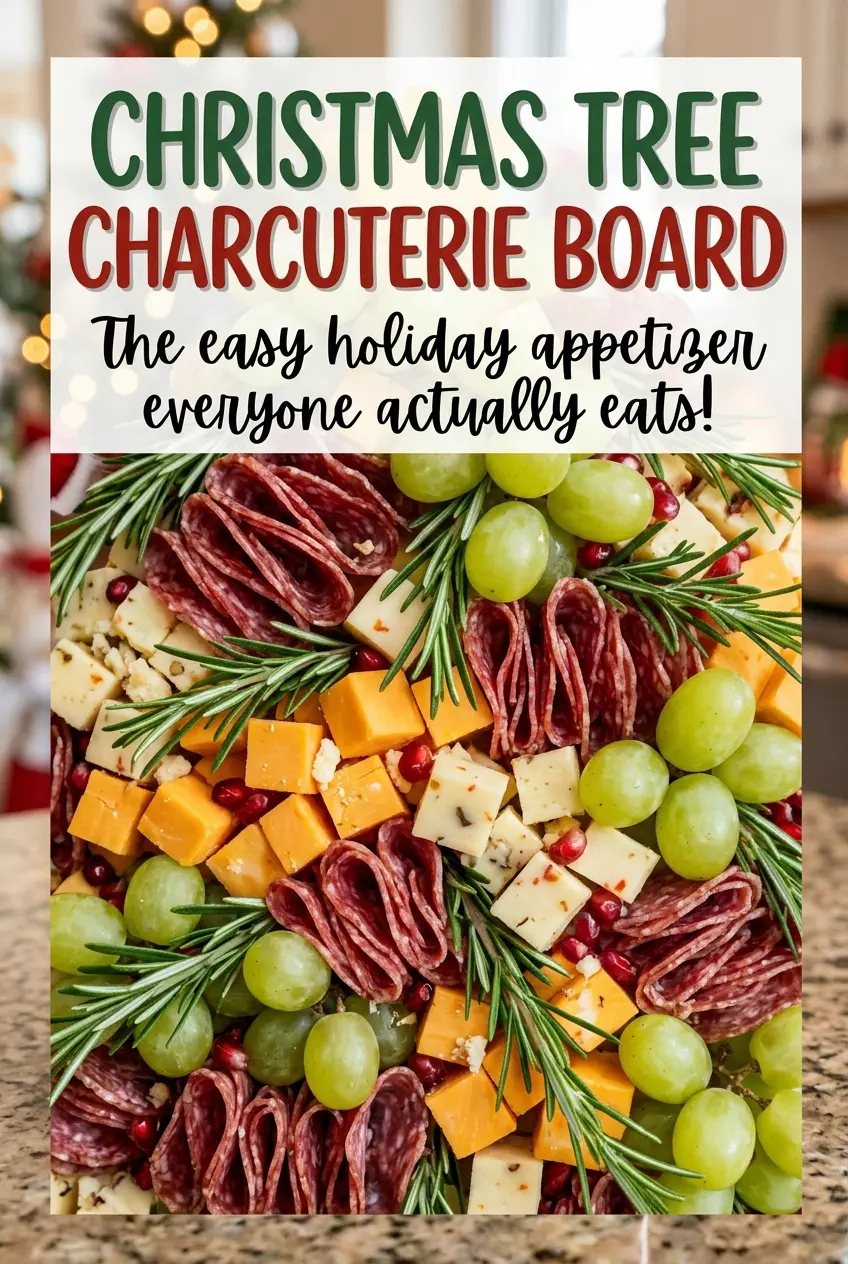
I like that the ingredients do double duty: the cheddar, gouda, and salami make satisfying rows, while the green grapes and olives bring in the tree color. The cherry tomatoes and dried cranberries add bright red spots, and the rosemary makes the greenery feel finished. Keep the arrangement relaxed rather than perfectly measured, and you’ll have a board that looks festive and is easy to graze from.
Kitchen Note
Pull the seedless grapes into small clusters before you start arranging. A few grapes together are easier to tuck into a row than one big bunch, and they leave the neighboring ingredients visible.
Save this Christmas Tree Charcuterie Board for a festive spread with savory cheese and salami, juicy grapes, and a pretzel-rod trunk.
The Rows, Not the Decorations, Make This Board Read as a Tree
It’s easy to focus on the provolone star and rosemary, but those finishing touches can’t rescue a tree shape that has no clear outline. The silhouette comes from the rows: each one is short and horizontal, and the lower rows stretch wider than the ones above. That change in width gives your eye a clear path from the top point down to the base.
Use the board’s full length and width as your guide instead of trying to make each row identical. The 18×24-inch surface gives the ingredients room to sit in distinct bands, with open space at the top and bottom for the decorations. If rows run together, the different colors still help separate them, but a little breathing room makes the outline easier to see. Let the tree take up the center of the board; the star and trunk should read as separate details, not extra items squeezed into the rows.
Why the Cheese, Salami, and Produce Need Different Jobs
- Sharp cheddar and gouda — The cheddar brings a more pronounced, tangy bite, while gouda is milder and rounder, so the two cheeses keep the rows from tasting one-note. A block of either cheese is easy to cut into neat cubes; if you can’t find gouda, a firm Monterey Jack makes a mild stand-in, though you’ll lose gouda’s buttery character.
- Hard salami — Its savory, seasoned flavor contrasts with the fruit, and the quarter-folds give the rows a little height. Choose a salami you enjoy eating on its own; a very soft, thin deli slice won’t hold the same shape. Pepperoni can replace it for a smaller, more peppery bite, but the row will look different.
- Seedless green grapes — Their fresh sweetness cuts through the rich cheese and salty olives, and seedless fruit is easy to eat from a grazing board. Firm grapes hold their shape best. Seedless red grapes work in their place, with a sweeter taste and a less traditional green-tree look.
- Cherry tomatoes and green olives — Tomatoes add juicy, bright bites, while olives bring a briny counterpoint. Firm cherry tomatoes matter more than a particular brand; a budget jar of olives is fine, as long as you drain them before they go on the board so excess brine doesn’t wet nearby crackers.
- Assorted crackers — A mix of shapes and sizes gives people different options and helps fill out the rows. Store-brand crackers work well here; choose sturdy pieces that can be picked up without crumbling under the cheese.
- Provolone and dried cranberries — Provolone is mild enough to serve as a star without pulling attention from the other cheeses, and a slice is easier to cut into a simple shape than a cube. Dried cranberries add chewy, tart-sweet color. If you use another sliceable cheese for the star, pick one that holds a cut edge rather than crumbling.
- Fresh rosemary and pretzel rods — Rosemary brings a fragrant, evergreen accent, while the pretzel rods make a straight-sided trunk with a salty crunch. Fresh rosemary gives a cleaner decorative look than dried herbs; the rods can be an inexpensive packaged brand since they’re serving as both decoration and snack.
Build the Tree in Rows Before Adding the Finishing Details
Lay Out the Widening Rows
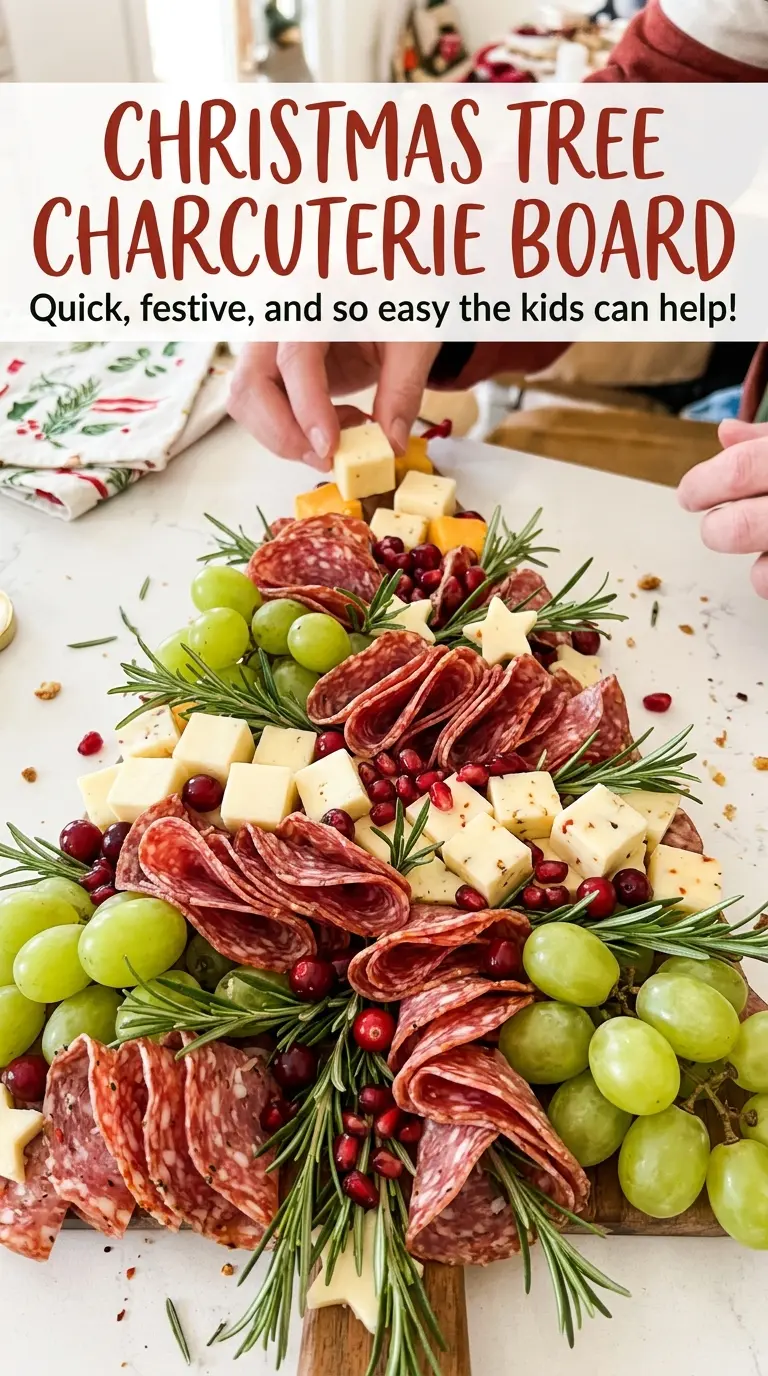
Set an 18×24-inch serving board on a stable surface, then arrange the cheddar, gouda, salami, grapes, cherry tomatoes, olives, and crackers in short horizontal rows. Start with the narrowest row near the top and let each row widen toward the bottom. Keep the edges roughly aligned so the outline reads clearly, but don’t worry about making every piece sit at the same angle. Leave room above the tree for the star and below it for the trunk.
Cut and Place the Star
Use a paring knife to cut a star from the provolone slice. Slow, controlled cuts help keep the points from tearing, especially at the narrow corners. Place the star above the top row, where it has room to stand out. Scatter the dried cranberries over the tree and tuck the rosemary sprigs between the rows so their green needles show.
Set the Pretzel-Rod Trunk
Lay the pretzel rods side by side below the tree to form the trunk. Keep their ends together and their sides parallel, so the trunk looks like one deliberate shape rather than a handful of loose snacks. If the bottom row is especially wide, center the rods beneath it to keep the board balanced. The rods should sit below the tree, not overlap its ingredients.
Bring It Out Ready to Eat
Give the board a quick look from the front before serving: the rows should widen toward the bottom, with the star above and the pretzel trunk below. Nudge a piece into place if it has rolled out of its row, then serve promptly while the crackers and pretzels are crisp. Put out serving picks or tongs if you want guests to take pieces without reaching across the arrangement.
Two Easy Ways to Adapt the Board
Make the Tree Gluten-Free
Replace the assorted crackers and pretzel rods with gluten-free versions, and choose gluten-free packaged salami and olives as well. The tree keeps its rows and its mix of savory and sweet bites, though some gluten-free crackers and pretzels are more fragile than their wheat-based counterparts.
Make a Lower-Carb, Cracker-Free Version
Leave off the crackers and pretzel rods and arrange the cheese, salami, grapes, tomatoes, and olives in the same widening tree shape. The board becomes more focused on cheese, meat, and produce, but you’ll give up the crunchy base and the defined pretzel trunk.
Making Ahead and Handling Leftovers
- Refrigerator: Refrigerate leftovers within 2 hours, keeping the perishable ingredients covered. Separate crackers and pretzel rods so they stay crisp, and use refrigerated leftovers within 3 to 4 days.
- Freezer: Skip freezing the assembled board. Grapes and tomatoes soften after thawing, and crackers and pretzels lose their crunch.
- Serving: You can cut the cheeses and prepare the other ingredients ahead, then cover and chill them separately. Assemble close to serving time so the crackers and pretzels don’t sit against moist ingredients.
Questions That Come Up While Building This Tree
Christmas Tree Charcuterie Board
Ingredients
Equipment
Method
- On an 18x24-inch serving board, arrange the cheddar, gouda, salami, grapes, tomatoes, olives, and crackers in short horizontal rows that widen toward the bottom to form a tree, leaving space above for a star and below for a trunk.
- Cut the provolone into a star with a paring knife.
- Place the provolone star at the top of the tree.
- Scatter the cranberries over the tree.
- Tuck the rosemary sprigs between the rows.
- Lay the pretzel rods side by side below the tree to form the trunk.
- Serve promptly.
- Refrigerate leftovers within 2 hours.