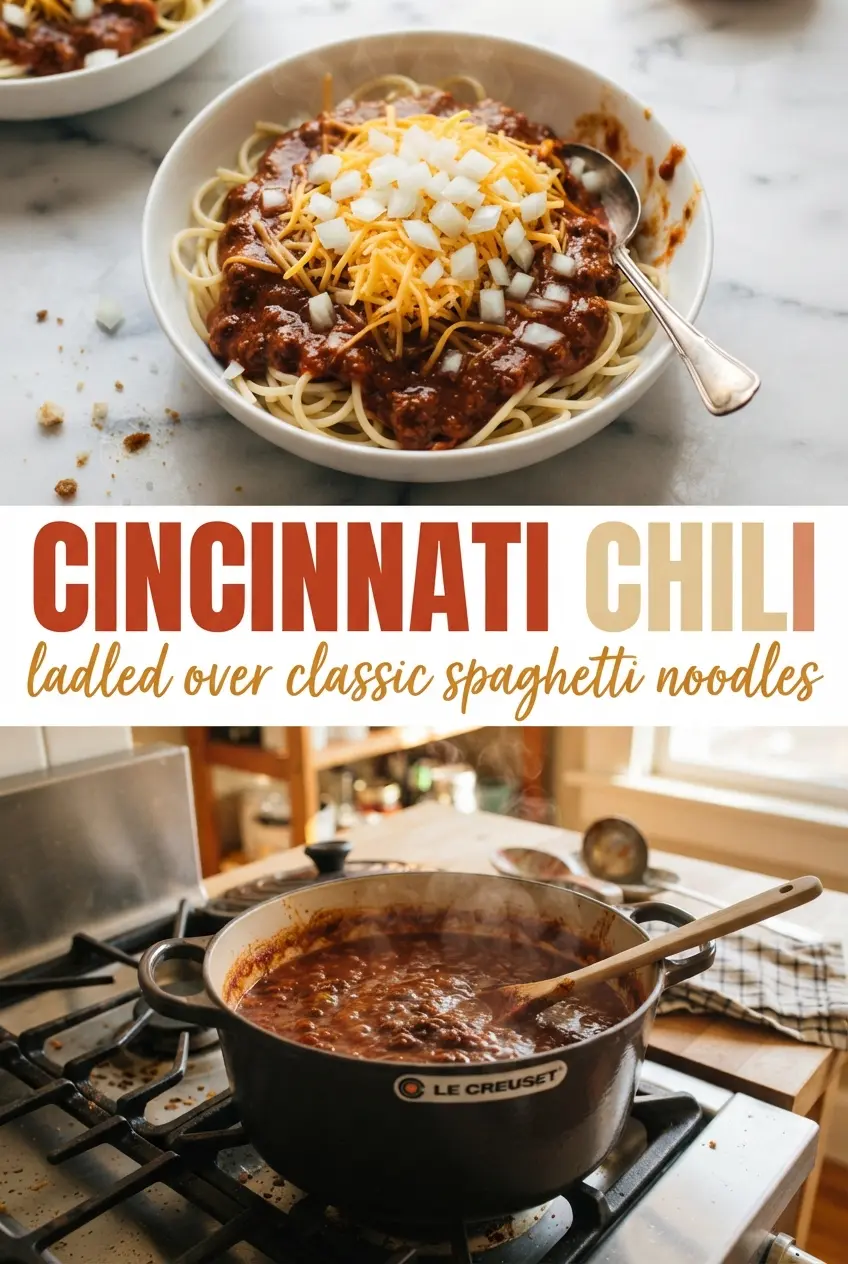
Cincinnati chili lands in a place all its own: saucy, finely textured, and warm with spice in a way that feels different from a bowl of standard red chili. The beef cooks down into a soft, almost silky sauce that clings to spaghetti instead of sitting on top of it, and the finishing layer of cheddar and onion gives every bite a sharp, cool contrast. It’s one of those dishes that looks unusual until you taste it, then the combination makes complete sense.
What makes this version work is the balance. Cinnamon, allspice, and a little unsweetened chocolate don’t make it taste like dessert; they round out the tomato and beef so the sauce tastes deeper and more layered. The long, uncovered simmer is doing important work too. It reduces the liquid, concentrates the spices, and gives the meat time to break down into that signature fine texture people expect from Cincinnati chili.
Below, I’ll walk through the small details that matter most, including how finely to break up the beef and why the sauce needs a long simmer rather than a quick boil. Those two things make the biggest difference between a chili that tastes right and one that just tastes like spiced ground beef in tomato sauce.
The sauce thickened up exactly right after the long simmer, and the cinnamon with the chocolate gave it that classic Cincinnati flavor without tasting sweet. My husband said the spaghetti and cheddar topping was the best part.
Save this Cincinnati Chili for the nights when you want that deep spiced sauce, spaghetti base, and cheddar pile-on that makes it unmistakably classic.
The Secret Is in the Simmer, Not the Spice Rack
Cincinnati chili gets misunderstood because people see the ingredient list and assume the spices are doing all the work. They’re not. The real shift happens when the pot simmers uncovered long enough for the beef to break down into very fine crumbles and the liquid to reduce into a glossy sauce that coats spaghetti instead of pooling around it. If you rush that part, the chili tastes flat and thin no matter how carefully you measure the spices.
The other detail that matters is texture. Traditional Cincinnati chili should be smoother and finer than a chunky bowl of chili. Browning the beef until it’s crumbled almost to a paste-like texture gives you that classic result. You want the onion to disappear into the sauce, not stand out in big pieces.
- Ground beef — Use a regular or lean blend, but break it up aggressively while it cooks. The finer the crumbles, the closer you get to the classic texture. If you use a very fatty beef, you’ll need to skim more grease off the top after simmering.
- Beef broth — This is what gives the sauce body without making it heavy. Homemade or boxed both work. If you only have water, the chili will taste thinner and you’ll need extra salt and a longer reduction.
- Cinnamon, allspice, and chocolate — These are the signature flavors, and they need time to melt into the sauce. The chocolate should be unsweetened, not cocoa mix. It deepens the color and rounds out the spices instead of making the chili taste sweet.
- Spaghetti — Thin spaghetti or standard spaghetti both work, but cook it just to al dente. Since the chili is ladled on top, overcooked pasta turns mushy fast.
Building the Sauce So It Stays Smooth and Deeply Spiced
Brown the Beef Into Fine Crumbles
Set a large pot over medium heat and cook the ground beef, breaking it up as small as you can. The goal is not browned chunks; it’s tiny, tender crumbles that melt into the sauce later. If too much liquid collects in the pan, let it cook off before moving on, because watery meat will dilute the final texture.
Soften the Onion and Garlic
Add the onion and garlic and cook until the onion turns soft and translucent. You’re building sweetness here, not color, so don’t push them into deep browning. If the garlic starts to darken before the onion is ready, the heat is too high and the finished chili can pick up a bitter edge.
Simmer Until the Sauce Turns Glossy
Stir in the broth, tomato sauce, spices, and grated chocolate, then let the pot simmer uncovered for 1 to 1.5 hours. The sauce should slowly thicken and darken, with the oil settling a little at the edges and the aroma turning warm and rounded. If it still looks soupy after an hour, keep going; this chili needs reduction to taste right.
Serve It the Classic Way
Cook the spaghetti until just tender, drain it well, and spoon the chili over the top while both are hot. Finish with shredded cheddar and diced onion so the heat of the chili softens the cheese only slightly. If the pasta sits in the chili too long before serving, it drinks up the sauce and loses that proper twirl-and-sauce balance.
How to Adapt This for a Different Pantry or a Bigger Batch
Make it gluten-free without changing the flavor
The chili itself is naturally gluten-free as long as your broth and tomato sauce are certified gluten-free. Serve it over gluten-free spaghetti or rice if you want the same bowl-style comfort without the wheat pasta. The texture stays the same because the sauce doesn’t rely on flour for thickening.
Use turkey or leaner beef for a lighter version
Ground turkey works, but it loses some of the deep beefy base that makes Cincinnati chili taste classic. If you swap it in, keep the broth full-bodied and simmer long enough for the sauce to gain depth. Leaner meat also means less grease to skim, which is the one small payoff.
Make a hotter version without losing the warm spice profile
Add a pinch of cayenne or a little extra chili powder when the spices go in. Keep the cinnamon and chocolate where they are, because they’re part of the balance; heat should sit on top of the sauce, not erase the regional flavor. Too much heat makes it taste like a different chili entirely.
Storage and Reheating
- Refrigerator: Store the chili separately from the spaghetti for up to 4 days. The flavor deepens overnight, and the sauce often tastes even better the next day.
- Freezer: The chili freezes well for up to 3 months. Cool it completely, portion it into airtight containers, and leave the pasta out until serving day.
- Reheating: Warm the chili gently on the stovetop over low heat with a splash of broth if it has tightened up in the fridge. Reheat the spaghetti separately so it doesn’t turn soft and sticky under the sauce.