
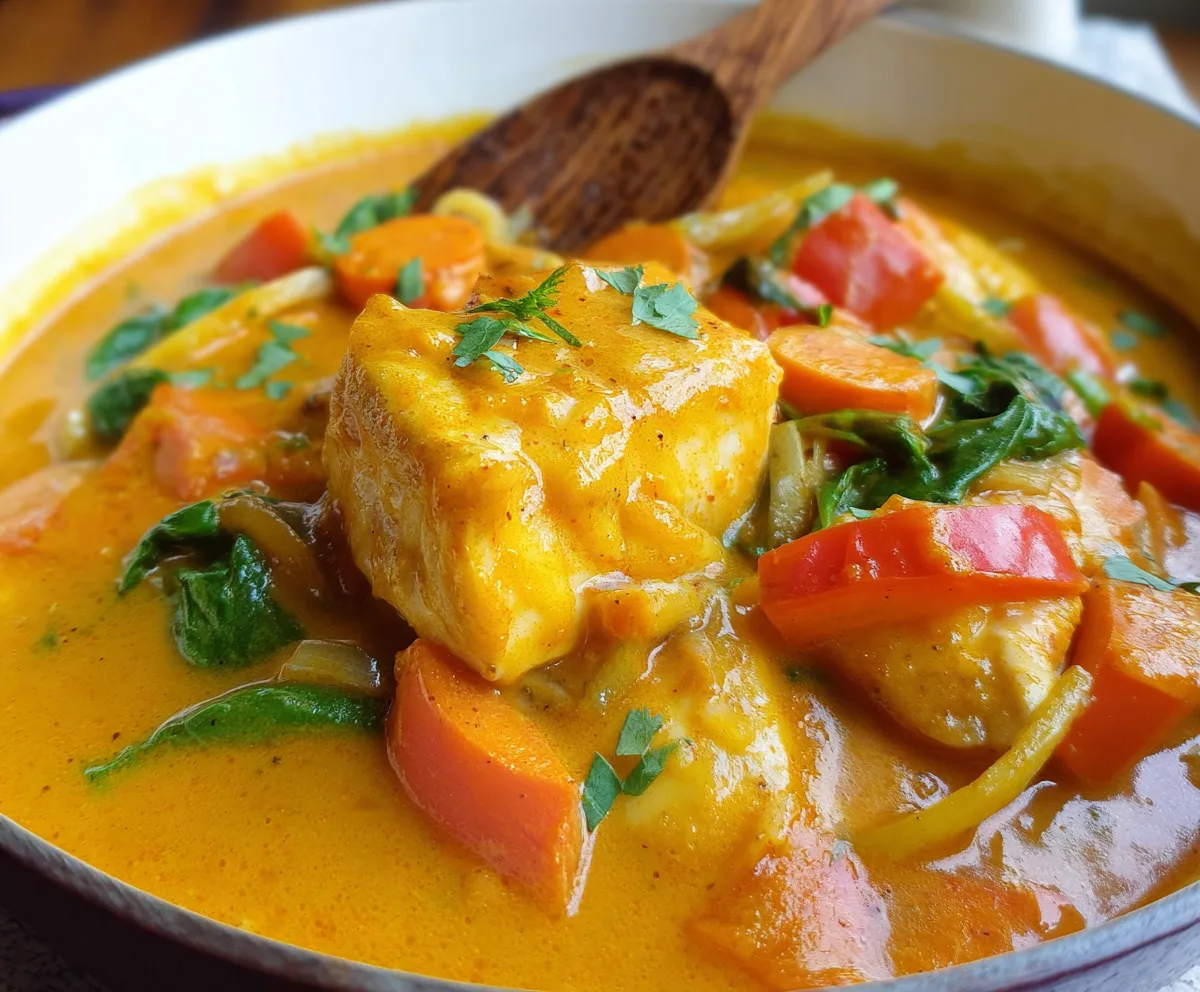
Coconut Curry Fish Stew is a cozy, flavorful dish that brings together tender chunks of fish, creamy coconut milk, and a gentle kick of curry spices. It’s the perfect mix of rich and light, with a touch of sweetness from the coconut and warmth from the curry powder, all simmered until the flavors melt together beautifully.
I love making this stew because it’s so simple but always feels special. The fish stays tender and flaky, soaking up the coconut curry broth, while the veggies add just the right bit of texture. Whenever I make this, I like to add a squeeze of fresh lime at the end—it gives the whole dish a fresh, bright twist that really wakes up the flavors.
This stew is great for a cozy night in, especially served over steamed rice or with warm, crusty bread to soak up the sauce. It’s the kind of meal that fills the kitchen with a wonderful smell and always gets compliments. If you’re looking for something comforting but not too heavy, Coconut Curry Fish Stew is a great choice to try.
Key Ingredients & Substitutions
Firm white fish: Cod, halibut, or tilapia work great as they hold shape while cooking. If you can’t find these, try snapper or mahi-mahi. Avoid flaky fish that fall apart easily.
Curry powder & turmeric: These spices build the stew’s warm flavor and golden color. If you don’t have curry powder, use garam masala or a mix of ground cumin, coriander, and chili powder.
Coconut milk: This adds creamy sweetness that balances the spices. Use full-fat for richness or light coconut milk for fewer calories. If coconut milk isn’t your thing, substitute with heavy cream mixed with a touch of coconut extract.
Lime juice: Adds a fresh, tangy lift at the end, brightening all the flavors. Lemon juice works in a pinch, but lime is preferred for its distinct taste.
How Can I Keep the Fish Tender, Not Overcooked?
Fish cooks quickly and can turn tough if overcooked in stew. Follow these tips:
- Cut fish into even pieces so they cook uniformly.
- Add fish at the end of cooking the broth and simmer gently. Avoid boiling after adding fish.
- Cover and cook just 8-10 minutes, or until fish flakes easily with a fork.
- Remove stew from heat as soon as fish is done to prevent further cooking.
These steps keep the fish tender and soak in the flavors without falling apart.
Equipment You’ll Need
- Large skillet or saucepan – I prefer a wide pan to let flavors meld and make stirring easy.
- Sharp knife and chopping board – helps you cut ingredients precisely and safely.
- Measuring spoons and cups – keep spices and liquids just right for balanced flavors.
- Can opener – for the coconut milk, ensuring no spills or messes.
- Serving bowls – nice bowls make the stew look inviting and are perfect for savoring every bite.
Flavor Variations & Add-Ins
- Swap fish for cooked shrimp or chicken pieces for different protein options that cook quickly and absorb flavors well.
- Add chopped vegetables like spinach, kale, or sweet potatoes to boost nutrition and texture.
- Mix in a teaspoon of Thai red curry paste instead of curry powder for a spicier, more aromatic flavor.
- Finish with a sprinkle of toasted coconut or chopped peanuts for extra crunch and richness.
How to Make Coconut Curry Fish Stew
Ingredients You’ll Need:
- 1 lb firm white fish fillets (e.g., cod, halibut, tilapia), cut into chunks
- 1 tbsp vegetable oil or coconut oil
- 1 medium onion, finely chopped
- 2 cloves garlic, minced
- 1 tbsp fresh ginger, grated
- 1-2 tbsp curry powder (adjust to taste)
- ½ tsp turmeric powder
- 1-2 fresh tomatoes, chopped
- 1 can (13.5 oz) coconut milk
- 1 cup fish or vegetable stock
- 1 red chili or bell pepper, sliced (optional)
- Salt and freshly ground black pepper to taste
- Juice of 1 lime
- Fresh cilantro leaves for garnish
- Lime wedges, for serving
How Much Time Will You Need?
This recipe takes about 10 minutes to get your ingredients ready, and then around 20 minutes to cook the stew. Overall, you can expect about 30 minutes from start to finish, making it a quick and satisfying meal.
Step-by-Step Instructions:
1. Prepare the Base:
Heat the oil in a large skillet or saucepan over medium heat. Add the chopped onion and sauté for about 5 minutes until it’s soft and translucent. Then, add the minced garlic and grated ginger, cooking for another minute until you can smell their lovely aroma.
2. Build the Flavors:
Stir in the curry powder and turmeric powder, cooking them with the onion mixture for 1-2 minutes to release their rich flavors. Next, add the chopped tomatoes and cook until they soften and turn saucy, about 5 minutes.
3. Add Liquid and Simmer:
Pour in the coconut milk and the fish or vegetable stock. Stir everything to combine well and bring the stew to a gentle simmer. If you’re using sliced chili or bell pepper, add it now. Season with salt and pepper to your taste.
4. Cook the Fish:
Carefully add the fish chunks to the simmering stew. Cover the pan and let the fish cook gently for 8-10 minutes, or until it flakes easily with a fork. Avoid boiling to keep the fish tender.
5. Final Touches and Serve:
Turn off the heat and stir in the fresh lime juice for a bright, zesty finish. Ladle the stew into bowls, sprinkle with fresh cilantro leaves, and serve with lime wedges on the side. This stew is delicious alongside steamed rice or warm crusty bread to soak up the sauce.
Can I Use Frozen Fish for This Stew?
Yes, you can use frozen fish, but be sure to thaw it completely in the fridge overnight before cooking. This prevents excess moisture and helps the fish cook evenly in the stew.
Can I Make This Stew Ahead of Time?
Absolutely! You can prepare the base sauce in advance and refrigerate it for up to 2 days. Add the fish only when reheating to avoid overcooking, and gently warm everything together before serving.
How Should I Store Leftovers?
Store leftovers in an airtight container in the fridge for up to 2 days. When reheating, warm gently on the stove to keep the fish tender and prevent it from breaking apart.
What Can I Serve with Coconut Curry Fish Stew?
This stew pairs wonderfully with steamed jasmine or basmati rice, or even warm crusty bread to soak up the flavorful sauce. For a lighter option, serve with a side of sautéed greens or a simple salad.