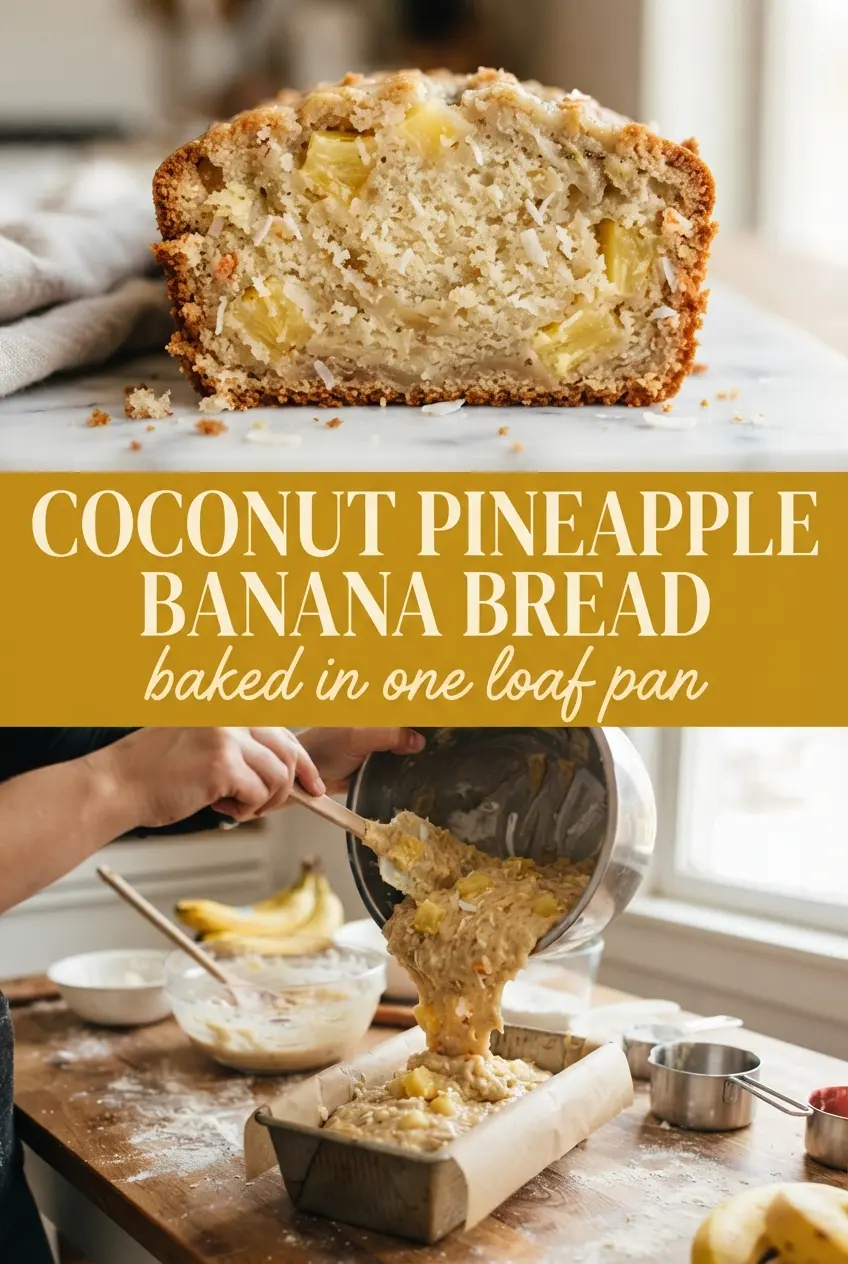
Coconut pineapple banana bread bakes up with a tender crumb, sweet banana depth, and little bursts of tropical brightness in every slice. The pineapple doesn’t just add flavor; it keeps the loaf soft for days, while the coconut gives the top a delicate chew that plays nicely against the moist crumb underneath.
What makes this version work is restraint. The batter starts like classic banana bread, then the pineapple and coconut go in at the end so the loaf stays light instead of dense. The pineapple has to be drained well or the middle turns gummy before the edges finish baking. That one detail matters more here than almost anything else.
Below, I’ve included the small technique choices that keep the loaf from sinking in the center, plus a couple of simple ways to tweak it if you want a toastier coconut finish or need to work with what you already have in the kitchen.
The pineapple kept the loaf so moist without making it heavy, and the coconut on top turned golden and crisp in the oven. I sliced it while it was still warm and it held together beautifully.
Save this coconut pineapple banana bread for the days when you want a soft, fruity loaf with a toasted coconut top.
The Pineapple Trick That Keeps This Loaf Soft Without Turning It Heavy
Pineapple is the ingredient that can make banana bread better or ruin it. When it’s too wet, the loaf turns dense in the middle and sinks after baking. When it’s drained properly, it melts into the crumb and gives you a moist slice that still holds its shape.
The other thing that matters is when the pineapple goes in. Fold it in at the end so you don’t break down the batter before it hits the oven. That keeps the gluten from overworking and helps the loaf stay tender instead of tight. The coconut behaves the same way; it should be folded through, not beaten in.
- Ripe bananas — Use bananas with plenty of brown spotting and soft flesh. Under-ripe bananas won’t give the loaf the deep banana flavor that balances the pineapple.
- Crushed pineapple — Drain it well, then press it lightly in a fine mesh strainer if it still looks wet. Canned pineapple is the easiest choice here, and it’s exactly what keeps the loaf from drying out.
- Shredded coconut — Sweetened or unsweetened both work. Sweetened coconut gives a softer, slightly chewier top; unsweetened keeps the loaf a little lighter.
- Brown sugar — This adds moisture and a faint caramel note that white sugar won’t match. Dark brown sugar makes the loaf richer, but light brown sugar is fine if that’s what you have.
- Butter — Melted butter gives the crumb a softer, more cake-like texture than oil. If you swap in oil, the loaf stays moist but loses some of that buttery depth.
Building the Batter So the Center Bakes Through
Start with the Wet Ingredients
Mix the mashed bananas, melted butter, brown sugar, eggs, and vanilla until the mixture looks smooth and glossy. A few banana lumps are fine, but the sugar should be fully dissolved into the wet ingredients so the batter bakes evenly. If the butter is too hot, it can scramble the eggs or make the batter greasy, so let it cool slightly after melting.
Bring in the Flour Without Overmixing
Add the flour and baking soda and stir only until the dry streaks disappear. Banana bread turns tough when the flour gets worked too much, and that problem shows up here fast because the fruit already adds plenty of moisture. The batter should look thick and slightly uneven, not whipped and airy.
Fold in the Pineapple and Coconut
Use a spatula for this part and fold just until the fruit and coconut are distributed. If you stir aggressively, the pineapple breaks down and bleeds liquid into the batter, which makes the center bake up gummy. The loaf pan should be filled evenly, then topped with a light sprinkle of extra coconut so the crust turns golden instead of pale.
Bake Until the Crumb Sets
Bake at 350°F until the top is deep golden and a toothpick comes out clean or with just a few moist crumbs. If the top browns too quickly before the center is set, lay a loose piece of foil over it for the last 10 to 15 minutes. Let the loaf cool before slicing, or the steam inside will make the middle collapse and the slices will smear.
Three Ways to Adjust This Loaf Without Losing the Texture
Toast the coconut for a deeper finish
Sprinkle the coconut topping over the loaf before baking, then watch it closely in the oven. Toasting brings out a nuttier flavor and gives the top a crisp edge that plays nicely against the soft crumb. If you want even more color, toast a little extra coconut in a dry skillet and scatter it over the cooled loaf.
Make it dairy-free without changing the structure much
Swap the butter for melted coconut oil or a neutral oil. Coconut oil gives the loaf a faint tropical note that fits the pineapple, while neutral oil keeps the flavor more classic. The crumb will be a touch softer and less rich than the butter version, but it still bakes up well.
Use gluten-free flour when you need a GF loaf
A 1:1 gluten-free baking flour blend usually works here because the bananas and pineapple already provide plenty of moisture. The texture will be a little more delicate, so let the loaf cool completely before slicing. Don’t use almond flour alone; it won’t give the loaf enough structure to rise and hold together.
Turn it into muffins for faster baking
Divide the batter into muffin cups and bake until the centers spring back when lightly touched. Muffins brown faster than a loaf, so start checking early. This version gives you more crust and less waiting, though the crumb will be slightly firmer than the loaf.
Storage and Reheating
- Refrigerator: Keep the loaf wrapped or in an airtight container for up to 4 days. The crumb gets a little denser in the fridge, but the flavor holds up well.
- Freezer: It freezes well. Wrap slices individually, then store them in a freezer bag for up to 3 months so you can thaw only what you need.
- Reheating: Warm slices in the microwave for 10 to 15 seconds or toast them lightly. Don’t overheat them or the coconut topping will dry out and the crumb will turn rubbery.