
Tender meatloaf with a tangy-sweet glaze has a way of disappearing fast, and this Cracker Barrel copycat gets the texture right where so many versions turn heavy. The loaf stays soft and sliceable instead of tight and crumbly, and the ketchup-mustard-brown sugar topping bakes down into a shiny finish that tastes like the diner version people remember.
The trick is in the crackers and milk. Soaking the saltines before they go into the bowl gives the meat a finer, more even texture than tossing in dry crumbs, and it keeps the loaf from feeling dense after baking. I also like baking it on a sheet pan instead of packing it into a loaf pan, because the edges get just enough color while the center stays moist.
Below, I’ll walk through the one step that keeps the texture tender, why the glaze goes on in two layers, and how to reheat leftovers without drying out the slices.
The cracker-and-milk mixture made the loaf so tender, and the glaze set up beautifully without sliding off. I baked it in two stages like you suggested and the center stayed juicy all the way through.
Save this Cracker Barrel copycat meatloaf for the nights when you want tender slices, a sweet-savory glaze, and a dinner that tastes like classic comfort food.
The Reason This Meatloaf Stays Tender Instead of Packing Down
Most meatloaf problems start before the pan even goes into the oven. If the mixture is overworked, the beef turns compact and bouncy instead of tender. If the binder is dry, the loaf bakes up crumbly. And if the glaze goes on too late or too thick, it never settles into that glossy top layer people expect from a diner-style meatloaf.
This version avoids all three problems. The soaked cracker mixture acts like a built-in panade, which means it holds moisture without making the loaf heavy. The loaf also bakes on a sheet pan, so the fat can render away instead of pooling underneath. That small change gives you cleaner slices and better browning on the edges.
- Crushed saltines — These do more than bulk up the loaf. They soften in milk and help the beef stay tender. If you swap in dry breadcrumbs, the texture gets a little firmer, which works in a pinch but won’t give the same soft, almost fluffy bite.
- Milk — This hydrates the crackers and gives the binder its smooth texture. Whole milk is ideal, but any milk you already have works. Don’t skip the soak; dry crumbs won’t dissolve the same way and can leave the loaf more uneven.
- Ground beef — An 80/20 blend gives you enough fat for flavor and moisture without turning greasy. Leaner beef can work, but the loaf will be less forgiving. If you use very lean meat, the onions and milk mixture matter even more.
- Ketchup, brown sugar, and mustard — That glaze needs all three pieces: sweetness, tang, and body. Brown sugar helps it caramelize, mustard keeps it from tasting flat, and ketchup gives it that classic diner sheen. Whisk it until smooth so it spreads evenly instead of clumping.
What Each Ingredient Is Actually Doing in This Dish
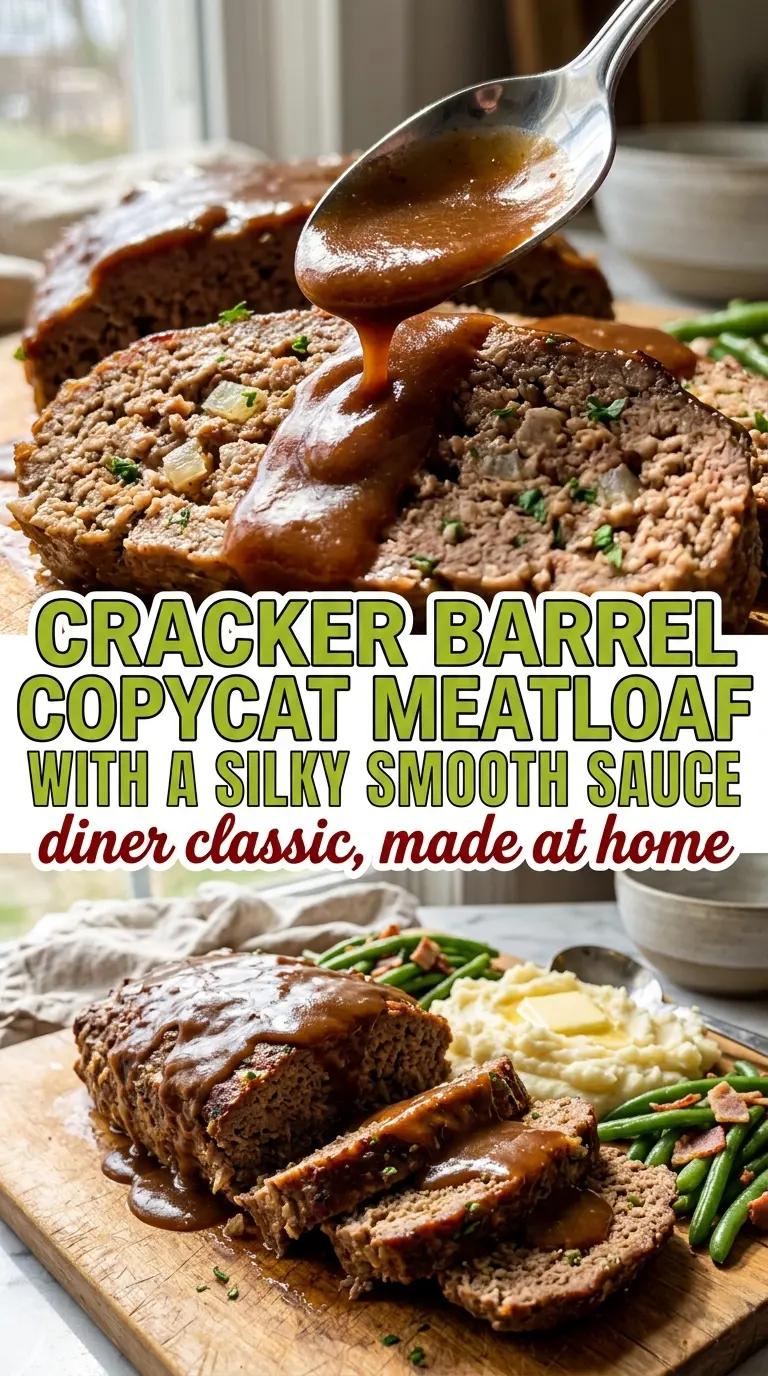
The onion should be diced small enough that it melts into the meat as it bakes. Big chunks stay crisp and can make each slice feel uneven. If you want a smoother texture, grate the onion instead of dicing it. That gives you the flavor without visible pieces.
The eggs are there to hold the loaf together, not to make it cakey. Two is enough for this amount of beef and crackers. Too many eggs can push the texture toward rubbery, especially if you also pack the mixture tightly.
Salt and pepper are basic here, but the seasoning gets a lift from the glaze and the gravy served on the side. That means you don’t need to over-season the raw mix. Taste the final plate with gravy before deciding it needs more salt.
Getting the Loaf, Glaze, and Rest Time Right
Soaking the Crackers First
Crush the saltines, then let them sit in the milk for about 5 minutes. They should look softened and swollen, almost like a loose paste. That short soak is what keeps the loaf from turning tight in the oven. If you rush this step and stir the crackers straight into the meat dry, the finished texture will be denser and the crumbs can stay a little gritty.
Mixing Without Overworking
Add the beef, eggs, onion, salt, and pepper to the soaked crackers, then mix just until everything is evenly combined. Stop as soon as the bowl looks uniform. Overmixing compresses the meat and makes the finished loaf tough. The mixture should hold together when you shape it, but it shouldn’t feel pasty.
Shaping and Glazing in Two Rounds
Form the mixture into a loaf on a baking sheet and shape it with a light hand. A flatter, evenly shaped loaf cooks more consistently than a tall mound. Spread on half the glaze before baking, then add the rest after 45 minutes. That first layer bakes into the surface and the second layer stays bright and sticky instead of burning before the center is done.
Knowing When It’s Done
After the final 15 minutes, the loaf should be cooked through and the glaze should look set and glossy. Let it rest for 10 minutes before slicing. If you cut it too early, the juices run out and the slices fall apart. The rest time gives the meat fibers a chance to settle so each piece holds its shape on the plate.
What to Change When You Want a Different Version
Gluten-Free Version
Use gluten-free crackers or gluten-free breadcrumbs in the same amount. The loaf still needs that soaked binder to stay tender, but the flavor will be slightly less salty and the texture can be a touch more delicate, so handle it gently when shaping.
Dairy-Free Swap
Replace the milk with unsweetened plain oat milk or another neutral non-dairy milk. You still get the softening effect the crackers need, but avoid strongly flavored options like coconut milk, which can show up in the finished taste.
Make It a Little Less Sweet
Cut the brown sugar back by 1 tablespoon and add a splash more mustard. You’ll get a glaze that leans more savory and sharp, which works well if you’re serving it with mashed potatoes and gravy.
Storage and Reheating
- Refrigerator: Store slices in an airtight container for up to 4 days. The glaze softens a little, but the flavor gets even better after a night in the fridge.
- Freezer: This freezes well. Wrap individual slices tightly and freeze for up to 3 months, or freeze the whole loaf in portions with parchment between layers.
- Reheating: Warm slices covered in a 300°F oven with a spoonful of gravy or a splash of water to keep them from drying out. The biggest mistake is microwaving uncovered, which pulls the moisture out and toughens the edges.
Answers to the Questions Worth Asking
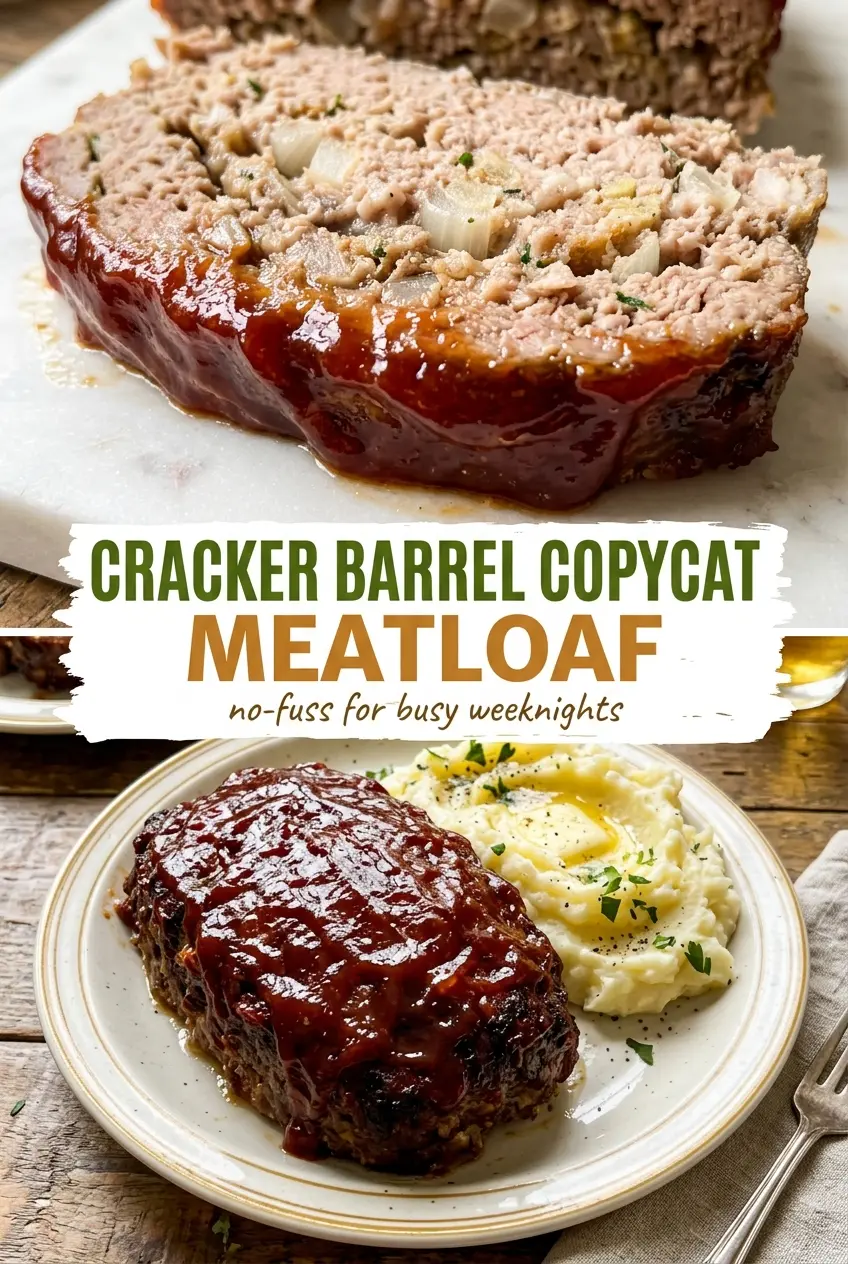
Cracker Barrel Copycat Meatloaf
Ingredients
Equipment
Method
- Preheat oven to 350°F and position a rack in the center so the loaf bakes evenly.
- Soak crushed crackers in milk for 5 minutes to soften them for a tender, cohesive texture.
- Mix soaked crackers with ground beef, eggs, diced onion, salt, and pepper until evenly combined.
- Shape the mixture into a loaf on a baking sheet, keeping it compact for clean slices.
- Whisk ketchup, brown sugar, and mustard together until smooth, then spread half over the loaf.
- Bake for 45 minutes at 350°F until the top looks set and slightly dry at the edges.
- Spread the remaining glaze over the loaf, then bake 15 more minutes at 350°F until glossy and cooked through.
- Rest the meatloaf for 10 minutes before slicing so juices settle and the interior stays tender.
- Slice and serve with gravy to match the classic diner-style finish.