
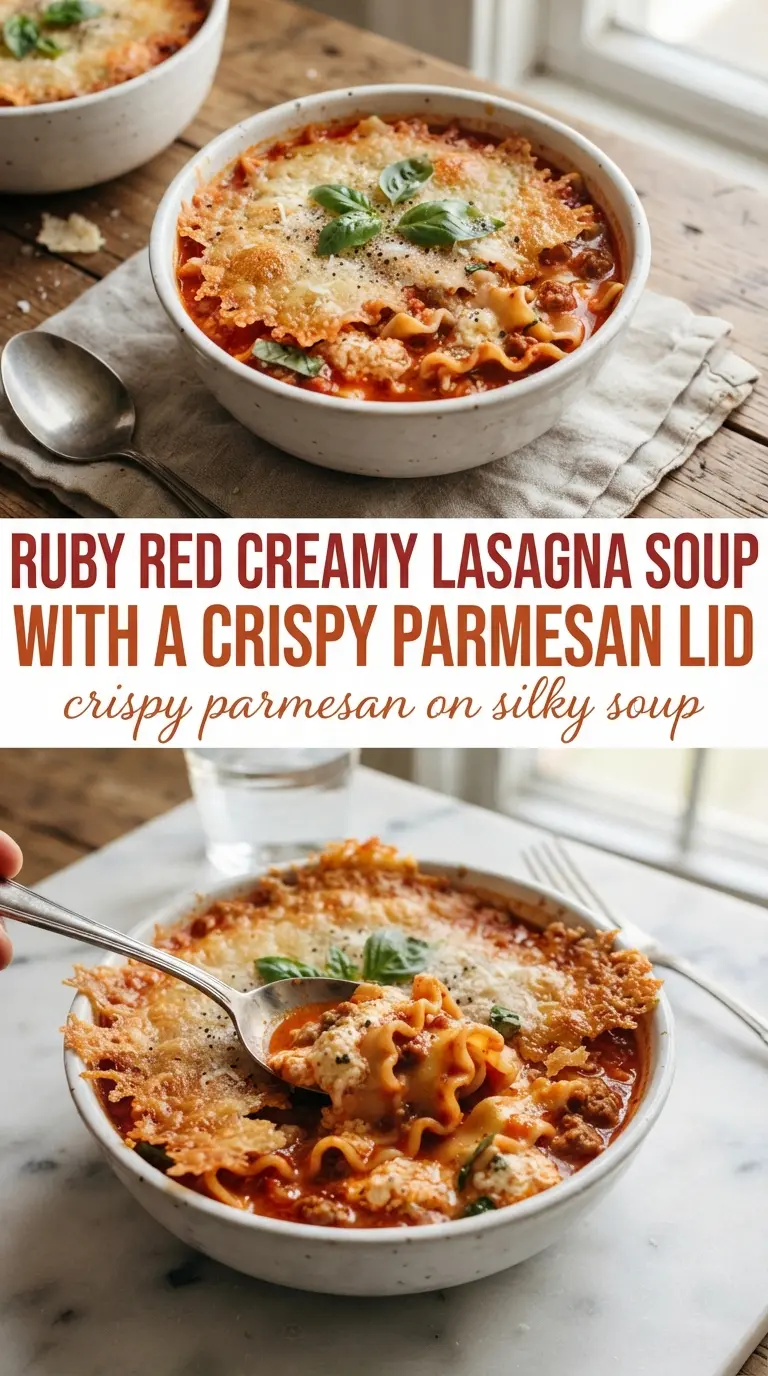
Ruby-red broth, savory sausage, and soft ribbons of pasta make creamy lasagna soup feel like a full pan of lasagna in a bowl, only faster and easier to get on the table. The finished soup is rich without turning heavy, with just enough tomato brightness to keep every spoonful lively. That crispy Parmesan lid on top gives you the best part of baked lasagna without waiting for an hour in the oven.
The trick here is building the flavor in the pot before the liquid goes in. Browning the sausage with the onion and garlic gives the broth a deeper, meatier base, and the crushed tomatoes keep the soup from tasting flat. Cream cheese does the work that cream and flour usually do, which is why the broth turns silky instead of greasy or thin. The ricotta and Parmesan finish it off with that familiar lasagna character people expect.
Below, you’ll find the part that keeps the noodles from going mushy, plus the easiest way to get that crisp Parmesan topping to set up properly. If you’ve ever wanted lasagna flavor without assembling layers, this one earns its place in the dinner rotation.
The broth turned out silky and the pasta stayed tender instead of falling apart. I used the Parmesan crisps on top and my husband kept saying it tasted like lasagna without all the work.
Save this creamy lasagna soup for a weeknight bowl that tastes like baked lasagna, with a silky tomato broth and that crisp Parmesan topping.
The Reason This Soup Stays Rich Without Turning Heavy
The biggest mistake with creamy tomato soups is adding dairy too early or too hot, then wondering why the pot turns grainy or separates. This one stays smooth because the sausage, onion, and garlic build a strong savory base first, and the cream cheese goes in after the noodles have cooked, when the broth is hot but not violently boiling. That gentle finish is what gives you a silky texture instead of a broken one.
Broken lasagna noodles also matter more than people think. If you drop them in too soon and let them sit, they soak up too much broth and turn bloated before the soup is even served. Cook them until they’re just tender, not soft all the way through, because they’ll keep relaxing in the hot broth while you finish the topping and get bowls ready.
What Each Ingredient Is Doing in This Bowl
- Italian sausage — This is the backbone of the soup. It brings seasoning, fat, and enough savoriness that the broth tastes built, not dumped together. Mild or hot both work; use hot if you want more bite without changing anything else.
- Yellow onion and garlic — These get cooked in the sausage drippings, which gives the soup depth before any liquid goes in. Dice the onion small so it melts into the broth instead of floating in chunks. Garlic goes in just long enough to smell fragrant; if it browns hard, it turns bitter.
- Crushed tomatoes — Use a good canned brand here, because the tomatoes define the soup’s base flavor. Crushed tomatoes give you body without needing extra simmering, and they’re better than tomato sauce for keeping the broth bright and not overly smooth.
- Chicken broth — This stretches the tomato base into a true soup and carries the sausage flavor through the bowl. If your broth is very salty, use a low-sodium version so the Parmesan at the end doesn’t push the whole dish over the edge.
- Broken lasagna noodles — These give you the lasagna part of the equation. Break them into uneven pieces on purpose; the irregular edges catch broth better than neat little squares. If you need a swap, mafaldine or campanelle works well, though the bowl will read more like pasta soup than lasagna soup.
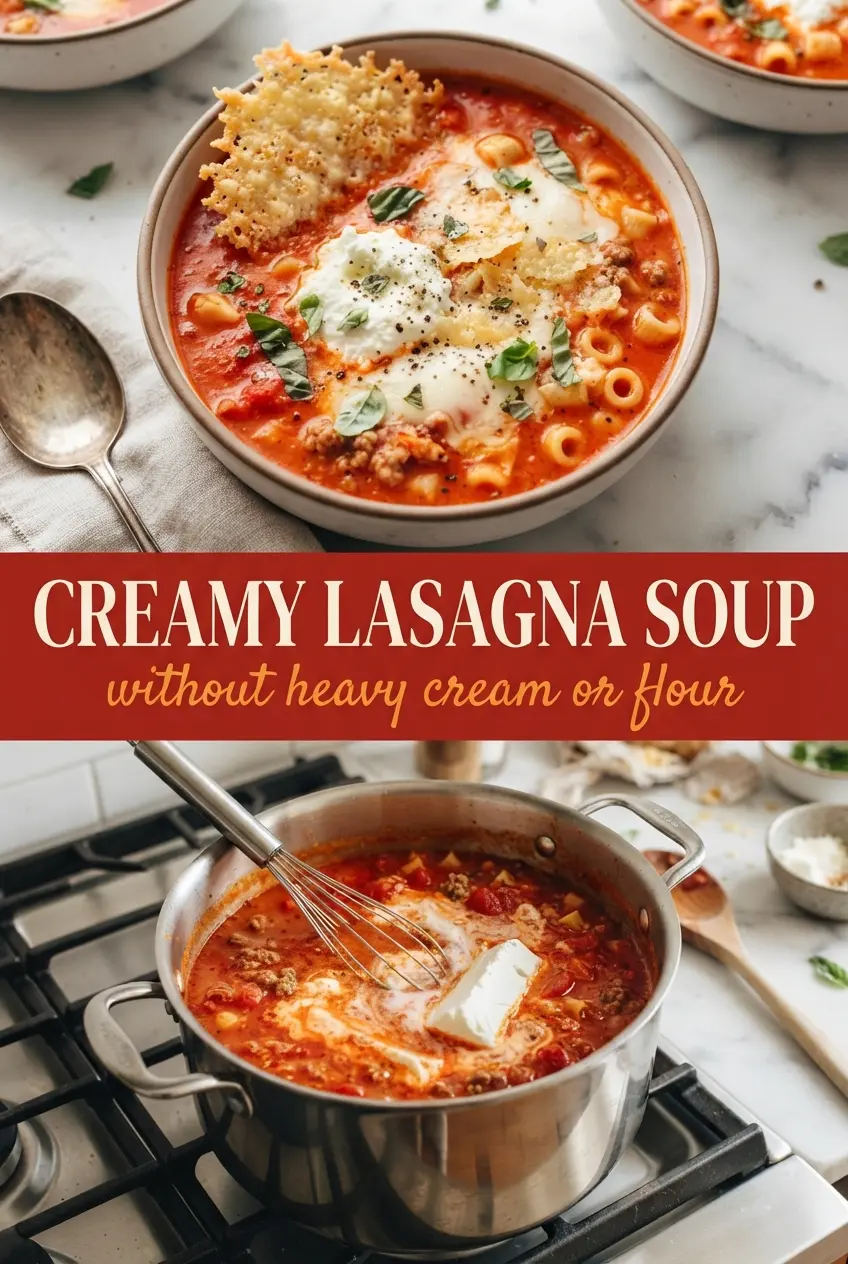
- Cream cheese — This is the ingredient that makes the broth turn silky without flour or heavy cream. Let it soften first so it melts fast and evenly. Cold cream cheese will leave little white bits in the pot unless you whisk patiently over low heat.
- Ricotta and Parmesan — Ricotta gives you that lasagna finish, while Parmesan adds salt and a sharp, nutty edge. The crisp Parmesan mounds are worth the extra five minutes because they add texture that keeps the soup from feeling one-note. If you only have one cheese to top with, use Parmesan for the stronger payoff.
The 20 Minutes That Matter Most
Brown the Sausage Until the Bottom of the Pot Has Color
Start with the sausage, onion, and garlic in the pot and cook until the sausage loses its pink color and the bottom of the pan has brown spots. That fond is where the deep flavor comes from, so don’t rush past it by keeping the heat too low or crowding the pot with extra liquid. The onion should soften and go translucent, not stay crunchy. If the garlic starts to darken before the sausage is browned, lower the heat right away.
Build the Broth Before the Noodles Go In
Add the tomatoes, broth, and Italian seasoning, then bring the pot to a real boil before adding the noodles. The boil helps the pasta cook evenly and keeps the sausage flavor moving through the broth. Once the noodles are in, stir them a few times so they don’t glue themselves together on the bottom. If you leave them unattended for the first minute, they’ll clump and you’ll spend the rest of the cook breaking them apart.
Finish With Cream Cheese Off the Heat
When the noodles are tender, turn the heat down and whisk in the cream cheese until the broth looks smooth and glossy. This is the point where people usually break the soup by boiling it hard and then stirring in dairy. Gentle heat keeps the texture velvety. If you want the soup a little looser, add a splash more broth after the cream cheese melts.
Crisp the Parmesan and Layer the Top
Spoon small mounds of Parmesan onto a parchment-lined pan and bake just until they turn lacy and golden at the edges. Pull them when they still look a little soft in the center; they crisp as they cool. Add ricotta to each bowl first, then ladle the soup around it and finish with the Parmesan crisp on top. That order keeps the cheese from disappearing into the broth before you get to eat it.
Three Ways to Adjust the Bowl Without Losing the Point
Make It Lighter With Turkey Instead of Sausage
Ground turkey works if you want a leaner pot, but it needs help because it doesn’t bring the same built-in seasoning or fat. Add an extra half teaspoon of Italian seasoning and a pinch of salt while it browns. The soup will be a little less rich, but the tomato and cheese still carry the lasagna character.
Gluten-Free Without Changing the Broth
Use your favorite gluten-free lasagna noodle or another sturdy short pasta. The broth itself doesn’t need changing, but gluten-free pasta often softens faster, so start checking it a few minutes early. If it thickens the soup too much, loosen it with a splash of broth before serving.
Dairy-Free Needs a Different Finish
Skip the cream cheese, ricotta, and Parmesan and use a plain unsweetened dairy-free cream cheese plus a spoonful of cashew cream if you want a similar body. You won’t get the same tang or cheesy finish, but the broth will still turn creamy. Add extra seasoning at the end, since dairy-free swaps usually mute salt and sharpness a little.
Storage and Reheating
- Refrigerator: Store for up to 4 days. The noodles will keep absorbing broth, so expect a thicker soup the next day.
- Freezer: It freezes, but the pasta turns softer after thawing. For the best texture, freeze the broth and sausage without the noodles, then cook fresh pasta when you reheat it.
- Reheating: Warm it slowly on the stove over low heat with a splash of broth or water. High heat can make the dairy separate and can push the noodles past tender into mushy.
Answers to the Questions Worth Asking
Creamy Lasagna Soup
Ingredients
Equipment
Method
- In a Dutch oven, cook the Italian sausage with the diced onion over medium-high heat until the sausage is browned and the onion is softened, about 6 to 8 minutes.
- Add the minced garlic and cook for 30 to 60 seconds, stirring, until fragrant and just starting to turn golden.
- Stir in the crushed tomatoes, chicken broth, and Italian seasoning, then bring the mixture to a boil over high heat, about 3 to 4 minutes.
- Add the broken lasagna noodles and simmer until tender, about 10 minutes, stirring occasionally so the noodles don’t clump.
- Reduce heat to low and whisk in the cream cheese until fully melted and silky, about 1 to 2 minutes, with no visible streaks.
- Preheat oven to 400°F and spread grated Parmesan into small mounds on a baking tray, then bake until crisp, about 5 minutes.
- Serve the soup topped with the crispy Parmesan mounds and spooned ricotta on top.