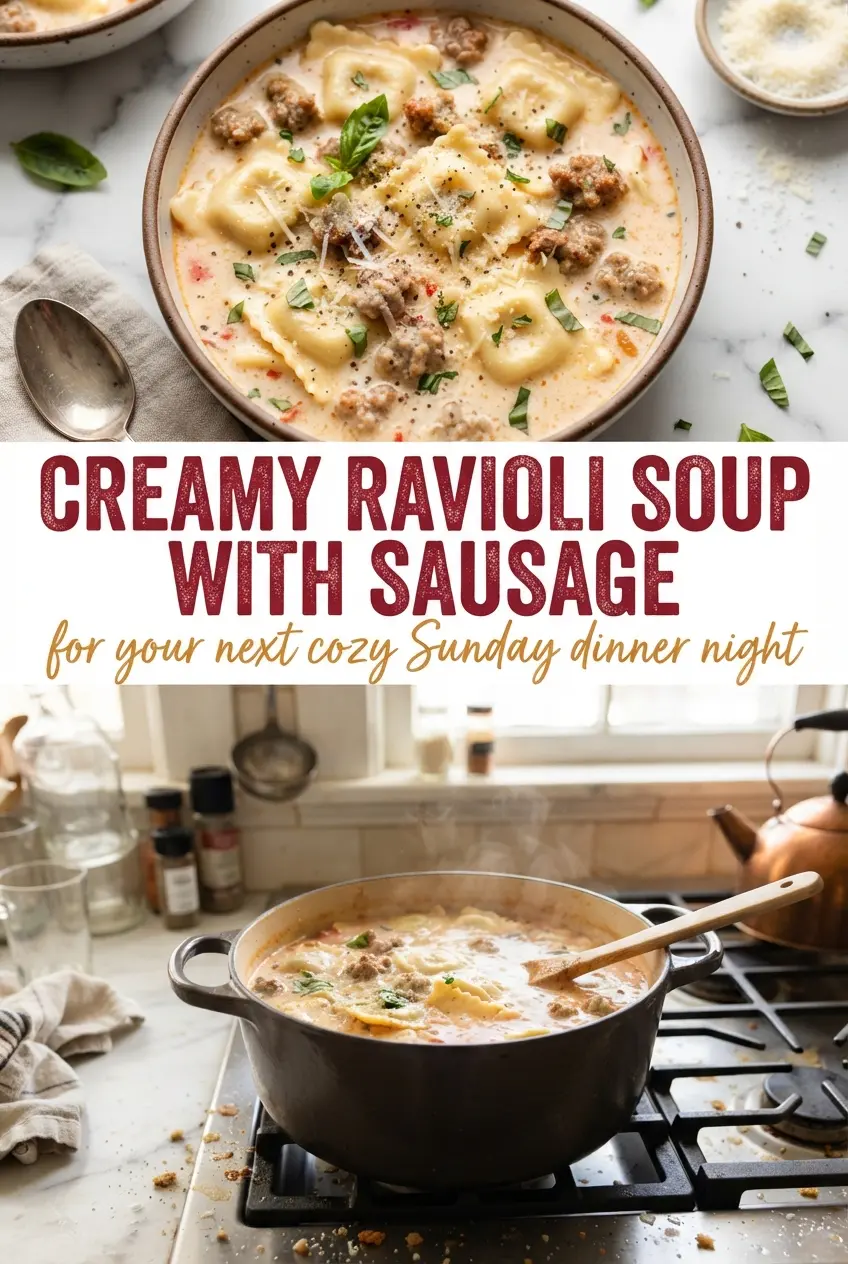
Pillowy ravioli in a rich, creamy tomato broth with savory sausage is the kind of bowl that disappears fast and gets talked about after dinner. The broth turns silky without feeling heavy, the sausage gives it backbone, and the cheese ravioli bring enough substance that you don’t need anything else on the table unless you want bread for dunking.
What makes this version work is timing. The sausage browns first so the pot picks up real flavor before anything liquid goes in, and the cream goes in after the tomatoes and broth have had a chance to simmer together. That keeps the soup smooth instead of dull or separated. The ravioli also go in at the very end, which keeps the pasta tender instead of bloated and fragile.
Below you’ll find the one detail that keeps the ravioli intact, plus a few practical swaps if you want to use what you already have. This is one of those soups that tastes like it took more effort than it did, which is probably why it ends up in the rotation so often.
The broth turned out creamy without getting greasy, and the ravioli stayed whole because I added them right at the end. Even reheated the next day, it still tasted rich once I thinned it with a splash of broth.
Save this creamy ravioli soup with sausage for a one-pot dinner that stays silky, hearty, and full of tender pasta.
The Reason the Ravioli Go In Last
The biggest mistake in ravioli soup is treating the pasta like it can sit around in the broth while everything else finishes cooking. It can’t. Ravioli absorb liquid fast, and once they swell too far they start to split at the seams and leak filling into the soup. The broth gets cloudy, the texture goes soft, and you lose the contrast that makes the bowl good in the first place.
The other thing worth watching is the cream. Add it after the tomatoes and broth have simmered together long enough to lose that sharp raw edge. If you rush it or boil hard after adding cream, the soup can take on a grainy look or separate a little at the edges. A low simmer keeps the base smooth and lets the sausage fat, tomato, and dairy settle into one broth instead of fighting each other.
What Each Ingredient Is Actually Doing in This Soup
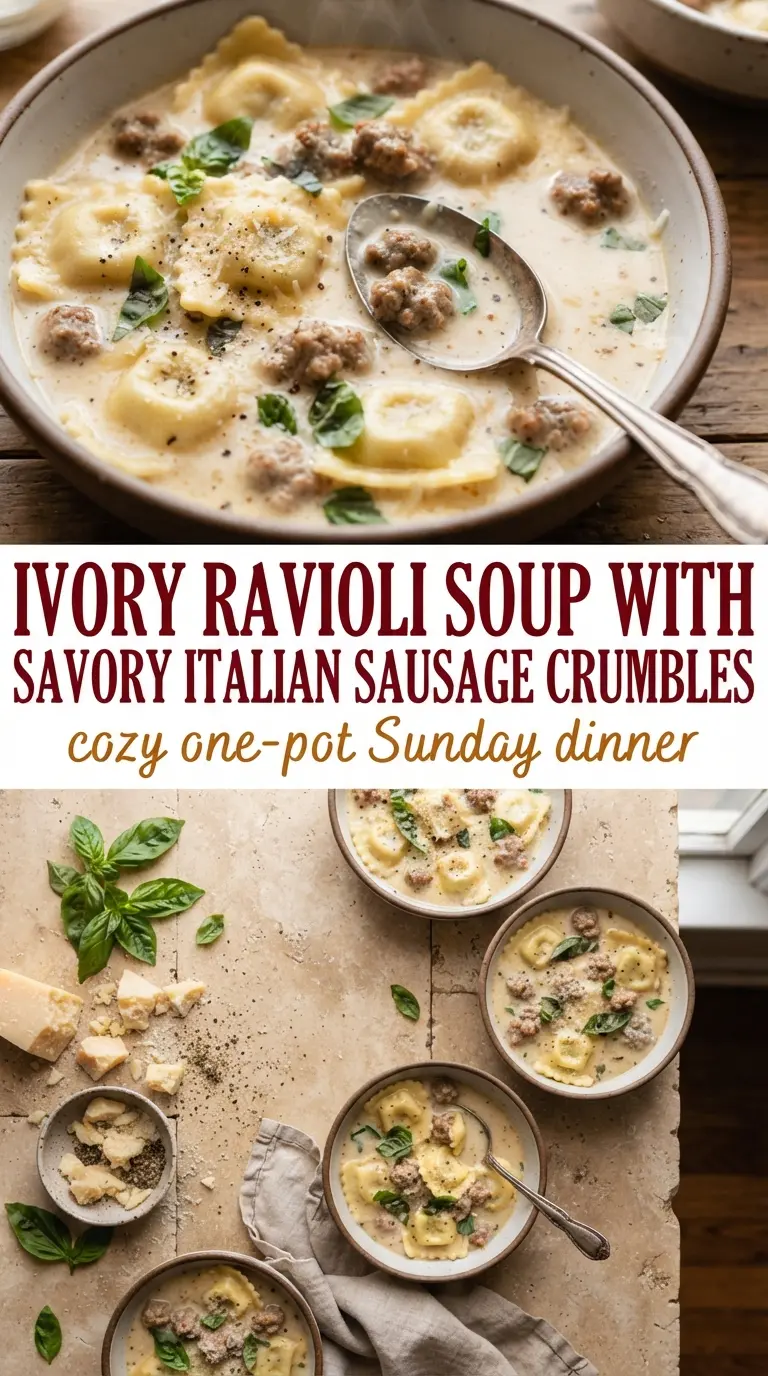
- Italian sausage — This is the main seasoning as much as the protein. It brings fennel, garlic, and fat into the pot, which means you get a built-in flavor base before the tomatoes even go in. Mild or hot both work; hot sausage gives the soup more edge, while mild keeps it friendlier. If you use turkey sausage, add a little extra olive oil so the onion has enough fat to soften properly.
- Onion and garlic — These build the background flavor that keeps the broth from tasting flat. Dice the onion small so it melts into the soup instead of standing out in chunks. The garlic only needs a short minute in the pot; if it browns, it turns bitter fast.
- Crushed tomatoes — Crushed tomatoes give the soup body without making it as thick as a marinara. They create that creamy tomato color once the cream goes in. A good canned brand matters here because there aren’t many ingredients to hide behind; if your tomatoes taste sharp, a small pinch of sugar or an extra minute of simmering helps round them out.
- Heavy cream — This softens the tomato and gives the broth its velvety finish. Half-and-half works in a pinch, but the soup will be thinner and a little more prone to splitting if it boils. Stir it in over low heat and keep the pot at a gentle simmer, not a rolling boil.
- Cheese ravioli — Fresh or refrigerated ravioli give the best texture because they cook fast and stay tender. Frozen ravioli work too; just give them an extra minute or two and don’t crowd the pot. The key is to add them only when the soup is at the end of its cooking time so they don’t burst.
- Fresh basil and Parmesan — Basil brightens the whole pot, especially after the cream has mellowed the tomatoes. Parmesan adds salt and a little nutty depth on top. Use real Parmesan if you can, because the pre-grated stuff doesn’t melt or finish the bowl the same way.
Building the Broth Without Breaking the Pasta
Brown the Sausage First
Start with a large pot over medium heat and cook the sausage until it’s deeply browned and broken into small crumbles. Those browned bits stuck to the bottom are flavor, not something to scrub away. If the sausage gives off a lot of grease, spoon off a little before adding the onion, but leave enough behind to cook the vegetables.
Cook the Aromatics Until They Lose Their Bite
Add the diced onion and let it soften in the sausage fat until it turns translucent at the edges and starts to smell sweet. Stir in the garlic for just long enough to take the raw edge off. If the garlic goes in too early or cooks too long, it can turn sharp and overpower the broth.
Simmer the Tomato Base Before the Cream
Pour in the crushed tomatoes and chicken broth, then bring the pot to a steady simmer. Let that cook long enough for the tomatoes to lose their canned taste and the broth to pick up the sausage flavor. Once the base tastes rounded, lower the heat and stir in the cream; high heat here is what causes a broken or grainy finish.
Cook the Ravioli at the Very End
Add the ravioli only when you’re close to serving and cook them according to the package directions until they float and feel tender at the center. Stir gently so they don’t tear on the bottom of the pot. If they sit in the soup too long, they’ll keep soaking up liquid and can split open, so serve the pot as soon as the pasta is done.
Finish With Basil and Parmesan
Turn off the heat and stir in the basil right before serving so it stays bright instead of turning dull and muddy. Ladle the soup into bowls and shower it with Parmesan while it’s still hot enough to melt slightly. That last cheese hit gives the broth a richer finish without making it heavier.
How to Change This Soup Without Losing What Makes It Good
Make It Lighter With Turkey Sausage
Turkey sausage works well if you want a leaner bowl, but it doesn’t render as much fat or carry quite as much seasoning. Add a small splash of olive oil before the onion so the base still tastes full, and expect the broth to be a touch less rich.
Use Gluten-Free Ravioli for a Gluten-Free Bowl
Gluten-free ravioli can be a little more delicate, so cook them gently and watch the package timing closely. The broth itself is naturally gluten-free if your sausage and broth are labeled that way, and the final bowl still keeps the same creamy, hearty feel.
Swap in Spinach Ravioli for a Different Filling
Spinach ravioli give the soup a lighter, greener edge and let the sausage and tomato stand out more. The filling won’t be as rich as cheese ravioli, so the bowl tastes a little less decadent, but the texture still works beautifully.
Storage and Reheating
- Refrigerator: Store for up to 3 days. The soup thickens as it sits and the ravioli soften a little more in the broth.
- Freezer: The broth freezes, but the ravioli don’t hold up well after thawing. Freeze the soup base without the pasta if you want to make it ahead, then cook fresh ravioli when you reheat it.
- Reheating: Warm it slowly over low heat and add a splash of broth to loosen the texture. Don’t boil it hard, or the cream can separate and the ravioli can fall apart.