
The skin is the first thing to tell you whether a turkey has had enough time in the refrigerator: it should feel dry to the touch, not slick. That dry surface is one reason I like making this dry brine turkey ahead instead of seasoning it just before it goes into the oven. The salt, pepper, rosemary, and thyme have time to season the meat, and the turkey can spend its final stretch uncovered so the skin dries.
I use a fully thawed, unbrined bird because the salt amount is measured for turkey that hasn’t already been seasoned. The rub goes over the outside, into the cavity, and beneath the breast and thigh skin, so the seasoning isn’t limited to the surface. Then the refrigerator does the slow work while I get the rest of the meal ready.
Roasted at 325°F, the turkey comes out with fragrant herb-scented skin and meat seasoned throughout. Give it a full 30 minutes to rest before carving; that pause makes the turkey easier to slice and keeps the board from filling with its juices.
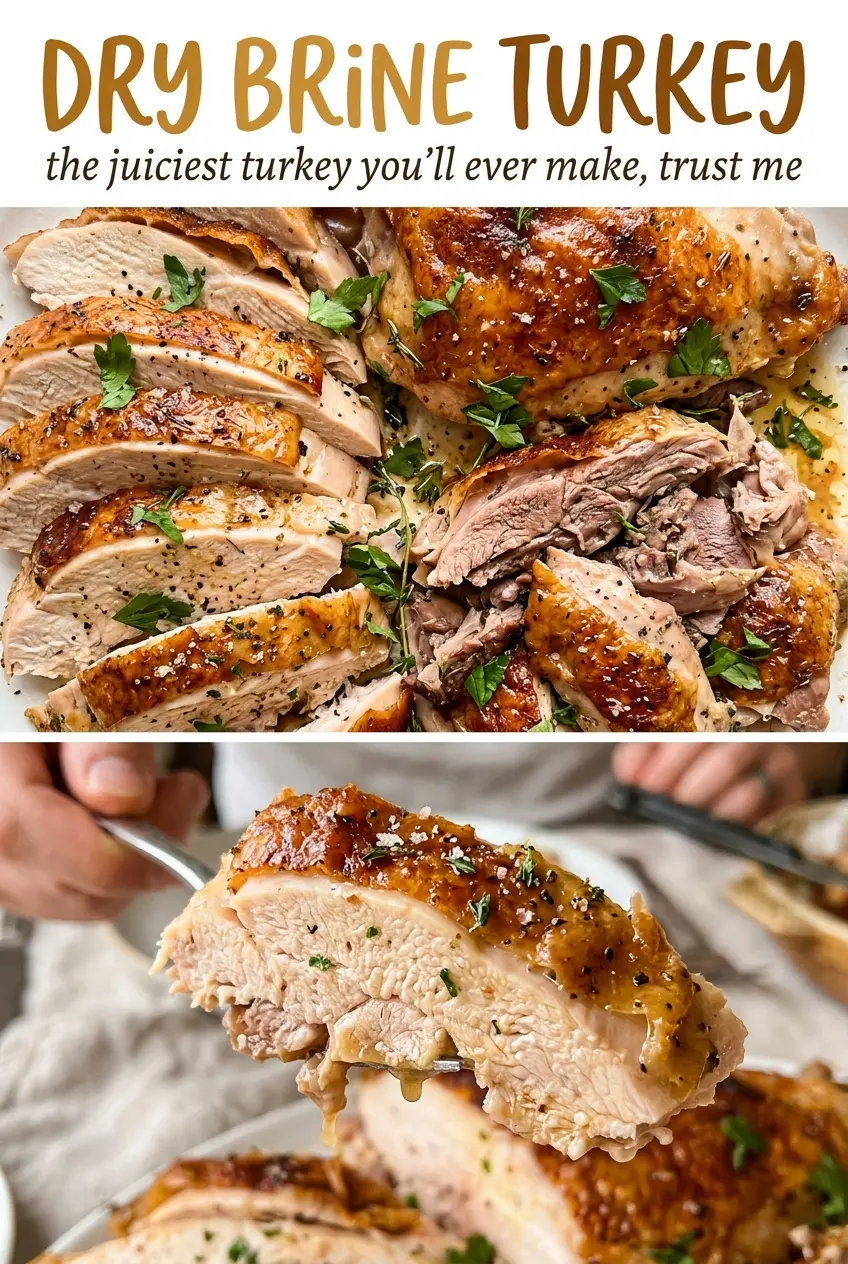
Kitchen Note
When you work the herbs beneath the breast and thigh skin, loosen the skin gently with your fingers first. It gives you room to spread the seasoning over the meat without tearing the skin.
Save this dry brine turkey for a roast with rosemary, thyme, and skin that gets time to dry before it goes in the oven.
Why the Turkey Needs Uncovered Time Before Roasting
A dry brine isn’t a wet soak. Salt and herbs are rubbed directly onto the turkey, and the refrigerator gives that seasoning time to work. Patting the bird dry before applying the mixture helps it adhere, while the uncovered hours at the end help the skin lose surface moisture. That matters because a damp surface tends to steam before it browns.
There are two details that make this approach different from sprinkling seasoning on at the last minute. First, the seasoning reaches more than the outside: it goes inside the cavity and under the breast and thigh skin. Second, the skin gets an uncovered stretch in the refrigerator before roasting. Keep the turkey on a rack in the roasting pan during that time, and cover it loosely with plastic wrap for the earlier part of the chill.
Don’t rinse the turkey before seasoning it. Rinsing can spread raw poultry juices around the sink and counter, and it doesn’t improve the brine. Patting the skin dry with paper towels is the useful step; discard the used towels and clean surfaces that touched raw turkey.
Why Morton Salt and Fresh Herbs Matter in This Brine
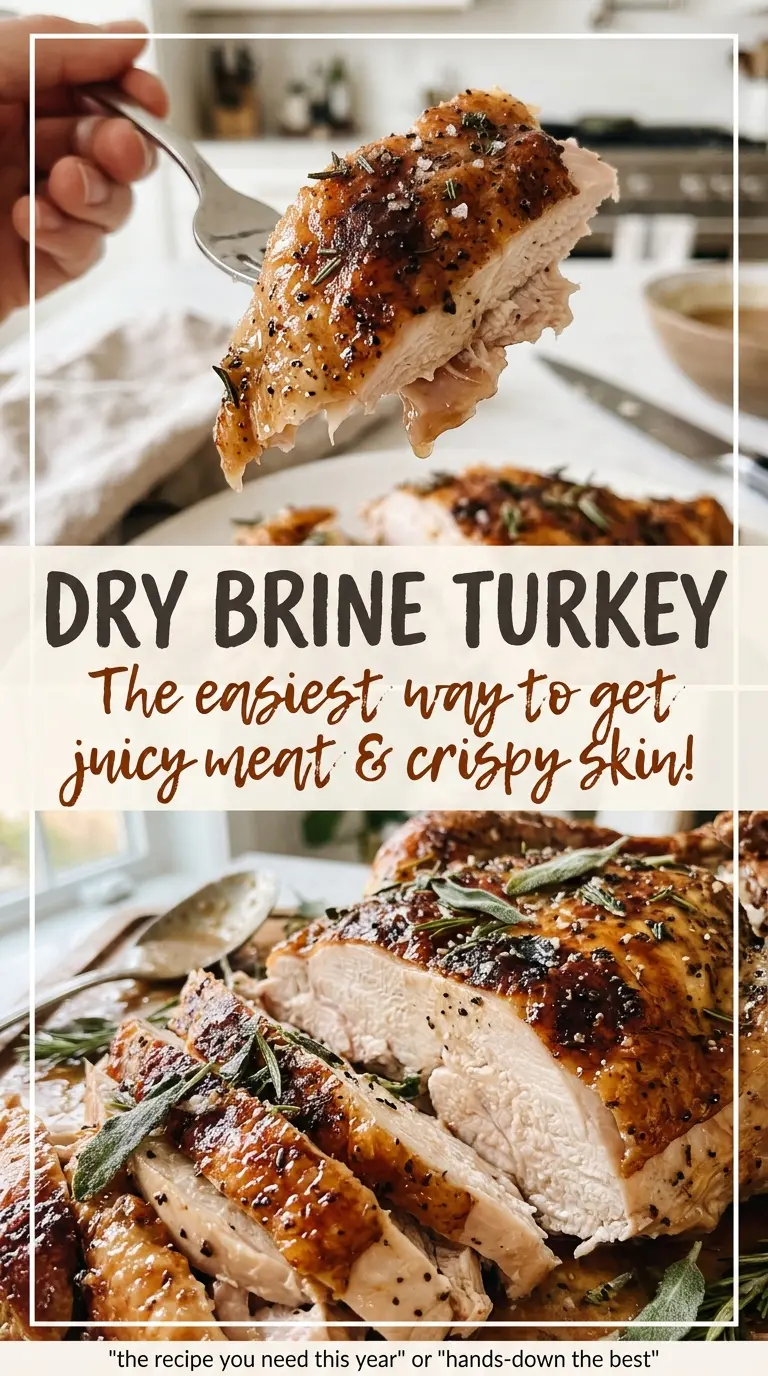
- Morton kosher salt — The amount here is calibrated for Morton kosher salt, so don’t replace it cup-for-cup with a different salt. Kosher salt crystals vary in size and weight by brand; an equal volume of another kind can leave the turkey too salty or underseasoned. Check the label before buying, especially if the turkey is sold as enhanced, self-basting, or already brined.
- Fresh rosemary and thyme — Chopped fresh herbs give the rub a clean, fragrant aroma that dried herbs won’t reproduce in exactly the same way. Choose herbs with leaves that look fresh rather than wilted or darkened, then chop them before mixing so they spread evenly with the salt and pepper. The listed combination keeps both herbs present without letting either dominate.
- Black pepper — Pepper adds a gentle warmth and a little bite to the salty herb rub. Freshly ground pepper has a more pronounced aroma, but ground black pepper works for an evenly distributed seasoning. Keep it mixed with the herbs and salt before rubbing it onto the turkey.
- Canola oil — A thin coating over the skin before roasting helps the surface roast evenly. Canola’s mild taste lets the rosemary and thyme stay in the foreground. Rub it over the skin after removing the plastic wrap, not during the refrigerator brine.
Building the Brine, Drying the Skin, and Roasting the Bird
Prepare and dry the turkey
Start with a fully thawed, unbrined turkey weighing 12 to 14 pounds. Remove the neck and giblets, then pat the turkey dry all over with paper towels; don’t rinse it. Drying gives the seasoning a better surface to cling to, and skipping the rinse avoids splashing raw poultry juices around your sink.
Season beyond the surface
Mix the Morton kosher salt, black pepper, chopped rosemary, and chopped thyme in a small bowl. Rub the mixture over the turkey, including inside the cavity and beneath the breast and thigh skin. Spread it as evenly as you can rather than leaving a thick pile of herbs in one spot. A little patience loosening the skin makes it easier to season the meat underneath without tearing the skin.
Give the skin its refrigerator time
Set the turkey on a rack in a roasting pan and cover it loosely with plastic wrap. Refrigerate it for 24 to 48 hours, then uncover it for the final 8 to 24 hours so the skin can dry. Keep the pan level and leave enough space around it that the wrap isn’t pressed tightly against the turkey. The surface should feel dry before roasting, not wet from condensation.
Roast until both readings are right
Heat the oven to 325°F and remove the plastic wrap. Rub the canola oil over the turkey skin, tuck the wing tips under the body, and place the turkey breast side up in a 16-inch roasting pan. Roast for 3 to 3 3/4 hours, tenting loosely with foil if the skin browns too quickly. Check with a thermometer in the thickest part of the breast and the innermost part of the thigh, without touching bone; both spots need to read 165°F.
Rest before carving
Transfer the turkey to a carving board and tent it loosely with foil. Let it rest for 30 minutes before carving. Cutting too soon sends more juices onto the board, while the rest gives you time to set out the serving pieces and get ready to carve.
Keeping This Turkey’s Seasoning in Balance
Choose the lower end of the turkey size range
A 12-pound turkey is the smaller option in this recipe’s 12- to 14-pound range. Keep the salt and herb amounts as listed rather than reducing the seasoning by guesswork; use the thermometer readings, not appearance alone, to judge when the bird is ready.
Keep the listed herb pairing together
Rosemary and thyme are used together here, with black pepper rounding out the salt. I don’t recommend swapping in a different herb or changing the salt amount without recalculating the brine; keeping the listed ingredients and proportions gives you the intended seasoning without a guesswork adjustment.
Naturally dairy-free and gluten-free
The turkey, salt, pepper, fresh herbs, and canola oil contain no dairy or wheat ingredients, so this preparation needs no dairy-free or gluten-free replacement. Keep the ingredient list intact and check packaged products if you use any beyond what’s listed here.
Storage and Reheating
- Refrigerator: Refrigerate leftover turkey within 2 hours and use it within 3 to 4 days. The skin softens after chilling, while the meat stays tender when stored covered.
- Freezer: Freeze carved turkey in an airtight freezer container for up to 3 to 4 months for best quality. Thaw it in the refrigerator before reheating.
- Reheating: Warm portions covered in a 325°F oven with a little broth or pan juices if you have them, until hot throughout. Reheating uncovered for too long can dry the slices; if using a microwave, cover the turkey and heat in short bursts.
Questions That Come Up Before the Turkey Goes in the Oven
Dry Brine Turkey
Ingredients
Equipment
Method
- Remove the neck and giblets from the turkey, then pat it dry with paper towels; do not rinse it.
- Mix the salt, pepper, rosemary, and thyme.
- Rub the herb mixture over the turkey, including inside the cavity and under the breast and thigh skin.
- Set the turkey on a rack in a roasting pan, cover loosely with plastic wrap, and refrigerate for 24 to 48 hours.
- Uncover the turkey for the final 8 to 24 hours so the skin dries.
- Heat the oven to 325°F and remove the plastic wrap from the turkey.
- Rub the canola oil over the turkey skin and tuck the wing tips under the body.
- Roast breast side up in a 16-inch roasting pan for 3 to 3 3/4 hours, tenting loosely with foil if it browns too quickly, until a thermometer reads 165°F in the thickest part of the breast and innermost part of the thigh without touching bone.
- Transfer the turkey to a carving board, tent loosely with foil, and rest for 30 minutes before carving.