
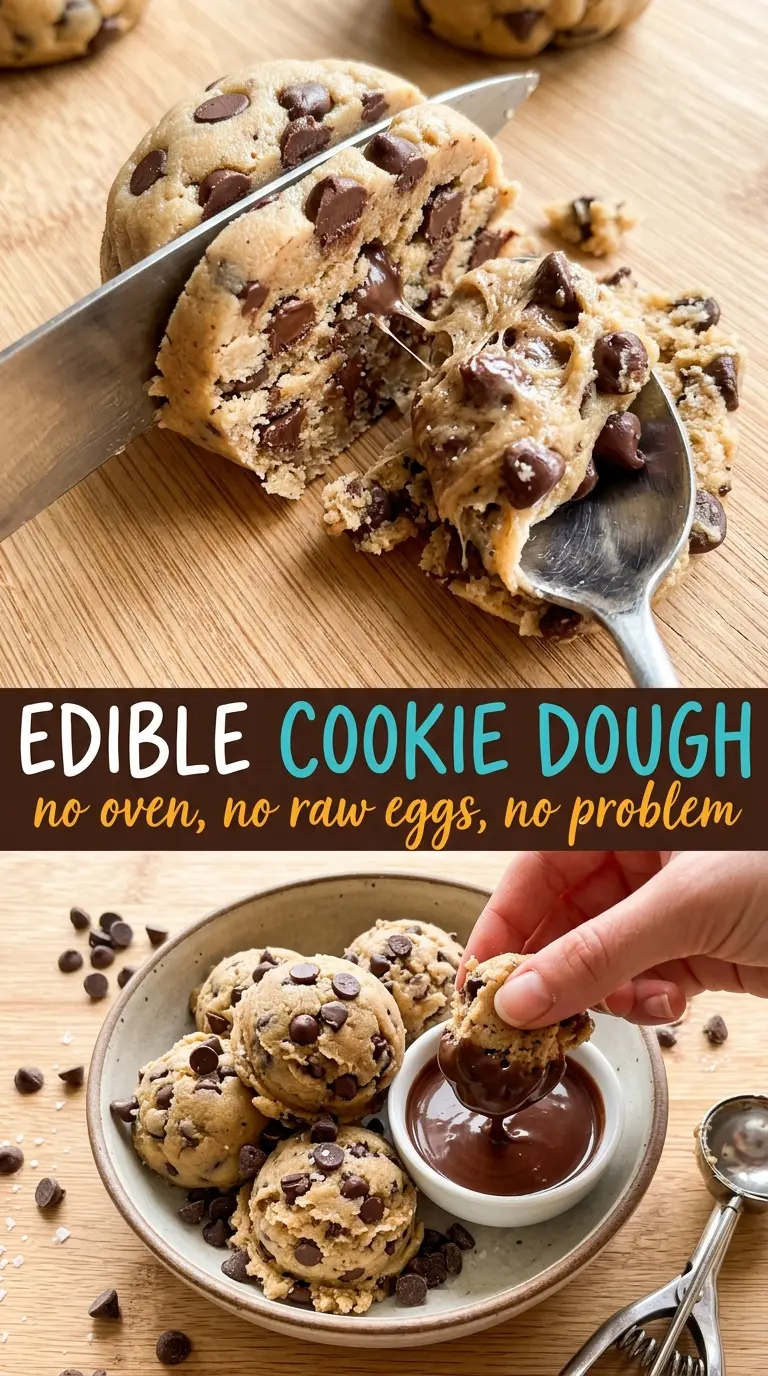
A bowl of edible cookie dough should taste like the best part of sneaking a spoonful from the mixing bowl, only with the texture polished enough to eat by the scoopful. This version lands in that sweet spot between thick and creamy, with just enough structure to hold its shape and just enough softness to feel indulgent. The mini chocolate chips matter here. They spread through every bite instead of sinking to the bottom, and they keep the dough from tasting one-note.
The big thing that makes this safe to eat is the flour. Raw flour can carry bacteria, so it needs a quick heat treatment before it goes into the bowl. After that, the rest of the method is simple: beat the butter and sugars until fluffy, then bring the dough together with milk, vanilla, and the cooled flour. That order gives you a smoother, more scoopable texture instead of a dry, sandy one.
Below, I’ll walk through the one step people skip when they rush this recipe, plus a few smart swaps if you want to change the chips, make it dairy-free, or stash a batch in the fridge for later.
The texture was spot on after I let the flour cool all the way, and the mini chips made every bite feel balanced instead of overloaded. I also loved that it held up in the fridge for a few days without getting grainy.
Save this edible cookie dough for the nights when you want a thick, scoopable dessert with mini chocolate chips and no oven required.
The Step That Keeps Cookie Dough Safe to Eat
The flour is the one ingredient you can’t treat casually here. Heat-treating it kills the risk that comes with eating raw flour, and it only takes a few minutes. If you skip this step, you’re making something that tastes good but doesn’t deserve the “edible” label.
Microwaving works if you stir and cool it properly, and baking works if you spread it out thinly enough for the heat to reach every bit. The real mistake is adding warm flour to the butter mixture. That melts the butter too early and leaves you with greasy dough instead of the dense, fudgy scoop you want.
What Each Ingredient Is Actually Doing in This Dish
- Heat-treated all-purpose flour — This gives the dough its body. Let it cool completely before mixing, or the butter will soften too much and the texture will go slack.
- Butter — Softened butter whips with the sugars into a light base, which is what keeps the finished dough from feeling heavy. Salted butter can work, but cut back on the added salt a little if you use it.
- Brown sugar — This brings the caramel note and the moist chewiness that makes cookie dough taste like cookie dough. Dark brown sugar gives a deeper molasses flavor, while light brown sugar keeps it a little cleaner and sweeter.
- Mini chocolate chips — Mini chips distribute more evenly than standard chips, and that matters in a no-bake dough where every bite should feel loaded. If all you have are regular chips, chop them up so they don’t clump.
Building the Dough So It Stays Thick and Scoopable
Whipping the Butter and Sugars
Beat the softened butter with both sugars until the mixture looks lighter in color and a little fluffy around the edges. That step traps air and gives the dough a softer bite. If the butter is too cold, you’ll get grainy clumps; if it’s melted, the dough turns greasy and loose.
Adding the Liquid Before the Flour
Mix in the milk and vanilla first so the sugars start dissolving before the flour goes in. That keeps the final texture smoother and less sandy. The dough should look glossy and creamy at this point, not separated.
Bringing in the Flour and Chips
Stir in the cooled flour and salt just until the dough comes together. Overmixing after the flour goes in can make it stiff. Fold in the mini chips last so they stay evenly distributed instead of getting crushed into the dough.
How to Adapt This for Different Cravings and Diets
Dairy-Free Version
Use a plant-based butter that behaves like regular butter and swap in an unsweetened non-dairy milk. The texture stays close to the original, though the flavor will be a little less rich unless you use a butter substitute with good fat content.
Gluten-Free Version
Replace the heat-treated all-purpose flour with a trusted 1:1 gluten-free flour blend. The flavor stays the same, but the texture can be slightly softer, so chill the dough for 15 to 20 minutes if it feels too loose.
Extra-Chocolate Version
Swap half the mini chocolate chips for chopped chocolate chunks or mini peanut butter chips. Chunks give you bigger pockets of chocolate, while peanut butter chips lean sweeter and softer, which changes the bite more than the base dough itself.
Storage and Reheating
- Refrigerator: Store in an airtight container for up to 5 days. The dough firms up in the fridge, so let it sit at room temperature for 10 to 15 minutes before scooping if you want a softer texture.
- Freezer: It freezes well for about 2 months. Portion it into scoops first and freeze on a tray, then transfer to a container so you can grab single servings without defrosting the whole batch.
- Reheating: This isn’t a recipe you reheat on the stove or in the oven. If it gets too firm, warm a portion in your hands or let it rest on the counter until it loosens slightly; microwaving turns it greasy fast.
Questions I Get Asked About This Recipe

Edible Cookie Dough
Ingredients
Equipment
Method
- Spread the all-purpose flour on a sheet pan and bake at 350°F for 5 min, then cool completely.
- Or microwave the all-purpose flour for 1 min 15 sec, stirring once halfway, then cool completely.
- Beat the softened butter with brown sugar and granulated sugar until fluffy and lighter in color.
- Mix in the milk and vanilla extract until smooth and creamy.
- Stir in the heat-treated all-purpose flour and salt until the dough looks evenly combined and thickens.
- Fold in the mini chocolate chips until they form clusters throughout the dough.
- Eat immediately for a thick, fudgy scoopable texture, or refrigerate for up to 5 days for firmer dough.