
Fig jam turns soft, jammy fruit into something spreadable with a deep, honeyed flavor and just enough brightness to keep it from tasting heavy. The texture is what makes it worth repeating: thick enough to mound on toast, glossy enough to spoon over yogurt, and loose enough to swirl into oatmeal while it’s still warm. When figs are ripe, they break down into a velvety preserve with almost no effort, which is exactly why this belongs in the regular rotation.
The balance matters here. Figs bring plenty of natural sweetness, so the sugar isn’t doing all the work — it helps the jam set and gives the fruit a little structure as it cooks. Lemon juice keeps the flavor from going flat and helps the preserve feel clean instead of syrupy, while a small amount of cinnamon adds warmth without taking over. I’ve found that letting the figs cook down slowly after the boil gives you better control over the texture, whether you like it rustic and chunky or smoother and spoonable.
Below, you’ll find the small details that matter most: how long to cook it, when to mash the fruit, and the easiest way to freeze extra jam so it keeps its color and flavor.
The jam set up beautifully after about 30 minutes, and the lemon kept it from tasting overly sweet. I left a few fig pieces chunky, and it was perfect on biscuits.
Sweet, spreadable fig jam with lemon brightness and a silky finish that makes toast, biscuits, and yogurt feel special.
The Part That Determines Whether Fig Jam Tastes Bright or Flat
The biggest mistake with fig jam is letting the fruit cook down until it tastes one-note and dull. Figs need enough heat to collapse and thicken, but they also need acid to keep the preserve lively. That’s why lemon juice isn’t optional here. It sharpens the sweetness, helps the jam hold onto its color, and keeps the final spoonful from tasting like cooked sugar.
The other trap is chasing the set too aggressively. Fig jam thickens as it cools, so if you boil it down until it looks fully finished in the pot, it can end up too stiff once it’s jarred. A good batch should coat the back of a spoon and move slowly when you stir it, with a glossy look rather than a dry, pasty one.
What Each Ingredient Is Doing in This Jam

- Fresh figs — Ripe figs are the whole point here. They bring body, natural sweetness, and that jammy texture as they break down. If your figs are very soft already, shorten the simmer a little so you don’t cook away all their fragrance.
- Granulated sugar — This sweetens the jam, but it also helps it thicken and preserves the fruit. Cutting it too far can leave you with something looser and less stable in the fridge or freezer. If your figs are especially sweet, you can reduce it slightly, but don’t remove it entirely.
- Lemon juice — This keeps the jam balanced and bright. Bottled lemon juice works in a pinch, but fresh tastes cleaner and sharper. If you skip it, the jam will still set, but the flavor will feel heavier.
- Cinnamon — A little cinnamon adds warmth and makes the figs taste rounder. Keep the amount small so it supports the fruit instead of turning the jam into something spiced and muddy.
Cooking the Figs Down Without Overdoing It
Starting with the full mixture
Combine the chopped figs, sugar, lemon juice, and cinnamon in a large pot and stir until the fruit starts to glisten. The sugar will pull out some liquid right away, which keeps the bottom from scorching when the heat goes up. If your figs are very dry, let the mixture sit for 5 to 10 minutes before turning on the burner so the fruit has time to soften in its own juices.
Bringing it to a hard simmer
Bring the pot to a boil over medium-high heat, stirring often. You want active bubbles across the surface, not just a few lazy pops at the edges. This is where the mixture starts to concentrate, so stay close and stir from the bottom to keep the sugar from sticking. If the heat is too low here, the fruit can taste stewed instead of jammy.
Finishing the texture
Lower the heat and simmer for 25 to 30 minutes, mashing the figs a little as they soften. For a chunkier jam, press only part of the fruit; for a smoother spread, use the back of the spoon more aggressively. The jam is ready when it looks thick, glossy, and slow-moving. If it still looks loose in the pot, don’t panic — it thickens more as it cools.
Jarring it at the right stage
Skim off any foam, then ladle the jam into clean jars and let it cool before sealing. Foam isn’t dangerous, but it can dull the surface and make the jars look cloudy. Once cooled, refrigerate or freeze the jam. Hot sealing isn’t needed for this style of quick preserve, and rushing that part can trap too much heat and moisture inside.
Three Ways to Make This Fig Jam Fit What You’ve Got
Chunky fig jam with visible pieces
Mash only half the figs during cooking and leave the rest mostly intact. You’ll get a rustic jam with more texture, which is great for toast, cheese boards, or spooning over yogurt. The tradeoff is a looser-looking jar, but the flavor stays just as concentrated.
Lower-sugar version
You can reduce the sugar a little if your figs are very sweet, but don’t cut it too far. Less sugar means a softer set and a shorter fridge life, so this version works best if you plan to use it quickly or freeze most of it. The flavor will lean more fruity and less classic-jam sweet.
Dairy-free and naturally gluten-free serving ideas
The jam itself is already dairy-free and gluten-free, so the real adjustment is how you serve it. It’s excellent over coconut yogurt, almond butter toast, or a warm bowl of oats. That makes it an easy option for mixed diets without changing the recipe at all.
Freezer-friendly batch
Freeze the cooled jam in small, freezer-safe jars or containers, leaving a little headspace for expansion. Smaller portions thaw faster and keep you from opening one large jar over and over. The texture stays better than you’d expect, especially if you don’t overcook the jam before freezing.
Storage and Reheating
- Refrigerator: Store in a sealed jar for up to 2 weeks. It will thicken a little more as it chills.
- Freezer: Freezes well for up to 6 months in freezer-safe jars with headspace left at the top.
- Reheating: For a softer spread, let it sit at room temperature for a bit or warm a spoonful gently. Don’t microwave it hard, or the sugars can get sticky around the edges before the center loosens.
Answers to the Questions Worth Asking
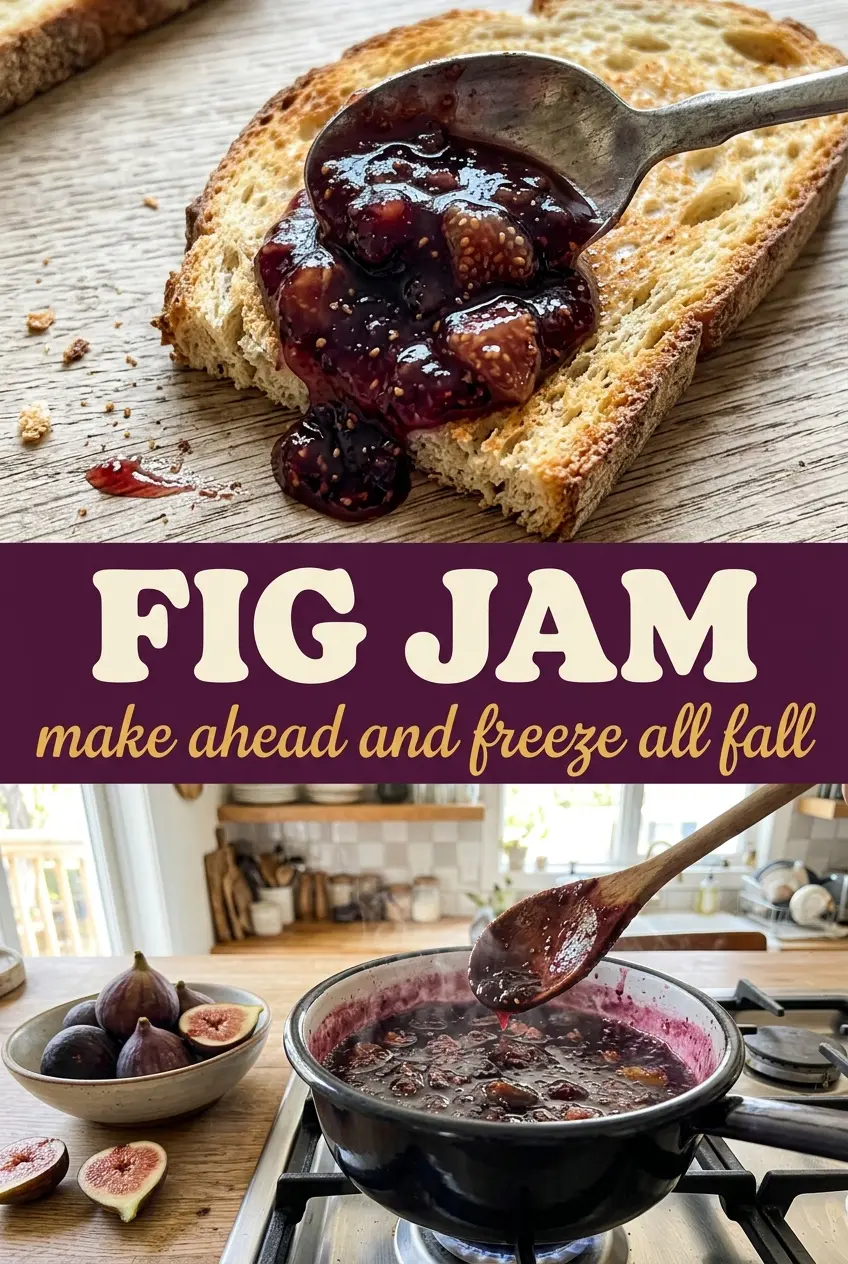
Fig Jam
Ingredients
Equipment
Method
- Combine fresh figs, granulated sugar, lemon juice, and cinnamon in a large Dutch oven. Stir until the sugar begins to wet the fruit.
- Bring the mixture to a boil over medium-high heat, stirring frequently, for 5-8 minutes. Look for a rapid bubbling surface all across the pot.
- Reduce heat to maintain a steady simmer and cook for 25-30 minutes, stirring every few minutes. Mash the figs slightly during cooking until the jam thickens and coats the back of a spoon.
- Skim foam from the surface with a spoon if it forms. Continue cooking only as needed so the jam stays thick.
- Ladle the hot jam into clean jars, leaving appropriate headspace for sealing. Fill neatly so the rims stay free of sticky residue.
- Let the jars cool completely before sealing. You’ll know it’s ready when the jam looks glossy and has thickened further.
- Freeze the jam for longer storage in freezer-safe jars or refrigerate for near-term use. Thaw in the refrigerator before serving.