
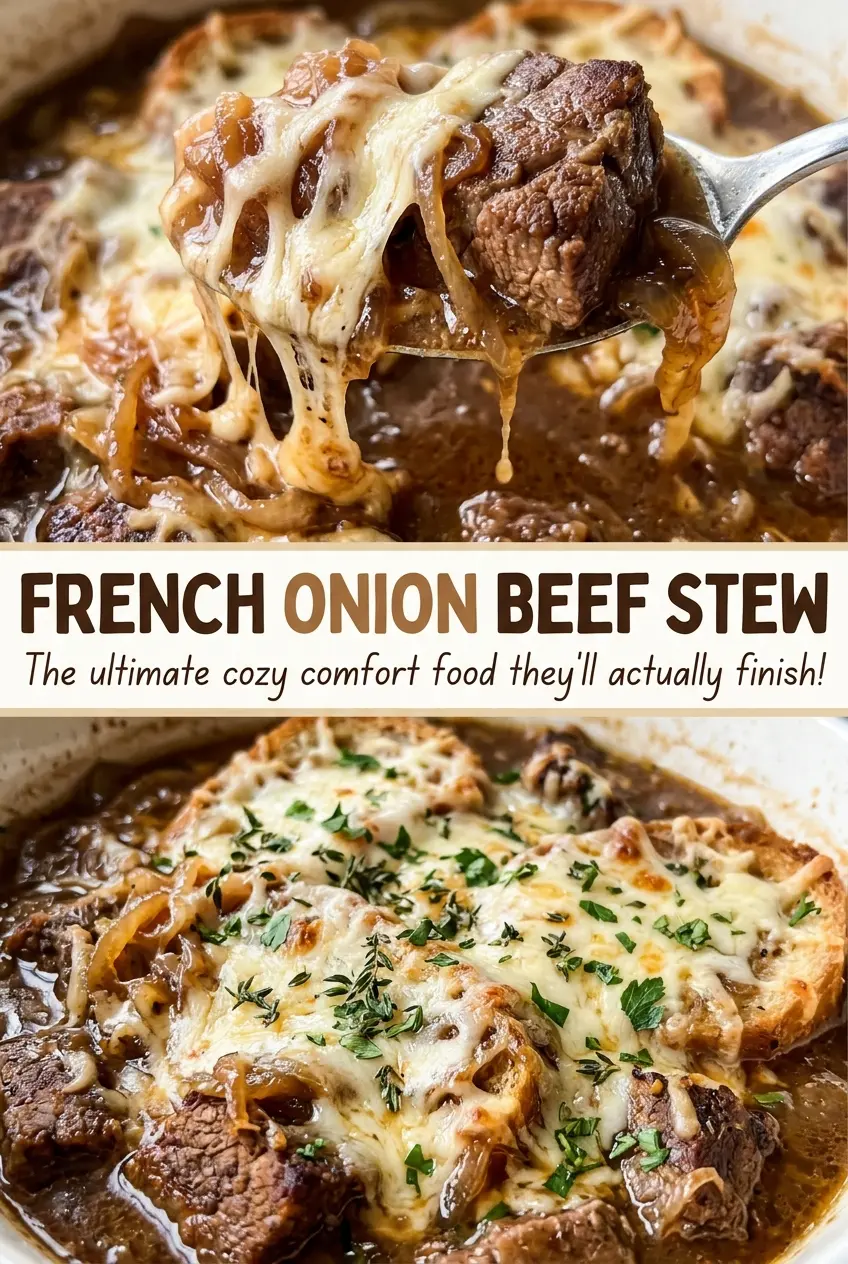
When the beef browns in the Dutch oven, the dark bits left behind are worth keeping; they’re the start of the stew’s deep, savory base. I brown the chuck in batches so it develops a proper crust, then let thinly sliced onions cook down slowly in the same pot. That’s where French Onion Beef Stew gets its familiar sweet, savory character, with fork-tender beef tucked into an onion-rich broth.
The other detail that makes this stew satisfying is the order of the flour and wine. A brief cook in the onion mixture takes away the flour’s raw taste, and the wine loosens all those browned bits before the broth goes in. The Gruyère toasts are crisped separately, then broiled until the cheese bubbles, so they keep their texture when they meet the hot stew. Each bowl gets a cheesy top and plenty of rich broth underneath.
Kitchen Note
Keep the pot covered while the baguette slices toast and the cheese broils. It holds the stew hot, and you can ladle it straight into bowls as soon as the toasts come out.
Save this French Onion Beef Stew for a cozy dinner: slow-cooked onions, tender chuck, and bubbling Gruyère toasts all in one bowl.
Why the Flour Goes In Before the Wine
That little bit of flour isn’t meant to turn this into a thick, gravy-like stew. It gives the broth some body, helping it cling to the beef and onions instead of feeling thin beside the cheesy toast. Cooking the flour briefly in the butter-coated onions also keeps the finished broth from tasting dusty or raw.
Adding the wine after the flour serves a second purpose: it loosens the browned fond from the bottom of the pot. Those bits came from searing the beef, and they carry a lot of savory flavor. Letting the wine reduce before the broth goes in concentrates its flavor, too, so the stew tastes rounded rather than sharply winey. Scrape the pot well as you pour; if browned bits stay stuck on the bottom, you’re leaving part of the stew’s best flavor behind.
The sequence matters more than adding extra thickener later. Once the broth, Worcestershire, herbs, and beef are in, the covered pot can do the slow work of bringing everything together.
What the Chuck, Onions, and Gruyère Each Bring to the Pot

- Beef chuck — Chuck has enough connective tissue to become tender during a long braise, while leaner cuts can turn dry before they soften. If you need a substitute, boneless beef short ribs cut into similarly sized cubes will work; they bring a richer, fattier result, so trim any especially thick exterior fat.
- Yellow onions — Their sweetness becomes the backbone of the broth after a long, slow cook. White onions can stand in at the same quantity, though their flavor is a little sharper. Slice them thinly and evenly so they soften at a similar pace.
- Dry red wine — There’s no need to open an expensive bottle; choose a dry red you’re happy to drink. The wine contributes acidity and depth, not a strong wine taste once it has reduced. For a wine-free version, use beef broth in its place; the stew will be a little less layered.
- All-purpose flour — This is what gives the broth a gentle, cohesive body. A cup-for-cup gluten-free flour blend made for baking can replace it in the same amount, though the texture may vary slightly by blend. Cook it in the onion mixture before adding liquid.
- Baguette and Gruyère — A baguette gives the topping a crisp surface and sturdy middle that can sit on the stew without disappearing. Gruyère melts smoothly and has a nutty flavor; Swiss cheese is a useful, milder substitute. Grate the cheese yourself if you can, since freshly grated cheese melts evenly over the toast.
The Stages That Build a Deep Onion Braise
Brown the Chuck in Uncrowded Batches
Heat the oven to 325°F, pat the beef dry, and season it with half of the salt and the black pepper. Warm the oil in a 6-quart Dutch oven over medium-high heat, then brown the beef in batches, turning it to color several sides; each batch takes about 8 minutes. Transfer the browned pieces to a plate rather than piling them into the pot. If the beef is crowded, it steams instead of browning, and you’ll miss the savory crust that flavors the braising liquid.
Cook the Onions Until Deeply Golden
Add the butter, sliced onions, and remaining salt to the pot, then lower the heat to medium. Stir often and scrape up the browned bits as the onions soften and release moisture. Give them 35 to 45 minutes to become deeply golden and caramelized; pale, just-softened onions haven’t developed the same sweetness. If the bottom starts catching, stir and scrape rather than letting those bits burn.
Turn the Onion Base Into a Braising Liquid
Stir in the garlic and cook for 1 minute, then add the flour and cook, stirring, for 1 minute more. Pour in the wine and scrape the bottom of the pot; simmer until it has reduced by about half, which takes 3 to 5 minutes. Stir in the beef broth and Worcestershire sauce, add the thyme and bay leaves, and return the beef and its juices to the pot. Bring it to a simmer, cover, and bake until the beef is fork-tender, about 2 to 2 1/2 hours.
Broil the Gruyère Toasts Just Before Serving
Remove the bay leaves and thyme stems, taste the stew, and adjust the salt if needed. Heat the oven to 425°F, arrange the baguette slices on a baking sheet, and bake until crisp and lightly golden, 5 to 7 minutes, turning once halfway through. Divide the grated Gruyère over the slices and broil for 1 to 2 minutes, until melted and bubbling. Ladle the stew into six bowls and top each one with a cheesy toast.
How to Adapt the Wine, Cheese, or Flour
Make the Stew Gluten-Free
Use a cup-for-cup gluten-free flour blend in place of the all-purpose flour and a gluten-free baguette for the toasts. Choose gluten-free beef broth and Worcestershire sauce as well. The stew keeps its onion-rich base, though the exact thickness can vary with the flour blend.
Skip the Red Wine
Replace the wine with the same volume of beef broth and simmer it in the pot before adding the remaining broth. You’ll still scrape up the browned bits, but the finished stew will have less acidity and a simpler, more straightforward beef flavor.
Use Swiss Cheese for a Milder Toast
Swap in the same weight of grated Swiss cheese for the Gruyère. It melts well under the broiler and keeps the classic cheesy finish, with a milder flavor and less of Gruyère’s nuttiness.
Storage and Reheating
- Refrigerator: Store the stew in an airtight container for 3 to 4 days. Keep the cheesy toasts separate; they lose their crispness in the broth.
- Freezer: Freeze the stew without the toasts in an airtight freezer-safe container for up to 3 months. Thaw it overnight in the refrigerator before reheating.
- Reheating: Warm the stew gently in a covered saucepan over medium-low heat, stirring occasionally, until hot throughout. Make fresh cheesy toasts for serving; reheating them in the stew makes the bread soggy.
Questions That Come Up While Making French Onion Beef Stew
French Onion Beef Stew
Ingredients
Equipment
Method
- Heat the oven to 325°F.
- Pat the beef dry and season it with 1 teaspoon of the salt and the black pepper.
- Heat the oil in a 6-quart Dutch oven over medium-high heat.
- Brown the beef in batches, turning to brown several sides, about 8 minutes per batch.
- Transfer the browned beef to a plate.
- Add the butter, onions, and remaining 1 teaspoon salt to the pot.
- Cook over medium heat, stirring often and scraping up browned bits, until the onions are deeply golden and caramelized, 35 to 45 minutes.
- Stir in the garlic and cook for 1 minute.
- Sprinkle in the flour and cook, stirring, for 1 minute more.
- Pour in the wine and scrape the bottom of the pot.
- Simmer until reduced by about half, 3 to 5 minutes.
- Stir in the broth and Worcestershire sauce.
- Add the thyme and bay leaves.
- Return the beef and any juices to the pot.
- Bring to a simmer, cover, and bake until the beef is fork-tender, 2 to 2 1/2 hours.
- Remove the bay leaves and thyme stems.
- Taste the stew and adjust the salt if needed.
- Cover the pot while you make the toasts.
- Heat the oven to 425°F.
- Arrange the baguette slices on a baking sheet and bake until crisp and lightly golden, 5 to 7 minutes, turning once halfway through.
- Divide the Gruyère among the slices.
- Broil until melted and bubbling, 1 to 2 minutes.
- Ladle the stew into 6 bowls and top each with a cheesy toast.