
Thin layers of Yukon gold potatoes bake into something far more luxurious than a standard gratin here. The onions don’t just sit on top; they melt down into the cream and broth so every slice gets coated in that deep, savory French onion flavor, then the gruyere finishes it with a browned, bubbling lid that cracks a little when you spoon through it. It’s rich without being heavy in a cloying way, and the potatoes stay tender instead of turning to mush.
The difference is in the onion base. Caramelizing them slowly until they’re truly deep golden gives the casserole its backbone, and the broth-to-cream mixture keeps the bake from tasting flat or one-note. Yukon golds matter here too because they hold their shape while still turning creamy at the edges. If you’ve ever had a potato bake that felt bland in the middle, this version fixes that from the inside out.
Below, I’ll walk you through the small details that keep the onions sweet, the potatoes evenly cooked, and the top properly bronzed. There’s also a note on the one swap I’d make if you need to work around the gruyere.
The onions turned into this sweet, dark jammy layer and the potatoes were perfectly tender after 45 minutes under foil. I used a mandoline and the whole dish baked evenly with that bubbly gruyere top everyone kept going back for.
Love the deep onion flavor and melty gruyere? Save this French Onion Potato Bake for the nights when you want a casserole that tastes slow-cooked but still lands on the table with minimal fuss.
The Onion Layer Is the Whole Recipe, Not Just a Garnish
Most potato bakes fail in one of two ways: the onions stay pale and sharp, or they brown too fast and turn bitter before the potatoes are tender. The fix is slow caramelization over medium-low heat until the onions collapse, turn glossy, and pick up that deep brown color that tastes sweet instead of raw. That stage does more than build flavor. It keeps the whole casserole from tasting like potatoes in cream sauce with a few onions scattered around.
Another place people go wrong is rushing the bake uncovered from the start. The potatoes need steam first, which is why the foil-covered portion matters so much. Once the potatoes are tender, the uncovered finish gives you the browned top and bubbling edges that tell you the cheese has melted properly without drying out the center.
What Each Ingredient Is Actually Doing in This Dish
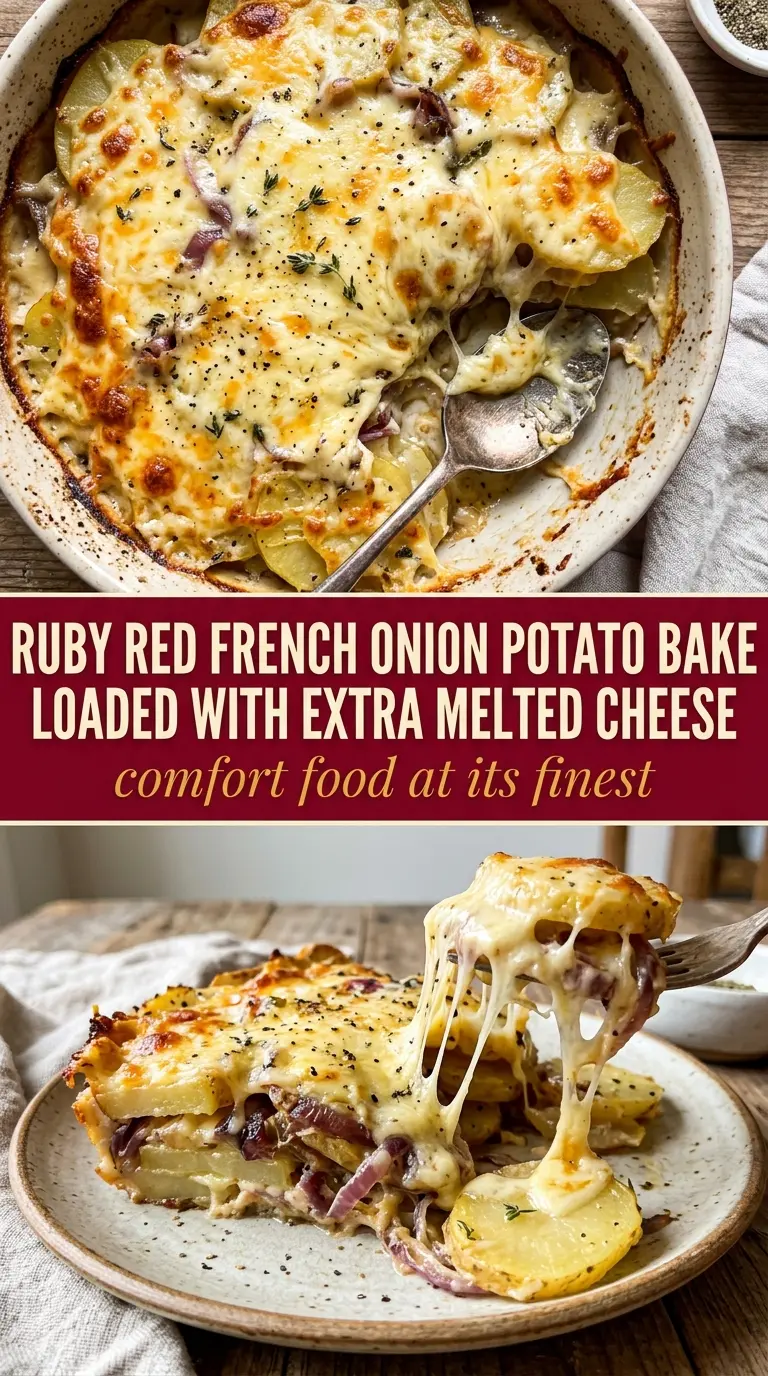
- Yukon gold potatoes — These hold their shape better than russets and give the bake a creamy, almost buttery texture. Russets will work in a pinch, but they break down more and can make the dish softer and a little grainier.
- Onions — Yellow onions are the best choice because they caramelize into a deep sweet-savory base. White onions brown faster and can taste sharper, while red onions shift the flavor in a direction that doesn’t fit the dish.
- Gruyere — This is the cheese that gives you that nutty, melty French onion finish. If you need a swap, use Swiss or a mix of mozzarella and parmesan, but you’ll lose some of the signature savory depth.
- Beef broth — This adds the meaty backbone that makes the bake taste like French onion soup in casserole form. A good boxed broth is fine here; just choose one you’d actually sip, because weak broth makes the whole dish flatter.
- Heavy cream — Cream softens the broth and gives the bake its silky texture. Half-and-half can work, but the sauce will be looser and a little less rich.
- Fresh thyme — Thyme brings the right herbal note without competing with the onions. Dried thyme works if that’s what you have, but use less since dried herbs read stronger once baked.
Building the Creamy Bake So the Potatoes Turn Tender, Not Watery
Caramelizing the onions low and slow
Cook the onions in butter over medium-low heat until they lose their raw crunch, turn soft and jammy, and take on a deep golden brown color. If they start sticking hard or darkening in patches, the heat is too high; lower it and keep stirring so they color evenly. Don’t stop at pale gold. That’s the difference between a sweet onion layer and an onion layer that still tastes like onion.
Layering for even cooking
Spread the potatoes in relatively even layers so the slices bake at the same pace. Thin slices matter here because thick slices can stay firm while the rest of the dish goes soft. Tuck the caramelized onions between the layers rather than leaving them all on top; that helps the flavor run through the whole bake instead of sitting in one concentrated spot.
Covering first, then browning
Once the broth and cream go in, cover the dish tightly with foil and bake until the potatoes are tender when pierced with a knife. That trapped steam is what finishes the potatoes without evaporating the sauce. When the foil comes off, the gruyere should melt into bubbling patches and the edges should brown just enough to look lacquered, not dry.
How to Make It Meatless Without Losing the French Onion Feel
Swap the beef broth for a rich vegetable broth and keep the caramelized onions extra dark for depth. You’ll lose some of that classic French onion soup intensity, but the onions and gruyere still carry the dish nicely. If your vegetable broth tastes thin, stir in a small splash of soy sauce or tamari for more savory weight.
How to Make It Lighter Without Breaking the Sauce
Use half-and-half instead of heavy cream if you want a lighter finish. The sauce won’t be quite as velvety, and it may feel a touch looser, but the casserole still holds together well because the potatoes release starch as they bake. Don’t go lower than that unless you’re fine with a thinner, less luxurious result.
How to Stretch It for a Bigger Crowd
Double the ingredients and bake it in two dishes rather than one deep pan. A deeper casserole can trap too much liquid in the center and leave you with uneven potatoes. Two shallower pans give you more browned surface area and more even texture from edge to middle.
Storage and Reheating
- Refrigerator: Store covered for up to 4 days. The potatoes will firm up a bit as they chill, but the flavor gets even better by the next day.
- Freezer: It freezes better before the final cheese topping, though the cream sauce can loosen a little after thawing. Wrap it tightly and freeze for up to 2 months for the best texture.
- Reheating: Reheat covered in a 325°F oven until hot through, then uncover for the last few minutes if you want the top to crisp again. The common mistake is blasting it in the microwave, which can make the cream sauce separate and the potatoes rubbery.
Questions I Get Asked About This Recipe
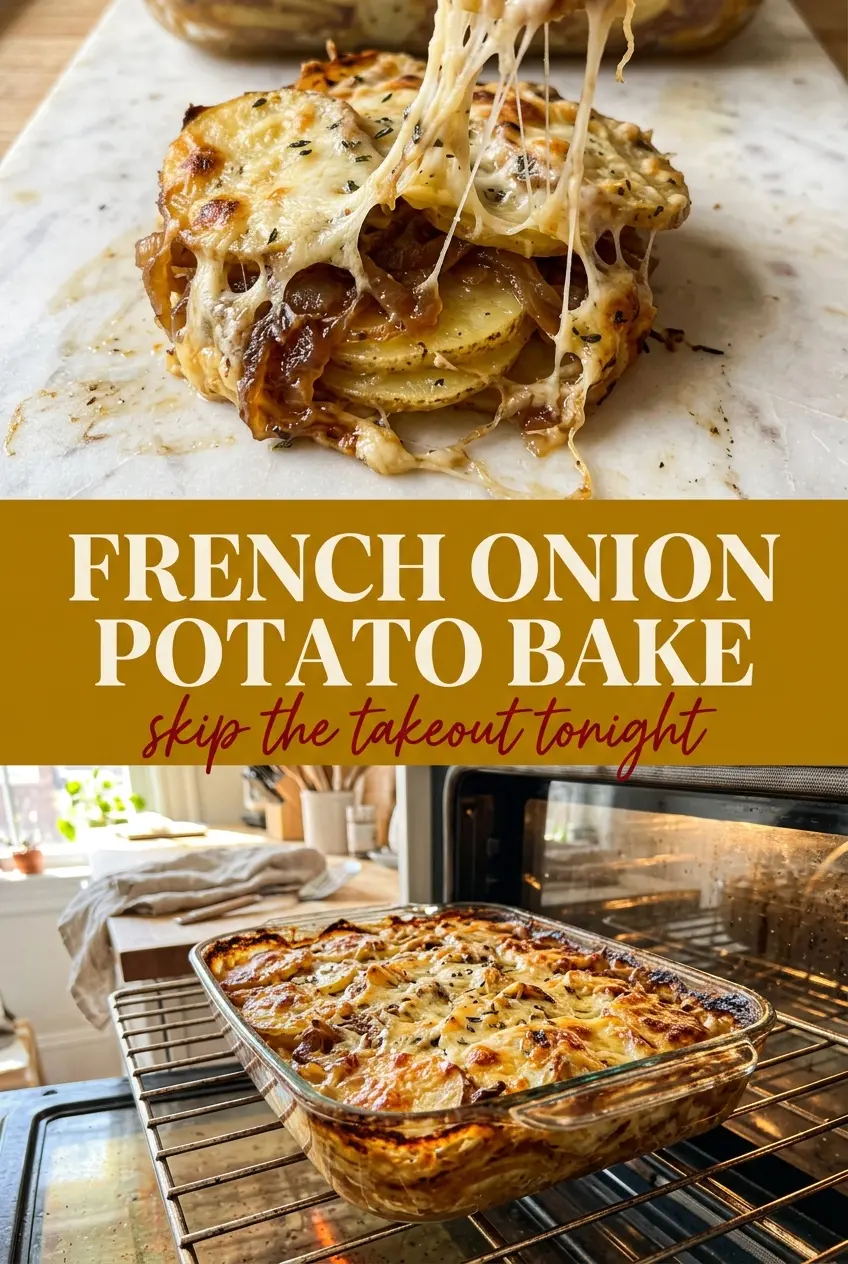
French Onion Potato Bake
Ingredients
Equipment
Method
- Melt the butter in a Dutch oven over medium-low heat, then add the sliced onions and cook for 25-30 minutes until deep golden brown, stirring occasionally to prevent scorching.
- Continue cooking until the onions look glossy and caramel-colored, keeping the heat medium-low throughout for maximum flavor.
- Preheat the oven to 375°F and grease a baking dish or casserole dish lightly so the potatoes release easily.
- Layer the sliced potatoes with the caramelized onions in the dish, spreading evenly so the bake cooks through uniformly.
- Whisk the beef broth with the heavy cream, fresh thyme, salt, and pepper, then pour the mixture over the potatoes to fill gaps between layers.
- Cover with foil and bake for 45 minutes until the potatoes are tender when pierced with a fork.
- Uncover the casserole and sprinkle with shredded gruyere cheese, then bake for 15 more minutes until golden and bubbly on top.