
Fruity frozen yogurt bark gives you that cool, crackly snap that makes a snack tray disappear fast. The yogurt freezes into a creamy sheet, the berries stay bright and juicy, and the crushed granola adds just enough crunch to keep each shard interesting. It looks playful on a plate, but the method is plain old smart: thin yogurt, quick toppings, and a hard freeze.
The thing that makes this version work is the balance. Greek yogurt brings body, so the bark sets firm instead of icy and brittle. A little honey or maple syrup takes the edge off the tang, and a thin spread is important here because thick yogurt bark can freeze unevenly and turn chewy in the middle. Fresh berries are the right choice because frozen fruit releases too much water as it thaws.
Below, I’ll walk through the small details that keep the bark crisp instead of sticky, plus a few easy ways to swap the toppings based on what’s in your freezer and pantry.
The yogurt froze into clean, breakable pieces and the granola stayed crunchy instead of getting soggy. My kids ate the whole tray after school and asked for the berry one again the next day.
Love the crackly texture and berry-studded top? Save this fruity frozen yogurt bark for the days when you want a cold snack with zero oven time.
The Part That Keeps Yogurt Bark Crackly Instead of Icy
Yogurt bark lives or dies by thickness and moisture. Spread it too thin and it shatters into fragile flakes that melt the second they hit your hand. Spread it too thick and the center stays soft longer than the edges, which gives you a sticky middle and a clean-freezer-edge problem. The sweet spot is a thin, even layer about a quarter inch thick, with the toppings pressed in just enough to cling.
Greek yogurt is doing the heavy lifting here because it has less water than regular yogurt. That means a firmer freeze and less chance of icy crystals. The berries need to be dry before they go on top; extra moisture pools on the surface and turns the bark slushy around the fruit. If your kitchen is warm, line up your toppings before you spread the yogurt so you can move fast.
What Each Ingredient Is Actually Doing in This Bark
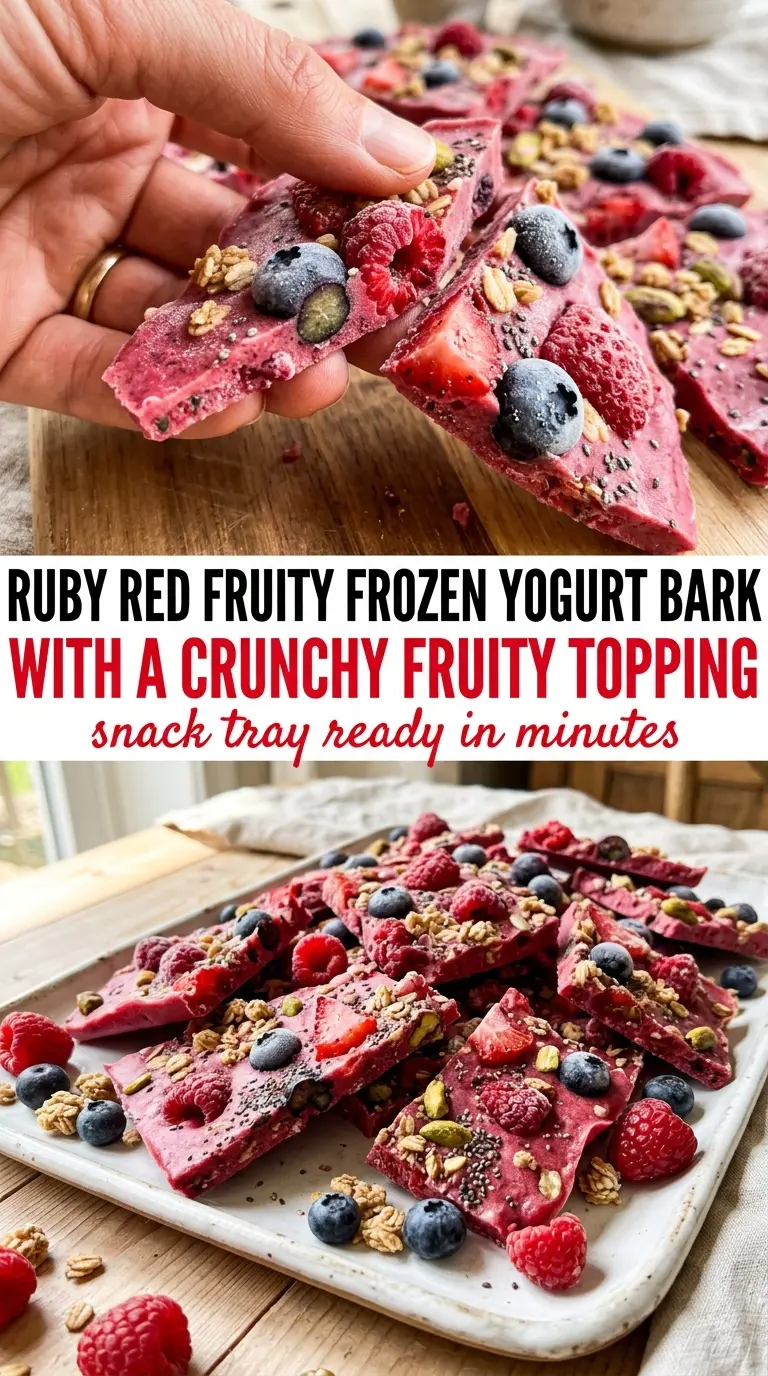
- Greek yogurt — This is the base that freezes into the bark. Plain yogurt works if that’s what you have, but Greek yogurt gives a thicker, cleaner snap. If you use vanilla yogurt, cut back on the sweetener because it usually already has sugar added.
- Honey or maple syrup — A little sweetness rounds out the tang and keeps the yogurt from tasting flat after freezing. Honey gives a slightly firmer set; maple syrup keeps it a touch softer and adds a deeper note. Stir it in completely so you don’t get sweet pockets.
- Mixed fresh berries — Strawberries, blueberries, and raspberries give you color and juicy pops in every bite. Slice the strawberries small so they don’t lift off the bark in big frozen chunks. Dry berries matter here; if they’re wet, the surface gets icy around them.
- Granola — This gives the bark its crunch and keeps the texture from being one-note. Crushed granola sticks better than whole clusters, and it freezes without getting rock hard. Use a plain or lightly sweetened granola so the bark doesn’t turn cloying.
- Mini chocolate chips — Optional, but they add a little extra treat factor and stay pleasantly firm in the freezer. Use mini chips rather than regular-size chips so the bark breaks more evenly. Skip them if you want the fruit to stay front and center.
How to Freeze It So the Bark Breaks Cleanly
Mix the yogurt base until smooth
Stir the honey or maple syrup into the yogurt until the mixture looks uniform and glossy. Any streaks of sweetener can freeze into uneven pockets, and those spots tend to taste sharper than the rest. If you’re using vanilla yogurt, taste it before adding more sweetener so the bark doesn’t end up overly sweet. The base should taste pleasantly tangy, not dessert-level sugary.
Spread it thin and evenly
Line a baking sheet with parchment and spread the yogurt into a rectangle about 1/4 inch thick. The edges should be close to the same thickness as the center, because thin corners freeze first and can become brittle before the middle is set. An offset spatula or the back of a spoon works well. If the layer is lumpy, the bark breaks unevenly.
Add the toppings before the surface skins over
Scatter the berries, granola, and chocolate chips over the yogurt right after spreading it. Press them in lightly so they anchor, but don’t bury them. If you wait too long, the top starts to set and the toppings won’t adhere well, which means they fall off when you break the bark. Work quickly here; this is the part that benefits from having everything prepped first.
Freeze until hard through the center
Set the tray flat in the freezer and leave it alone for at least 3 hours, or until the bark feels completely solid when you press the center. If it still bends, it will bend instead of snap. Once it’s hard, break it into shards with your hands or a knife. Serve it right away for the cleanest crunch, because frozen yogurt bark softens fast at room temperature.
How to Change the Toppings Without Losing the Texture
Make it dairy-free with coconut yogurt
Use a thick coconut-based yogurt in place of Greek yogurt. The bark will freeze a little softer and taste more coconut-forward, but it still cracks well if the layer stays thin. Choose an unsweetened version if you want control over the sweetness.
Swap the berries for chopped stone fruit
Peaches, nectarines, and cherries all work if they’re patted dry and cut small. They bring a softer, sweeter bite than berries, but they can release more juice as they thaw, so keep the pieces modest and don’t overload the surface.
Go nut-free for school snacks
Skip the granola if it contains nuts and use crushed freeze-dried fruit, toasted oats, or plain cereal for crunch. You still get contrast and texture, just without the nut issue. This version travels well in a freezer bag for lunchboxes if you pack it frozen.
Storage and Reheating
- Refrigerator: Don’t store this in the fridge. It softens into a puddled mess within minutes and loses the bark texture completely.
- Freezer: Store the shards in a freezer bag or airtight container with parchment between layers for up to 2 weeks. The fruit stays best in the first week, before the berries start to dull.
- Reheating: No reheating needed. Let a piece sit at room temperature for 1 to 2 minutes if it’s too hard straight from the freezer, but don’t leave it out long or the yogurt will sweat and soften.
Answers to the Questions Worth Asking
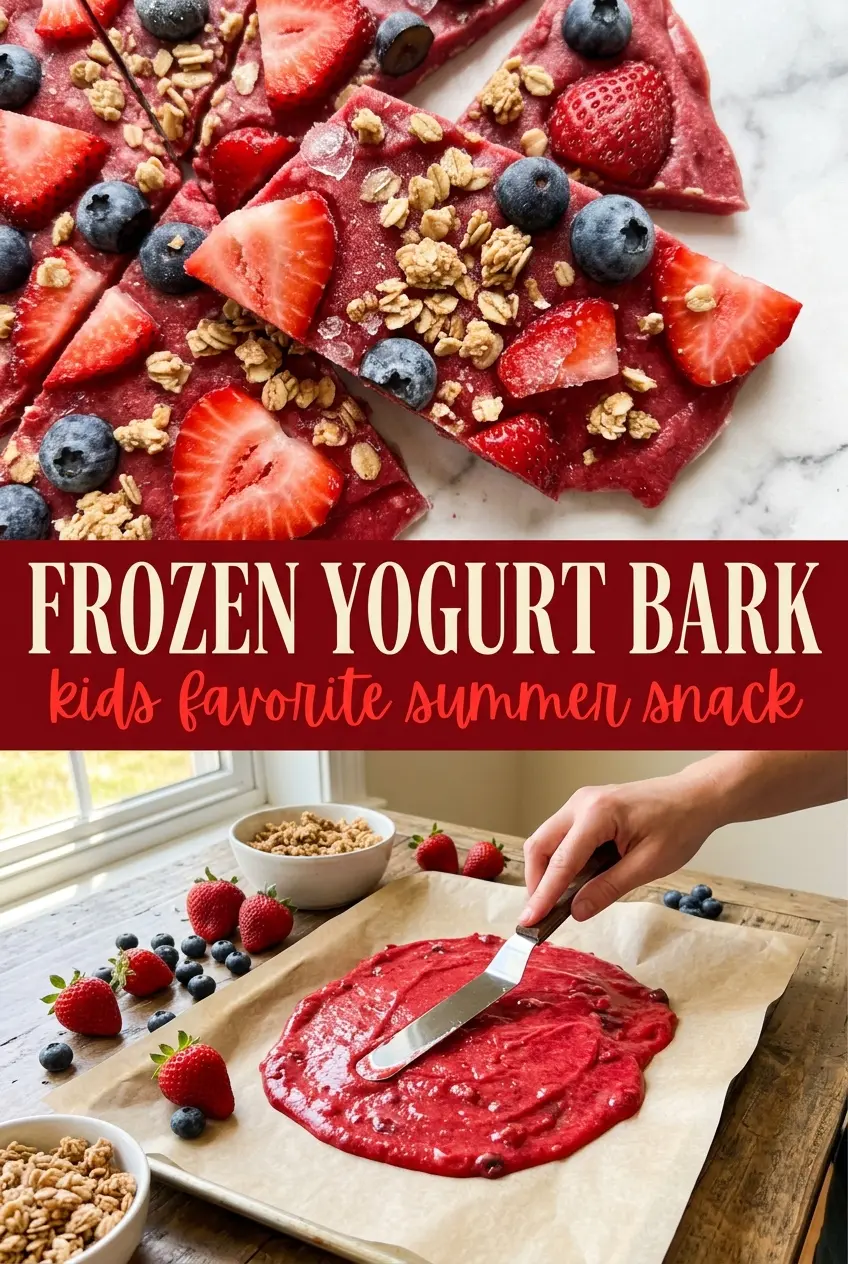
Fruity Frozen Yogurt Bark
Ingredients
Equipment
Method
- Line a sheet pan with parchment paper.
- In a bowl, stir the honey into the yogurt until smooth.
- Spread the yogurt evenly onto the parchment in a thin layer, about 1/4 inch thick.
- Scatter the sliced berries, crushed granola, and chocolate chips evenly over the top.
- Freeze for at least 3 hours, or until completely solid, keeping the pan level so the bark sets evenly.
- Break into shards and serve immediately, or store in the freezer for later.