
Garlic bread grilled cheese hits that sweet spot between crisp, buttery, and properly gooey. The outside turns deeply golden with a garlic-herb crust that crackles when you cut into it, while the inside stays soft enough to hold a molten mix of mozzarella, provolone, and parmesan. It eats like the best part of garlic bread and grilled cheese got together and stopped trying to compete.
What makes this version work is the layering. The garlic butter goes on the outside so it can toast into a real crust instead of disappearing into the bread, and the cheese blend matters: mozzarella gives the stretch, provolone brings the melt and a little bite, and parmesan sharpens the whole thing so it doesn’t taste flat. Medium-low heat is the difference between a sandwich that browns evenly and one that burns before the center gives up its chill.
Below, you’ll find the exact heat level that keeps the garlic from scorching, plus a few smart swaps if you need to use a different bread or cheese. The technique is simple, but the details are what make it worth doing right.
The cheese melted all the way through before the bread got too dark, and the garlic butter crust stayed crisp instead of greasy. I added a pinch of red pepper flakes and my son asked for another one right away.
Crispy garlic bread grilled cheese with a triple-cheese pull that browns beautifully in the skillet.
The Trick to Keeping Garlic Butter Crispy Instead of Greasy
The biggest mistake with garlic bread grilled cheese is treating it like ordinary grilled cheese. Garlic butter has more water and more solids than plain butter, so it can slide toward soggy if the pan is too hot or if the bread is too thin. Medium-low heat gives the bread time to toast through while the butter browns slowly enough to stay fragrant instead of bitter.
Pressing the sandwich helps, but only lightly. If you crush it, the cheese escapes before it melts and the filling turns dense. You’re looking for steady contact with the pan, a slow sizzle, and a crust that turns deep gold before the cheese is fully fluid.
What Each Ingredient Is Actually Doing in This Dish
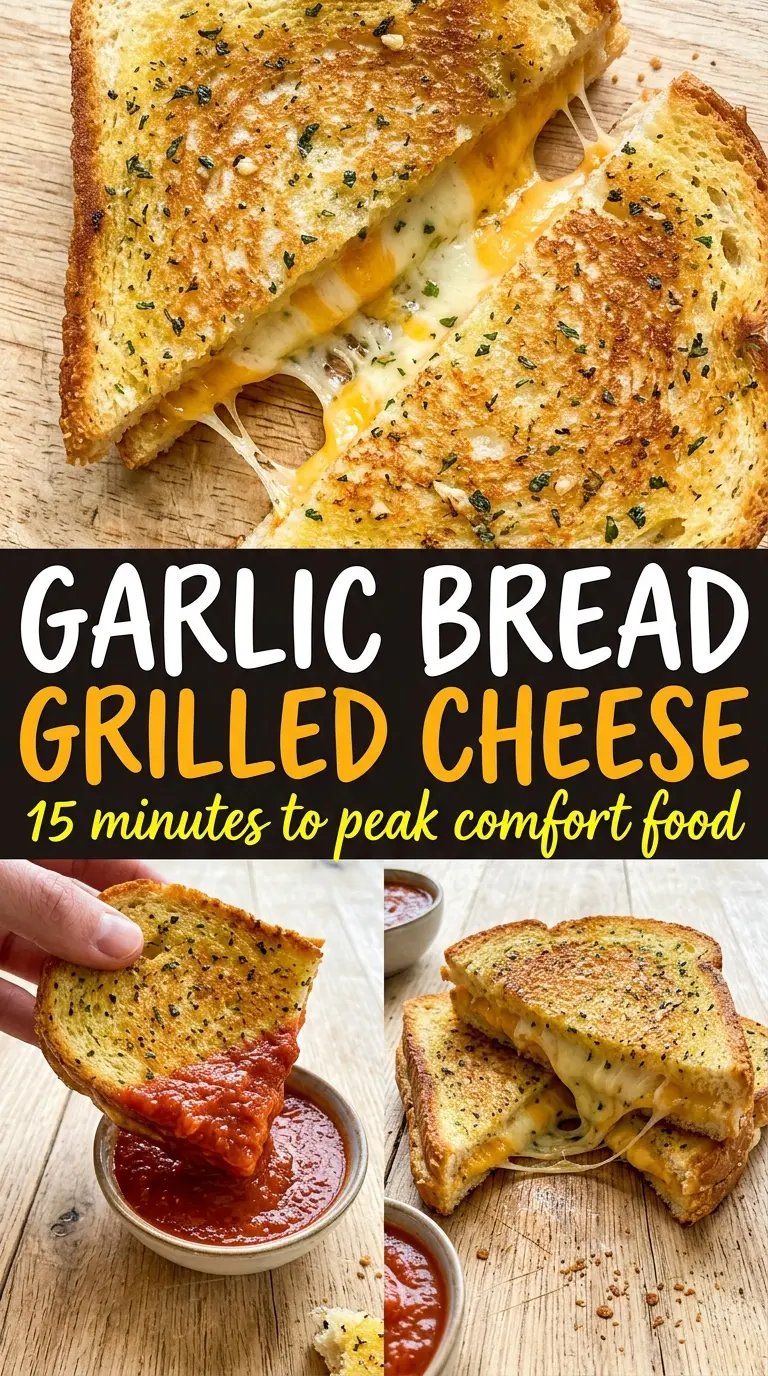
- Sourdough or Italian bread — Both hold up well, but the slices need to be thick enough to handle the filling. Thin sandwich bread gets limp fast and won’t give you that crisp edge.
- Softened butter — Soft butter spreads in an even layer, which matters here. Melted butter runs into the crumb and makes the sandwich greasy instead of crisp.
- Fresh garlic and garlic powder — The fresh garlic gives sharp, roasted pockets of flavor, while the garlic powder seasons the whole butter mixture evenly. That combination tastes fuller than using one or the other alone.
- Mozzarella, provolone, and parmesan — This is the blend that gives you stretch, melt, and salt. If you swap in only mozzarella, the sandwich can taste bland; if you use only parmesan, it won’t melt into the right pull.
- Parsley — It isn’t just for looks. The fresh herb cuts through the richness so the sandwich tastes balanced instead of heavy.
How to Build the Sandwich So the Center Melts Before the Outside Burns
Mix the Garlic Butter First
Work the minced garlic, garlic powder, and chopped parsley into the softened butter until everything looks evenly flecked. You want the garlic distributed all the way through, not clumped in one spot, because concentrated bits can scorch in the pan. If the butter is too cold, it tears the bread; if it’s melted, it soaks in too fast and won’t help form a crust.
Butter the Outside, Not the Inside
Spread the garlic butter generously on the outer sides of all four bread slices. That’s what gives you the crisp, garlicky shell. The inside should stay clean so the cheese can melt directly against the bread without slipping around in a slick of butter.
Layer the Cheese for Melt and Stretch
Build the filling with mozzarella, provolone, and parmesan on the inside of two slices, then close the sandwiches with the remaining bread. Keep the cheese centered and leave a small border so it doesn’t burst out in the skillet. A little overflow is fine; a lot means the heat was too high or the sandwich was overfilled.
Toast Low and Slow
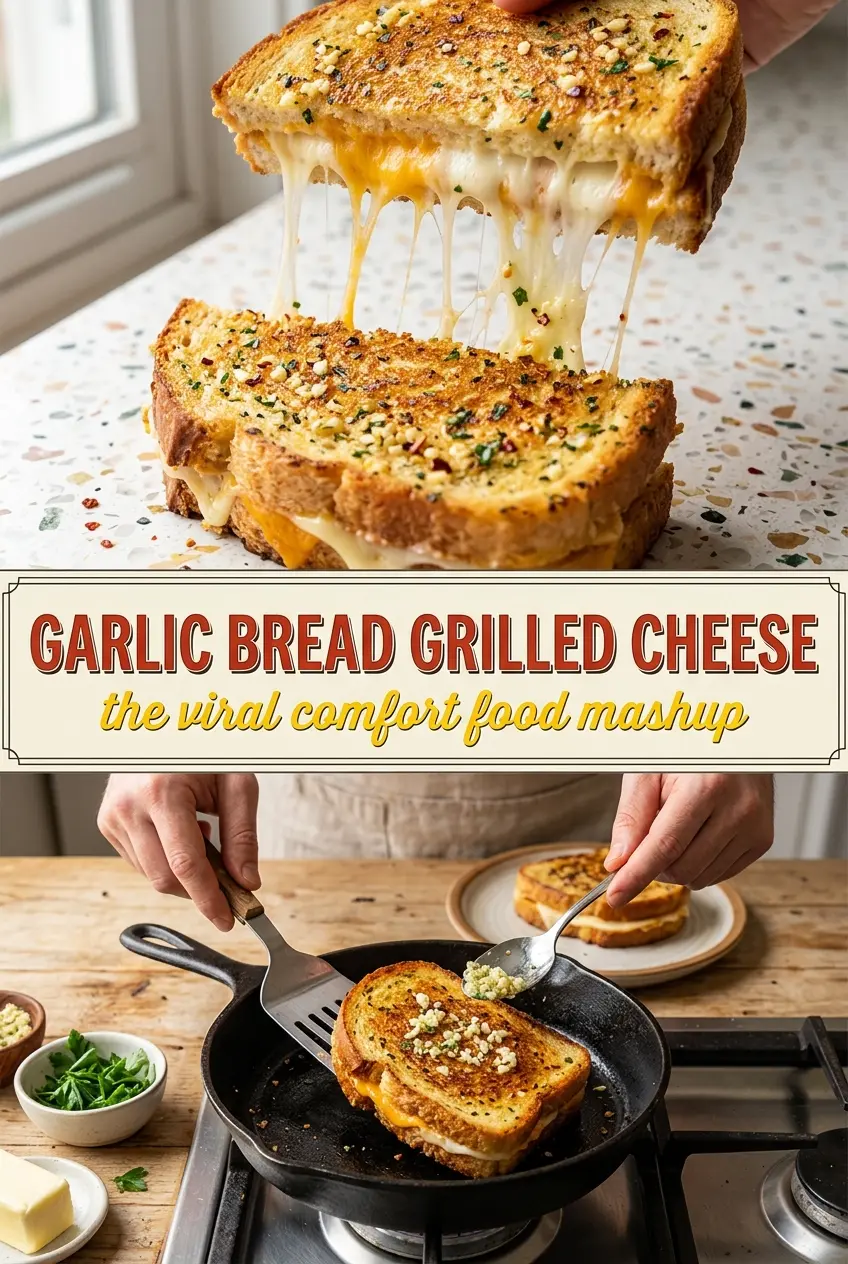
Cook the sandwiches in a skillet over medium-low heat for 3 to 4 minutes per side, pressing lightly with a spatula. Watch for a deep golden crust and listen for a steady, gentle sizzle. If the bread is browning too fast, turn the heat down immediately — garlic butter goes from perfect to bitter faster than plain butter does.
Finish When the Cheese Is Fully Melted
The sandwich is done when the outside is crisp and the cheese gives easily when you lift the edge with a spatula. If the bread is ready before the center is soft, lower the heat and give it another minute rather than turning up the burner. That patience is what keeps the crust from burning while the middle catches up.
Ways to Change It Without Losing the Garlic-Bread Effect
Make It Gluten-Free
Use a sturdy gluten-free bread with some structure, not a soft sandwich loaf that collapses under the filling. The sandwich will still crisp, but it usually browns a little faster, so keep the heat on the lower end and watch the first side closely.
Make It Dairy-Free
Use a plant-based butter that browns well and a dairy-free mozzarella-style shreds blend that melts cleanly. You’ll lose a little of the parmesan’s sharpness, so add a pinch more garlic powder and a small pinch of salt to keep the filling from tasting flat.
Swap the Cheese Blend
Fontina, Monterey Jack, or mild cheddar can replace one of the melty cheeses if that’s what you have. Keep at least one very good melting cheese in the mix, or the filling turns heavy and you lose the dramatic pull that makes this sandwich worth making.
Storage and Reheating
- Refrigerator: Store leftovers in an airtight container for up to 2 days. The crust softens in the fridge, so expect the bread to lose some of its fresh crunch.
- Freezer: It freezes, but the texture suffers. Wrap tightly and freeze for up to 1 month, then thaw in the fridge before reheating.
- Reheating: Reheat in a skillet over low heat or in a 350°F oven until the bread crisps back up and the cheese loosens. The common mistake is using the microwave, which melts the cheese unevenly and turns the garlic bread base rubbery.
Questions I Get Asked About This Recipe
Garlic Bread Grilled Cheese
Ingredients
Equipment
Method
- Mix softened butter with minced garlic, garlic powder, and parsley until evenly combined, with visible herb flecks.
- Spread garlic butter generously on the outside of each bread slice so the surface looks well coated.
- Layer mozzarella, provolone, and parmesan on the inside of 2 bread slices.
- Top with the other bread slices, pressing lightly so the cheese layer is held together.
- Cook in a cast iron skillet over medium-low heat for 3–4 minutes per side, pressing gently with a spatula for even contact.
- Continue cooking until the outside is deeply golden-brown with a crispy garlic crust and the cheese is fully melted and glossy.
- Cut diagonally and serve immediately, showing melted cheese when pulled open.