
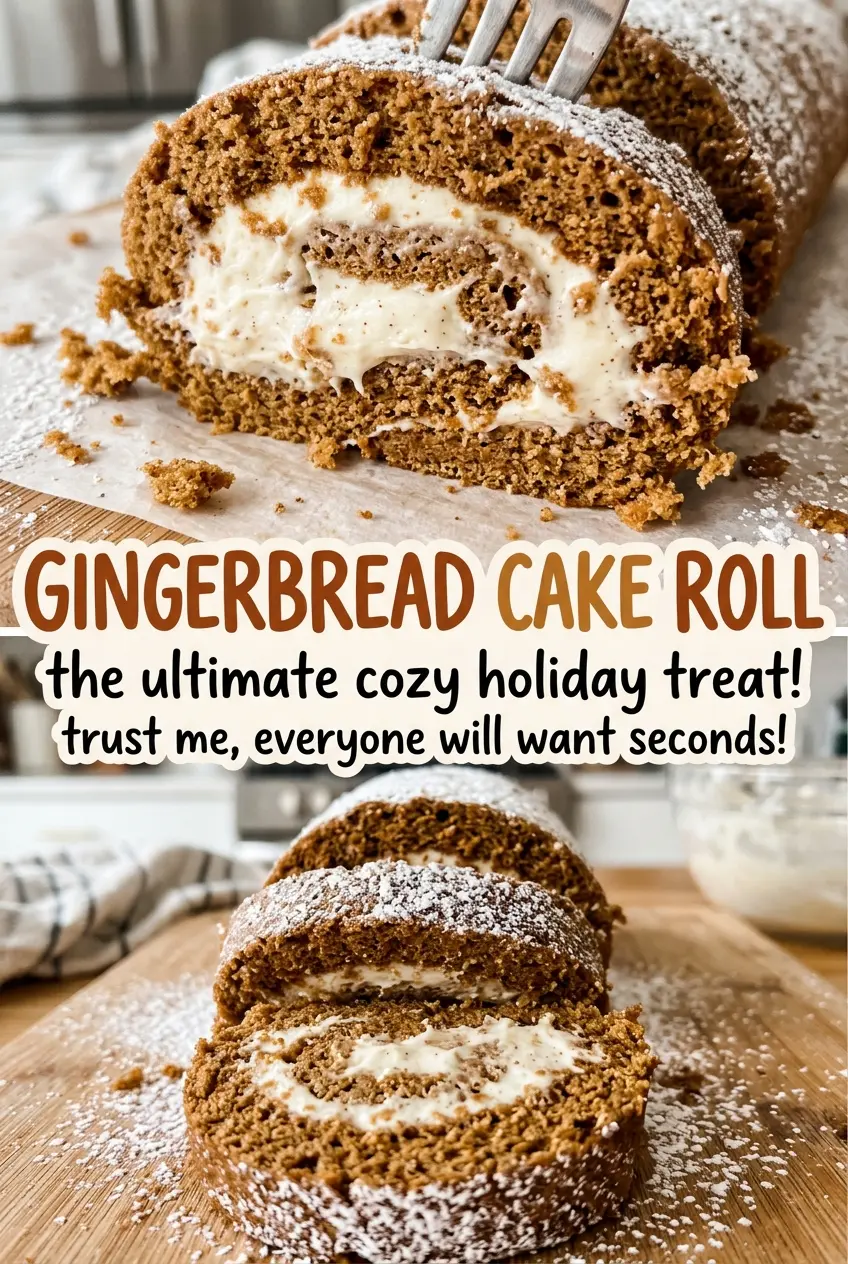
The cake comes out of the oven thin, soft, and still warm enough to bend without a fight. That short window is what lets this gingerbread cake roll curve around its cream cheese filling instead of breaking into pieces. I roll it while it’s hot, then let it cool in that shape before adding the filling.
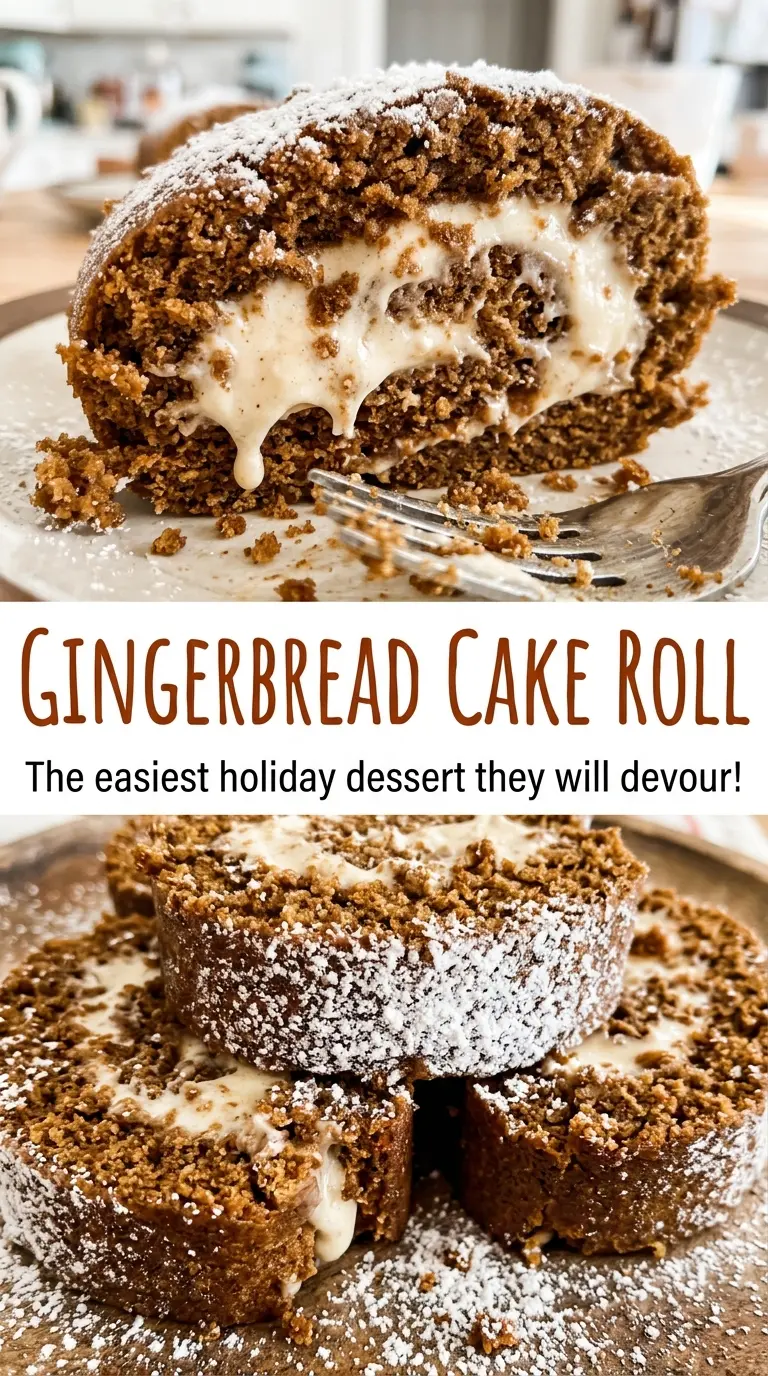
The batter gets its lift from eggs beaten with sugar until thick and pale, so I fold in the flour mixture gently and stop as soon as the dry streaks disappear. Molasses and warm spices give the cake its gingerbread character, while the smooth cream cheese filling keeps each slice soft and tangy. Cut through the chilled roll and you’ll see a tidy spiral in every piece.
Kitchen Note
Roll the cake while it’s hot, with the clean parchment tucked inside; waiting until it cools flat makes it more likely to crack when you shape it. Let it cool seam side down before you unroll it to fill.
Save this Gingerbread Cake Roll for its soft spiced cake, neat cream cheese swirl, and make-ahead-friendly chill.
Why Beating the Eggs Long Enough Keeps This Thin Cake Rollable
A cake roll needs enough structure to hold its shape, but it also needs to stay flexible. Here, beating the eggs and sugar on high for 4 to 5 minutes builds volume before the flour goes in. Look for a mixture that’s thick and pale, not merely foamy. That air helps the thin layer bake up light enough to roll.
Once the flour mixture is added, gentle folding protects that volume. Use a spatula to bring the batter up from the bottom of the bowl, turning it over until no dry streaks remain. A few folds too many can make the batter lose some of its lift; flour pockets left behind create dry spots in the cake. Spread the batter evenly in the pan so the edges and center bake at the same pace. That even thickness matters in a cake that has only 10 to 12 minutes in the oven.
What the Molasses, Eggs, and Cream Cheese Each Bring
- Unsulphured molasses — It gives the cake its deep gingerbread flavor and moist texture. Choose unsulphured molasses for the balanced sweetness here; blackstrap has a much stronger, more bitter taste that can overwhelm the spices.
- Room-temperature eggs — They beat into a thicker, airier mixture than cold eggs, which helps the thin cake bake with enough lift to roll. Set them out ahead so they aren’t cold when you start mixing.
- Ground ginger, cinnamon, and cloves — These are the full spice backbone, so freshness matters more than buying a premium brand. If the jars have been open for years, the cake’s aroma will be muted; ordinary grocery-store spices work well when they’re fragrant.
- Cream cheese and unsalted butter — Both need to be softened so they beat into a smooth filling rather than leaving lumps. Store-brand cream cheese and butter are fine; the soft texture is what makes them blend evenly.
- All-purpose flour — It gives the cake enough structure without making it tough. A standard all-purpose flour is the right choice here; a higher-protein flour could make the delicate cake less tender.
The Four Stages That Keep the Cake Intact
Prepare the Pan and the Parchment
Heat the oven to 375°F. Grease a 10×15-inch jelly-roll pan, line it with parchment, then grease the parchment too. Set a second sheet of parchment on the counter before the cake goes in; you’ll need it ready when the hot cake comes out. Whisk the flour, spices, baking soda, and salt together so the leavening and spices are distributed throughout.
Whip the Batter Without Deflating It
Beat the room-temperature eggs and granulated sugar on high for 4 to 5 minutes, until the mixture looks thick and pale. Beat in the molasses and vegetable oil, then fold in the flour mixture just until you can’t see dry streaks. Spread the batter across the prepared pan in an even layer. Don’t keep mixing once the flour is incorporated; the goal is a uniform batter, not a heavily worked one.
Bake, Roll, and Cool Seam Side Down
Bake for 10 to 12 minutes, until the top springs back when you press it lightly. Invert the hot cake onto the clean parchment and carefully peel away the parchment that lined the pan. Starting at a short end, roll the cake with the clean parchment inside, then set it seam side down to cool completely for about 45 to 60 minutes. If the cake feels fragile while you’re rolling, support it with the parchment rather than pulling at the edges.
Spread the Filling and Chill Before Slicing
Beat the softened cream cheese and butter until smooth, then beat in the powdered sugar and vanilla until creamy. Gently unroll the cooled cake and spread the filling evenly, leaving a 1/2-inch border around the edges. Roll it back up without the parchment, keeping the seam underneath, then wrap the roll and refrigerate it for at least 1 hour. Use a serrated knife to slice through the chilled cake without compressing the swirl.
Two Ways to Serve the Same Gingerbread Cake
Petite pinwheel bites
Keep the cake and filling exactly the same, then cut the chilled roll into smaller rounds for a dessert tray. You’ll get more little spirals and a higher filling-to-cake ratio in each bite, so use a steady sawing motion with the serrated knife.
Flat gingerbread-and-cream-cheese squares
For a simpler format, bake the batter in the same prepared pan, then let the cake cool flat instead of rolling it. Spread the same cream cheese filling over the top and cut it into squares. You’ll trade the spiral for an easy-to-portion layer of filling, with no hot-cake rolling step.
Storage and Reheating
- Refrigerator: Keep the wrapped roll refrigerated for 3 to 4 days. The cake may firm up slightly as it chills.
- Freezer: Wrap the whole roll tightly or freeze individual slices for up to 1 month. Thaw in the refrigerator; the cream cheese filling may soften a little after thawing.
- Reheating: This cake is best served chilled, so don’t heat it. Slice it cold for a clean swirl and serve soon after cutting.
Questions That Come Up While Making a Cake Roll
Gingerbread Cake Roll
Ingredients
Equipment
Method
- Preheat the oven to 375°F.
- Grease a 10x15-inch jelly-roll pan and line it with parchment paper.
- Grease the parchment and set a second sheet of parchment on the counter.
- Whisk the all-purpose flour, ground ginger, ground cinnamon, ground cloves, baking soda, and salt in a medium bowl.
- Beat the eggs and granulated sugar in a large bowl with an electric mixer on high speed for 4 to 5 minutes, until thick and pale.
- Beat in the unsulphured molasses and vegetable oil.
- Fold the flour mixture into the egg mixture just until no dry streaks remain.
- Spread the batter evenly in the prepared pan.
- Bake for 10 to 12 minutes, until the top springs back when lightly pressed.
- Invert the hot cake onto the clean parchment.
- Carefully peel off the parchment from the bottom of the cake.
- Starting at a short end, roll the cake up with the clean parchment inside.
- Cool seam side down until completely cool, about 45 to 60 minutes.
- Beat the cream cheese and unsalted butter in a medium bowl until smooth.
- Beat in the powdered sugar and vanilla extract until creamy.
- Gently unroll the cooled cake.
- Spread the filling evenly over it, leaving a 1/2-inch border.
- Roll the cake back up without the parchment.
- Wrap the roll.
- Refrigerate seam side down for at least 1 hour before slicing with a serrated knife.