
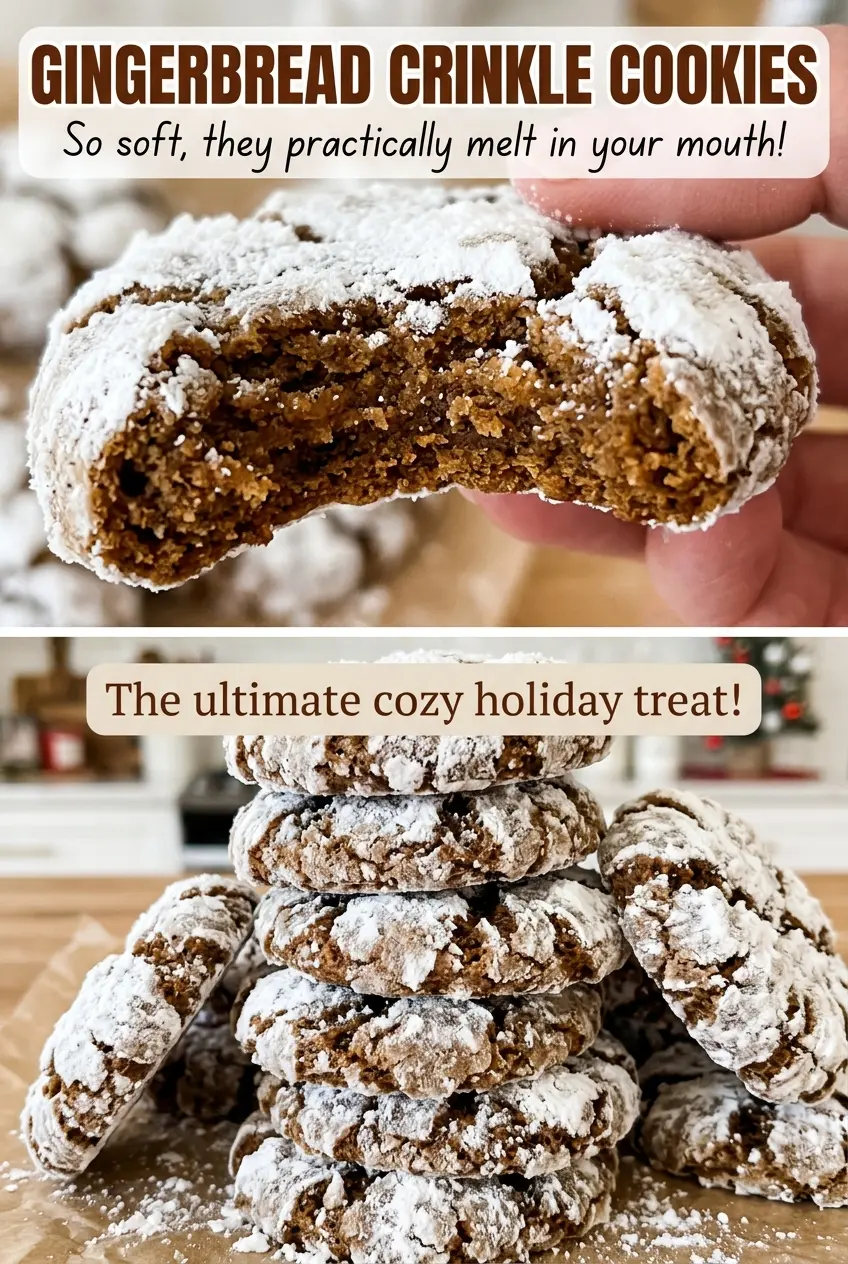
Before this dough gets its hour in the refrigerator, it feels soft and tacky enough to make you wonder whether the cookies will hold their shape. They will. Chilling gives the dough time to firm up, so the portions roll neatly instead of sticking to your hands. These gingerbread crinkle cookies bake into puffed rounds with crackled tops and a soft, spiced center.
Unsulphured molasses gives them that deep gingerbread flavor without the harsh bitterness that can come with blackstrap molasses. Ground ginger leads, while cinnamon rounds it out and a little clove adds warmth in the background. The powdered sugar coating turns the cracks into the pretty snowy finish I want on every cookie. You get a strong gingerbread bite without a fussy decorating step.
Kitchen Note
Let the baking sheet cool before the next batch goes on. Dough on a warm sheet starts softening before it reaches the oven, which can make the cookies spread sooner than you want.
Save these gingerbread crinkle cookies for a batch with warm spice, soft centers, and snowy cracks.
Why a Generous Sugar Coat Makes Those Gingerbread Cracks
The cracks aren’t a decoration added after baking; they form as the dough puffs and expands in the oven. A generous layer of powdered sugar gives that movement somewhere visible to show up. As the cookie surface opens, the dark gingerbread peeks through the white coating, making each crack stand out.
A skimpy coating is the common letdown: the sugar can disappear into the dough, leaving pale cookies without much contrast. Roll each chilled dough ball until the outside looks thoroughly white, with no bare patches. Keep the coating on the outside rather than kneading it into the dough; the contrast is what makes a crinkle cookie look like one. The edges should set while the centers stay tender, so don’t wait for the whole cookie to look firm in the oven. Once cooled, the cracks remain visible and the tops keep their snowy finish.
The Molasses and Brown Sugar Behind These Gingerbread Crinkles

- Unsulphured molasses — This brings the familiar deep, slightly bittersweet gingerbread note. Choose unsulphured molasses for a balanced flavor; blackstrap is much more intense and can make the cookies taste bitter. There isn’t a direct swap that keeps the same character.
- Light brown sugar — Its molasses content gives the dough moisture and a mellow caramel note. Dark brown sugar works in its place in the same packed measure, with a deeper flavor that can edge further into molasses territory.
- Butter — Softened unsalted butter creams smoothly with the sugar and lets you control the salt in the dough. Let it soften until it yields when pressed, but don’t melt it; melted butter changes how the dough comes together.
- Ground ginger and cinnamon — Ginger supplies the direct, warming spice, and cinnamon softens its sharper edge. Fresh, fragrant spices make a difference here; if the jars have been open for ages and smell faint, the cookies will taste flatter.
- Ground cloves — A small amount gives the spice blend its deeper, almost peppery warmth. If cloves aren’t your preference, swap them for the same amount of cinnamon for a gentler, less layered cookie.
- Powdered sugar — Its fine texture clings to the dough and creates the crinkle contrast. Regular granulated sugar won’t give the same snowy coating or clear pattern.
From Tacky Dough to Crackled Tops: The Stages That Matter
Whisk the Spices Through the Flour
Whisk the flour, baking soda, ground ginger, cinnamon, cloves, and salt together in a medium bowl. Break up any small clumps so the leavener and spices are spread through the flour rather than concentrated in one spot. This quick mix helps every cookie bake with an even gingerbread flavor. Set the bowl aside while you build the wet mixture.
Cream the Butter and Sugar, Then Add the Molasses
Beat the softened butter and packed light brown sugar in a large bowl with an electric mixer on medium speed until light and fluffy, about 2 minutes. Add the egg, molasses, and vanilla, beating until combined and scraping down the bowl as needed. The molasses makes the mixture look darker and loose; that’s expected. Add the flour mixture on low and stop as soon as no dry streaks remain, since beating longer can make the cookies tougher.
Chill Before Portioning
Cover the dough and refrigerate it for 1 hour. The dough starts out soft, but after chilling it should be firm enough to scoop and roll into tidy portions. Heat the oven to 350°F and line two baking sheets with parchment paper while the dough chills. Scoop the dough into 1 1/2-tablespoon portions and roll each one into a ball.
Coat, Bake, and Cool
Roll each ball generously in powdered sugar, then arrange the cookies about 2 inches apart on a prepared sheet. Bake one sheet at a time for 10 to 12 minutes, watching for puffed cookies with cracked tops and set edges. Cool the cookies on the baking sheet for 5 minutes before transferring them to a wire rack to cool completely. Let the baking sheet cool before baking the remaining dough.
Small Changes That Keep the Gingerbread Character
A Deeper Brown Sugar Note
Use packed dark brown sugar in place of the light brown sugar, keeping the same measure. The extra molasses notes make the cookies taste darker and richer, though the gingerbread flavor will be less subtle.
A Gentler Spice Blend
Replace the ground cloves with the same amount of ground cinnamon. You’ll keep the warm gingerbread feel but lose the sharper, more pungent note cloves bring.
A Gluten-Free Batch
Replace the all-purpose flour with a cup-for-cup gluten-free baking blend designed for cookies, ideally one that includes xanthan gum. The spice and molasses still come through, though the finished cookies may have a slightly different, less chewy texture.
Storage and Reheating
- Refrigerator: Store the cookies airtight for up to 5 days; chilling firms them slightly, and the powdered sugar may look damp.
- Freezer: Freeze fully cooled cookies in an airtight container, separating layers with parchment, for up to 2 months. Thaw at room temperature while still covered to limit condensation on the sugar.
- Reheating: Warm one cookie in the microwave for 5 to 8 seconds if you want it warm. Longer heating can make it tough as it cools, so avoid heating a whole stack at once.
Questions That Come Up While Baking Gingerbread Crinkles
Gingerbread Crinkle Cookies
Ingredients
Equipment
Method
- Whisk the flour, baking soda, ginger, cinnamon, cloves, and salt together in a medium bowl.
- Beat the butter and brown sugar in a large bowl with an electric mixer on medium speed until light and fluffy, about 2 minutes.
- Beat in the egg, molasses, and vanilla until combined, scraping down the bowl as needed.
- Add the flour mixture and mix on low just until no dry streaks remain.
- Cover and refrigerate the dough for 1 hour.
- Heat the oven to 350°F.
- Line two baking sheets with parchment paper.
- Scoop the chilled dough into 1 1/2-tablespoon portions.
- Roll the portions into balls.
- Coat each ball generously in powdered sugar.
- Arrange the dough balls about 2 inches apart on a prepared baking sheet.
- Bake one sheet at a time for 10 to 12 minutes, until the cookies are puffed and cracked with set edges.
- Cool the cookies on the baking sheet for 5 minutes.
- Transfer the cookies to a wire rack to cool completely.
- Let the baking sheet cool before baking the remaining dough.