
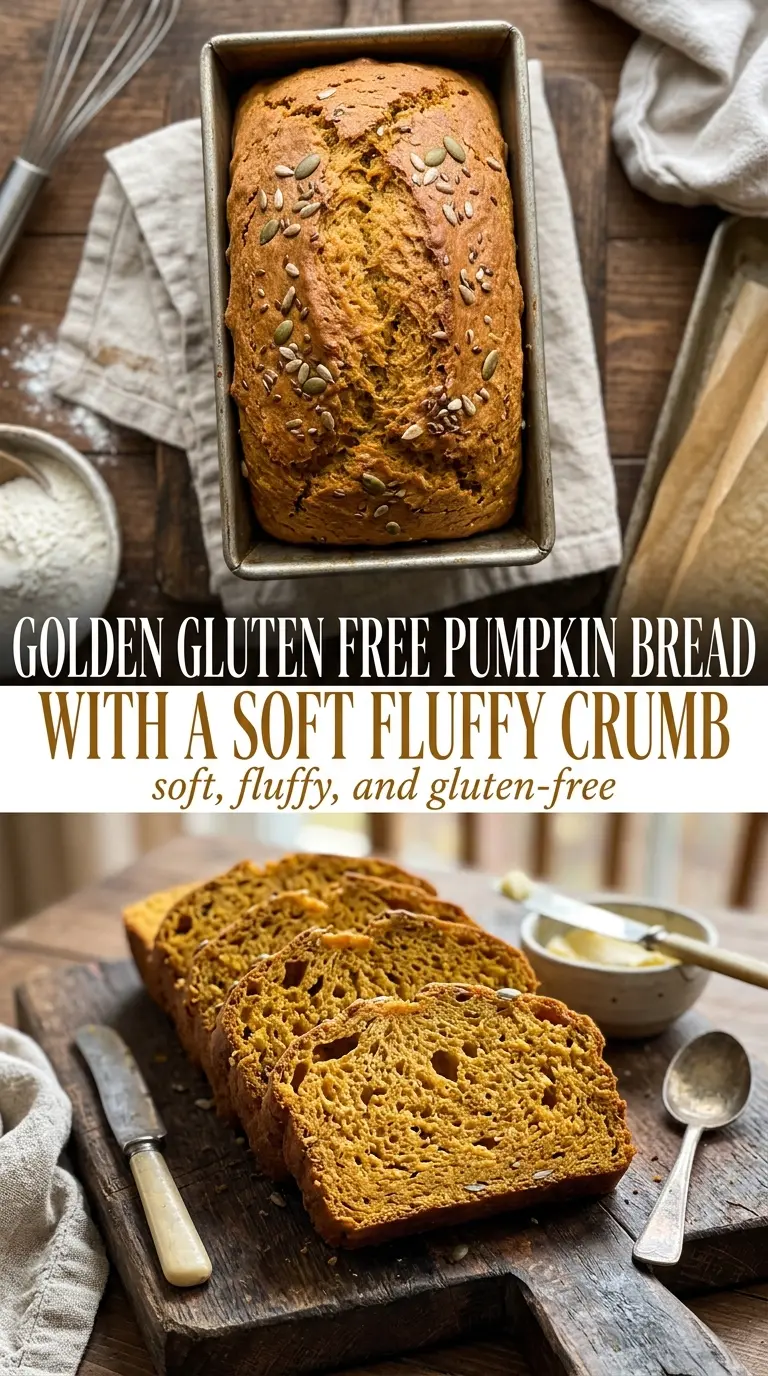
Gluten free pumpkin bread should be soft, sliceable, and full of warm spice without turning gummy or crumbly. The best loaves have a tender crumb that holds together cleanly, with enough pumpkin flavor to taste like more than a loaf of sweet bread wearing a fall costume. This version does that by leaning on a good 1:1 gluten-free flour blend and the right balance of moisture, so the finished loaf stays plush instead of dense.
The trick is in the mix. Pumpkin puree brings body and moisture, but it also needs structure from the flour blend and eggs or the loaf can bake up heavy in the center. A blend that already includes xanthan gum gives you a much better chance at that classic quick-bread texture, and mixing the batter only until the flour disappears keeps the crumb from tightening up. The result is a loaf that tastes like the bakery version, just with a gluten-free crumb that actually behaves.
Below, you’ll find the small details that matter most: which flour blends work best, why the loaf needs a full cool-down before slicing, and how to adjust the recipe if you want to add chocolate chips, nuts, or a simple glaze.
The loaf came out super tender, and I was shocked that it sliced cleanly after cooling. I used the suggested flour blend with xanthan gum, and the crumb stayed soft instead of falling apart like most gluten-free breads I’ve tried.
Pin this gluten free pumpkin bread for a soft, spiced loaf that slices cleanly every time.
The Real Reason Gluten-Free Pumpkin Bread Turns Gummy
Most gluten-free pumpkin loaves fail for one of two reasons: the batter is overmixed, or the flour blend can’t hold onto the moisture from the pumpkin. Pumpkin puree adds a lot of softness, which is great until there isn’t enough structure to support it. That’s when the center bakes up damp and the edges dry out before the middle sets.
The other issue is patience. Gluten-free quick breads need time to cool before they can be sliced without tearing. If you cut too early, the crumb can look underbaked even when it’s done. Letting it rest lets the starches finish setting, and that small pause makes all the difference.
What Each Ingredient Is Doing in This Loaf
- 1:1 gluten-free flour blend — This does the structural work that wheat flour would normally handle. Use a blend with xanthan gum already included if you can, because it helps the loaf hold together and slice cleanly. If your blend doesn’t include it, the bread may still work, but the crumb can be a little more fragile.
- Pumpkin puree — Use pure pumpkin puree, not pumpkin pie filling. The puree gives flavor, color, and moisture without adding extra spices or sugar that throw off the balance. If the puree looks watery, blot it lightly with a paper towel first so the loaf doesn’t turn heavy.
- Vegetable oil — Oil keeps the crumb soft even after the loaf cools. Butter can work, but it firms up more as the bread sits, which can make gluten-free loaves feel drier the next day. A neutral oil keeps the pumpkin and spice front and center.
- Eggs — The eggs help bind the batter and give the loaf lift. They matter more here than in a wheat-based quick bread because they help replace some of the structure gluten would normally provide. Room-temperature eggs whisk in more smoothly and help the batter mix evenly.
- Pumpkin pie spice — This gives the loaf its warm, classic aroma. If you don’t have it, use cinnamon with a smaller amount of ginger and nutmeg, but the flavor won’t be quite as rounded. Fresh spices make a bigger difference here than in heavily frosted bakes.
How to Mix the Batter Without Losing the Tender Crumb
Whisk the Dry Ingredients First
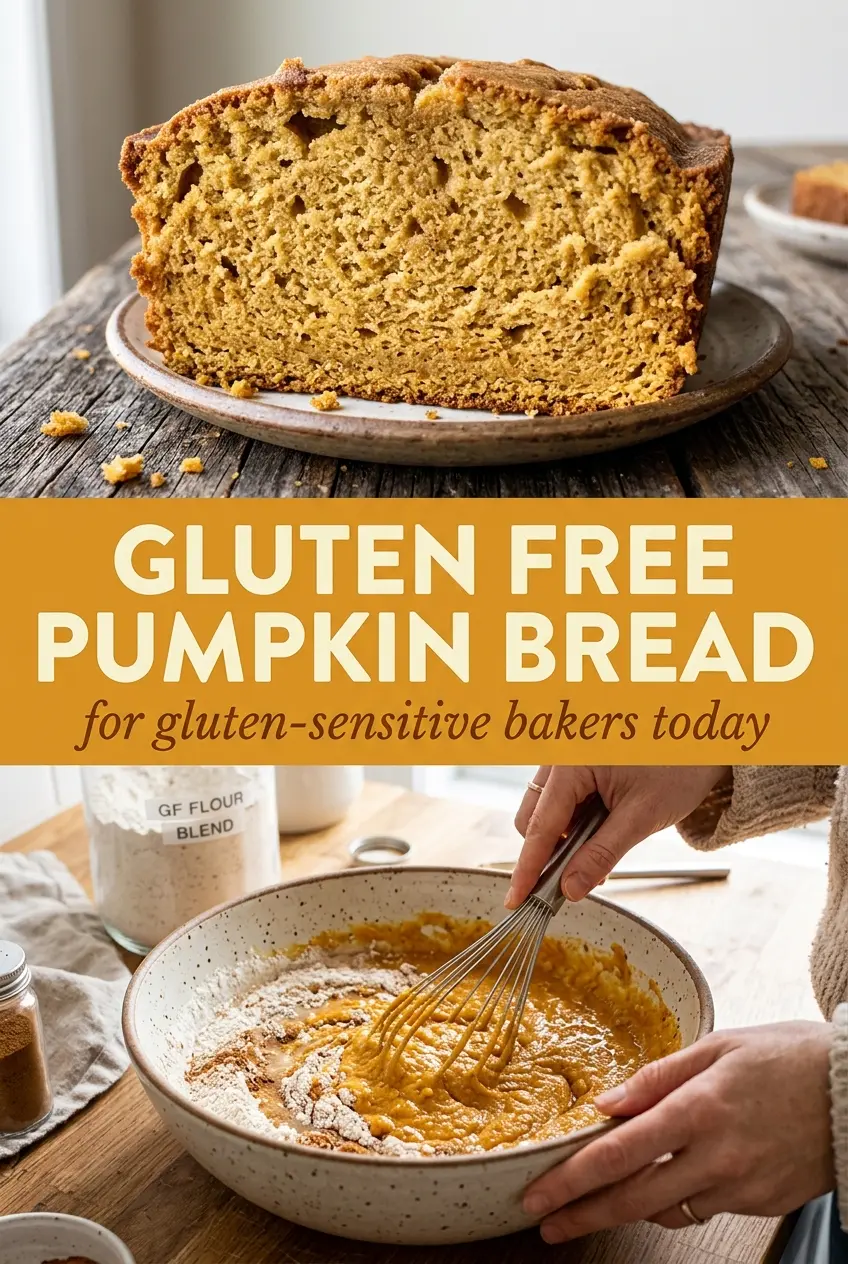
Start by whisking the flour, baking soda, pumpkin pie spice, and salt together until the mixture looks evenly speckled. Gluten-free flour blends can clump more than wheat flour, so this step matters for even rising and spice distribution. If the baking soda isn’t dispersed well, you’ll get uneven tunnels and a faint soapy taste in random bites.
Build the Wet Base Until Smooth
Whisk the pumpkin puree, oil, eggs, and sugar until the mixture looks glossy and fully combined. The sugar should dissolve into the wet ingredients enough that the batter looks thick but not grainy. If you see streaks of egg white, keep whisking before adding the flour so the loaf bakes evenly.
Stop Mixing the Moment the Flour Disappears
Fold the dry ingredients into the wet mixture just until you no longer see dry pockets. The batter will be thick, and that’s normal. Overmixing makes gluten-free quick bread dense and gummy because it knocks out the air and can make the starches tighten too early.
Bake Until the Center Sets
Pour the batter into a greased loaf pan and bake at 350°F until a toothpick inserted in the center comes out clean or with just a few moist crumbs. The top should be domed and deep golden, with the center feeling springy when lightly pressed. If the top is browning before the middle is done, tent it loosely with foil for the last part of baking.
Make It Dairy-Free Without Changing the Texture
This loaf is already dairy-free as written, which is one reason it works so well for a lot of different kitchens. The oil keeps the crumb soft without needing butter, so you don’t lose tenderness when you skip the dairy. If you glaze it, use a simple powdered sugar glaze with plant milk or water.
Swap in Brown Sugar for a Deeper Molasses Note
You can replace part or all of the granulated sugar with packed brown sugar for a richer, slightly softer loaf. Brown sugar adds moisture and a deeper caramel note, which plays nicely with pumpkin spice, but it also makes the bread a touch more delicate. If you use all brown sugar, expect a darker crust and a slightly more tender crumb.
Add Chocolate Chips or Chopped Pecans
Fold in about 3/4 cup of chocolate chips or chopped pecans at the very end so they don’t sink. Chocolate makes the loaf feel dessert-like, while pecans add crunch and a little bitterness that balances the sweetness. Toss the add-ins with a spoonful of the flour blend first if they tend to drop to the bottom.
Storage and Reheating
- Refrigerator: Store in an airtight container for up to 5 days. The crumb stays soft, but the loaf will firm up slightly when chilled.
- Freezer: Freeze slices or the whole loaf tightly wrapped for up to 3 months. Slicing before freezing makes it easier to thaw only what you need.
- Reheating: Warm a slice in the microwave for about 10 to 15 seconds or toast it lightly. Don’t overheat it, or the crumb can turn dry and the edges toughen fast.
Questions I Get Asked About This Recipe
Gluten Free Pumpkin Bread
Ingredients
Equipment
Method
- Preheat the oven to 350°F and grease a loaf pan.
- Whisk together the 1:1 gluten-free flour blend, baking soda, pumpkin pie spice, and salt until evenly combined.
- Whisk together the pumpkin puree, vegetable oil, eggs, and granulated sugar until smooth and glossy.
- Fold the dry ingredients into the wet ingredients until just combined, stopping as soon as no dry flour streaks remain.
- Pour the batter into the prepared loaf pan and smooth the top with a gentle shake for an even layer.
- Bake for 55-65 minutes at 350°F, until a toothpick inserted in the center comes out clean and the loaf looks set at the edges.
- Let the bread cool completely before slicing so the center sets properly and doesn’t crumble.