
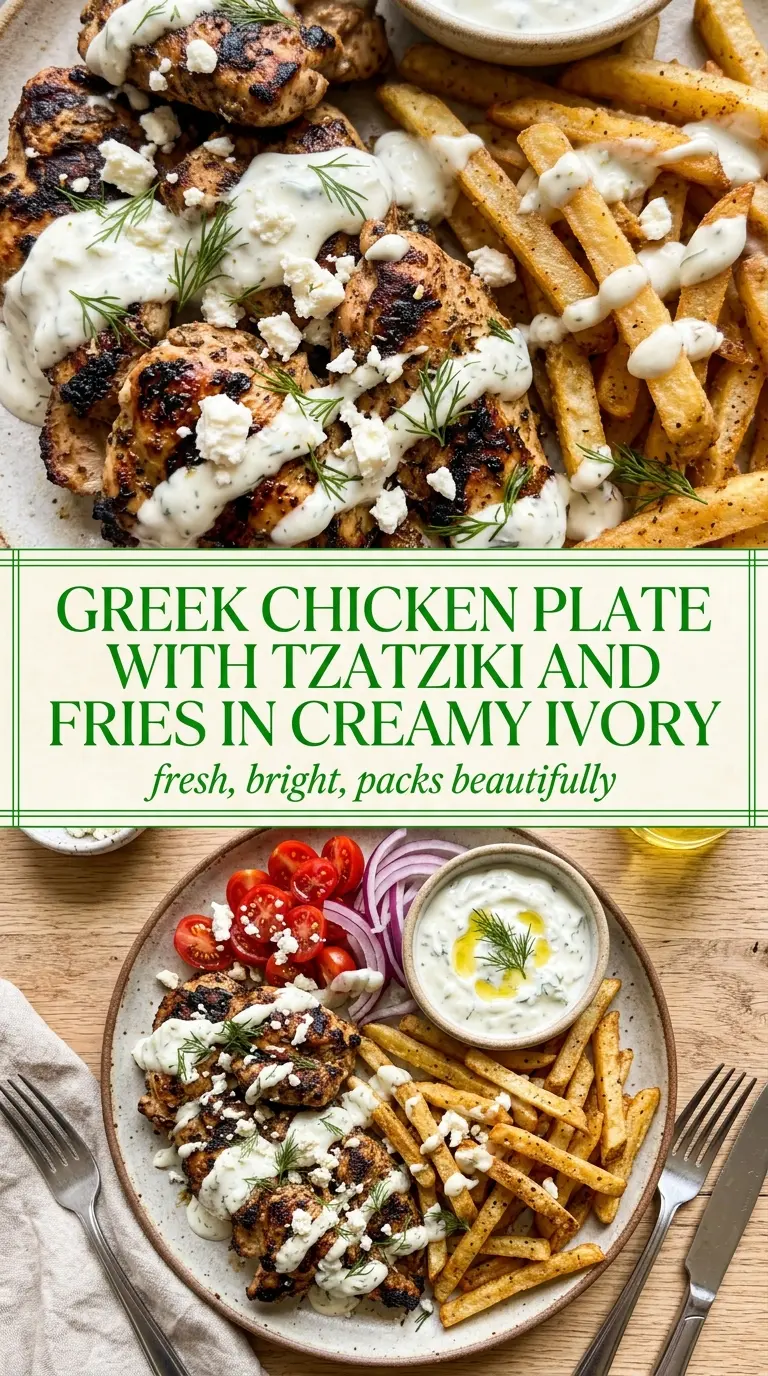
Juicy Greek chicken, crisp-edged fries, and cool tzatziki hit the plate in the right order here: savory, tangy, creamy, then that salty crumble of feta at the end. It eats like a full meal, but it doesn’t feel heavy, and the best part is how well the pieces hold their shape for lunch boxes. The chicken gets a quick yogurt marinade that keeps it tender in the oven, while the fries bake on their own sheet so they can actually brown instead of steaming under all that chicken juice.
The tzatziki matters just as much as the chicken. Freshly grated cucumber gives it a clean crunch and a lighter texture, but only if you squeeze out the water first. If you skip that part, the sauce turns thin and starts pooling under everything. A little dill and lemon wake up the yogurt and keep the whole plate tasting bright instead of flat.
Below you’ll find the small details that make this plate work every time, from getting the fries genuinely crisp to keeping the chicken tender and the sauce thick enough to spoon over the top without running all over the tray.
The chicken stayed juicy even after reheating, and the tzatziki thickened up instead of turning watery. I packed it for lunch three days in a row and the fries still had a nice browned edge after a quick reheat.
Save this Greek Chicken Plate with Tzatziki and Fries for a bright, meal-prep-friendly dinner that keeps the chicken juicy and the tzatziki thick.
The Secret to Crispy Fries and Juicy Chicken on the Same Tray
The fries and chicken need different treatment if you want both to turn out well. The fries want space, dry heat, and a hot pan so their edges can brown. The chicken wants a quick yogurt coat that protects it from drying out in the oven. Put those two jobs together on one crowded tray and you get soft potatoes and chalky chicken.
The other mistake is baking the fries straight under the chicken juices. Keep them on a separate sheet. That one choice changes the texture more than any seasoning ever will. If your fries look pale after the first bake, leave them alone for the full time after flipping. Pulling them too early keeps the centers fluffy but leaves the outside limp.
What Each Ingredient Is Actually Doing in This Dish
- Boneless chicken breast — Cubing it gives you more surface area for the marinade and faster, more even cooking. Thighs work too if you want a little more richness, but the timing will run a few minutes longer.
- Plain yogurt — This is what keeps the chicken tender and helps the seasonings cling. Use regular plain yogurt for the marinade; Greek yogurt is thicker and can coat too heavily before it loosens in the oven.
- Greek yogurt — This belongs in the tzatziki because it gives the sauce body. Full-fat tastes best and stays thick, but low-fat works if you drain the cucumber well.
- Grated cucumber — This is the part that makes the sauce taste fresh instead of heavy. Squeeze it hard in a clean towel or your hands until most of the liquid is gone, or the tzatziki will thin out within minutes.
- Fresh dill and lemon juice — Dill gives the sauce its herbal lift, and lemon keeps it bright against the salty chicken and feta. Dried dill can work in a pinch, but use less and expect a flatter finish.
- Potatoes — Russets give the crispiest fries because their starch content helps the edges brown. Yukon Golds will work, but they stay a little creamier inside and less shattery on the outside.
- Feta and cherry tomatoes — These are the finishing pieces that turn the plate from simple to satisfying. The tomatoes add juicy acidity, and the feta gives you a salty bite at the end that pulls the whole dish together.
Building the Marinade, Baking the Fries, and Finishing the Plate
Marrying the Chicken to the Marinade
Mix the chicken with yogurt, olive oil, garlic, paprika, oregano, salt, and pepper until every piece is coated. The marinade should look thick and clinging, not soupy. Fifteen minutes is enough to season the surface and soften the meat slightly, but longer is fine if you’re prepping ahead. If the garlic starts to taste harsh, it’s because it sat in the yogurt too long; keep it to the same day and the flavor stays clean.
Giving the Fries Enough Space to Brown
Toss the potatoes with olive oil, salt, and pepper, then spread them in a single layer on a separate sheet pan. Crowding is the enemy here. If the pieces touch too much, they steam and go soft. Bake them until the undersides are turning golden before you flip them, then keep going until the edges look browned and a little rugged.
Cooking the Chicken Without Drying It Out
Spread the marinated chicken on another sheet pan and bake until the pieces reach 165°F at the center. You want the chicken to look opaque with a little caramelized color at the edges, not dry and tight. Thin cubed breast meat cooks fast, so start checking early. If you leave it in until every piece looks deeply browned, you’ve gone too far.
Pulling the Plate Together at the End
Stir the tzatziki while the chicken and fries finish cooking so it stays cold and thick. If the cucumber has been drained properly, the sauce will hold soft peaks on a spoon instead of running. Plate the chicken and fries first, then drizzle or dollop the tzatziki over the top and finish with tomatoes and feta. Add the sauce at the end so the fries keep their edges.
Three Ways to Make This Plate Fit Your Week
Swap in chicken thighs for a richer bite
Use boneless skinless thighs instead of breasts if you want more moisture and a deeper savory flavor. They stay juicier during reheating, though they need a few extra minutes in the oven and won’t slice quite as neatly for meal prep.
Make it dairy-free without losing the tang
Use an unsweetened dairy-free yogurt for both the marinade and the sauce, then add extra lemon juice and a little more garlic to sharpen the flavor. The texture will be a touch looser than classic tzatziki, but it still gives you that cool, creamy contrast against the hot fries.
Turn it into a lower-carb bowl
Skip the fries and serve the chicken over chopped cucumber, tomatoes, and lettuce with the tzatziki on top. You keep the same Greek-style flavor, but the plate gets lighter and the sauce becomes the main creamy element instead of a topping.
Meal prep it for the week
Store the chicken, fries, and tzatziki in separate containers so the fries don’t soften from the sauce. The chicken reheats best on a skillet or in the oven, while the fries come back to life faster in a hot oven or air fryer than in the microwave.
Storage and Reheating
- Refrigerator: Store for up to 4 days. The chicken stays tender, and the tzatziki may thicken slightly after chilling.
- Freezer: The chicken freezes well for up to 2 months, but the tzatziki and fries do not hold their texture well after thawing.
- Reheating: Reheat the chicken and fries separately in a 375°F oven or air fryer until hot. The biggest mistake is using the microwave for everything at once, which softens the fries and makes the chicken rubbery.
Answers to the Questions Worth Asking

Greek Chicken Plate with Tzatziki and Fries
Ingredients
Equipment
Method
- Combine the boneless chicken breast, plain yogurt, olive oil, garlic, paprika, dried oregano, salt and pepper in a bowl, then marinate for at least 15 minutes.
- Let the marinated chicken sit while you prep the fries so the seasoning hydrates the coating.
- Preheat the oven to 400°F, toss the potatoes with olive oil, salt, and pepper, then spread on a sheet pan.
- Bake the fries for 15 minutes until the bottoms start to bronze, then flip and bake another 10 to 12 minutes until golden.
- Spread the marinated chicken on a separate sheet pan, then bake for 15 to 20 minutes until it reaches 165°F.
- Rest the chicken briefly on the pan so juices settle before plating.
- Stir together the grated cucumber, plain Greek yogurt, fresh dill, and lemon juice to make the tzatziki.
- Taste and adjust with a little extra salt if needed, then keep chilled while the chicken finishes.
- Plate the chicken and fries together, drizzle with tzatziki, and top with cherry tomatoes and feta.