
When the beef hits the hot skillet, it should sizzle and start picking up color while the onion softens around it. That’s the first layer of flavor in this Ground Beef and Orzo Skillet with Feta, and it all happens in one pan. I like how the orzo cooks right alongside the beef instead of needing its own pot, so there’s no pasta water to drain and no second pan to wash.
The finished skillet has tender little pasta pieces, a tomato-rich base, and feta in two textures: some stirred through, some left on top. The feta brings a salty, tangy finish that cuts through the beef without needing a separate sauce. Keep the skillet deep enough to hold the broth and tomatoes as they bubble, and you’ll have a hearty, cohesive dinner ready to bring straight to the table.
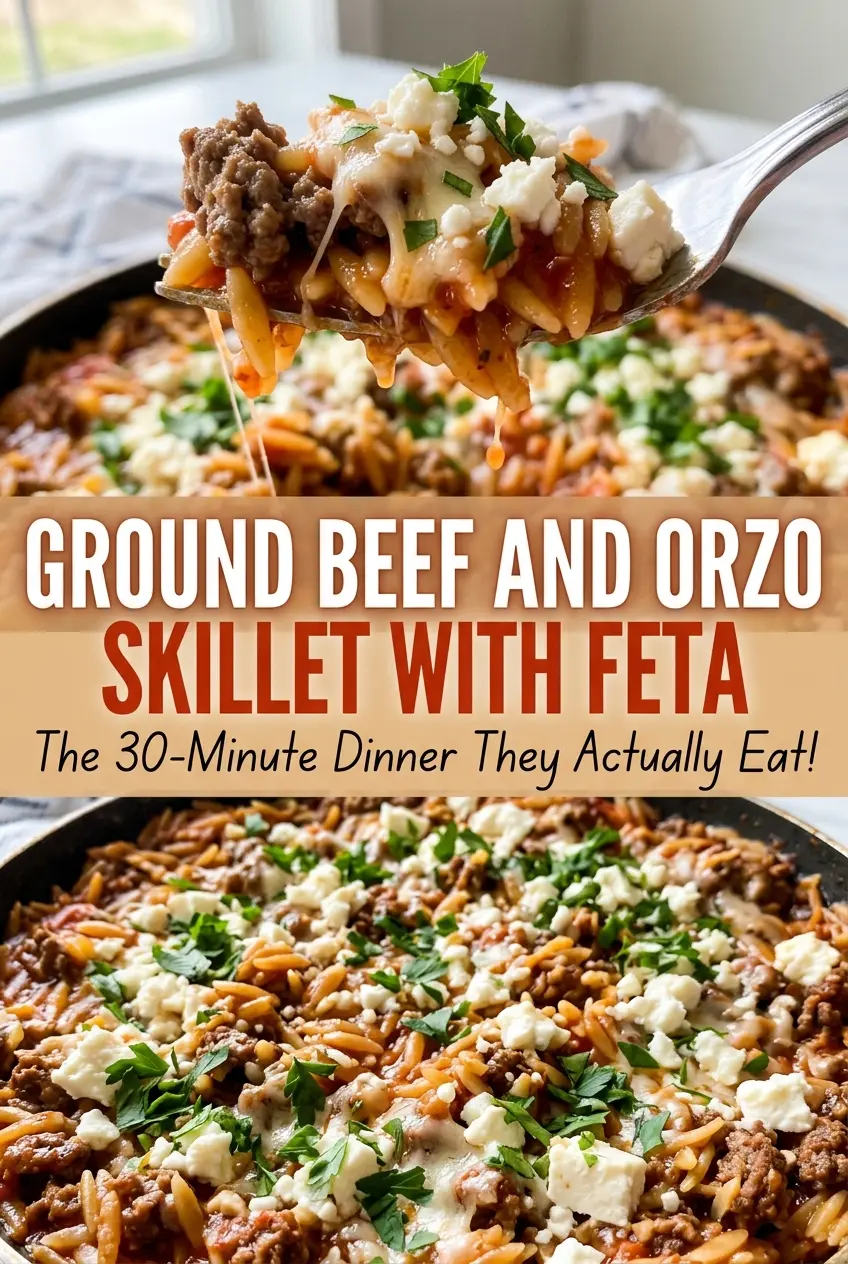
Kitchen Note
Orzo settles toward the bottom as it cooks, so stir through the whole skillet every few minutes rather than just skimming the surface. A quick pass with the spoon keeps the pasta moving while the covered skillet simmers.
Save this Ground Beef and Orzo Skillet with Feta for a one-pan dinner with tender tomato orzo and a tangy feta finish.
Orzo Drinks Up the Broth Before the Skillet Looks Finished
Because the orzo cooks directly in the tomatoes and broth, this isn’t a case where the pasta gets boiled separately and folded into a finished sauce. The liquid has to do two jobs: cook the pasta through and leave enough behind to bind the beef and tomatoes. That’s why the skillet can look looser than you expect early in the simmer. Give the orzo time to absorb the liquid instead of trying to force the mixture thick with extra heat.
Look at the pasta as well as the liquid when you judge the finish. The orzo should be tender, and most of the liquid should be absorbed; a little sauciness is welcome, but it shouldn’t look like soup. If the liquid disappears before the pasta is tender, the heat may be too high, which can cook off moisture quickly. Keeping the simmer low and covered gives the orzo time to soften without scorching the bottom.
Why Beef, Tomato, and Feta Need Different Jobs
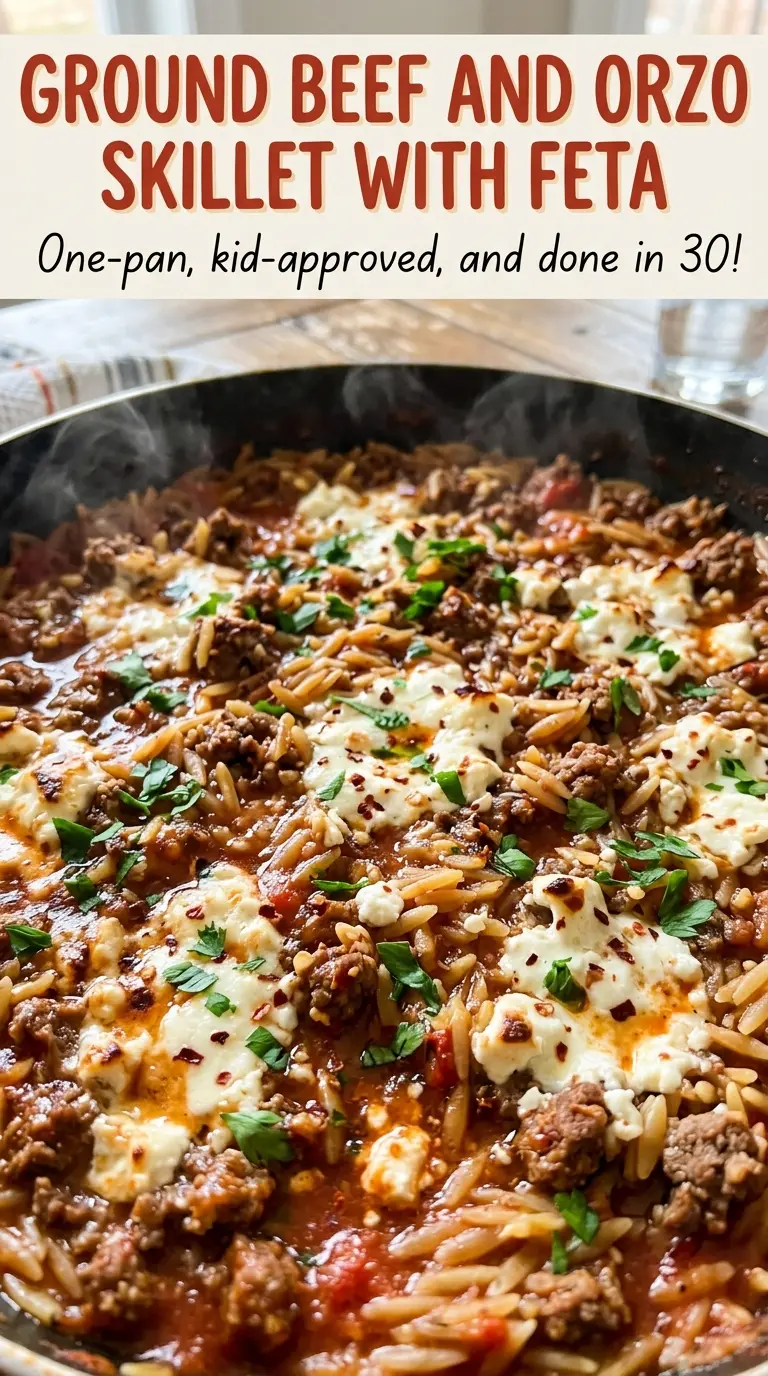
- Ground beef — 85% lean beef gives the skillet enough richness without leaving the pasta swimming in excess fat. Freshly packaged beef is fine; focus on breaking it into small pieces as it browns so it distributes evenly through the orzo.
- Onion, garlic, and oregano — Finely chopped onion softens into the base, while garlic and dried oregano add their flavor quickly. Dried oregano is a good pantry ingredient here; there’s no need to seek out a specialty brand. Chop the onion evenly so the pieces soften at a similar pace.
- Orzo — This small pasta shape cooks in the skillet liquid and helps give the dish its thick, spoonable texture. Stick with orzo rather than swapping in a different pasta shape, since another size won’t absorb liquid on the same schedule.
- Diced tomatoes and beef broth — The tomatoes contribute both tomato pieces and their canning liquid, while the low-sodium broth supplies the moisture for cooking the orzo. Use the tomatoes undrained; draining them would remove liquid the pasta needs.
- Feta — Its salty tang stands up to the beef and brings contrast to the tomato base. Pre-crumbled feta is convenient, while feta crumbled from a block tends to have a softer, less dry texture. Either works in this skillet.
Building the Skillet from Browned Beef to Tender Orzo
Soften the Onion First
Warm the olive oil in a 12-inch deep skillet over medium heat, then add the finely chopped onion. Cook for 3 to 4 minutes, stirring, until it softens and looks glossy rather than raw and crisp. Give the onion this head start before adding the beef so it has time to become tender. If the pan is crowded or the onion is still firm, let it soften before moving on.
Brown the Beef Before Adding Pasta
Add the ground beef and break it into small pieces with a spoon as it cooks. It takes 5 to 7 minutes to brown and reach 160°F; look for no pink portions and an even, browned surface across the crumbles. Avoid leaving the beef in one large mass, or the outside may brown while the middle stays undercooked. Once it’s ready, the skillet should smell savory, with the onion tucked through the meat.
Toast the Orzo and Loosen the Browned Bits
Stir in the minced garlic and dried oregano, and cook them for 30 seconds, just until fragrant. Add the orzo and stir for 1 minute so the little pasta pieces are lightly toasted rather than sitting dry in the skillet. Pour in the undrained diced tomatoes and beef broth, then add the salt and pepper. Scrape the bottom as you stir; those browned bits loosen into the liquid and become part of the base.
Simmer Until the Pasta Is Tender
Bring the mixture to a boil, then reduce the heat to low and cover the skillet. Simmer for 10 to 12 minutes, stirring every few minutes, until the orzo is tender and most of the liquid has been absorbed. The exact appearance shifts as the pasta cooks, so check the texture instead of relying on a dry-looking surface. Take the skillet off the heat, stir in half of the feta, scatter the rest over the top, and cover for a 2-minute rest before serving.
Two Ways to Change the Feta Finish
Make It Dairy-Free by Leaving Out the Feta
Omit the feta for a dairy-free version; the beef, tomato, and orzo still make a satisfying skillet, though it loses the salty, tangy finish and creamy bits. The rest of the ingredients and cooking method stay the same.
Keep All the Feta on Top
For a sharper feta bite, skip stirring half of it into the skillet and scatter all of it over the finished orzo. You’ll get a more distinct contrast between the creamy pasta underneath and the salty crumbles on top, rather than feta distributed throughout.
Storage and Reheating
- Refrigerator: Store leftovers in an airtight container for 3 to 4 days. The orzo will continue to absorb moisture and become softer as it sits.
- Freezer: Freeze portions in airtight containers for up to 2 months. Thaw overnight in the refrigerator; the orzo will be softer after freezing, though the skillet is still good to eat.
- Reheating: Reheat a portion in a covered microwave-safe bowl, stirring halfway through, until it reaches 165°F. Don’t leave it uncovered for the full reheating time, or the orzo can dry at the edges.
Questions That Come Up with This Beef and Orzo Skillet
Ground Beef and Orzo Skillet with Feta
Ingredients
Equipment
Method
- Heat the olive oil in a 12-inch deep skillet over medium heat.
- Add the onion and cook for 3 to 4 minutes until softened.
- Add the ground beef and cook for 5 to 7 minutes, breaking it up with a spoon, until browned and cooked to 160°F.
- Stir in the garlic and oregano and cook for 30 seconds.
- Add the orzo and stir for 1 minute to lightly toast it.
- Stir in the diced tomatoes, beef broth, salt, and pepper, scraping up any browned bits.
- Bring the mixture to a boil.
- Reduce the heat to low, cover, and simmer for 10 to 12 minutes, stirring every few minutes, until the orzo is tender and most of the liquid is absorbed.
- Remove the skillet from the heat and stir in half of the feta.
- Scatter the remaining feta over the top.
- Cover and rest for 2 minutes before serving.