
Juicy chicken thighs, caramelized pineapple, and tender bell peppers make this sheet pan dinner taste like it worked harder than it did. The sweet-savory glaze clings to everything as it roasts, and the edges pick up just enough color to give each bite a sticky, browned finish. It lands in that sweet spot where dinner feels bright and satisfying without asking for a pile of pots and pans.
What makes this version work is the balance in the sauce and the way the pan is loaded. Soy sauce brings salt and depth, brown sugar helps the chicken and pineapple caramelize, and sesame oil adds that toasted note that keeps the sweetness from taking over. I’ve also found that keeping the chicken and vegetables cut to similar sizes matters more than people think — it’s the difference between juicy chicken and soft peppers that turn tired before the chicken is done.
Below, I’ve included the easiest way to keep the glaze from pooling, the best swaps if you need to adjust the dish, and the reheating trick that keeps the chicken from drying out the next day.
The sauce caramelized around the pineapple instead of running off the pan, and the chicken stayed juicy all the way through. My kids kept picking out the peppers because they had those browned edges.
Juicy Hawaiian chicken, caramelized pineapple, and sticky sesame glaze belong on your Pinterest dinner board.
The Reason the Pineapple Stays Sweet Instead of Turning Watery
Sheet pan dinners fail when the pan gets crowded and the fruit starts steaming instead of roasting. Pineapple gives off juice as it heats, and if the pieces are piled too tightly under the chicken, that juice has nowhere to go. You end up with a slick pan and pale edges instead of the sticky, browned finish that makes this dish worth making.
The fix is simple: spread everything into a single layer and give the pan enough room for the moisture to evaporate. Chicken thighs are the right cut here because they stay tender even after the fruit and peppers are done softening. If you swap in chicken breast, you’ll need to watch the timing closely because it dries out fast once the sugars in the glaze start to concentrate.
What Each Ingredient Is Actually Doing in This Dish
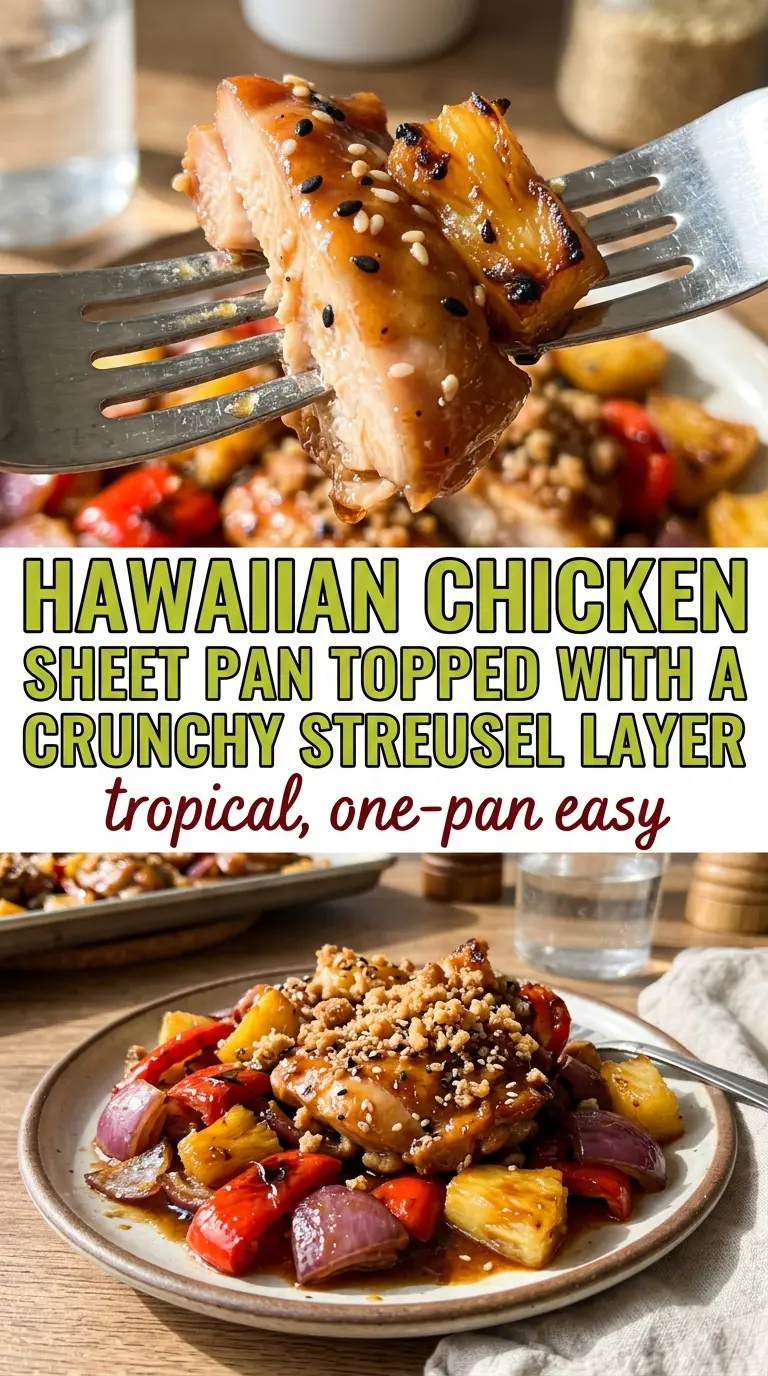
- Chicken thighs — These stay moist under high heat and give you a richer result than breast meat. Boneless thighs work best for even roasting, but bone-in thighs can be used if you add a few extra minutes and check that the thickest part reaches temperature.
- Pineapple chunks — Fresh or canned both work, but canned pineapple should be drained well so the pan doesn’t flood. The fruit caramelizes at the edges and helps build the sticky glaze that makes the dish taste complete.
- Bell peppers — Their job is more than color; they soften just enough to balance the sweet glaze without disappearing. Slice them into sturdy strips so they keep some bite after roasting.
- Soy sauce — This is the salty backbone of the glaze. Use a regular soy sauce for the best balance; low-sodium works too, but the final dish may need a pinch more salt at the table.
- Brown sugar — It helps the sauce lacquer the chicken and pineapple as it bakes. If you cut the sugar too much, you lose that glossy finish and the glaze tastes thin instead of rounded.
- Sesame oil — A small amount goes a long way here. It adds the toasted note that makes the dish taste intentional, not just sweet.
- Garlic — Fresh minced garlic gives the sauce its sharp edge. Garlic powder can fill in if that’s what you have, but fresh garlic tastes cleaner and stands up better to roasting.
- Sesame seeds — These go on at the end for a little crunch and a nutty finish. Toasted sesame seeds are even better if you have them on hand.
The Part of the Roast That Actually Controls the Texture
Mix the glaze before it ever hits the pan
Whisk the soy sauce, brown sugar, sesame oil, and garlic until the sugar starts dissolving. That keeps the glaze from landing in gritty pockets on the pan and helps it coat the chicken evenly. If the sugar sits in a clump at the bottom of the bowl, it stays there in the oven instead of caramelizing where you want it.
Lay everything out with breathing room
Spread the chicken, pineapple, and peppers across the sheet pan in a single layer. If the pieces overlap, they trap steam and the browning slows down fast. You want the edges of the fruit and peppers to sit directly on the hot pan so they can caramelize instead of collapse.
Roast until the glaze tightens and the chicken loses its pinkness
At 400°F, the sugars in the sauce should bubble and darken around the edges in 30 to 35 minutes. The chicken is done when the thickest part is cooked through and the juices run clear. If the top is browning too quickly before the chicken cooks, move the pan to a lower oven rack so the heat works more evenly.
Finish with sesame seeds while the pan is still hot
Sprinkle the sesame seeds over the chicken right after it comes out of the oven so they stick to the glaze. That last bit of heat wakes up their flavor and gives the dish a slight crunch. If you wait too long, they just roll off the surface and lose their impact.
How to Adapt This for a Lighter, Spicier, or More Pantry-Friendly Dinner
Gluten-Free Version
Swap the soy sauce for tamari or a certified gluten-free soy sauce in the same amount. The flavor stays close to the original, and you still get the same salty-sweet glaze without changing the roasting time.
Lower-Sugar Finish
Cut the brown sugar back to 2 tablespoons if you want a less sticky glaze. The sauce will still caramelize, but the final result will taste a little less lacquered and the pineapple flavor will come through more clearly.
Spicy Hawaiian Chicken
Add a pinch of red pepper flakes or a drizzle of sriracha to the glaze. Heat works well here because it cuts through the sweetness, especially if your pineapple is very ripe.
Storage and Reheating
- Refrigerator: Store leftovers in an airtight container for up to 4 days. The pineapple softens a bit more as it sits, but the flavor holds up well.
- Freezer: This freezes fairly well for up to 2 months, though the peppers will lose some texture. Freeze in portions with as little air as possible, then thaw overnight in the fridge.
- Reheating: Warm gently in a 325°F oven until heated through or reheat in a skillet over medium-low heat. High heat dries the chicken out and makes the sugars in the glaze bitter before the center is hot.
Questions I Get Asked About This Recipe
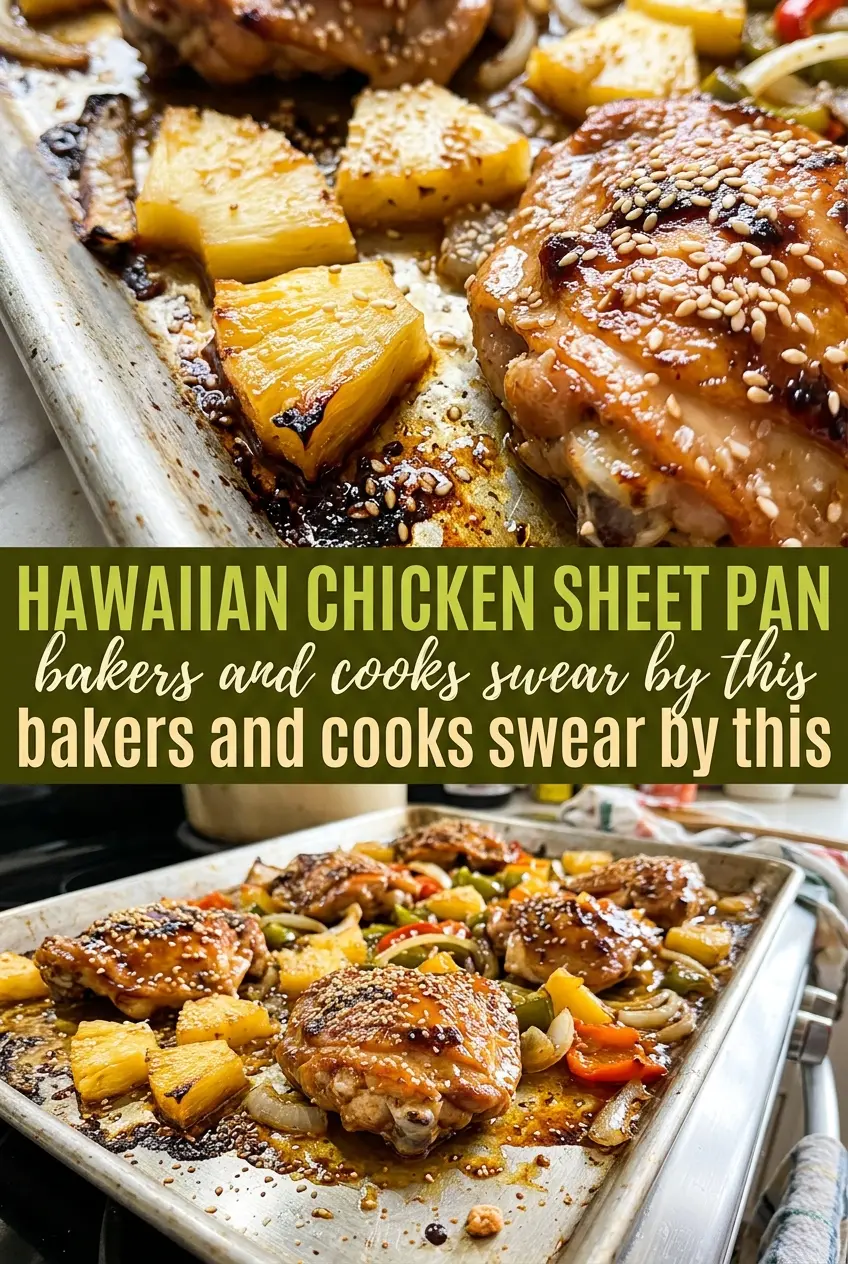
Hawaiian Chicken Sheet Pan
Ingredients
Equipment
Method
- Preheat oven to 400°F while you prep the ingredients so the sheet pan is hot when food goes in.
- Whisk soy sauce, brown sugar, sesame oil, and garlic together until the sugar dissolves and the sauce looks glossy.
- Arrange chicken, pineapple chunks, and bell peppers on a sheet pan in an even layer for consistent roasting.
- Pour the sauce evenly over everything so the chicken and vegetables are coated without fully drowning the pan.
- Roast at 400°F for 30-35 minutes until the chicken is cooked through and the edges caramelize, with pineapple turning lightly golden.
- Sprinkle sesame seeds over the sheet pan and rest for 2 minutes before serving so the topping clings and toasts slightly.