
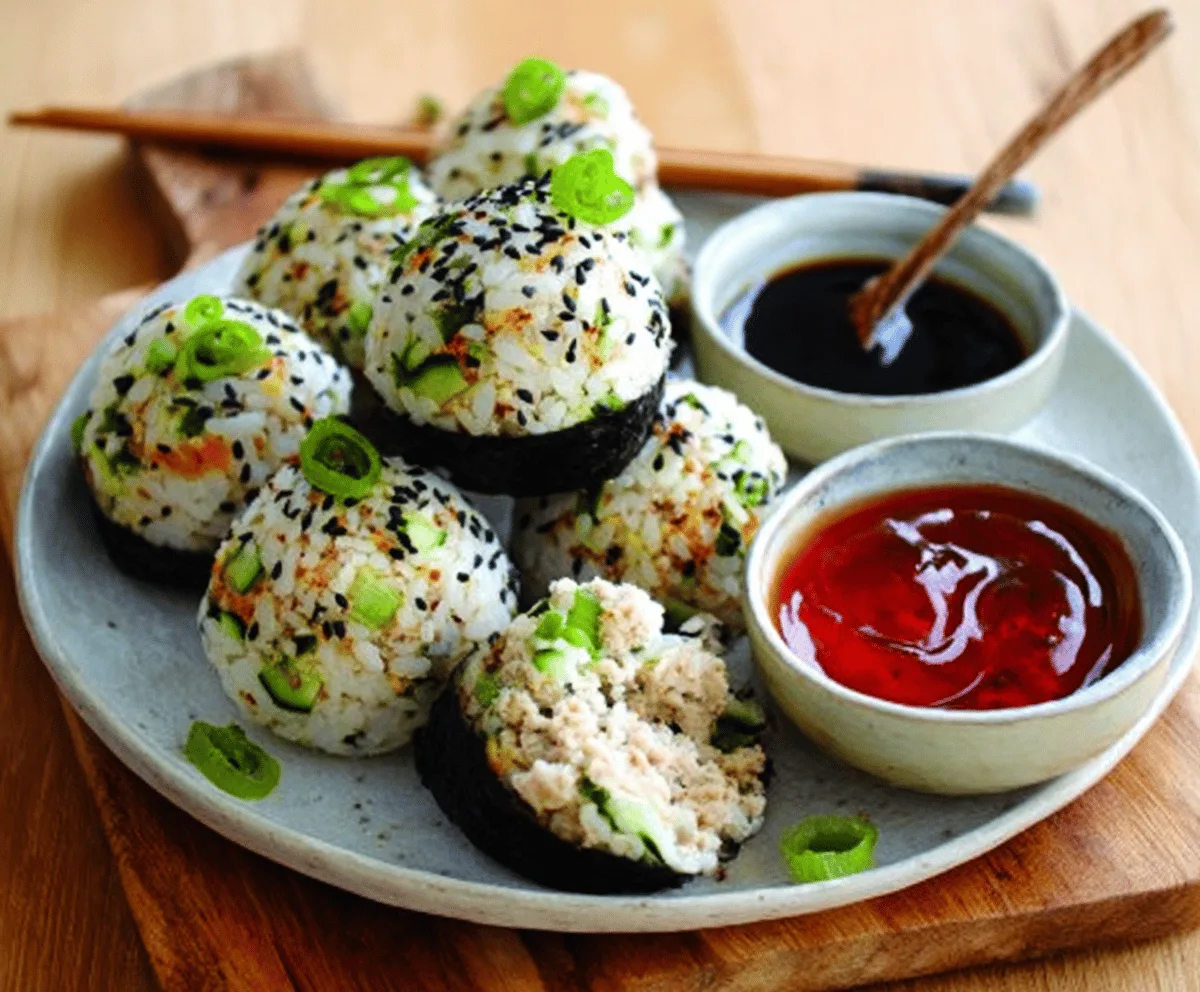
Healthy Tuna Rice Balls are a simple and tasty snack that combines soft, sticky rice with flavorful tuna. They have a nice balance of protein from the tuna and comforting rice that makes them both filling and light. A hint of seasoning keeps things interesting without overpowering the natural flavors.
I like making these rice balls when I need something quick but satisfying to grab on the go. They’re easy to customize, too—sometimes I add a little bit of chopped veggies or a dash of soy sauce to give them a boost. I find that they hold together nicely, so they’re perfect for lunchboxes or a picnic.
These tuna rice balls also remind me of the simple, homemade snacks my family used to make. They’re a great packing option for school or work, and I always feel good knowing I’m eating something with wholesome ingredients. Plus, they taste great warm or at room temperature, which makes them handy anytime you want a little bite.
Key Ingredients & Substitutions
Short-grain or sushi rice: This sticky rice helps the balls hold their shape. If you don’t have sushi rice, you can use other sticky rice types or medium-grain rice. Avoid long-grain since it’s too fluffy and won’t stick well.
Tuna: Canned tuna in water is light and healthy. If you prefer, use canned salmon, cooked chicken, or mashed chickpeas for a vegetarian option.
Cucumber and red chili: These add fresh crunch and mild heat. You can replace cucumber with finely diced celery or bell peppers. For heat, try a pinch of crushed red pepper flakes.
Soy sauce and sesame oil: These give a subtle, savory flavor boost. Low-sodium soy sauce is best to keep it healthy. If avoiding soy, try coconut aminos as a substitute.
How Can I Shape Tuna Rice Balls Without Them Falling Apart?
Shaping rice balls can feel tricky because you want them firm but not squished. Here’s how I make it work:
- Make sure the rice is cooled but still slightly sticky.
- Use wet hands or lightly oil them to prevent sticking while shaping.
- Press the mixture gently but firmly into an oval or round shape. Don’t pack too hard or they get dense.
- If pan-frying, a light spray of oil helps create a crust that holds the shape better.
With these tips, your rice balls should hold nicely and be easy to eat or pack for later!
Equipment You’ll Need
- Mixing bowl – I find it easy to combine all the ingredients here without mess.
- Knife and cutting board – for chopping cucumbers, green onions, and optional peppers.
- Measuring spoons and cups – to measure soy sauce, sesame oil, and rice vinegar accurately.
- Small bowl of water – for moistening hands to shape rice balls, preventing sticking.
- Non-stick skillet or frying pan (optional) – for pan-frying the rice balls if you want a crispy exterior.
- Spatula or tongs – to turn or serve the rice balls easily, especially when pan-frying.
Flavor Variations & Add-Ins
- Swap tuna for salmon or chicken: These options add different flavors and textures or make it more filling for non-seafood eaters.
- Introduce cheese or spicy sauces: Mix in a little shredded cheese or a dash of sriracha for extra flavor and heat.
- Add more veggies: Incorporate chopped carrots, radishes, or shredded lettuce for more crunch and nutrients.
- Use different seasonings: Try garlic powder, ginger, or a splash of lemon juice to change the taste vibe.
Healthy Tuna Rice Balls
Ingredients You’ll Need:
- 1 ½ cups cooked short-grain or sushi rice (preferably cooled)
- 1 can (5 oz) tuna in water, drained and flaked
- 1 small cucumber, finely diced
- 1 tablespoon low-sodium soy sauce
- 1 teaspoon toasted sesame oil
- 1 teaspoon rice vinegar
- 1 tablespoon finely chopped green onions
- 1 teaspoon toasted sesame seeds (black or white)
- 1 small red chili or red bell pepper, finely diced (optional, for mild heat and color)
- Salt, to taste
- Non-stick cooking spray or a small amount of vegetable oil for pan-frying (optional)
How Much Time Will You Need?
This recipe takes about 15 minutes to prepare, plus any time needed to cook and cool the rice beforehand. If cooking the rice fresh, allow an extra 20-25 minutes for that. Pan-frying is optional and adds 5 to 6 minutes.
Step-by-Step Instructions:
1. Mix the Tuna and Veggies:
In a mixing bowl, combine the flaked tuna, diced cucumber, chopped green onions, and diced red chili or bell pepper if you chose to use these. Stir them gently so they get well distributed.
2. Add Flavorings:
Pour in the low-sodium soy sauce, toasted sesame oil, and rice vinegar. Mix everything well to blend the flavors throughout the tuna and veggies.
3. Combine with Rice:
Gently fold the cooled, cooked rice into the tuna mixture. Be careful not to mash the rice grains; you want the texture to stay nice and fluffy yet sticky enough to hold together.
4. Shape the Rice Balls:
Wet your hands slightly with water to stop sticking. Take a handful of the mixture and press it firmly into an oval or round ball. Continue until all the mixture is shaped.
5. Add Sesame Seeds:
Lightly sprinkle or roll the rice balls in toasted sesame seeds for a bit of crunch and extra flavor.
6. Optional Pan-Fry:
If you want a crispy exterior, heat a non-stick skillet over medium heat and lightly spray or brush with oil. Carefully place the rice balls in the pan and cook for 2-3 minutes on each side until golden brown.
7. Serve and Enjoy:
Serve the rice balls warm or at room temperature. They make a perfect healthy snack or light meal!
Can I Use Frozen Tuna for These Rice Balls?
Yes, you can use frozen tuna, but make sure it’s fully thawed and drained before mixing. Thaw it overnight in the fridge or use a cold water bath for quicker thawing, then pat dry to remove excess moisture.
Can I Make These Rice Balls Ahead of Time?
Absolutely! Prepare and shape the rice balls, then store them in an airtight container in the fridge for up to 2 days. Reheat gently in a skillet or microwave before serving for the best texture.
How Should I Store Leftovers?
Place leftover rice balls in an airtight container and refrigerate for up to 3 days. To reheat, warm them in a skillet over medium-low heat or use a microwave, covering lightly to retain moisture.
What Can I Substitute for Soy Sauce?
If you’re avoiding soy, use coconut aminos or tamari as a gluten-free alternative. Both provide a similar umami flavor without the soy content.